





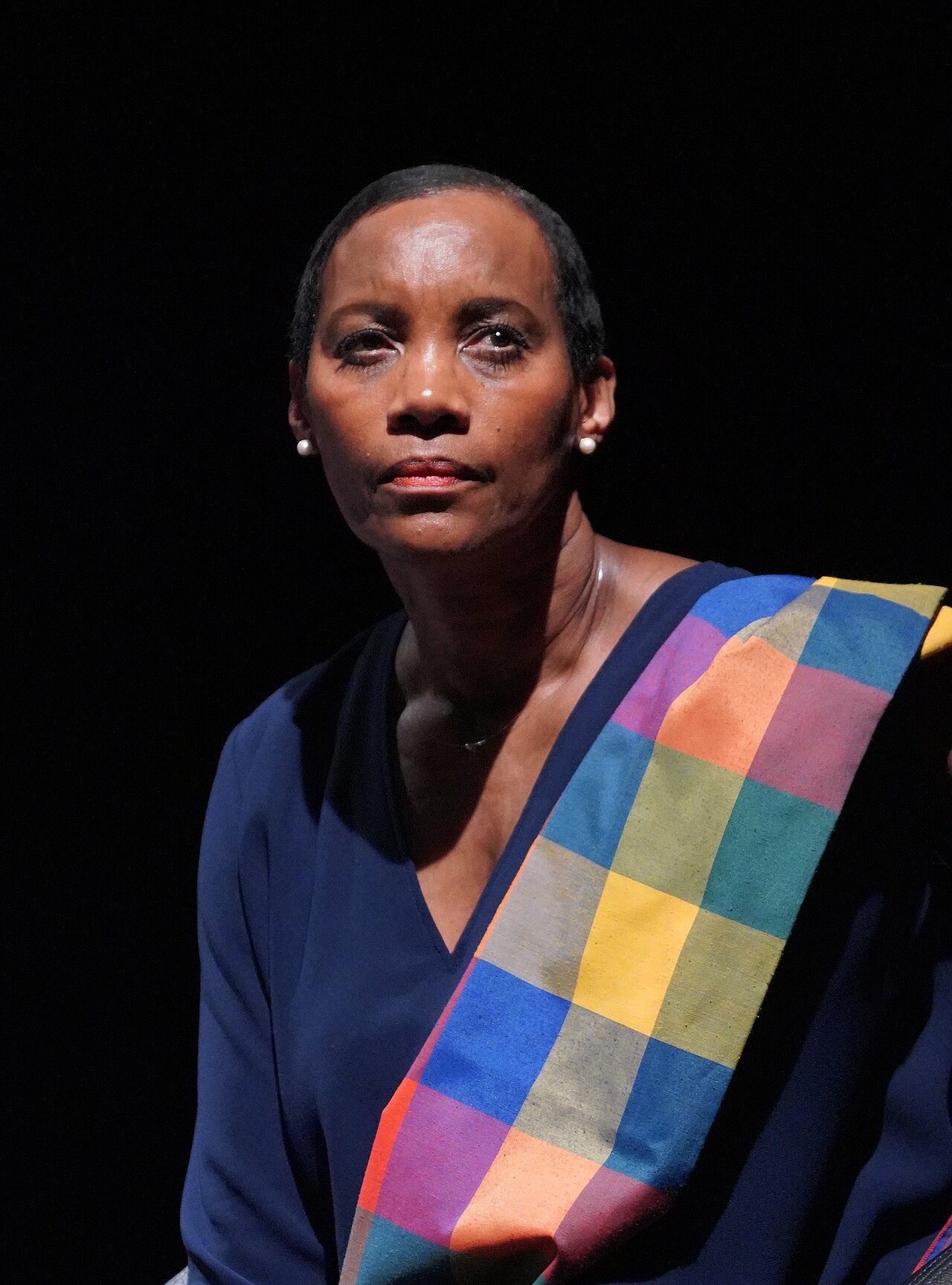
For three decades, Dafroza Mukarumongi-Gauthier has been the relentless moral conscience of France, a soft-spoken yet formidable force hunting the men who slaughtered her world. She is not a police officer or a state prosecutor.
She is a survivor, a widow to a grief that claimed nearly 80 members of her family, and a woman on a sacred mission to ensure that the architects of the 1994 genocide do not die peacefully in their beds, thousands of miles from the blood-soaked hills where they committed their atrocities.
Her life’s work, undertaken with her French husband, Alain Gauthier, has earned them the nickname “the Klarsfelds of Rwanda,” a reference to the famed Nazi hunters. But for Dafroza, this is not a hunt for notoriety; it is a pilgrimage of pain, a decades-long journey back to her homeland to gather the evidence that French authorities long ignored. She is terrorizing fugitives not with weapons, but with memory, and her weapon of choice is a well-documented case file.
Indeed, the recent French court ruling blocking the burial of notorious genocide suspect Protais Zigiranyirazo on French soil stands as a direct testament to the Mukarumongi-Gauthier’s decades-long crusade. Her campaign has fundamentally shifted the landscape, transforming France from a safe haven for fugitives into a place where their past crimes have inescapable consequences.
By meticulously building legal cases and tirelessly raising public awareness, Dafroza and her husband Alain Gauthier have ensured that figures like Zigiranyirazo, the brother-in-law of the former Rwandan president, are not granted the dignity of a peaceful rest in France, denying them the final impunity they sought and upholding the principle that the soil of the Republic is no resting place for architects of genocide.
An Abyss of Loss
Dafroza’s story begins in the lush, rolling hills of southern Rwanda. She was born Dafroza Mukarumongi on August 4, 1954, in the town then known as Astrida (later Butare). The region of Butare and Kibeho was her family’s heartland, the place where she lived with her mother, Suzana, her siblings, and a large extended family until she left for college.
The shadow of violence had loomed over her life long before 1994. In 1963, as a young girl, she, her mother, sister, and cousins fled to the massive brick church in Kibeho to escape a wave of massacres.
“I hid in my mother’s legs. We could hear screaming outside,” she recalled during a painful return to the site in 2021. The church, then considered an inviolable sanctuary, saved them. That memory of sanctuary would make the events of 1994 an even more profound betrayal.
In late February 1994, sensing the rising tension, Dafroza—who was living in France—made a fateful trip to Kigali to see her family. Her mother urged her to flee back to the safety of Europe but refused to leave herself, unable to persuade the rest of the family to abandon their home. It was the last time Dafroza would see them.
When the genocide began in April, sparked by the assassination of President Juvénal Habyarimana, Ethnic extremists enacted a meticulously planned campaign of extermination against the Tutsi. Dafroza’s mother, Suzana, was shot dead outside a church in a Kigali parish where she had sought refuge. In total, Dafroza lost as many as 80 family members. There were no survivors on her mother’s side.
“It’s an abyss—all these deaths that inhabit us,” she has said, her face still etched with the pain 30 years later.
The Birth of a Hunter
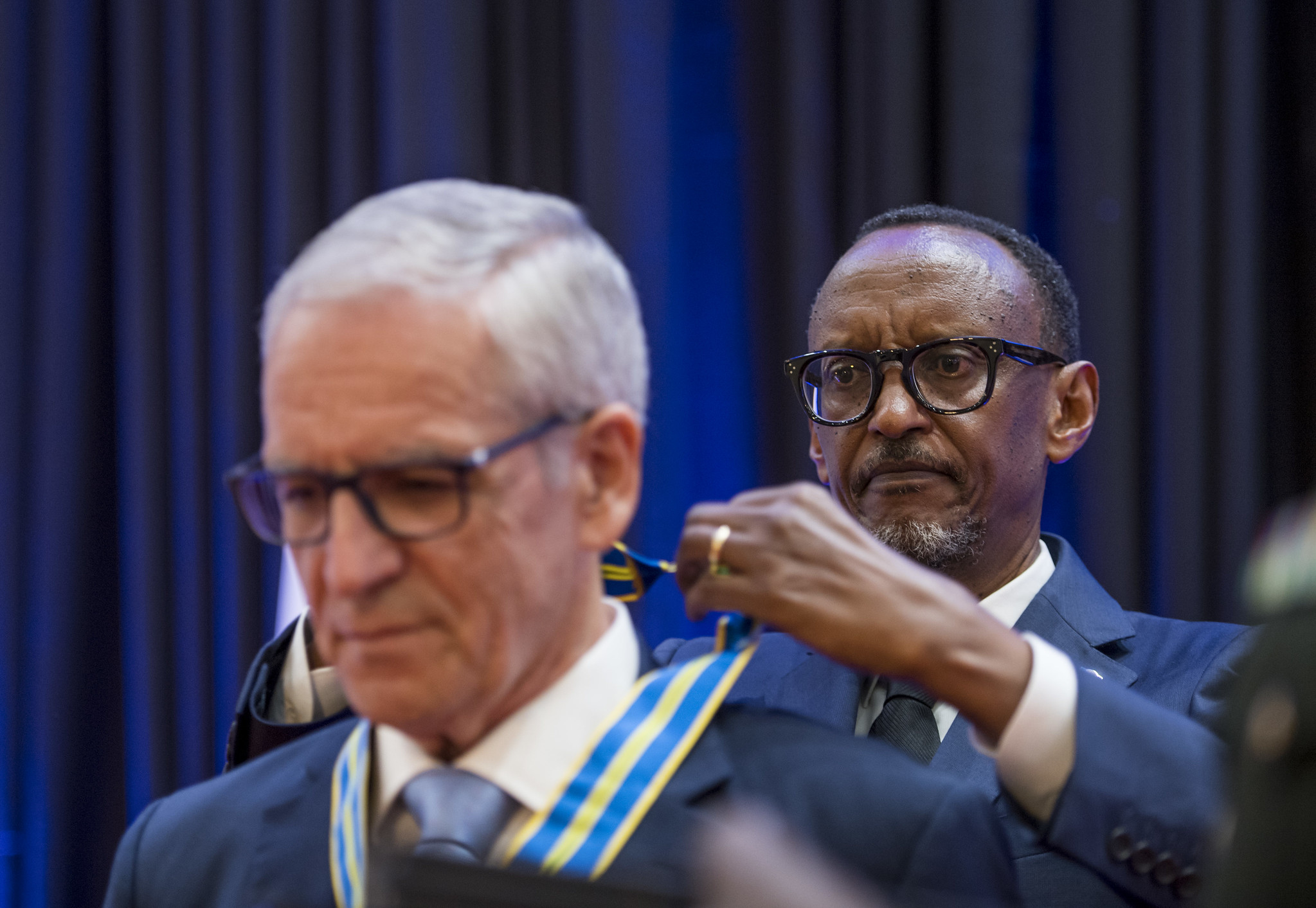
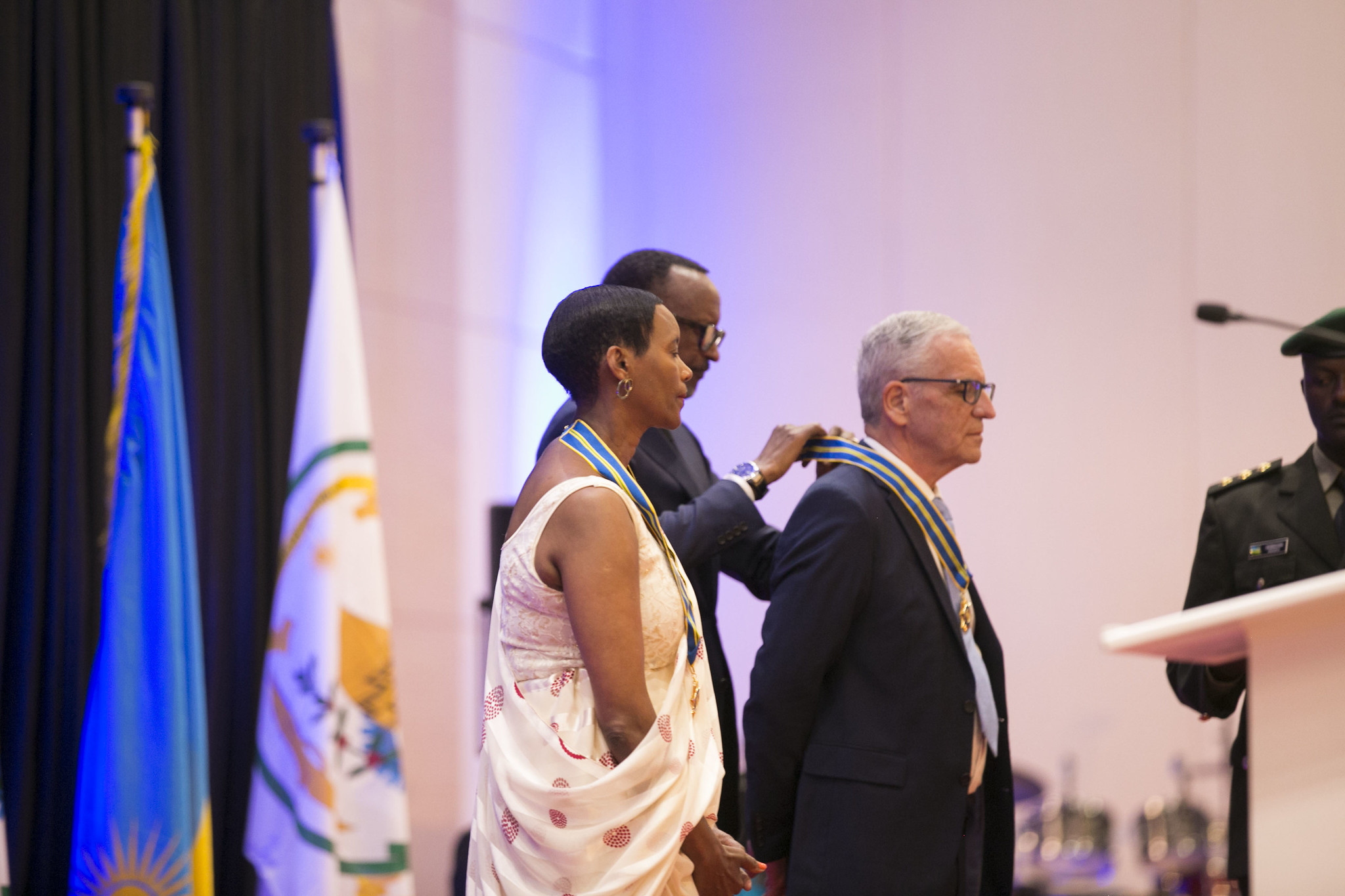
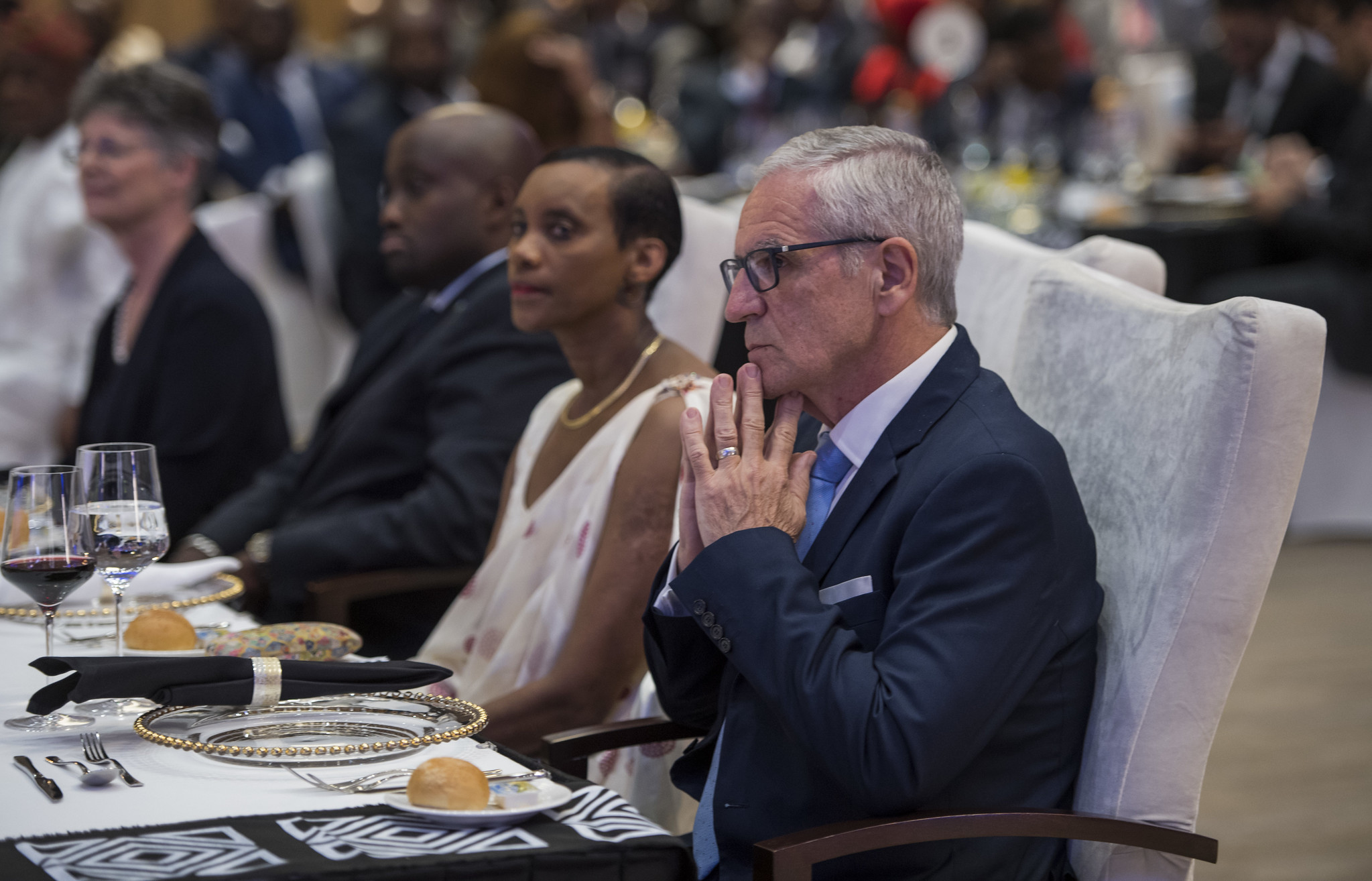
In 2017 President Kagame awarded Dafroza Mukarumongi-Gauthier and Alain Gauthier medals of Honour for their outstanding friendship pact ‘Igihango’ with Rwanda. It is one of the highest civilian honors in the country.
 Consumed by grief but refusing to be paralyzed by it, Dafroza and Alain made a vow: they would end the impunity enjoyed by génocidaires living comfortably in France. Historical links between Paris and the Habyarimana regime had made France a preferred refuge for many high-level perpetrators. They became doctors, priests, municipal employees—living anonymous lives, their pasts neatly erased.
In 2001, the couple co-founded the Collectif des Parties Civiles pour le Rwanda (Collective of Civil Parties for Rwanda), based in their home in Reims. With little more than determination and their own savings, they began their work. Their method was painstaking and personal.
“When we’ve spotted the killer in France, we go to the scene of the crime,” Dafroza explains to rapt French schoolchildren, whom they now educate about the genocide. “We look to see if there are survivors and we begin the investigation.”
They began traveling to Rwanda three or four times a year, journeying across the green hills to remote villages. They would track down survivors and witnesses, sitting in modest hotels like the White Horse Hotel in Ruhango, notebooks open, listening to soft-spoken, traumatic testimonies that slowly grew in confidence. They collected names, dates, and specific, horrific details—evidence that would form the backbone of legal complaints filed in France.
For years, they were virtually alone in this pursuit. “Had we not committed ourselves, I think that no genocide perpetrator would have been tried and convicted today in France,” Alain notes, lamenting that the French justice system relied for so long on the initiative of private citizens.
A Painful Homecoming
The work is an endless confrontation with ghosts. In September 2021, Dafroza returned to Rwanda for the first time in 25 years. The trip was tied to the upcoming trial of Laurent Bucyibaruta, the former prefect of Gikongoro, who had been living in Saint-André-les-Vergers, France. The region was deeply familiar to Dafroza; it was her homeland.
She was apprehensive. “I don’t know if I will be able to manage this,” she confessed in Reims before leaving. Her journey back to Kibeho was overwhelming. The beautiful beige-brick church where she had been baptized and confirmed, and where she had survived the 1963 killings, was the site of one of the genocide’s worst massacres. In April 1994, 40,000 Tutsis who had sought refuge there were almost entirely exterminated, including members of her own family.
Standing in the church, she clenched her hat tightly in her hands, fighting the immediate flood of images. Later, at the Kibeho memorial, where the names of the 40,000 victims are engraved on marble steles, she was overcome. She found the names of her primary school French teacher, his wife who taught singing, and their seven children. “I knew the eldest,” she said, her voice choking with emotion. “What is very hard is that these are families gone forever… There are some where there is one or two survivors. But here, it’s over, finished. That is the genocide.”
Yet, in this place of utter desolation, she found a sliver of peace. Seeing the care taken to remember the victims was profoundly healing. “It does me good now to see where they are. That they are being cherished, that they are being taken care of for eternity,” she said. “They existed, just like we do here, standing. They have a history, a family history… They only asked to live.”
Justice as a Form of Burial
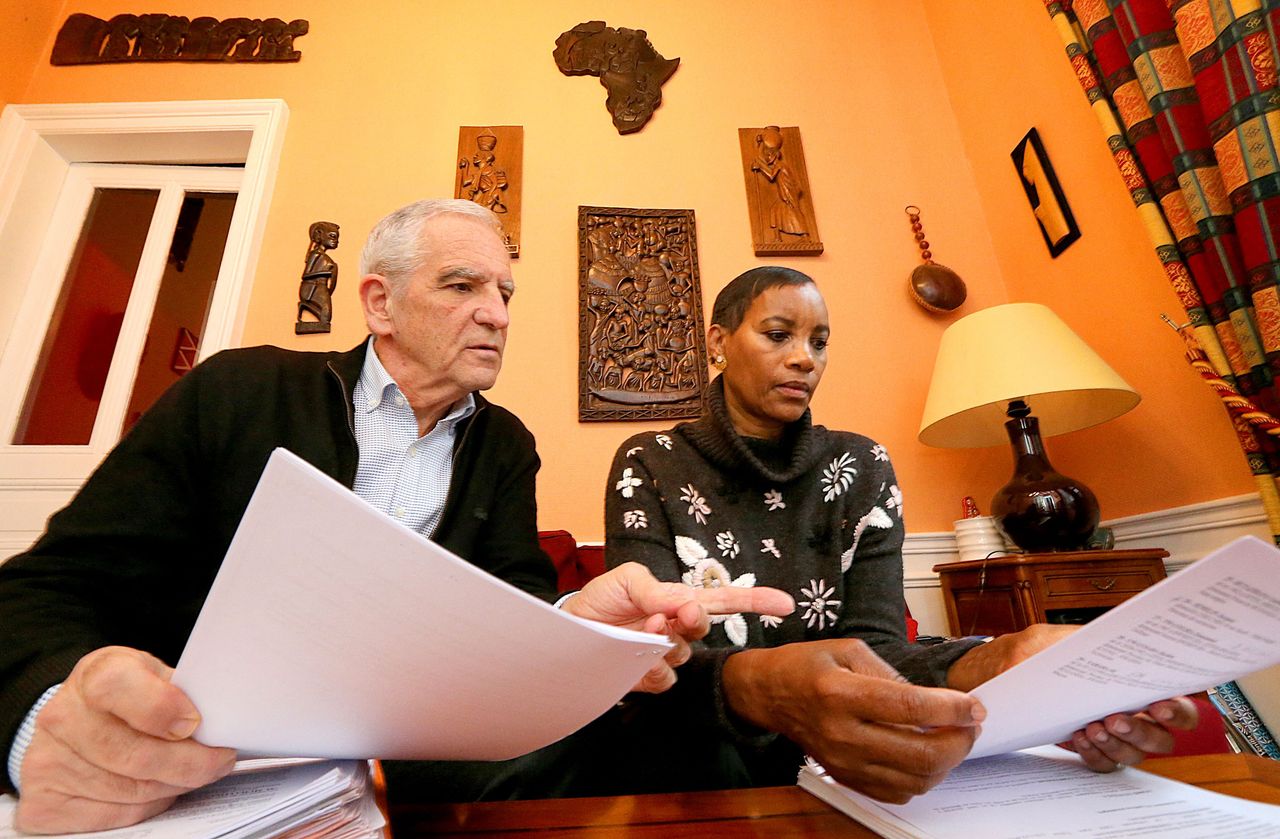
The Gauthiers at work
For Dafroza, the relentless pursuit of justice is not about hate or vengeance. It is about moral restitution. It is the only worthy burial she can offer her family. Countless victims were dumped in mass graves, unidentified and un-mourned. “Their only grave… the only worthy burial we can offer them is justice itself,” she believes.
“What we do with a trial is rehabilitate victims, say their names and what they were,” she says. “This is the moral restitution the victims expect.”
The Gauthiers’ Collective is behind more than 30 legal cases in France. To date, their work has led to seven convictions, with sentences ranging from 14 years to life imprisonment. Each trial is a battle, but each verdict is a victory for memory over oblivion.
She draws strength from the survivors she meets—people like Bertin in Kibeho, who lived through the church massacre and now helps her find witnesses.
“Being with them, these survivors, hearing the account of what they endured, what they lived through, it gives you strength,” she said. “They are alive, they live, they have rebuilt families. It feels good to see that they are transmitting this history. It is very, very important.”
This transmission is her ultimate goal. As she and Alain approach their later years, they spend significant time speaking in schools, ensuring a new generation understands the horrors of the past so they might not be repeated.
The Duty of Memory
Dafroza Mukarumongi-Gauthier has lived with the genocide for 30 years. It is a daily inhabitant of her heart. The work has been her life’s duty, a way to transform unimaginable personal terror into a powerful force for accountability. She has terrorized the comfortable lives of fugitives not with violence, but with an unwavering demand for justice, proving that the most powerful force against evil is a survivor who refuses to forget.
“We will have done our little bit towards reconciliation in Rwanda,” says Alain. “We did our duty.”
And for Dafroza, it is a duty born of love: “I believe in it… even when I don’t believe anymore, I believe! It’s the power of positive thinking,” she smiles. “Justice, it soothes. It allows you to restructure yourself, too. Yes, to find a certain interior peace.”
The details of this story are derived from a collection of previous media reports from other platforms, both local and international
