



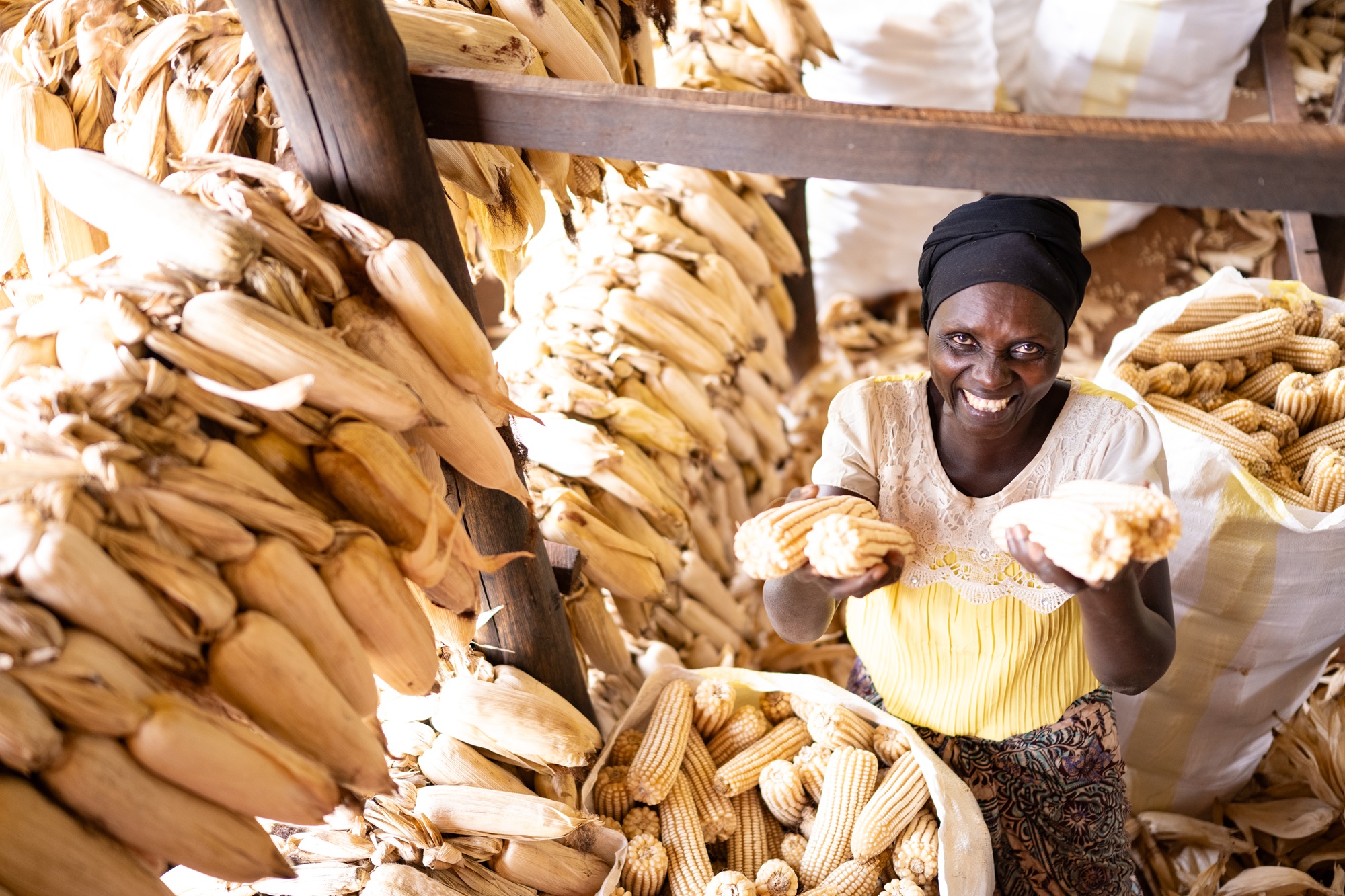
Primitive Nyirabuhoro, a farmer from Ngoma District’s Kazo Sector, proudly displays her maize harvest—grown with the support of One Acre Fund—reflecting the resilience and determination of women transforming agriculture in their communities.
When Adeline Gwizimpundu began farming in 2014, her situation looked very different from today. The former teacher from Kayonza District had the ambition to start a farm but lacked the most basic resources: land and access to farm inputs.
Today, with access to the right farming tools and practical farming knowledge, the 28-year-old farmer is able to grow more and earn more, has renovated her home, purchased land and household appliances, and comfortably provides for her family while contributing to her community.
In Rwanda, women like Adeline make up about 79% of the agricultural workforce; their hard work, skills, and resilience sustain households and supply our markets. Yet despite their central role, they face barriers that limit their ability to fully participate as leaders and decision-makers in the sector.
But what if the resources extended to Adeline could reach more women farmers? How much more could they contribute to our food markets and the economy?
The barriers that hold women back
For Rwanda, where agriculture remains the backbone of rural livelihoods, we should not look at this only through an equity lens, but also as a smart economic strategy.
Women often lack the same access to land, finance, training, and markets as men. Land in particular remains one of the biggest barriers. Without secure land rights, many cultivate borrowed or leased plots, limiting their ability to invest in improvements such as soil restoration or irrigation.
Similarly, for Adeline, land access was the first hurdle.
“I only had the money to rent the land, but because I knew Tubura was going to provide fertilizers and seeds with repayment later, I was so happy,” Adeline says.
The organization I work for, Tubura, delivers a bundled approach that provides access to high-quality farm inputs on credit, practical farming training and market access opportunities. This model is especially valuable to women farmers who may not have the upfront funds to buy inputs while also renting land at the beginning of the season. Pairing all these helps farmers increase productivity and strengthen their income.
The challenges facing women farmers keep them in a cycle of economic vulnerability. But when women gain access to the right support systems, the benefits ripple out.
What happens when women farmers have the right support
According to FAO, closing gender gaps in agriculture could increase global GDP by nearly $1 trillion while significantly reducing hunger worldwide.
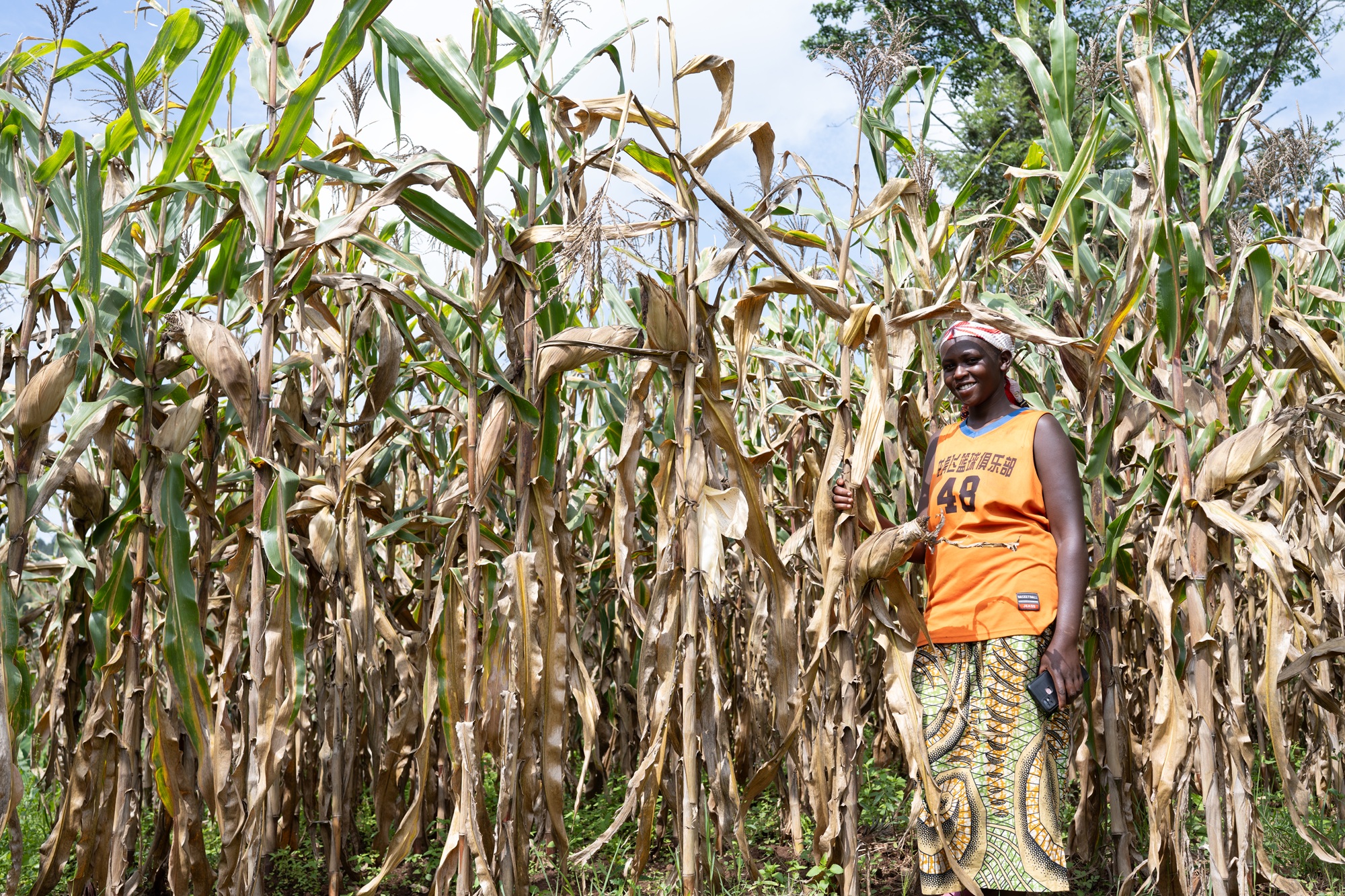
Adeline Gwizimpundu, a farmer from Kayonza District, stands proudly in her maize field—once limited by lack of land and inputs, she now grows more, earns more, and supports her family and community, embodying the potential of women farmers across Rwanda.
As primary caregivers, women need money in their pockets to keep their families fed and secure. However, the ripple effects extend far beyond individual farms. Research consistently shows that when women earn more income, they reinvest a greater share into their families, paying school fees, improving housing, and ensuring better nutrition for children. Many farmers also use the incomes from their increased yields to invest in livestock, so that if a season’s harvest fails due to extreme weather, the livestock can be sold to buy food or cover household expenses.
Like Adeline, some women achieve successful harvests that enable them to save enough money to purchase land of their own, going from tenants to landowners with long-term security.
At Tubura, we have seen that for agricultural programs to succeed, they must be designed with women’s realities in mind and treat them as partners in designing solutions.
As of the 2026 season, 56% of our field officers are women. This ensures that women’s perspectives shape program design and delivery. Training approaches are also adapted to fit women’s schedules. Short audio lessons and pocket-sized visual guides allow farmers to access information while balancing household responsibilities and farm work.
A global momentum – International Year of the Woman Farmer
As we commemorate the International Year of the Woman Farmer, we should reflect on the structural barriers women farmers face and how to accelerate gender-smart agricultural reforms worldwide. Rwanda has made important progress in promoting gender equality.
Initiatives such as the 2008 Land Tenure Regularization Program have helped women secure land titles, while programs like ours have expanded access to farm inputs on credit. However, women still face barriers and there is an opportunity to extend support to more women and also strengthen women’s voices and leadership in agriculture.
The government and development partners can expand women’s access to secure land rights, agricultural finance, extension services, and reliable markets. Supporting women’s leadership in cooperatives and farmer organizations will also ensure their voices influence decisions that affect their livelihoods. Additionally, strengthening market access through programs, like Tubura Harvest, that link farmers to fair markets will help them earn more from what they grow.
The opportunity is clear. Studies show that if women had the same access to productive resources as men, their farm yields could increase by 20–30%. In Rwanda, that would mean stronger local economies, more resilient households, and a more secure national food supply.
Ms. Susan Asiimwe is the Director of Government Relations and Legal at Tubura (One Acre Fund Rwanda)
