




Excitement in Nyabugogo Bus Part following the reopening of the Uganda-Rwanda border.
We all know the downsides of being poor, and we hustle to make lots of resources to escape it. But what about the downsides of being sick, working in unprotected risky workplaces, or even losing our lives?
This is the kind of story that may lead people to quick conclusions. So, pay attention to your own.
On the morning of 11 November 2025, a quiet determination settled over the Private Sector Federation (PSF) team as they set out across the rolling plains of Rwanda’s Eastern Province.
The three-hour-long journey stretched through Kirehe, Ngoma, and Nyagatare, districts where the horizon seems to widen with every kilometer, carrying stories of movement, trade, and resilience.
The PSF team traveled with purpose—to seek ways for disease prevention from the private sector members alongside the nation’s busiest frontiers, Rusumo and Kagitumba One Stop Border Posts (OSBP), from the silent threats of pandemics and epidemics.
At each stop, the conversations echoed like a promise; that borders may define geography, but they must never define vulnerability.
During conversations with border managers, a shared question kept surfacing like a refrain; how do we keep our borders open yet our business community safe? It was the heartbeat of every discussion, guiding the search for practical solutions.
“We encourage PSF to intensify awareness health campaigns and set up reliable health information desks at the border,” Innocent Murisa, Border Manager at Rusumo OSBP said.
“Our business community needs timely alerts on diseases and practical guidance on staying healthy—because good health is not just a personal asset, it’s what keeps our workforce standing and our economy moving,” he added.
A safe and comfortable working environment can be defined as a sanctuary where private sector members perform their tasks free from potential hazards, disease risks, or threats.
The latter is under PSF Health Program mandate, operated in associations and companies’ daily work to protect private sector members while securing business profitability and economic growth.
It (PSF Health Program) is a program partnered between PSF and the Rwanda Biomedical Center (RBC).

The gridlock at the Kenyan Malaba border with Uganda, where nearly all Rwanda’s import and exports via Mombasa port, transit.
“As traders, we move every day between borders, markets, and communities.
When health information is not shared on time, we are exposed without knowing it. Clear alerts and guidance from authorities can help us protect ourselves and avoid carrying infections back home,” Jean Nyandwi—Cross-border trader at Rusumo OSBP said.
“We don’t want to be a risk to our families or customers. If the government shares health updates and prevention messages at borders, traders can take precautions early and stop diseases from spreading into the community,” he added.
Are Healthy Bodies the Quiet Engine of National Prosperity?
The answer is, yes. In August 2024, the government launched the Second National Strategy for Transformation (NST2), marking a major step forward in advancing sustainable development and improving the quality of life for citizens.
The ambitious five-year strategy, structured around 14 clearly defined goals, places strong emphasis on strengthening healthcare systems nationwide.
According to the NST2 framework, HIV/AIDS and Non-Communicable Diseases (NCDs) remain significant public health challenges, requiring coordinated, multi-sectoral efforts for effective prevention and control.
The strategy prioritizes sustaining progress in the fight against these diseases through targeted awareness campaigns, particularly for young people, with special focus on Adolescent Girls and Young Women (AGYW).
At the same time, it promotes proven prevention measures for men, including voluntary medical male circumcision.
The NST2 further outlines the development and implementation of comprehensive, inclusive policies in collaboration with multiple stakeholders to address HIV/AIDS, reduce stigma and discrimination, improve the socio-economic wellbeing of affected populations, uphold human rights, tackle inequalities and gender-based violence, and ensure social and legal protection for people living with or affected by HIV.
In addressing Non-Communicable Diseases, the strategy adopts a whole-of-society, life-course, and multi-sectoral approach to ensure a sustainable and long-term response.
The Ministry of Health notes that key interventions will include regular public awareness campaigns on healthy lifestyle practices, alongside capacity-building initiatives for community and certified public health workers to strengthen prevention efforts and promote early detection and screening at the community level.
What Researchers say about A Healthy Workforce:
According to research, a nation’s economy rises on the shoulders of a healthy workforce.
For example, a global review from the World Health Organization (WHO) on the impact of health on growth, the perspective of economic structure evolution for 2025, found a positive long-term relationship between population-level health and GDP per capita growth, especially in developing countries, including Rwanda.
The WHO asserts that health workforce generates a “triple return” in; improved health, more resilient economies, and higher employment—meaning health sector investments are not just social costs but economic assets.
WHO explains that for private-sector employers and workers, good health and wellbeing translate into fewer sick days, higher workforce engagement, and greater innovation and productivity.
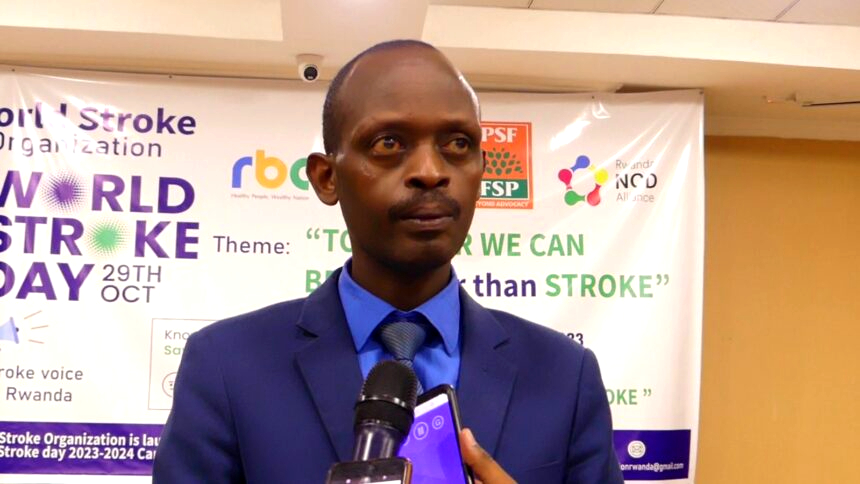
For PSF, the private-sector members, staying fit is not just personal discipline—it is an economic imperative.
A strong body fuels strong productivity, and productivity is the quiet engine that drives a country forward, according to health sector experts at PSF Rwanda Health Program.
The PSF says that investing in workforce health delivers a triple return; healthier people, more resilient businesses, and sustained economic growth, proving that health spending is not a cost but a strategic investment in national prosperity.
According to the Health Investment Charter, championed by the WHO Regional Office for Africa, evidence shows that investing in the health sector generates significant economic benefits, with studies estimating a return of up to nine dollars for every dollar invested in the health workforce program.
The writer (Leon Pierre RUSANGANWA) is a Health Program Coordinator at PSF, and Program Advisor at Rwanda NGOs Forum on HIV/AIDS and Health Promotion