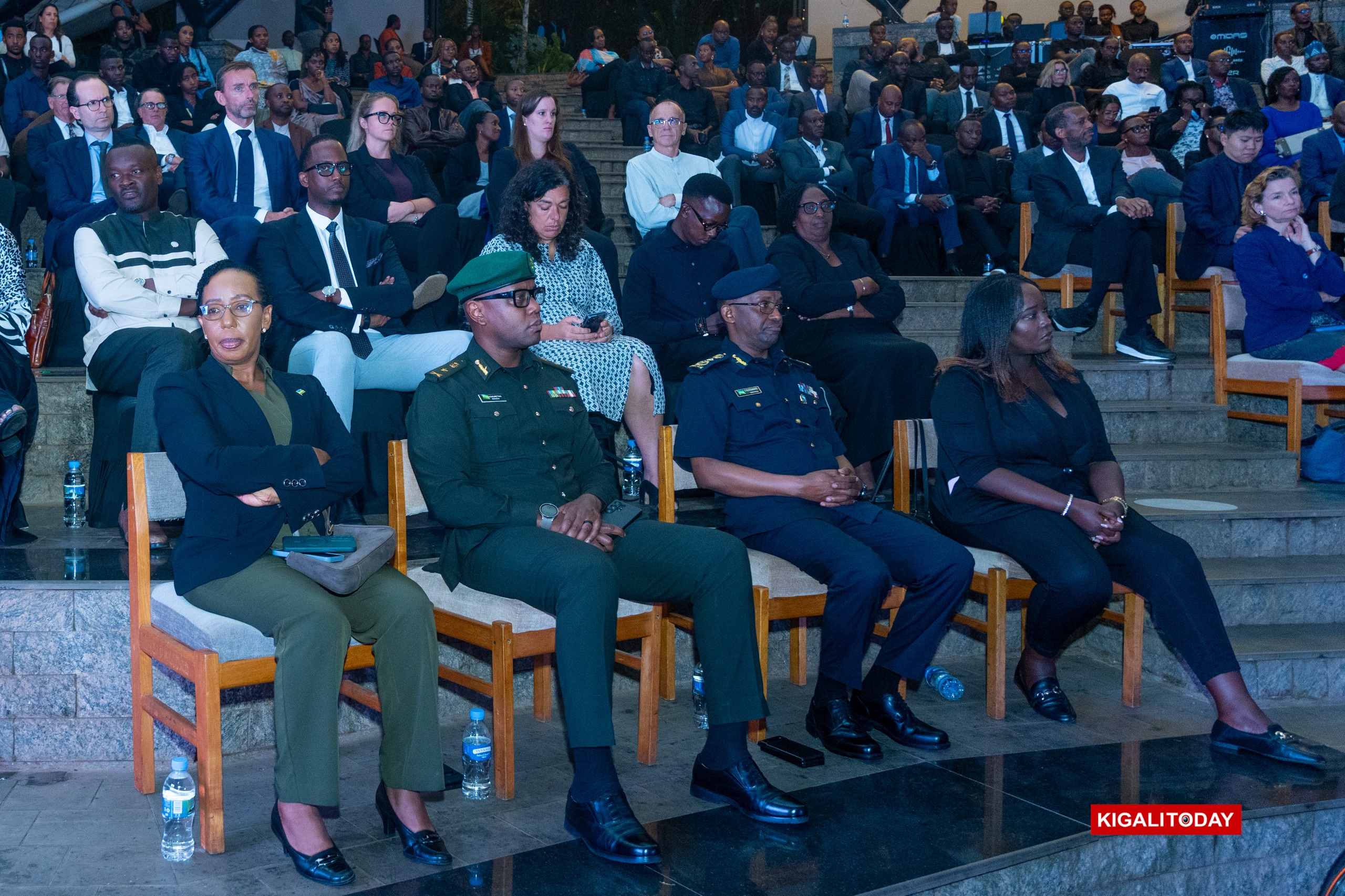




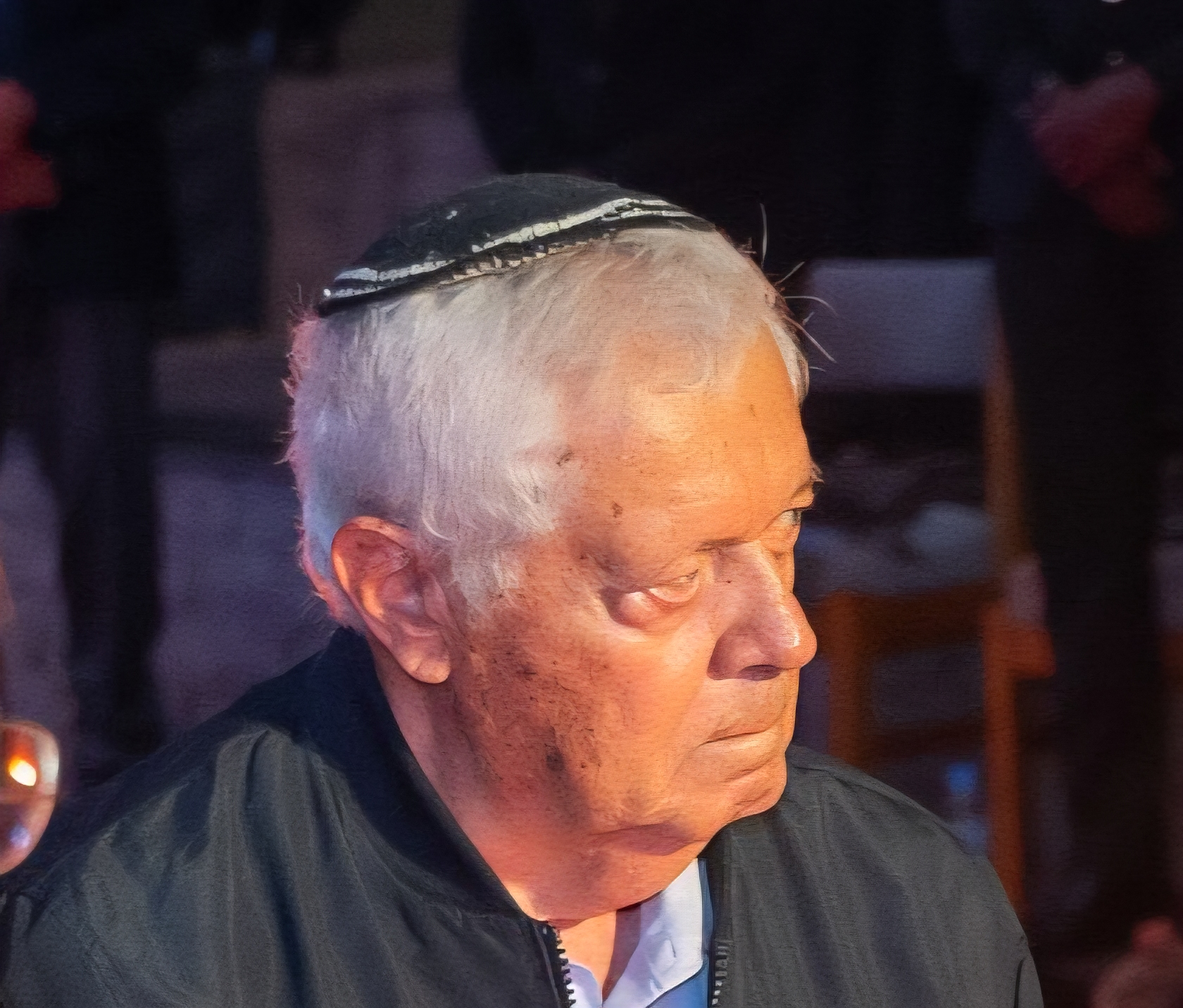
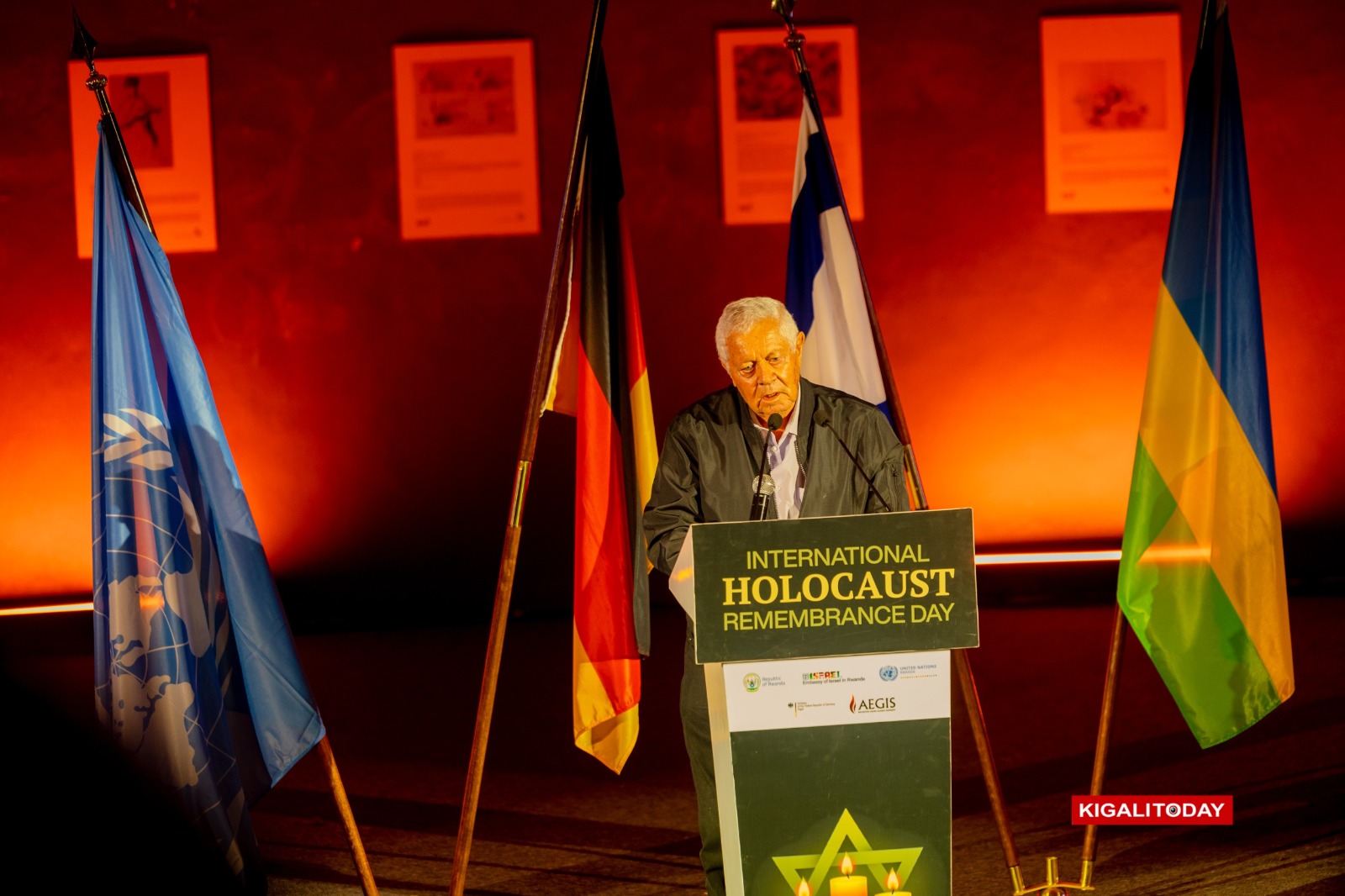
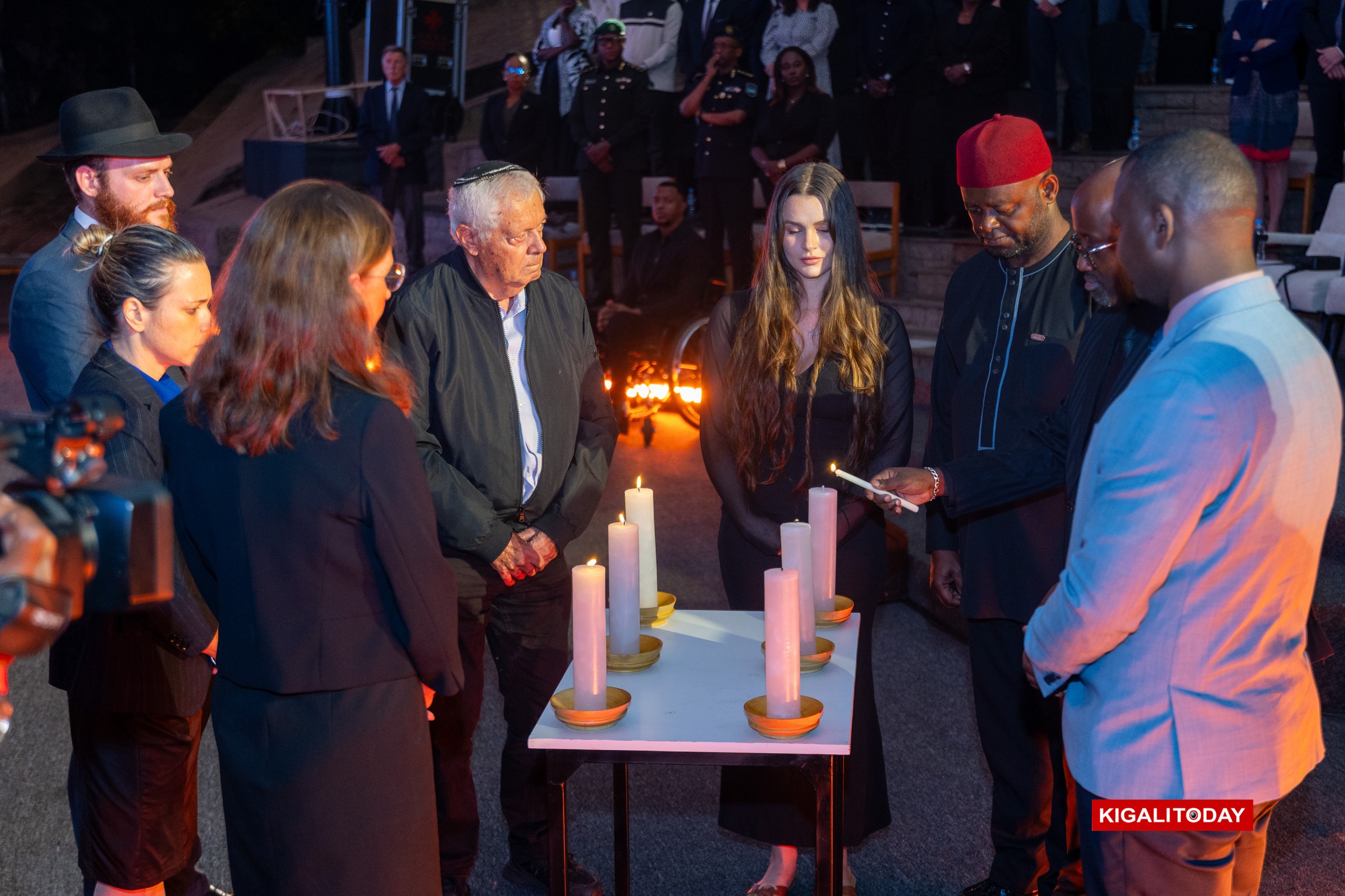
At the Kigali Genocide Memorial, as the world marked the 81st International Holocaust Remembrance Day, Lyonell Fliss stood quietly before the audience, carrying with him a lifetime of memory. He was there not only as a survivor of the Holocaust, but as a man who still inhabits the body of the frightened child he once was.
“Eighty-one years have passed,” he told those gathered, “but the Holocaust is still present in my body and in my memory.” Time, he explained, has not erased what was etched into him at six years old—an age when memory is not stored in words or logic, but in fear, sensation, and instinct.
For Fliss, surviving the Holocaust means living with memories formed before childhood had fully begun. Survivors, he reminded the audience, are not only witnesses to history; they are children whose lives were permanently shaped by violence, hatred, and loss before they were old enough to understand them.
Fliss was six years old when the Holocaust unfolded around him. At that age, he explains, memory does not function only through thought, but through sensation, fear, and instinct. Holocaust survivors, he reminds the audience, are not only witnesses—they are children shaped forever by what they lived through.
The Holocaust, he said simply, was born of antisemitism: a hatred that mutated into a grotesque ideology and culminated in what the Nazis called the “Final Solution.”
Fliss’s story begins in Romania.
Romania, Fliss recalled, was not a backward or uncivilized place. It was a cradle of culture and civilization—home to universities, theaters, conferences, churches, and prestigious schools. Yet it became the setting for some of the most brutal massacres of the Holocaust.
On June 29, 1941, more than 16,000 Jewish people were murdered in a single day. They were shot in the streets, killed near police stations, thrown into rivers. Neighbors killed neighbors—by the thousands.
For Fliss, this reality shattered a dangerous illusion: that education, culture, and civilization automatically produce humanity. On the contrary, he noted, many educated people helped poison young minds, particularly in universities, turning students into antisemites and criminals.
Among survivors, that Sunday has a special name. And Fliss remembers it clearly.
His family was at home when the sounds began—shouting, gunfire, screaming, crying in the streets. His mother immediately sensed danger. She ordered her children to hide under the bed.
“Don’t speak. Don’t cough. Don’t sneeze. Don’t move.”
For a six-year-old, it felt like a deadly version of hide-and-seek. Soon, heavy blows struck the door. When it did not open, a man returned with an axe and smashed it in. He did not notice the children hiding beneath the bed. He stole food and left.
Then came the sound of boots—many boots—on the stairs and in the corridors. Voices followed, in a language Fliss did not understand. He assumed they were German soldiers. Only days earlier, when German troops had entered the town as Romania’s allies, he had admired them: young, confident men in spotless uniforms, with shiny weapons and unfamiliar vehicles.
At that age, he did not yet understand who they were.
The soldiers ransacked the home and dragged the family outside. It was a miracle, Fliss said, that they were not shot immediately. As they were forced down the stairs, his mother fell and was badly injured—her kneecap broken, blood everywhere. His father and young Lyonell tried to help her.
Once again, they were spared—for reasons they never understood.
They were marched through streets soaked in blood and littered with bodies, toward the police station—an execution site. As they walked, the child’s arms grew too tired to remain raised. They fell to his sides.
A soldier behind them shouted orders. His mother translated: “Lift the child’s arms or we will shoot.”
Fliss did not understand what “shoot” meant. To him, shooting was a game children played with their fingers.
He turned to the soldier and tried to explain that his arms were tired.
The soldier’s rifle:
His parents screamed in terror. At the last moment, his mother lifted one of his arms and his father the other, holding them up as they continued marching—his parents supporting him on either side.
That image, Fliss said, has stayed with him his entire life.
At the police station, they saw piles of bodies. His mother immediately understood what would happen next. She approached a young Romanian officer, knelt before him, kissed his hand, and pleaded:
“Take me and my husband if you must—but save this child. Take him with you. Let him live.”
That man, Fliss said, risked his own life. Quietly, he led the family away—against the current of people being marched to their deaths. Because of that single act of courage, they survived.
Later, an order came from the central government: women and children were permitted to return home. The men were not.
Most were tortured and murdered. Many were packed into sealed cattle cars—turned into mobile gas chambers—where they died of suffocation, thirst, and madness.
“These are not stories I read in books,” Fliss told the audience. “These are my memories—seen through the eyes of a six-year-old child.”
That Sunday, he said, changed him forever. He learned that what appears powerful and impressive can be evil, and that what seems ordinary—a single human being—can be an angel.
That day, he lost his childhood innocence.
Today, as hatred, antisemitism, and mass violence resurface across the world, Fliss issued a warning drawn from lived experience: nothing is guaranteed, nothing is safe, when hatred is allowed to grow.
“This,” he said simply, “is why I tell my story.”