



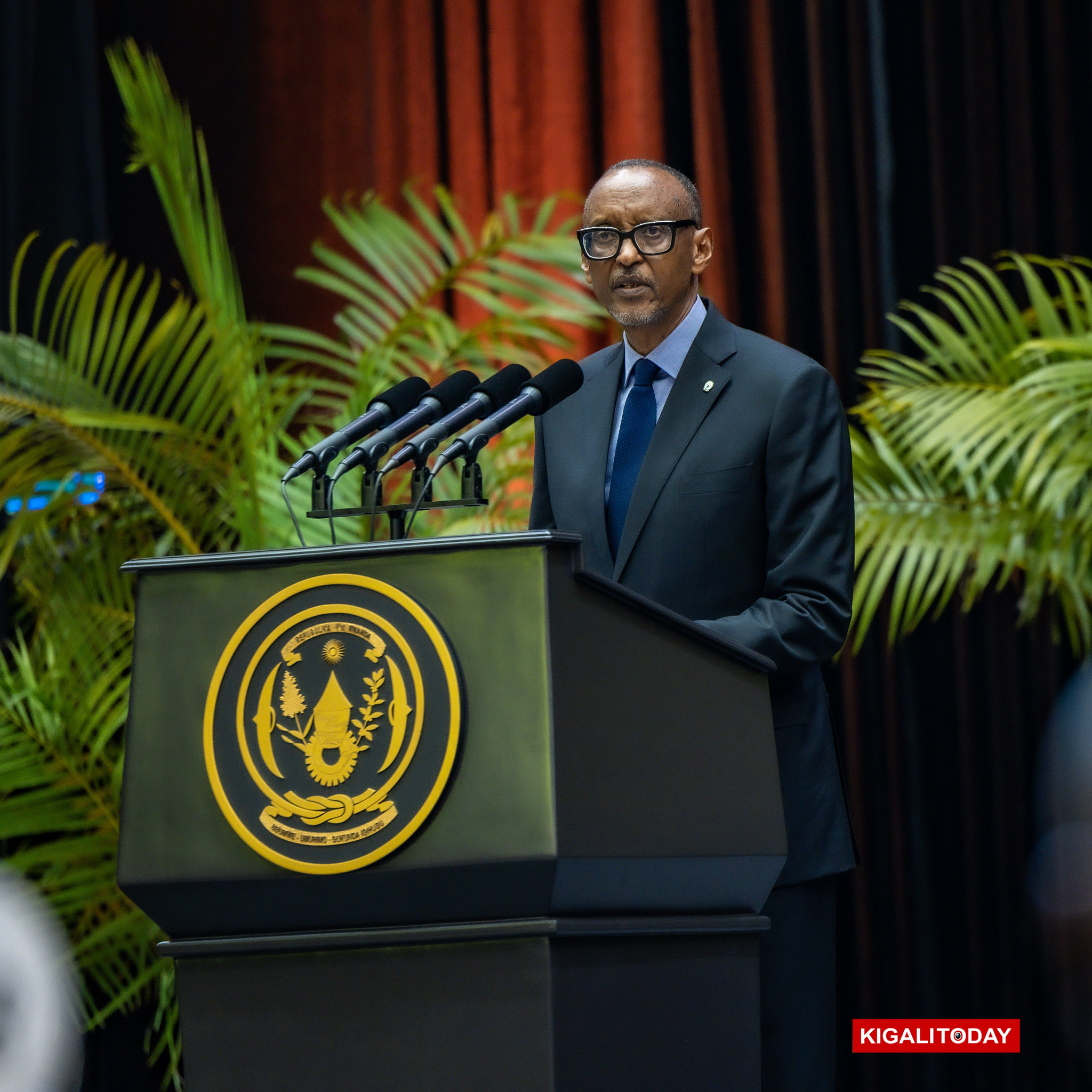
President Paul Kagame addressing the Diplomatic Dinner on Friday night
In a reflective section of his address to diplomats on Friday, President Paul Kagame questioned the criteria by which countries and leaders are judged internationally, suggesting that perceptions about religion and wealth sometimes shape how nations like Rwanda are treated on the global stage.
Speaking to ambassadors, high commissioners and representatives of international organizations in Kigali, Kagame shared a series of personal reflections that departed from the security and geopolitical themes that dominated most of his remarks.
He described conversations — both real and imagined — in which he said critics suggested he was “not Christian enough” and that Rwanda itself was “not wealthy enough,” assertions he said highlighted the kinds of judgments smaller countries sometimes face.
“In some of those moments, people told me: Paul, you are not Christian enough,” Kagame said, recounting one such exchange.
Kagame said he responded by questioning what such a standard meant and why it should determine how a country or leader is viewed.
“What is enough? How enough do you want me to be Christian?” he said.
MORE PHOTOS FROM THE DIPLOMATIC DINNER
The president pointed out that his own background is rooted in a Christian upbringing, noting that his parents were deeply involved in the church and even shared part of their limited income with it.
“I’m called Paul,” he said. “My parents were very good Christians. They used to share part of their limited wealth with the church.”
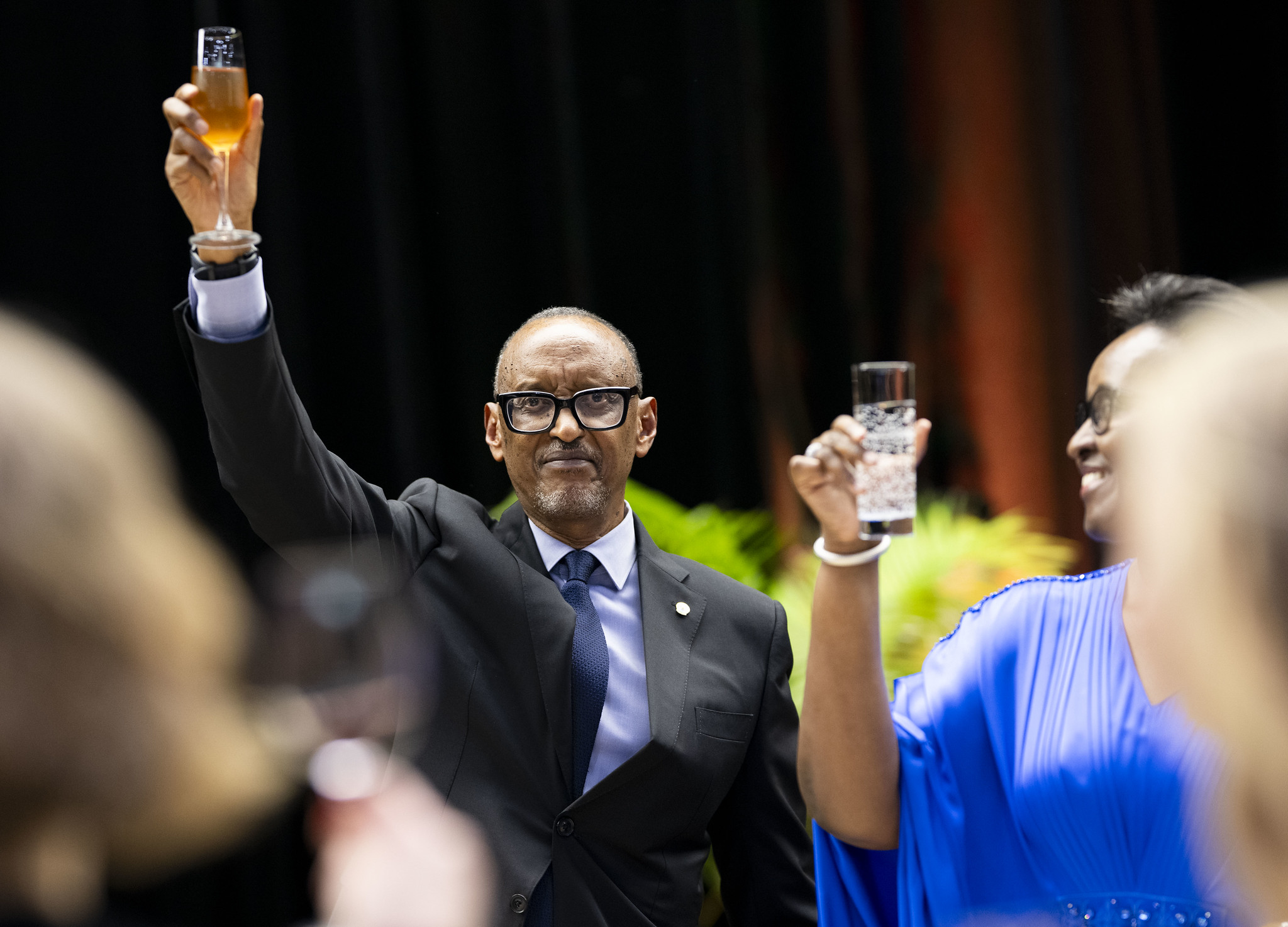
President Kagame and First Lady share a Toast with their guests
He said such personal history made the criticism puzzling, but added that he never claimed to be a religious preacher, explaining that his responsibilities as a political leader were different.
“I cannot claim to be a preacher, because that’s not the responsibility God assigned me,” Kagame said.
At the same time, Kagame criticized what he described as hypocrisy among some people who publicly present themselves as deeply religious while engaging in contradictory behavior.
“I have seen people who claim to be that level of Christian that I am not,” he said, adding that some publicly promote religious devotion but privately consult witch doctors or engage in practices that contradict their beliefs.
For Kagame, such contradictions raised broader questions about how individuals and societies measure moral credibility.
“There are other measures you can use to test the value of people,” he said.
He said the discussion about religion often shifted into another critique — that Rwanda, as a country, is not wealthy enough.
“Your country, Rwanda, is not wealthy enough,” Kagame said he had been told in another conversation.
According to Kagame, such arguments suggested that countries without large natural resources or major economic power were sometimes treated as less important or less legitimate on the world stage.
He said Rwanda lacks some of the resources that global powers often value, such as vast mineral deposits or forests.
“You don’t have enough of the resources the world needs — minerals, forests, all kinds of things,” he said, describing the criticism.
But Kagame questioned whether lacking such resources should be seen as a fault or a reason for marginalizing a country.
“Do I also have to face penalties for not being wealthy enough?” he asked.
He said the argument left him wondering what exactly countries like Rwanda were expected to do differently in order to meet such expectations.
“What do people do to become wealthy that I didn’t do that constitutes an offense?” he said.
For Kagame, the juxtaposition of those criticisms — that he was “not Christian enough” and that Rwanda was “not wealthy enough” — illustrated how arbitrary standards can sometimes shape international perceptions.
“First I was told I was not Christian enough. Second, I’m being told I’m not wealthy enough,” he said.
He suggested that such judgments can influence how some countries respond to Rwanda or view its policies.
But he also said Rwanda does not need validation based on those criteria.
“I wish I didn’t get attention from such people,” Kagame said, adding that less attention from critics might actually be beneficial.
“If you pay less attention to me, maybe it is better for me and maybe better for you,” he added.
Kagame concluded the reflection by suggesting that individuals and nations should focus less on meeting external expectations and more on being authentic about their values and responsibilities.
“No pretense,” he said. “Everyone should be what they want to be.”
The remarks formed one of the most personal segments of the president’s speech, offering insight into how he views the way Rwanda is sometimes perceived internationally, beyond the geopolitical and security debates that dominated much of his address.
