



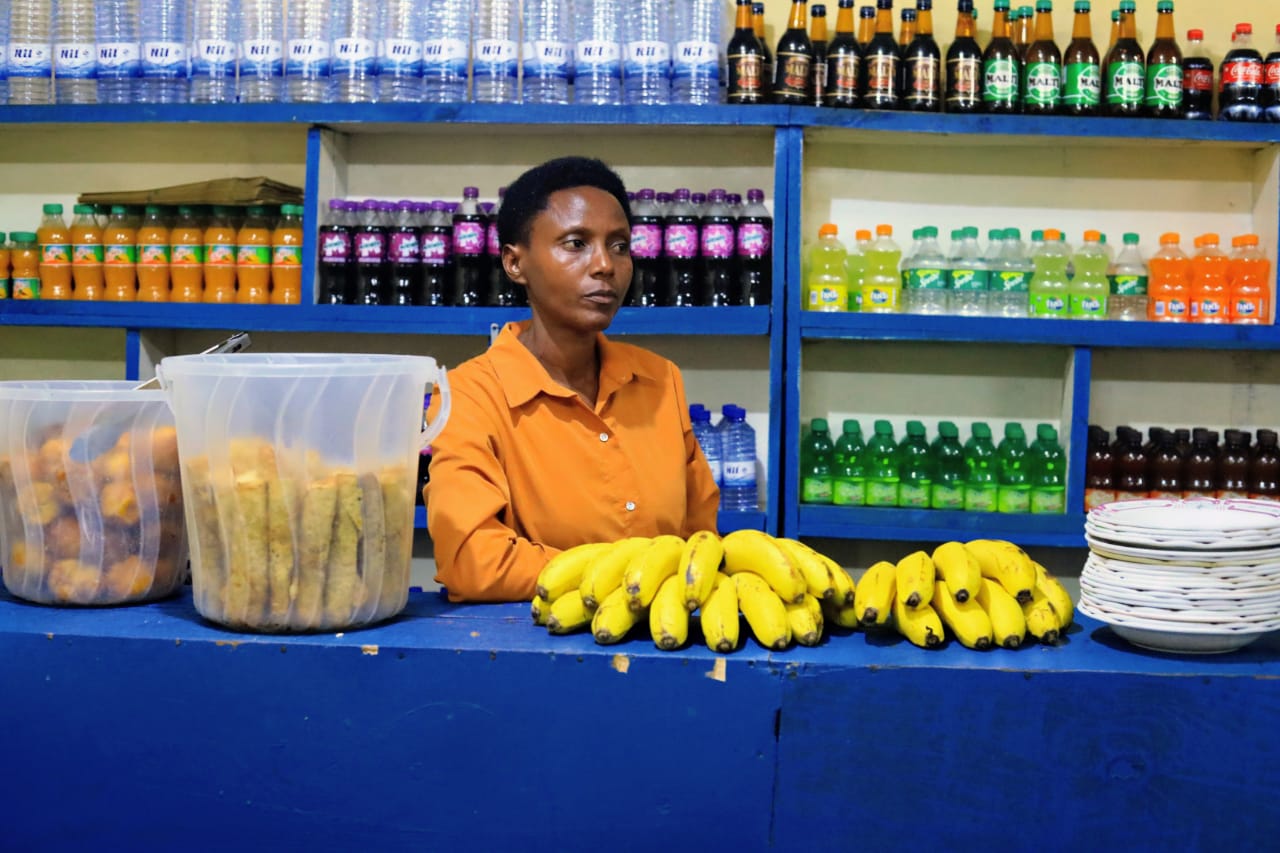
Evelyne Mukamana says that periodic profit-sharing enables members of her business group to cover school fees, clothing, and medical care.
KARONGI, Rwanda — In the narrow, bustling corridors of the Kiziba refugee camp, the scent of stewing meat and spices marks a shift from the traditional image of humanitarian dependency. Here, five women are rewriting the narrative of displacement, one meal at a time.
What began as a solution to a logistical hurdle has evolved into Best Future Women Company Ltd, a thriving restaurant that has transformed its founders from aid recipients into employers.
From Savings Groups to Scaling Up
The venture was born of necessity. Founders noticed that laborers and humanitarian staff within the camp often traveled two hours round-trip just to find a midday meal.
“We noticed that some people spent nearly two hours going back home just to eat. We thought it would be easier if they could find meals here and only return home after finishing their work,” said Aline Nyirarukundo, one of the founding partners.
The financial bridge from idea to reality was built through local “tontines,” or informal savings groups. The five women pooled an initial investment of Rwf 1 million, contributing Rwf 200,000 each. Today, the business is valued at approximately Rwf 3 million, supporting three permanent employees and additional temporary staff as demand dictates.
A Pathway to Self-Reliance
For the women involved, the dividends are measured in more than just Rwandan Francs; they are measured in dignity. In a landscape where direct food aid has largely been replaced by cash transfers, the ability to generate a surplus is the difference between subsistence and stability.
Evelyne Mukamana, the group’s leader, noted that periodic profit-sharing enables members to cover school fees, clothing, and medical care. “Before starting this business, our lives were much harder,” Mukamana said. “Now I can support my children, buy livestock, and pay for medical care when they fall sick.”
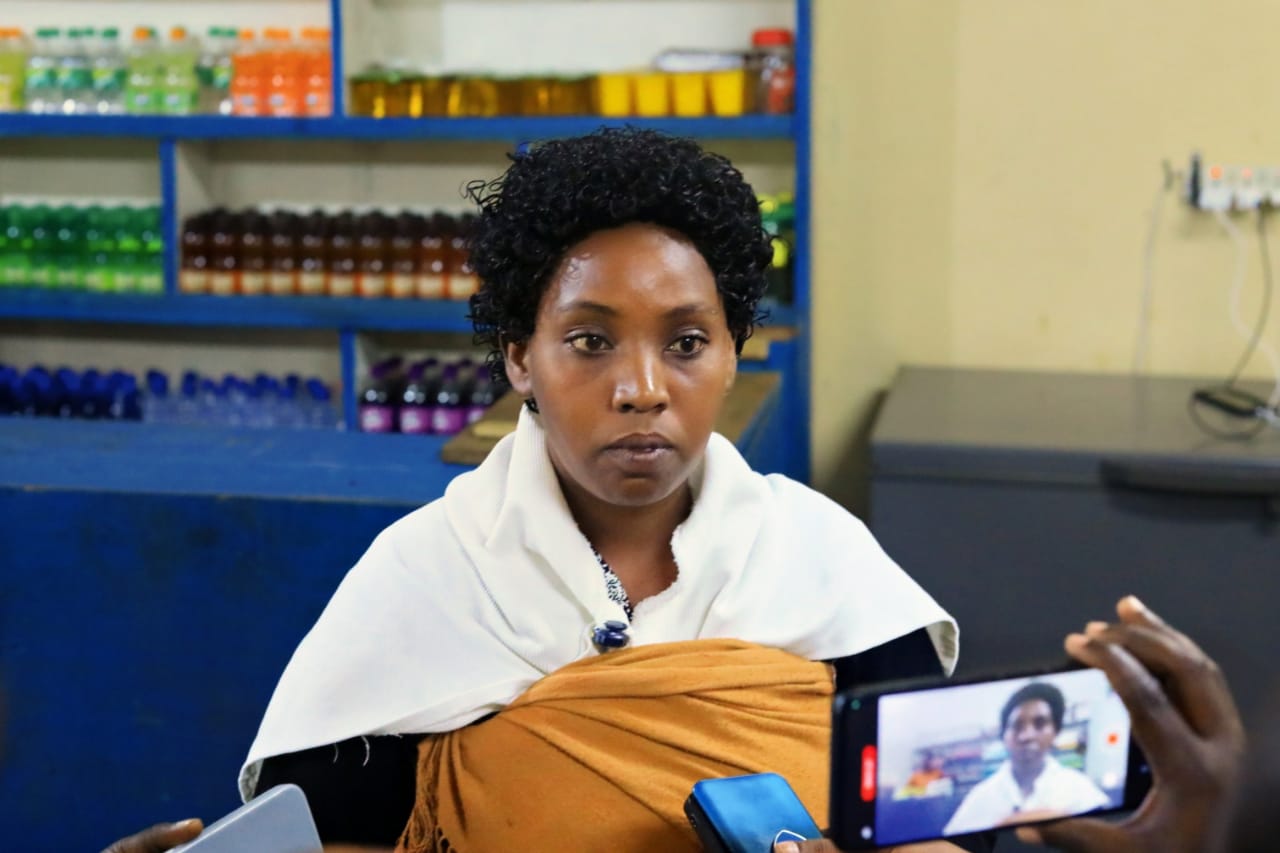
Aline Nyirarukundo, one of the founding partners says that the motivation to establish a restaurant was triggered by the fact that some people spent nearly two hours going back home to have lunch
The Rwandan Model
The success of Best Future Women Ltd is a byproduct of Rwanda’s specific approach to displacement. Unlike many host nations that restrict refugees to camps with limited right to work, Rwanda allows its more than 37,000 residents—primarily from the Democratic Republic of Congo and Burundi—to move freely and start businesses.
Gonzague Kayigire, who oversees refugee programs at the Ministry in charge of Emergency Management (MINEMA), suggests this integration is intentional. “Allowing refugees to run businesses helps them support each other. Assistance is often provided in the form of money, which means people need markets where they can buy what they need,” Kayigire explained.
Looking Ahead
As Kiziba enters its third decade of existence, the focus has shifted from emergency relief to long-term resilience. The women of Best Future are already eyeing their next move: investing in industrial catering equipment for rental.
For Nyirarukundo, the restaurant is a standing rebuttal to stereotypes regarding refugee capability. “Many people think women should limit themselves, but women are capable. I can take care of my household, support my family and still run a business. What matters most is having the courage to start.”
Their progress and ambition mirror a broader evolution taking place across refugee communities in Rwanda. Over the years, the country has increasingly emphasized policies that encourage self-reliance, allowing refugees to move freely, engage in trade and establish businesses within and beyond the camps.
This approach has gradually transformed refugee settlements from spaces defined primarily by aid distribution into communities where entrepreneurship, small-scale commerce and vocational activities are steadily emerging.
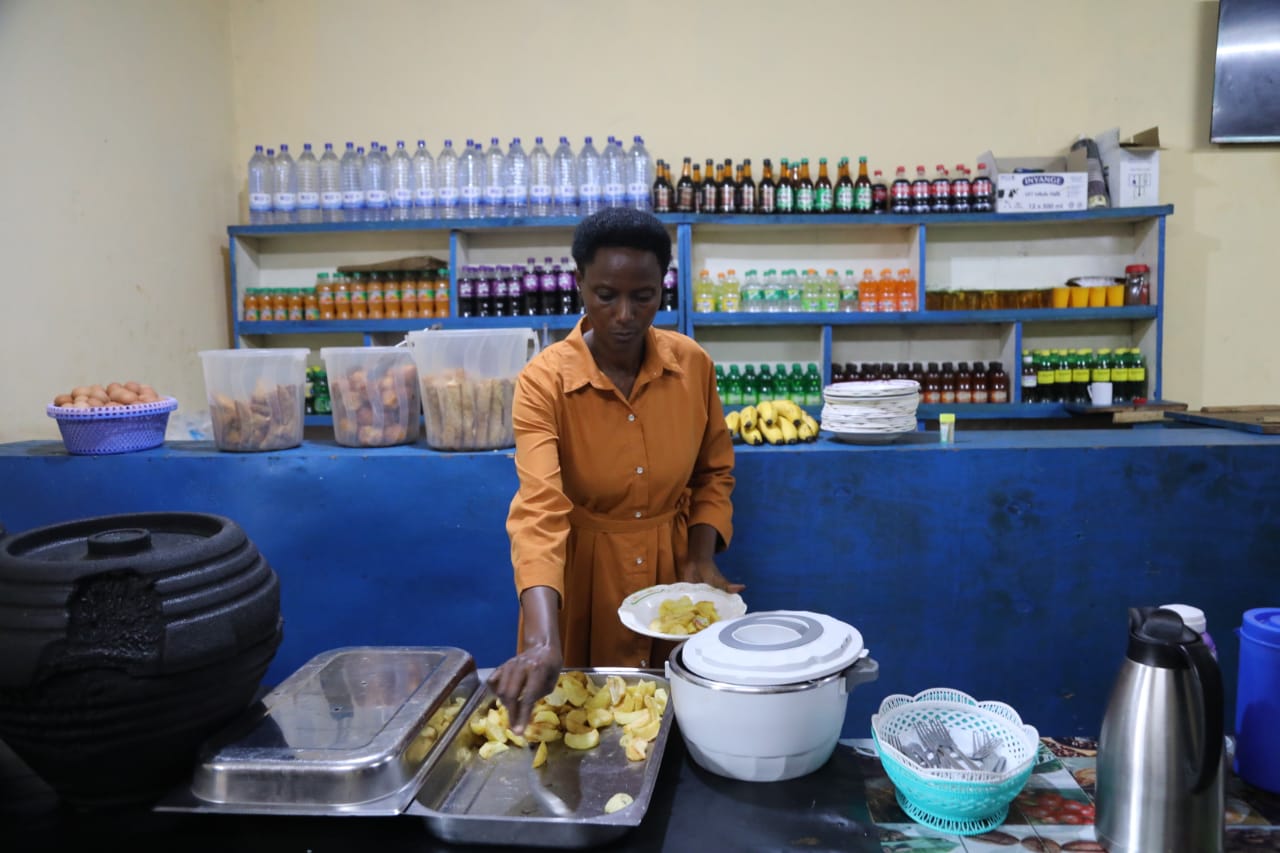
The women of Best Future are already eyeing their next move: investing in industrial catering equipment for rental.
Across camps such as Kiziba, Mahama, Kigeme and Gihembe, small markets, tailoring shops, farms and restaurants are becoming common sights. For many displaced families, these ventures offer a path to stability and dignity, complementing humanitarian assistance that has increasingly shifted toward cash-based support.
The ability to generate income, however modest, helps families cover essential needs such as school fees, healthcare and daily household expenses.
While challenges remain and durable solutions such as voluntary repatriation or resettlement continue to be pursued, in places like Kiziba, the quiet hum of small businesses is gradually reshaping the narrative of displacement.