




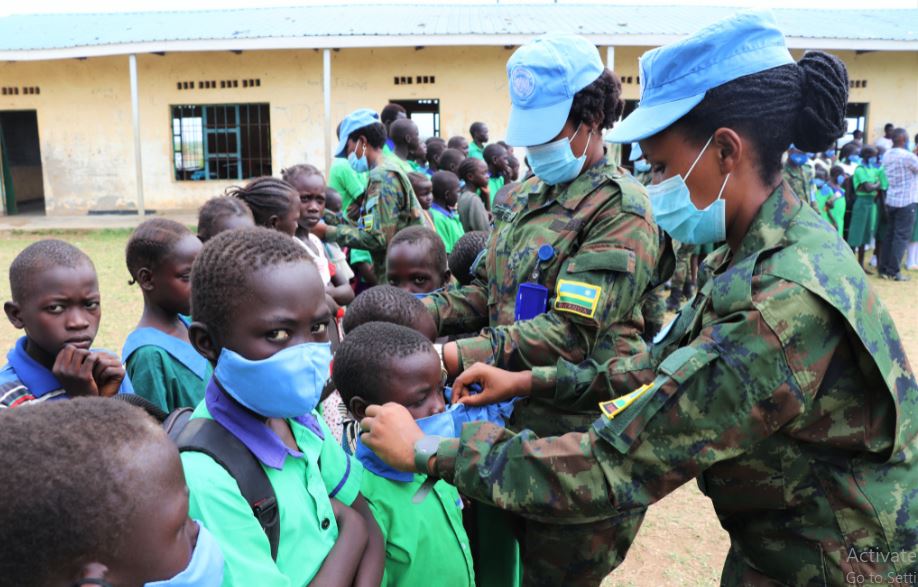
RDF has made life return to areas that had been abandoned to insurgents in different regions
The decision by the United States to impose sanctions on the Rwanda Defence Force (RDF) represents a serious escalation in already fragile regional diplomacy.
While Washington frames the move as necessary to support peace in eastern Democratic Republic of the Congo, the broader implications deserve closer scrutiny.
Sanctions are powerful tools. But they are blunt instruments. And when directed at a national military institution that has been central both to domestic stability and international peacekeeping, they risk producing consequences far beyond their intended aim.
For more than two decades, the RDF has been one of Africa’s most active and disciplined contributors to peace support operations. Rwandan troops have deployed under United Nations mandates in South Sudan and the Central African Republic.
In Mozambique’s Cabo Delgado province, RDF forces were credited with stabilizing insurgent-held areas, reopening towns, and allowing displaced civilians to return home.
These deployments were not symbolic. In several instances, they helped prevent further territorial collapse and protected vulnerable communities in environments where other forces had struggled to operate effectively.
Sanctioning such an institution raises a fundamental question: how should the international community weigh a country’s global security contributions against contested allegations in a complex regional conflict?
Rwanda’s security doctrine cannot be separated from its history. Since the 1994 Genocide against the Tutsi, the country has built its national defense posture around a single imperative: never again allow existential threats to organize unchecked along its borders.
Kigali has long argued that armed groups operating in eastern Congo include elements with genocidal ideology and that regional instability poses direct security risks.
Whether one agrees with Rwanda’s assessment or not, that perspective has shaped its policies for three decades.
The country’s internal stability since 1994 — in a region frequently marked by coups and insurgencies — is often cited by its leadership as evidence of the effectiveness of its preventive security model.
Unverified criticism argues that cross-border involvement exacerbates instability in eastern Congo.
Yet the conflict in that region predates the current tensions and involves a dense web of local militias, weak state institutions, historical grievances and competition over mineral resources. Reducing that complexity to the actions of a single neighboring state risks oversimplifying a deeply rooted crisis.
There is also a wider strategic consideration. Rwanda has played a visible role in global conversations about mass atrocity prevention.
The memory of international inaction in 1994 helped shape the evolution of the “Responsibility to Protect” norm, which calls for proactive measures when civilian populations face grave threats. Kigali has consistently maintained that security cannot be reactive; it must anticipate risk.
Sanctions imposed without parallel progress on disarmament of armed groups in eastern Congo may reinforce the conviction in Kigali that preventive security concerns are being dismissed rather than addressed.
Accountability and transparency are essential for durable peace. But punitive measures aimed at an entire national defense institution carry risks. They can complicate peacekeeping logistics, strain diplomatic channels and harden positions at a moment when regional dialogue remains fragile.
If the objective is de-escalation and long-term stability in the Great Lakes region, then sustained diplomacy — addressing militia demobilization, border security guarantees and political reform within eastern Congo — may ultimately prove more effective than financial restrictions alone.
The challenge for international policymakers is to balance pressure with pathways to resolution. Sanctions can signal disapproval.
But peace in one of Africa’s most complex conflict zones will require more than signals. It will require engagement with the full security realities facing all parties.
In a region where history has taught the costs of inaction, the goal should be preventing renewed instability — not inadvertently deepening it.
