



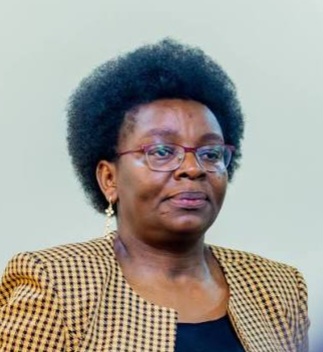
Victoire Ingabire Umuhoza is one of those claiming to be advancing “opposition politics” yet negating the 1994 genocide against the Tutsi
As genocide denial continues to resurface in different forms, mainly coming from genocidaires and their descendants, it is important to separate two issues that are too often deliberately conflated: political opposition and historical truth.
Genocide commemoration is not synonymous with President Paul Kagame, nor is it an extension of the Rwandan government. It is about remembering over one million Tutsi who were systematically murdered in 1994 by the genocidal regime. That truth stands independently beyond politics, beyond leadership, and beyond debate.
Criticizing a government or its leaders is a legitimate exercise of democratic freedom. People have the right to question policies, challenge authority, and express dissent. This applies to Rwanda as it does anywhere else. However, genocide denial is not criticism. It is a distortion.
To deny or minimize the Genocide against the Tutsi is not just an intellectual failure; it is a moral one. It dehumanizes victims, dishonors survivors, and desecrates the memory of those who were lost. It crosses a line from political discourse into historical revisionism and hate.
One of the most troubling trends is how some individuals are labeled as “opposition” by outsiders, as though that label justifies all positions they take. Opposition should not mean opposing reality itself.
Being in opposition doesn’t give people the right to deny or distort undeniable facts about the 1994 Genocide against the Tutsi. When individuals deny genocide or spread conspiracy theories, they are not standing against a government; they are undermining the dignity of an entire people. Framing such rhetoric as legitimate political opposition risks normalizing dangerous falsehoods.
Another recurring pattern is the selective use of genocide survivors in political narratives. Some self-styled opposition and descendants of genocidaires highlight cases where survivors face legal consequences, portraying these situations as evidence of persecution by the government of Rwanda.
This argument deliberately ignores a fundamental principle, ‘no one is above the law’. Justice systems, by definition, apply to all citizens equally.
Being a survivor does not guarantee immunity from accountability, just as it does not justify being used as a political tool to spread misinformation. Misrepresenting such cases only fuels confusion and deepens division.
Genocide denial today often hides behind more subtle language, coded statements, selective storytelling, and conspiracy theories. These narratives are amplified by individuals who assume they can act without consequence.
But denial, regardless of how it is framed, remains dangerous. It erodes truth, distorts history, and risks enabling the very ideologies that led to genocide in the first place.
The 1994 genocide against the Tutsi is not up for debate. More than one million Tutsi were killed in a coordinated and systematic genocide. This is a documented historical fact, recognized globally.
It must remain separate from political disagreements or contemporary debates about governance. Blurring that line is not only intellectually dishonest, it is deeply disrespectful.
There is a clear and necessary distinction between political criticism and genocide denial. One strengthens democratic discourse; the other undermines humanity itself.
Rwanda’s history demands clarity, honesty, and responsibility. You can oppose a government. You can criticize a leader; however, you cannot rewrite or minimize a genocide. That line must remain firm for the sake of truth, for the dignity of victims, and for the future of collective memory.
