


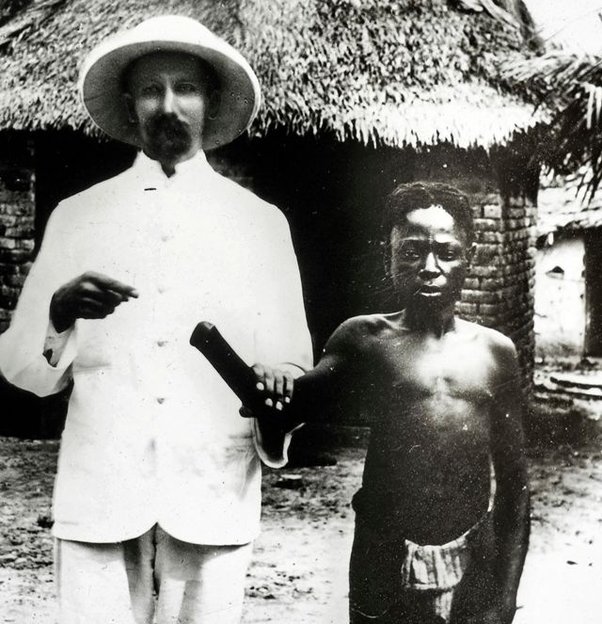
The brutality is unimaginable
Belgium’s Foreign Minister and Deputy Prime Minister, Maxime Prévot, has abruptly rediscovered compassion for the Congolese people.
Speaking after the EU Foreign Affairs Council on January 31, 2026, Prévot lamented what he called the “forgotten conflict” in eastern Democratic Republic of Congo (DRC), painting a grim picture of widespread sexual violence.
To underline his sense of urgency, Prévot claimed that “a woman is raped every four minutes, and a child every thirty minutes in eastern Democratic Republic of Congo.”
He went on to demand swift European Union action, calling for mediation, and the supposed withdrawal of AFC-M23 rebels, and the reopening of Goma airport for humanitarian access—carefully insisting it would not be used for military purposes.
How noble. How urgent. How convenient.
But before Belgium appoints itself the moral guardian of the Congolese people, there is a question it must answer—one it has spent more than a century avoiding.
Belgium’s Unburied Past
Belgium is not a neutral observer in Congo’s suffering. It is one of its principal architects.
From 1885 to 1908, King Leopold II ruled the Congo Free State as his personal possession. This was not colonial administration—it was industrial-scale exploitation driven by profit, enforced through terror.
The Congolese population was forced into brutal labor systems to extract rubber and ivory for European markets.
Failure to meet quotas was met with collective punishment. Communities were destroyed. Families were torn apart. Violence was not incidental—it was policy.
Leopold’s colonial machinery relied on fear to function. Forced labor, hostage-taking, starvation, public punishment, and mass killings were routine. Entire villages were wiped out to “set examples.”
The colonial army enforced compliance with ruthless efficiency, turning human lives into accounting tools of extraction.
This was not chaos. It was organization.
Not excess. It was design.
A Demographic Catastrophe
The result was one of the greatest human catastrophes of the modern era.
Scholars estimate that up to 10 million Congolese died during Leopold’s rule—through direct violence, disease, starvation, and social collapse directly linked to the colonial economy. The population of the territory was effectively halved in just over two decades.
This was not an unfortunate chapter.
It was a genocide carried out for profit.
Leopold cloaked his enterprise in the language of civilization and humanitarianism—claims strikingly similar to today’s rhetoric about “forgotten conflicts” and “urgent concern.”
That is what makes Prévot’s moral alarm so jarring.
Belgium has never fully confronted its responsibility. Apologies have been partial. Accountability symbolic. Reparations nonexistent. Looted artifacts still sit in European museums. The structural damage inflicted on Congo’s institutions and social fabric remains unresolved.
And yet Belgium speaks—again—as if history began yesterday.
What Real Responsibility Would Look Like
If Belgium truly cared about the Congolese people, it would begin with honesty, not lectures.
It would:
- Fully acknowledge the scale and intent of its colonial crimes
- Support meaningful reparations and restitution
- Return stolen cultural heritage
- Stop positioning itself as Africa’s moral referee
- Recognize how colonial extraction laid the groundwork for Congo’s enduring instability
Without this reckoning, Belgium’s calls for intervention sound less like concern and more like recycled paternalism.
Congo Does Not Need Belgium’s Sudden Love
The Congolese people do not need selective empathy or late-stage outrage. They need justice, truth, and accountability.
Until Belgium confronts its own past without euphemism or evasion, its moral posturing over eastern Congo will remain hollow. History has a long memory—even when politicians pretend otherwise.
And hypocrisy, especially of this magnitude, deserves to be called out—loudly.
