



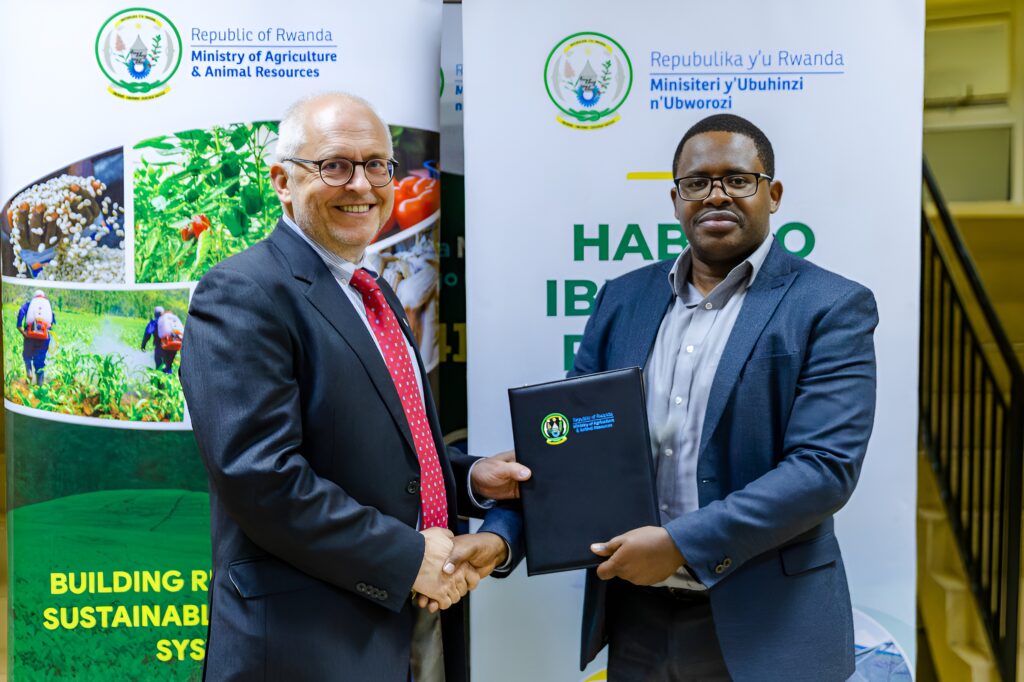
Professor Toby Peters, Executive Director of ACES, and Dr. Olivier Kamana, Permanent Secretary of MINAGRI, following the signing of the Memorandum of Understanding (MoU).
KIGALI — For years, Rwanda’s farmers have faced a paradox of inadequate storage and logistics, leading to losses when production is high. Perishable produce—especially fruits and vegetables, but also other agricultural products with a short shelf life—often spoil before reaching markets, forcing farmers to sell quickly at lower prices or risk total losses.
A new initiative aimed at reversing this trend is now underway, transforming dormant infrastructure into a climate-resilient cold-chain network with integrated storage, processing, and market systems.
Through a new partnership between the Ministry of Agriculture and Animal Resources (MINAGRI) and the Africa Centre of Excellence for Sustainable Cooling and Cold-Chain (ACES), government seeks to modernize its agricultural sector with this nationwide cold-chain packhouse network.
The goal is to significantly reduce post-harvest losses, link farmers to markets, and open opportunities for value addition and exports.
Modern Packhouses Across Key Farming Zones
The initiative will rehabilitate and operationalize 10 cold-room packhouses strategically located in Rulindo, Rwamagana, Gatsibo, Ngoma, Nyanza, and Karongi districts. Together, they will serve over 400,000 smallholder households and link thousands of production sites to temperature-controlled processing, storage, and aggregation facilities.
Each packhouse will include processing areas with cold storage, solar-powered energy systems, and aggregation infrastructure.
By maintaining produce at ideal conditions from farm to market, the network will extend shelf life, reduce losses, and improve the quality of Rwanda’s horticultural products. Farmers will gain better bargaining power and access to domestic and international markets.
Rwanda’s fruit and vegetable sector spans nearly 495,000 hectares across more than 13,000 production sites, producing over 2.3 million metric tonnes annually. The packhouse network will cover 185,447 hectares, directly serving 4,811 production sites, roughly 36% of the total addressable market.
Beyond immediate production, the project is designed to attract green investments, strengthen off-taker partnerships, and support agribusiness growth. It also aligns with Rwanda’s broader development goals, including Vision 2050, NST2, and PSTA5, which prioritize green growth, job creation, and rural economic transformation.
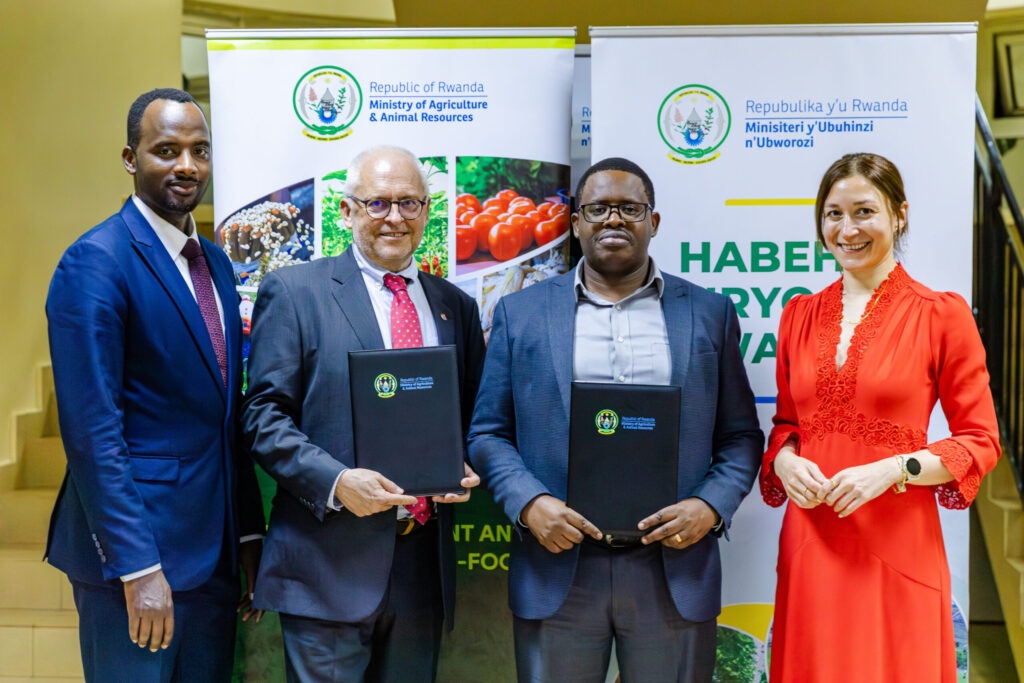
(L-R) Issa Nkurunziza, UNEP – U4E, Clean Cooling Network Africa Lead; Professor Toby Peters, Executive Director of ACES; Dr. Olivier Kamana, Permanent Secretary of MINAGRI; and Dr. Leyla Sayin, Director of the Executive Office, ACES. Following the signing of the MoU, the team engaged in strategic discussions on the next phase of implementation.
Strategic Leap for Agriculture and Exports
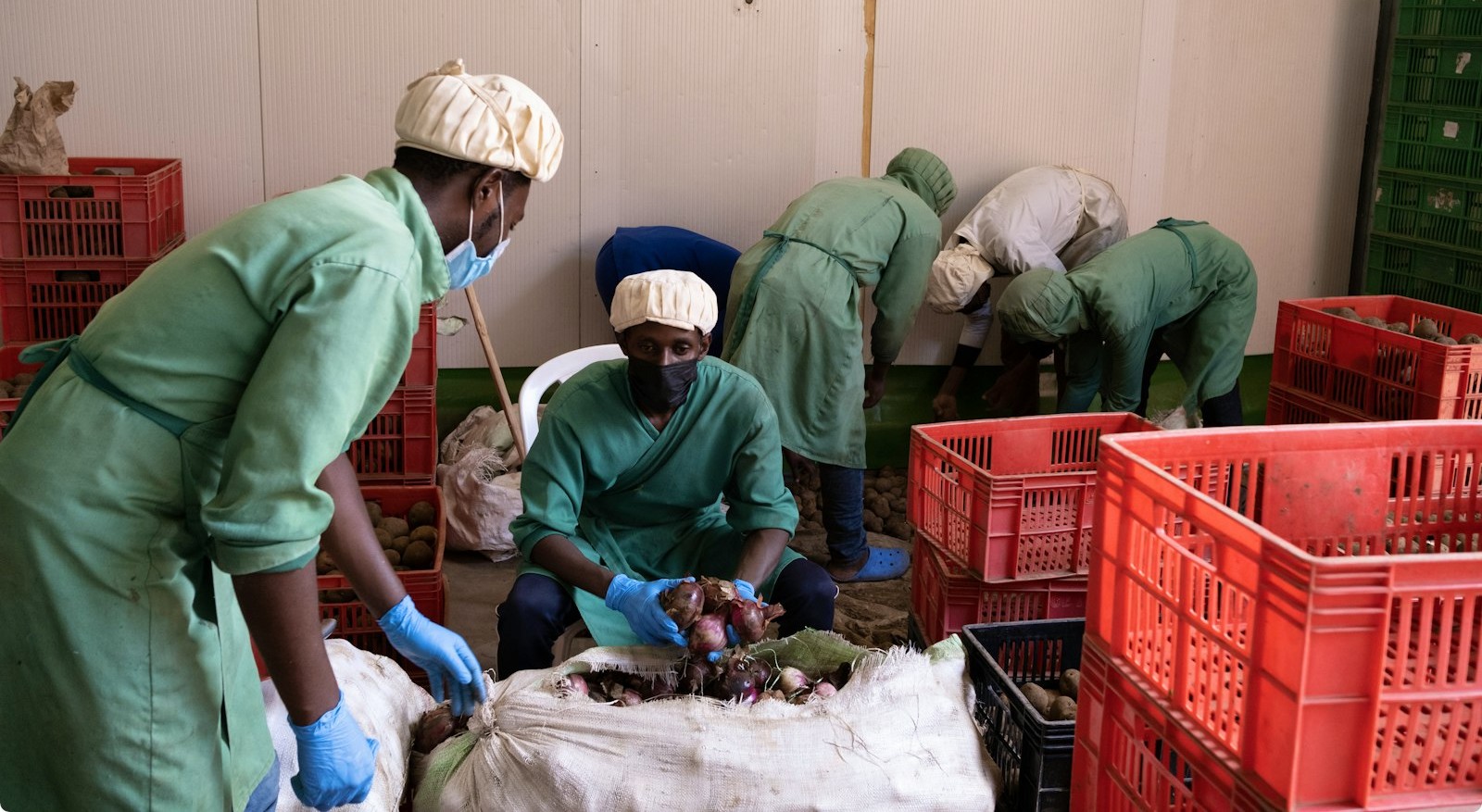
Rwandan workers removing onions from a sack in depot. Inadequate storage causes perishable crops to spoil before reaching markets forcing farmers to sell quickly at lower prices or risk total losses.
The cold-chain initiative goes beyond infrastructure, establishing integrated food corridors linking farmers to premium domestic buyers, exporters, and regional markets. Facilities will operate under HACCP and Rwanda GAP standards, progressing toward Global G.A.P. certification to meet international food safety requirements.
The Packhouses will also serve as training and innovation hubs, equipping farmers and agribusinesses with modern post-harvest handling skills and logistics expertise.
Dr. Olivier Kamana, Permanent Secretary at MINAGRI, described the project as “a step toward a modern, competitive, market-oriented agriculture sector that connects farmers to reliable markets while creating opportunities for value addition, exports, and rural incomes.”
Professor Toby Peters, Executive Director of ACES, added: “By turning underutilized infrastructure into integrated food systems, Rwanda demonstrates how climate-smart agriculture can deliver both economic and environmental returns.”
As the network rolls out nationwide, the initiative is expected to reduce post-harvest losses at scale, strengthen market access, and position Rwanda’s agriculture sector to compete more effectively in regional and global markets—while improving food security and increasing incomes for farmers.