The silence of August…..
My journey with the story of Rwanda did not begin with a press card, a digital recorder, or a polished notebook.
It began in the heavy, haunting heat of August 1994. I was a child of the diaspora, returning to a home I had only heard of in stories, stepping into a landscape that felt suspended between the world of the living and the world of the dead.
The air in Rwanda that August was unlike any air I have breathed since. It was thick and carried a scent that a child’s mind could not fully name but a human soul could never forget.
I remember the silence—a silence so heavy it rang in the ears. Across the thousand hills, the earth was still scarred, and the bodies were still fresh. They lay in the valleys, in the doorways of abandoned homes, and along the red-dust roads where people had once walked to market.
To see such sights at a tender age is to have the reality of the 1994 Genocide against the Tutsi etched into your soul before you even have the words to describe it.
Those images became the foundation of my consciousness. They were not “news” to me. They were the first true things I knew about the world. I saw the aftermath of a darkness so total that it seemed impossible the sun would ever feel warm again.
The calling of the pen
It was from this profound, haunting background that I eventually found my path. In 2005, I officially began my career as a journalist. By then, the bodies had been buried with dignity, the grass had grown over the scars of the earth, and a new Rwanda was beginning to breathe.
But beneath the surface of the new buildings and the paved roads, the stories were waiting.
I realized then that my life’s work would not be about politics or economics in the traditional sense. It would be to sit at the forefront of our history, recording and writing about the darkest moments in human life so that the world could never look away.
I became a writer because I knew that if these stories were not captured, the silence of August 1994 would eventually swallow the truth.
Since 2005, I have traveled to the furthest corners of our country. I have taken my notebook to the rocky heights of the North, the deep forests of the West, and the marshlands of the East.
I have met you—the widows who held onto hope when there was nothing left to grasp. I have met you—the widowers who rebuilt homes from heaps of rubble.
I have met you—the orphans who were then as young as under 20s, facing a world that had been emptied of its color. I have met you—the orphans who had prematurely become parents to your siblings. I have met you!
The haunting journey
When you sit down for these interviews, especially as the #Kwibuka period approaches, the atmosphere changes. There is a specific kind of stillness—a “holy fear” that settles between the writer and the survivor.
As a journalist, you feel the immense weight of every word. You are not just looking for a headline. You are asking a human being to reach back into the fire and bring out a piece of the flame.
The feeling is one of deep, trembling responsibility. My heart often races against my ribs as I watch a survivor’s eyes cloud over with a memory that is thirty-two years old, yet feels like it happened thirty-two minutes ago.
You find yourself holding your breath, terrified that a clumsy question or a loud exhale might break the fragile bridge of their courage.
It takes incredible strength to grasp every single horrific story—to document the details of the churches where sanctuary became a trap, the schools where laughter turned to screams, and the hillsides where neighbors turned into hunters.
As someone who saw the “fresh bodies” of 1994, I do not just hear these stories; I see them. They are not just ink on paper. They are a part of my own history. I carry these stories with me every single day.
The fate of the long-term witness
People often see the finished article—the professional layout, the emotional photograph, the clear sentences. They see the journalist as a detached observer. But to report on such tragedy for twenty-one years is to live a double life.
You walk through the beautiful, modern streets of Kigali, seeing the skyscrapers and the clean boulevards, but your mind sees an invisible map of what lies beneath.
You pass a beautiful grove of trees and remember a testimony from 2008 about what happened in that very spot. You see a grandmother walking with her grandchild and you wonder which of the stories in your filing cabinet belongs to her.
The “fate” of a journalist who carries these stories is a quiet, heavy one. You become a custodian of shadows. There is a specific kind of exhaustion that comes with this work—a “soul-weariness” that sleep cannot cure.
I have spent countless nights staring at the ceiling, replaying the voices of survivors—mostly, during the 100-day commemoration period. I hear the crack in a man’s voice as he describes the last time he saw his brother. I see the way a woman’s hands shake when she mentions the name of her village. I see an elderly, lonely genocide survivor, narrating to me, that long and sour journey he walked and left to be named “the museum Tutsi” after Tutsi in his entire village were massacred.
With all this, as a journalist, you become a living library of a nation’s pain. You absorb the trauma you document. Sometimes, the weight feels like it will break the pen.
But in that darkness, a slow and steady transformation occurs. The more I wrote about your pain, the more I began to be healed by your light.
The haunting and the healing
There is a haunting that happens when you sit with a survivor who was an orphan under twenty back in 2005. At that time, their eyes were hollow. They spoke of a future they could not see. They were living in a gray world.
As a writer, I recorded that grayness. I wrote about their struggle to return to school. I wrote about their loneliness during the holidays, and the crushing weight of being the “head of the household” at age fifteen.
Those stories haunted me because they felt unfinished. I would go home to my own family and feel a sharp pang of guilt for the simple comforts I possessed.
But then, the years passed. 2005 became 2015, and 2015 became 2025. My career moved forward, but my connection to these stories remained. I began to see a miracle unfolding in the very people I had interviewed.
The orphan who had no shoes in 2005 was now a university graduate. The widow who could not speak without weeping was now leading a cooperative, teaching others how to farm and thrive. The “unspeakable” stories were being answered by “unbelievable” lives.
The miracle of resilience
As a human being who saw the “fresh bodies” of August 1994 and then spent twenty years documenting the survival that followed, I have reached a profound conclusion. The horror of the Genocide against the Tutsi was a total attempt to delete life. But the restoration I have witnessed is a total celebration of life.
What keeps me believing in resilience and finding life after a dark day, is your resilience, courage, forgiveness and determination to try and find a life.
I have watched the orphans I interviewed in my early career become parents themselves. I have seen them cradling a new generation—children who will never know the scent of August 1994, children who will grow up in a country that loves them.
I have seen those who were left with nothing become the most important people to the Rwandan society. They are our doctors, our leaders both in public and corporate organisations.
They are our entrepreneurs, and our visionaries. They are the ones building the schools and the hospitals. They are the ones proving, every single day, that light is more persistent than darkness.
A vow at #Kwibuka32
As we approach the 32nd commemoration on April 7, 2026, my role as a journalist feels more vital than ever. The stories I have collected since 2005 are not just archives; they are the fuel for our national soul.
To the survivors I have met in every corner of this country: Thank you for trusting me with your darkest moments. Thank you for allowing me to sit in your silence and record your tears.
You have taught me more about being a human being than any book or university course ever could. You taught me that forgiveness is not a sign of weakness, but the ultimate expression of power.
You taught me that bravery is not the absence of fear, but the decision to move forward while the fear is still there.
We honor your bravery now and forever. You are the reason I picked up the pen in 2005, and you are the reason I will never put it down.
Even when the stories haunt me, I am grateful for the haunting, because it means I am still feeling, still listening, and still witnessing the greatest comeback in human history.
Your lives are the ultimate victory over the killers of 1994. Every time you smile, every time you build, and every time you love, you are winning.
Keep strong and resilient as usual.
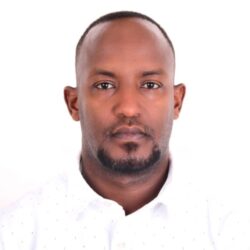
Dan Ngabonziza is the Managing Director, Kigali Today Ltd, the parent company of KT Press, KT Radio 96.7FM, KigaliToday.com (Kinyarwanda) and Kigali Today TV channel.