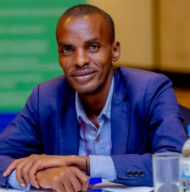



Jean-Damascène Bizimana
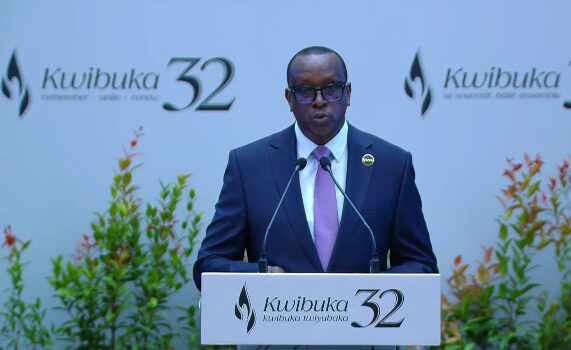
Jean-Damascène Bizimana, Rwanda’s Minister of National Unity and Civic Engagement (MINUBUMWE), has outlined historical evidence pointing to the central role of former President Juvénal Habyarimana in the planning and execution of the 1994 Genocide against the Tutsi.
Speaking during the 32nd commemoration week of the Genocide against the Tutsi—running from April 7 to April 13 and ushering in the 100 days of remembrance—Bizimana said the genocide was not spontaneous, but the result of a long-standing and well-documented plan.
He noted that although countries such as the United States, France, and Belgium have since acknowledged failures in their response and sought forgiveness, early warnings and credible reports pointing to preparations for mass violence were largely ignored.
According to Bizimana, propaganda was instead intensified, portraying Tutsis as enemies of the state and framing the Rwanda Patriotic Front (RPF) as a threat that needed to be eliminated.
He cited a January 15, 1990 report by the French ambassador to Rwanda, which indicated that Hutu civilians affiliated with the ruling MRND party had been trained to attack Tutsis, beginning in Kibirira and later spreading across the country.
Further evidence emerged in 1991, when French military attaché General Varret visited Rwanda and met Colonel Pierre-Célestin Rwagafilita, then head of the gendarmerie. During the meeting, Rwagafilita reportedly outlined a plan to exterminate Tutsis, stating that the army would carry out killings nationwide.
Bizimana also referenced testimony by Georges Martres, who served in Rwanda between 1989 and 1993. Martres later told the French Parliament that by 1990, the likelihood of genocide was already evident. He noted that senior military officials, including former army chief of staff General Déogratias Nsabimana and Colonel Serubuga, viewed the 1990 RPF attack as a pretext to begin killing Tutsis, creating widespread fear among the population.
The minister further highlighted the role of extremist political figures, including Léon Mugesera, who delivered inflammatory speeches inciting violence against Tutsis. At a 1992 rally in Ngororero, Mugesera called for the killing of Tutsi civilians—rhetoric that Bizimana said was later echoed by interim President Théodore Sindikubwabo in April 1994 to mobilise killings in Butare (now Huye District).
Bizimana emphasised that the roots of genocide ideology can be traced back to policies under Habyarimana’s leadership. He pointed to a political agenda introduced on August 1, 1973, which institutionalised ethnic divisions in governance and undermined national unity.
He also cited speeches and writings attributed to Habyarimana in 1973 that framed Tutsis as the source of Rwanda’s problems and reinforced ethnic-based leadership dominated by the Hutu majority.
The minister further noted that on April 28, 1991, Habyarimana chaired an MRND congress where he stressed ethnic unity among Hutus over national unity. This ideology, Bizimana said, laid the groundwork for extremist groups such as the Coalition pour la Défense de la République (CDR), founded in 1992 and led by Martin Bucyana. The CDR promoted the “Hutu Power” ideology and rejected coexistence with Tutsis.
During the Arusha peace negotiations in Tanzania, Bizimana said Habyarimana resisted reconciliation efforts. He cited tensions with Rwanda’s chief negotiator, Boniface Ngulinzira, whom Habyarimana criticised for pursuing peace agreements with the RPF.
Bizimana also highlighted the role of state-controlled media, particularly the notorious Radio Télévision Libre des Mille Collines (RTLM), which spread hate speech and incited violence. He said Habyarimana was directly involved in its establishment, including financing, recruitment, and ensuring its continued broadcast.
Additionally, the minister pointed to the distribution of weapons to militias, including more than 1,700 firearms at Gabiro military camp in 1991, as well as grenades and other rudimentary weapons, citing United Nations reports.
He added that government officials and military leaders openly supported plans to eliminate Tutsis. This included correspondence from Colonel Anatole Nsengiyumva, then head of military intelligence, who reportedly informed Habyarimana that the army was prepared to carry out the killings.
Bizimana further linked regional dynamics to the escalation of extremist ideology, noting that the assassination of Burundi’s President Melchior Ndadaye was used to justify intensified “Hutu Power” mobilisation in Rwanda.
He concluded by warning that genocide ideology remains a threat in the region, particularly in eastern Democratic Republic of Congo, where efforts to dismantle genocidal forces continue to face challenges.
“Thirty-two years on, the fight against genocide ideology is ongoing. Addressing it remains essential to sustaining unity, reconciliation, and long-term stability,” Bizimana said.