



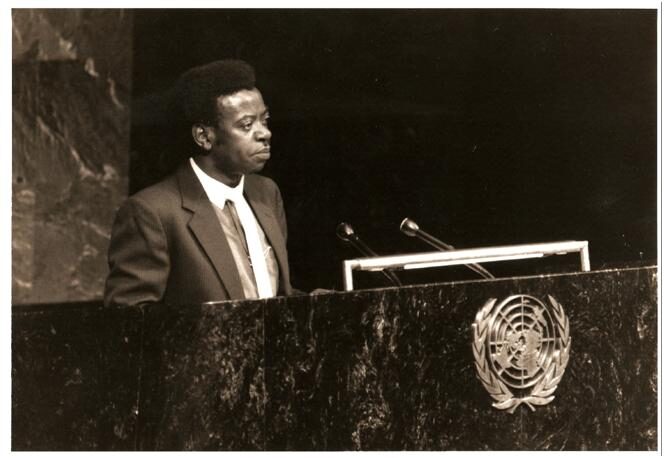
Mathieu Ngirumpatse was all-powerful president of the MRND, the ruling party before 1994. It laid foundation for what would happen, with its patron, President Juvénal Habyarimana providing the state cover
In 1994, Rwanda was engulfed in the Genocide against the Tutsi, a catastrophe that claimed more than one million Tutsi lives in just one hundred days.
Yet the plan and coordination of the killings were not accidental.
Beneath them lay years of preparation constructed through elite influence, calculated propaganda, and the steady conditioning of a population to accept violence as inevitable.
At the center of power stood dictator Juvénal Habyarimana and an inner circle known as the Akazu, closely associated with his wife, Agathe Kanziga Habyarimana. This tight network of relatives and loyalists operated behind formal institutions, shaping decisions and protecting extremist interests.
As negotiations in Arusha pushed for power-sharing with the Rwandan Patriotic Front, hardliners within this genocidal clique viewed compromise as betrayal. Moderate politicians were threatened, removed, and killed, narrowing the political space until only extremist voices remained dominant.
On the ground, militias were not waiting, they were being readied. The Interahamwe militias, tied to the ruling party- MRND, were deployed across the country with increasing coordination with the sole objective of wiping out all Tutsi.
Leaders such as Mathieu Ngirumpatse- president of the MRND spoke openly about their organization and reach, signaling a structure already in place. Testimonies and visual records from 1994 reveal how these militias operated with chilling precision.
Propaganda ensured that such brutality did not emerge in a vacuum. The magazine Kangura published material like the “Hutu Ten Commandments,” warning against any association with Tutsi and portraying them as enemies within. These ideas were repeated, reinforced, and normalized until they shaped everyday thinking.
The regime-sponsored mediums like radio stations carried this message even further. Radio Télévision Libre des Mille Collines- RTLM blended entertainment with incitement, reaching both ordinary citizens and elites.
Among its voices was Georges Ruggiu, a Belgian journalist whose broadcasts targeted educated listeners in French, urging participation in the genocide against the Tutsi.
Ruggiu who was convicted and sentenced by the International Criminal Tribunal for Rwanda- ICTR later admitted that his words were intended to incite the killing of Tutsi, acknowledging the deliberate role media played in mobilizing perpetrators.
Political rhetoric reinforced the same narrative. Léon Mugesera used speeches to depict Tutsi as traitors and existential threats, language that stripped them of belonging.
High level regime officials like Jean Kambanda who served as Prime Minister operated within a system that gave such narratives weight and direction.
By April 1994, nothing was improvised. The networks were built, the militias trained, positioned, and the minds of many prepared. When violence erupted, it moved with terrifying speed not because it was sudden, but because it had long been set in motion.
