



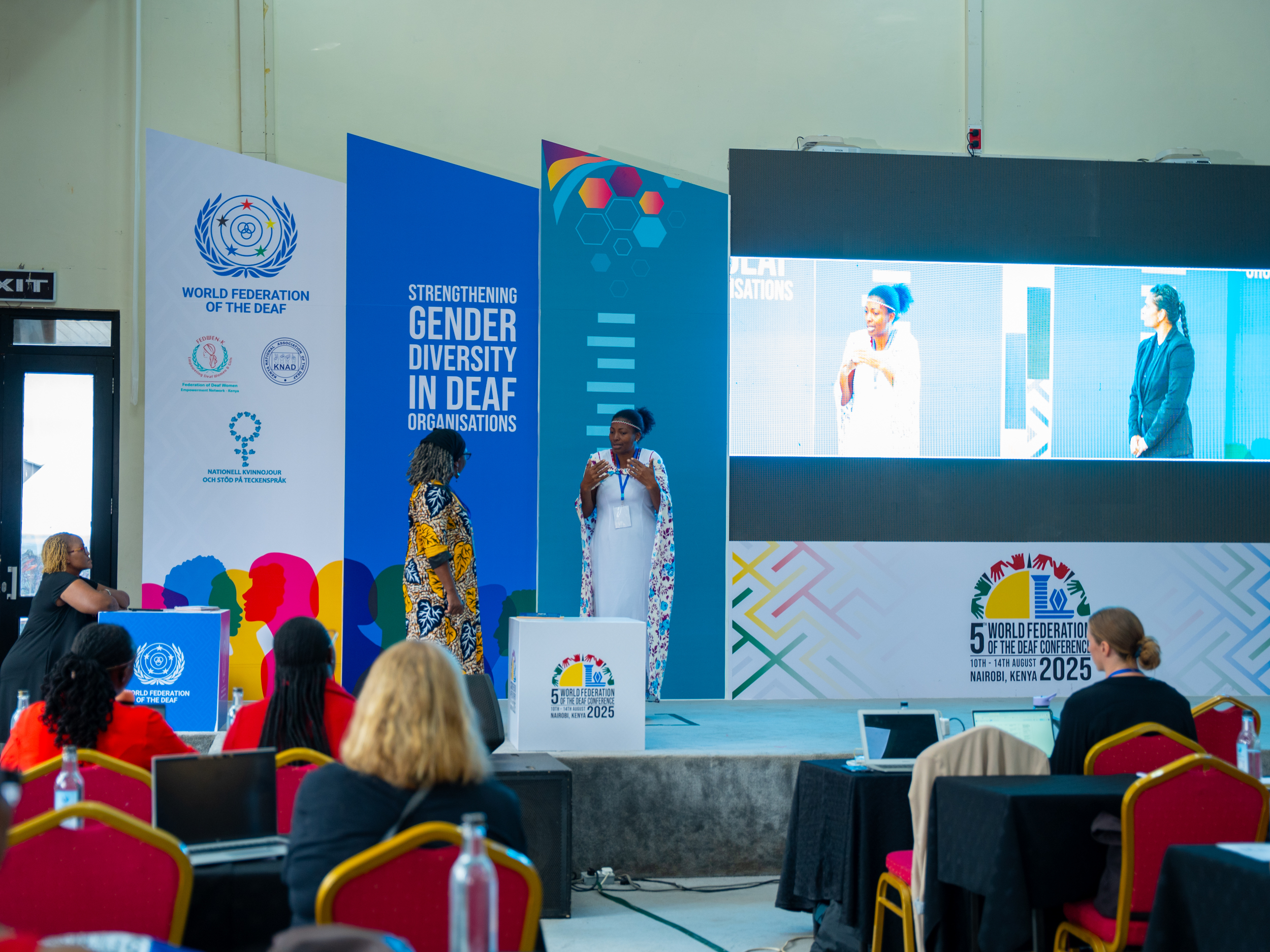
Strengthening Deaf organizations through dialogue on gender equality at the pre-conference
Parliament has done its part. On 4 August 2025, Rwanda passed a new Law Regulating Healthcare Services that lowers the age of consent for health care—including sexual and reproductive health—from 18 to 15 and sets modern rules for assisted reproductive technologies.
It is a landmark reform with a simple promise: young people should reach care when they need it. The question now is whether that promise will travel the last metre—from statute to consultation room—in a language patients actually understand.
Rwanda has strong delivery platforms to build on. The Isange One Stop Centre model operates nationwide, placing medical, psychosocial, police and legal support under one roof so survivors of gender-based violence do not have to retell their story across town.
Government and partners continue to audit and strengthen the network; in March 2024 the Gender Monitoring Office completed a service-delivery assessment to tighten coordination and remove bottlenecks. If interpreters are embedded at statement-taking and clinical exams—and video-remote support is available when distance is the barrier—cases will move faster and more fairly for Deaf survivors as well.
Education is also moving toward inclusion. The new Education Sector Strategic Plan (2024–2029) commits to resource rooms, teacher capacity, and supports that keep learners with disabilities inside the public system rather than beside it. That infrastructure works best when Rwandan Sign Language (RSL) appears with it—in timetables, classroom routines, and teacher training—so a lesson becomes legible to every pupil in the room.
There is, however, an unfinished legal thread. The UN Committee on the Rights of Persons with Disabilities has noted that sign language is not yet recognized as an official language under Rwandan law, and Deaf leaders continue to advocate for explicit recognition.
Recognition is not symbolic; it makes language access automatic in health, justice and education rather than reliant on heroism.
This is the seam of work the Federation of Deaf Women Empowerment Network Kenya (FEDWEN) knows well from regional practice. Our craft is the final mile: the minutes in which a clinician asks for consent, a survivor gives a statement, or a teacher frames a question.
In high-volume facilities, a Deaf “navigator” at the reception desk or adolescent corner keeps appointments from dissolving into confusion and makes follow-up routine.
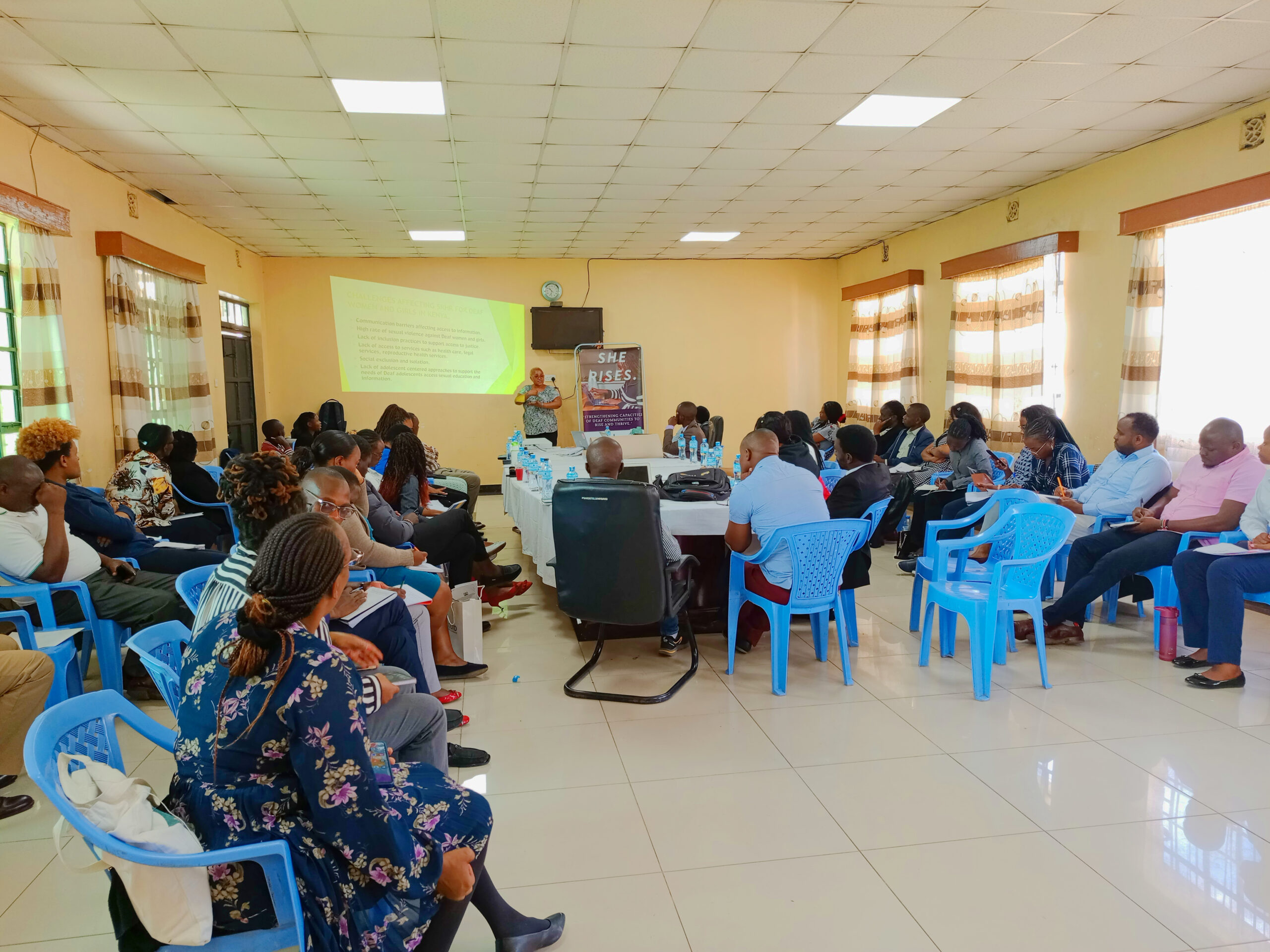
Training probation officers at Makadara Law Courts on Deaf mainstreaming for better access to justice
In GBV response, survivor accompaniment ensures that interpretation is present at the first interview and medical-legal exam, so timelines shorten and records don’t have to be repaired later. In school governance, preparing Deaf women to serve on committees turns access from an afterthought into a budget line—interpreters scheduled, bilingual materials printed, tablets for video-remote interpreting procured with the same predictability as blood-pressure cuffs.
Rwanda’s GBV system shows how this could look in practice. The Isange network already counts cases, services delivered, and referral timelines. Adding a light column for “interpreter present at statement-taking and exam” would make language visible without inventing new bureaucracy.
Hospital supervisors already check staffing and stock; noting whether RSL was used in triage, consent and discharge would tell managers where comprehension is improving adherence.
District education officers already log resource-room use; recording whether core subjects had interpreter coverage would help planners place people where demand actually sits. These are pencil-level steps that keep a large machine true.
Culture can move with administration. When national briefings and the evening news carry an RSL inset as a matter of craft, not courtesy, the public square teaches the standard that clinics and courts should keep.
Hand making Ok sign, Rwanda flag painted as symbol of best quality, positivity and success – isolated on white background
Rwanda already understands the power of consistent, system-wide messaging; this is the same instinct, applied to language. Schools can echo it with small rituals—teachers signing the first words they are about to speak, and accepting answers in RSL and in writing—so Deaf pupils are invited into the hour, not left beside it.
A note about sequence matters here. The 15-and-over consent provision will put more adolescents in consultation rooms on their own terms. For those encounters to be safe, private and effective, providers must be able to ask and answer in the language a young person lives in. That is not an optional flourish; it is how consent becomes real.
The Isange model’s integration across sectors is equally instructive: when communication is integrated, evidence strengthens and re-traumatization falls. In both settings, RSL is not decoration. It is the medium in which care and protection happen.
Where does FEDWEN-Kenya fit without turning this into a pitch? By sharing the unglamorous tools that make reforms stick. Interpreter workforce planning that matches shifts to peak demand.
Navigator playbooks for adolescent corners and GBV units. Board-readiness modules that equip Deaf women to ask practical questions about procurement and rostering. Lightweight dashboards that let district teams see, in their own data, where comprehension is lifting adherence and case progression.
We have used these pieces elsewhere in the region because they help institutions do what they already intend to do—only more reliably.
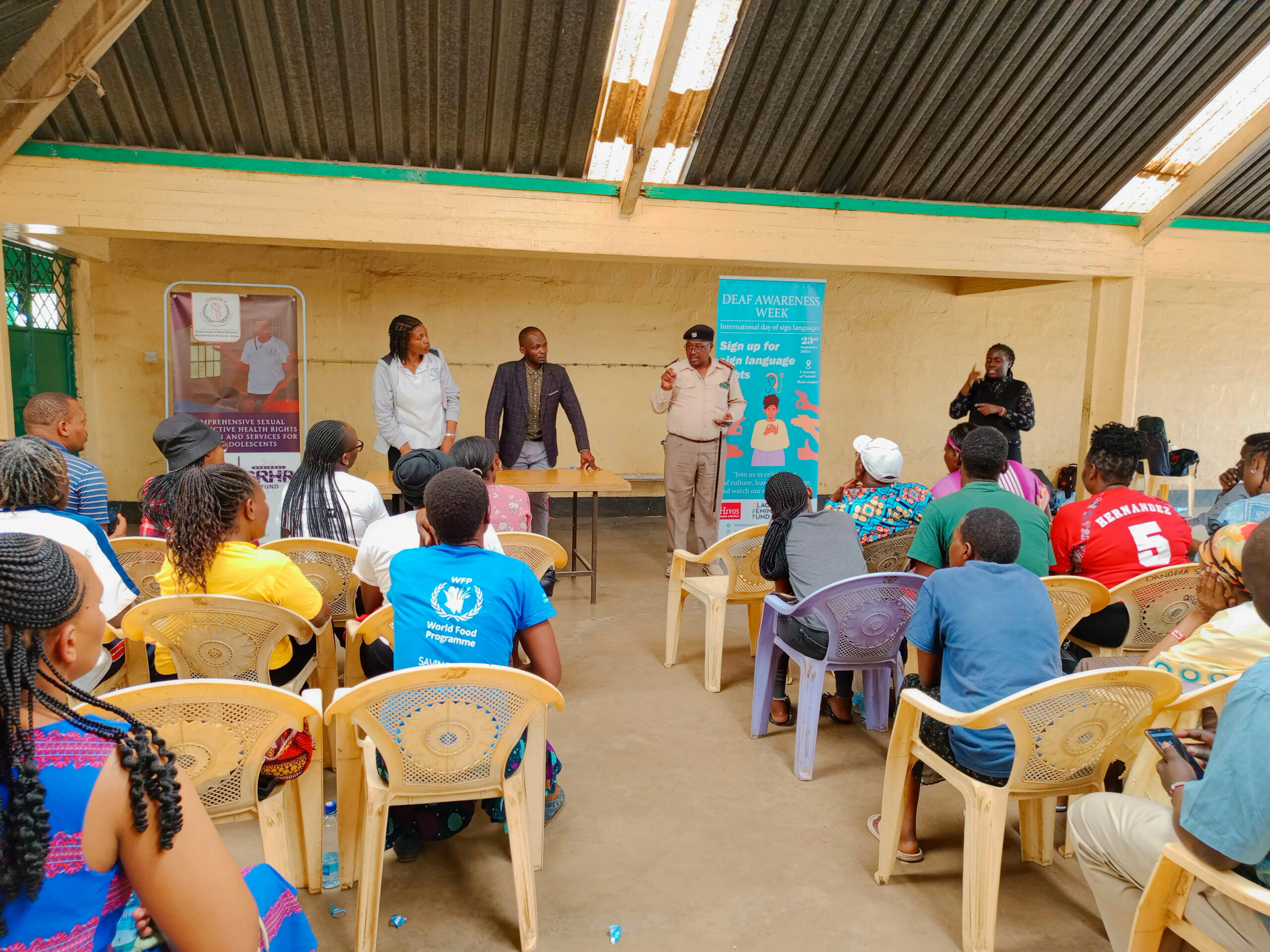
Bringing parents of Deaf children and local authorities together for grassroots training on inclusion and empowerment
Rwanda has momentum in law, service design and education. Recognizing RSL in legislation would lock that momentum into place. Until then, everyday practice can move ahead: book interpreters the way you book theatres; keep video-remote numbers on the wall; make “RSL present” a line on supervision notes and case files.
If you lead a hospital, a school, a newsroom or a justice unit and want to pressure-test your current routine, FEDWEN- Kenya can compare notes, share checklists and help you count what matters. The new consent law has opened the door. Rwandan Sign Language is how the room welcomes the person who walks through it.
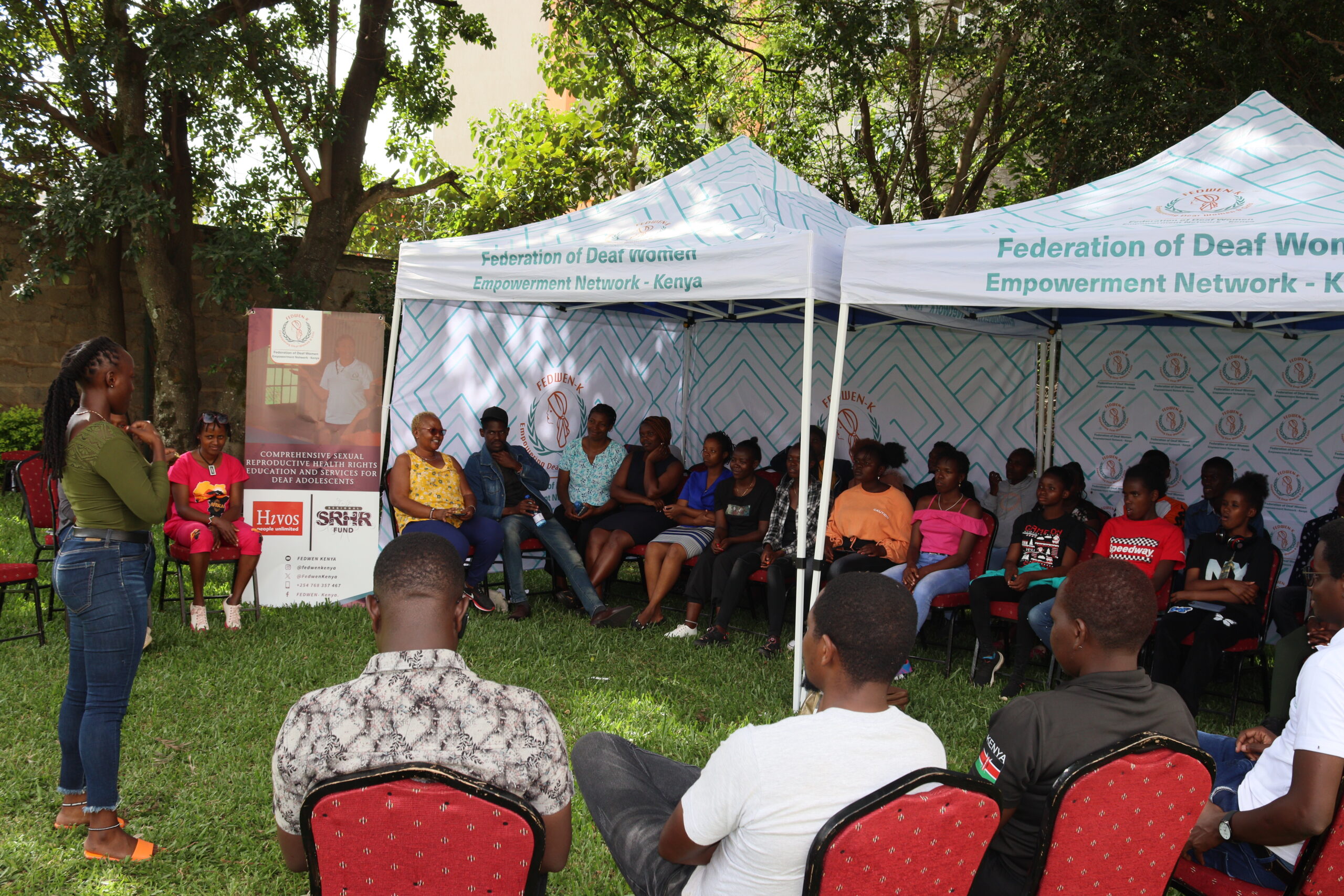
Deaf youths engaging in open conversations on SRHR in a safe and inclusive space
Pamela (Ivone) Wango is an SRHR Advocate | Deaf Ally | Sign Language User & Interpreter | Psychologist
