




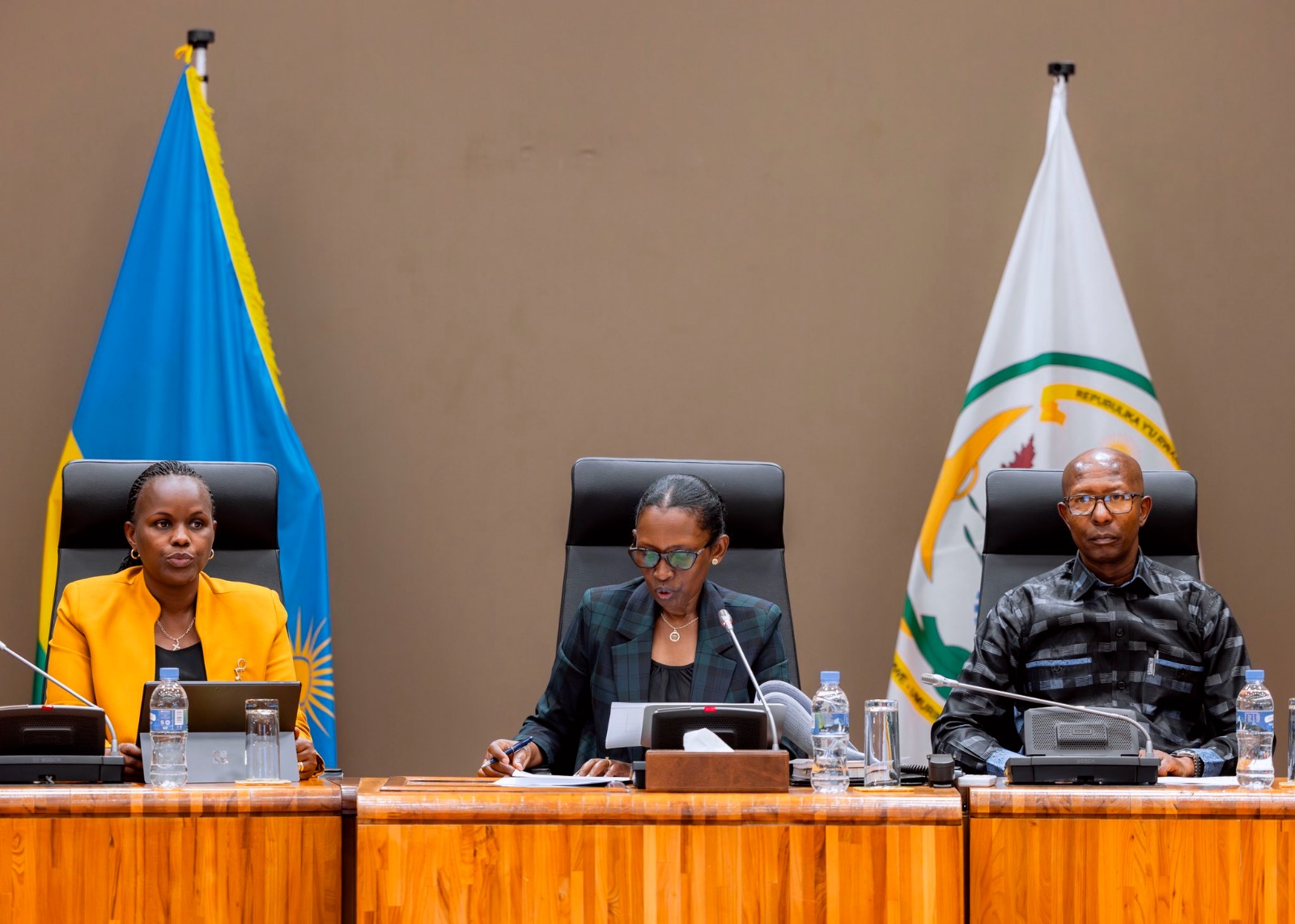
L-R: MPs Uwineza Beline, Deputy Speaker in charge of parliamentary affairs, Kazarwa Gertrude, Speaker of the Chamber of Deputies and Harerimana Mussa Fazil, Deputy Speaker in charge administration and finance
Rwanda’s Chamber of Deputies operates on a structured parliamentary calendar established by the Organic Law N° 002/2024.OL of 12 July 2024, ensuring that legislative work follows a predictable rhythm while remaining responsive to national needs.
At the core of this framework are three ordinary sessions, each lasting two months. According to Article 126, the first session runs from 05 October to 04 December, marking the start of the parliamentary year. The second session follows from 05 February to 04 April, and the third session takes place from 05 June to 04 August. When an opening or closing date falls on a weekend or public holiday, it automatically shifts to the next working day.
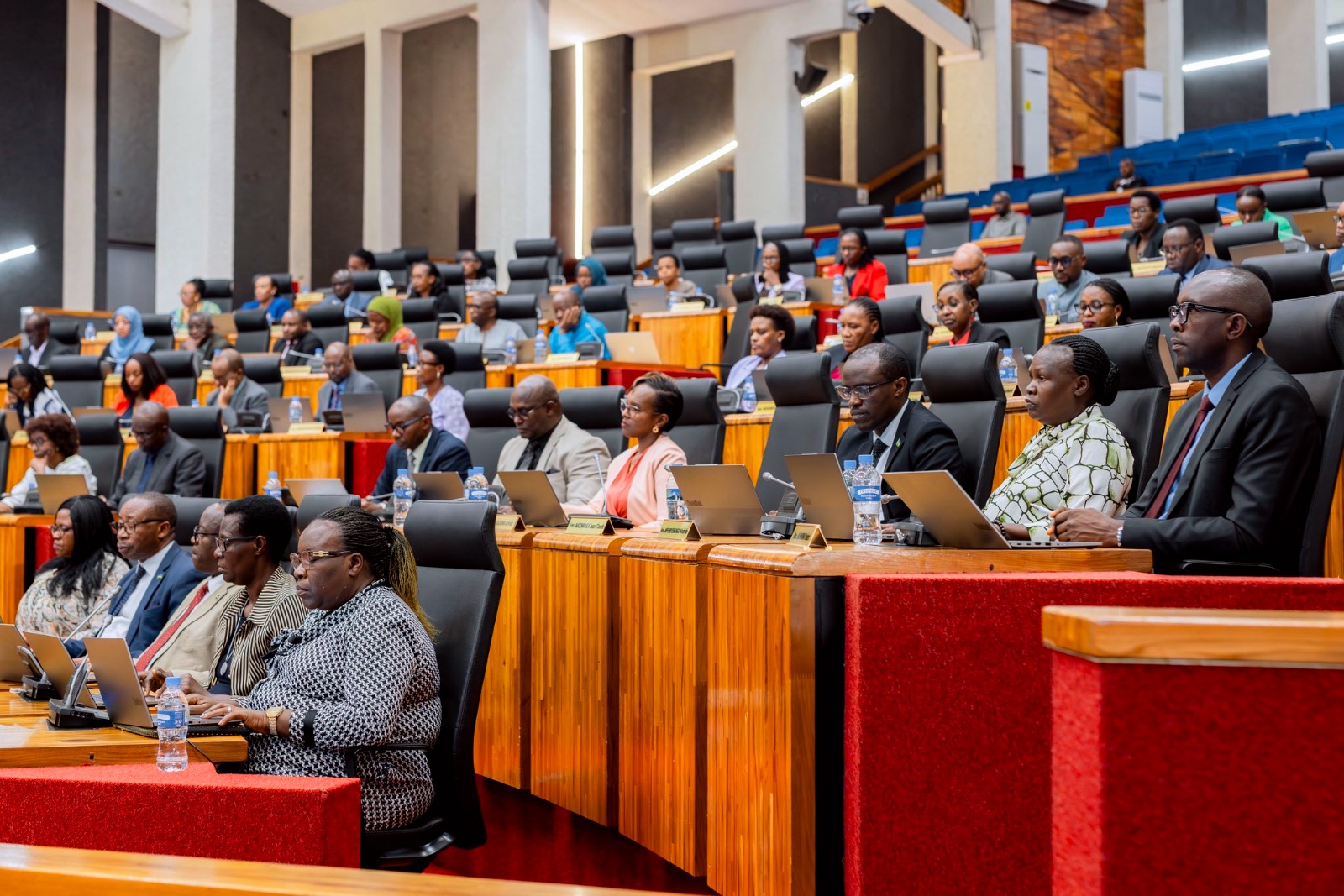
Article 2 defines an ordinary session as the period during which the Plenary Assembly meets to debate and pass laws, scrutinize public policy, approve national programs, and hold government officials accountable. These predictable cycles help institutions, civil society actors, and citizens coordinate their submissions, engagements, and expectations with Parliament’s most active periods.
Outside the two-month plenary windows, lawmakers enter what is commonly referred to as recess—but MPs do not step away from their responsibilities. Recess time is used for constituency outreach, follow-up on citizen concerns, evaluation of public projects, preparation of committee reports, and drafting of legislation. It is also a key period for field missions and consultations that inform future debates.
The Chamber may also sit in extraordinary sessions whenever urgent matters arise, such as national emergencies or fast-track legislation. These sessions can be convened by the Speaker, the Government, or one-third of the Deputies.
Article 132 grants all Members of Parliament a 30-day annual vacation after the end of the third ordinary session. If circumstances prevent MPs from taking the break at once, the Conference of Chairpersons reschedules unused days while notifying national leaders at least a month in advance. Even during this period, Parliament may be summoned back if a national emergency requires an extraordinary sitting.
Importantly, MPs continue performing their duties until a new Chamber is sworn in at the end of each five-year term, guaranteeing uninterrupted institutional stability.
Together, these provisions create a clear and efficient parliamentary cycle—one that keeps the Chamber of Deputies active throughout the year, strengthens legislative oversight, and ensures continuous engagement with citizens and national priorities.
