



Dear Dad,
I am still writing to you. This time, my heart is heavy with a trend I see among our peers—parents who look at their children and beam with pride when they speak only English, French or any other foreign language, with no knowledge of Kinyarwanda – our mother tongue.
And these parents feel no shame when those same children stumble over a basic greeting in Kinyarwanda.
There is a growing belief in our neighborhoods that for a child to be smart and “global,” they must first shed what is “local.”
But Dad, you spent decades in exile longing for the sounds of home. You knew that a person without their language is a person without a compass.
The standard of the highest office
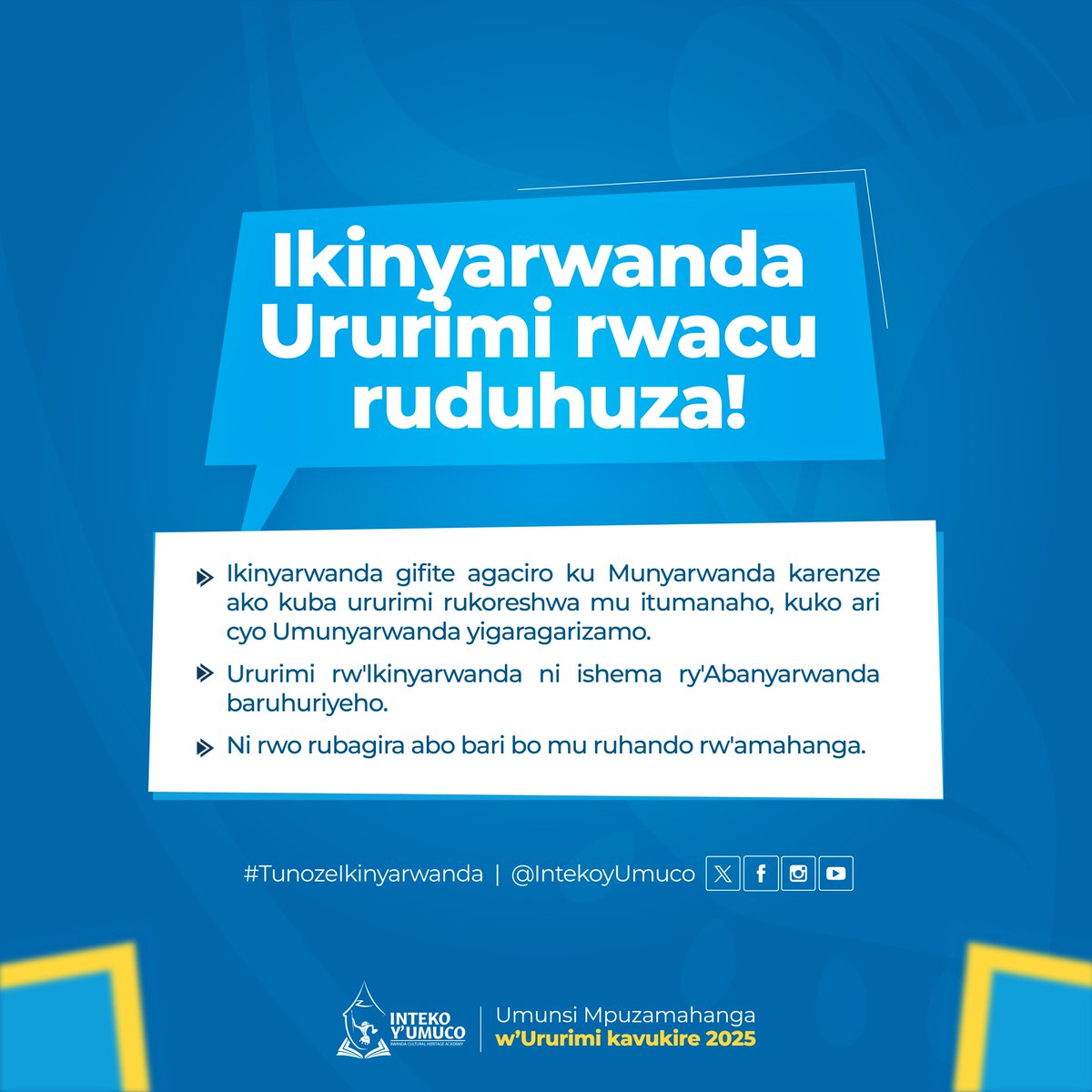
There is a government agency dedicated to the promotion of Kinyarwanda. It regularly conducts campaigns.
Dad, I wish you could have been with me at the events I have been able to attend where President Paul Kagame was the guest of honor.
On more than four occasions, I have watched him do something that would have made you smile. The President does not just talk about policy; he protects our soul.
I have seen the President stop mid-sentence to challenge Ministers and high-ranking officials on their mastery of Kinyarwanda. He corrects them firmly, reminding those in leadership that to serve Rwandans, one must respect and perfectly speak the language of the people.
He has made it clear that our institutions must take this seriously. If the head of state treats our language as a matter of national dignity, why are we treating it as a secondary skill in our own homes?
The weight of our history and the modern excuse
We must acknowledge, Dad, that our history is a scarred one. For many Rwandans, the tragedy of our past meant being born or living in exile, far from the hills that speak our name.
In those difficult years, many parents—driven by unavoidable circumstances and the sheer necessity of survival in foreign lands—could not prioritize teaching their children Kinyarwanda.
But today, being home is no longer a dream; it is our reality. The struggle of exile can no longer be an excuse for linguistic neglect.
The President’s insistence should serve as a lesson to all of us: we are no longer wandering; we are building. To neglect our tongue now is to choose a “self-imposed exile” while sitting right here in the heart of Rwanda.
The heartbreak of the family gathering
I have visited different relatives and friends’ homes recently, and I have attended family gatherings that left me deeply disappointed.
It is painful to watch children struggle to communicate with their own grandmothers and grandfathers. These elderly aunties and uncles, who carry our history but speak no foreign languages, are becoming strangers to their own blood.
It looks like a shame to the parents, yet, incredibly, they visibly look unconcerned. They watch this linguistic wall rise between the generations and do nothing.
We are raising a generation that cannot even say “thank you” or “I love you” to the people who prayed for their return to this land.
The scientific “superpower” and the role of schools
To the parents who fear that Kinyarwanda will “confuse” a child: the science says you are mistaken. To narrow this down, this is what science says:
The multilingual brain: Scientific facts prove that children have a unique biological capacity to learn and speak multiple languages simultaneously without losing proficiency.
Cognitive edge: Learning a native language provides a complex mental framework that makes it easier to grasp the logic of foreign tongues.
The classroom gap: We must also address our schools. I have seen academic programs where Kinyarwanda is given very limited slots on the weekly timetable. We must treat Kinyarwanda teachers with the same respect as those teaching foreign languages. If the school treats the language as “lesser,” the child will too.
A father’s promise: Learning together
You know me, Dad. I am not the “perfect” Kinyarwanda speaker or writer. But I have made a choice. In my house, I hardly ever speak to my children in a foreign language. We treat Kinyarwanda as a shared journey.
We learn together, and my children love it. They are growing up with the tools to navigate the world, but they are anchored by the roots of their home.
You wished for a Rwanda where children had the opportunities you were denied in exile. Today, those opportunities are everywhere. But the greatest opportunity we can give our children is the gift of their identity. Let us speak to them in the tongue of our ancestors, loudly and with pride.
Your son,
Still writing to you.
Dan Ngabonziza is the Managing Director, Kigali Today Ltd, the parent company of KT Press, KT Radio 96.7FM, Kigali Today (Kinyarwanda) and Kigali Today TV channel.