




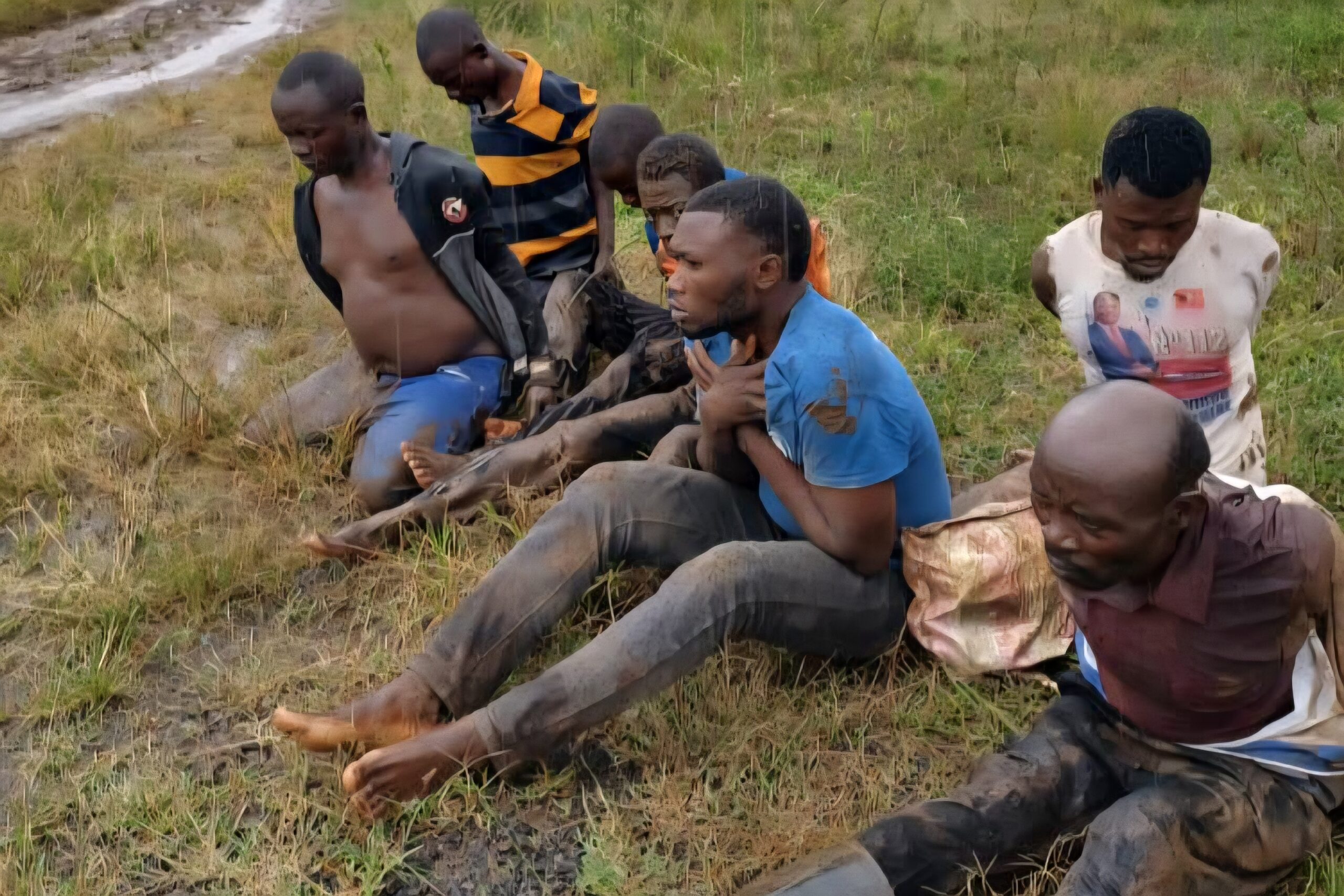
These are Wazalando militias captured by AFC-M23 in Kavumu south Kivu, where the Kinshasa government and it coalition are attempting to take key airport for several days.
GOMA — A fragile ceasefire in eastern Congo appeared to falter further on Tuesday as the rebel alliance known as AFC-M23 accused government forces of launching a series of drone and artillery strikes on densely populated towns, deepening fears that a regional truce brokered less than two weeks ago is collapsing.
In two statements posted within hours of each other on X, the group’s spokesman, Lawrence Kanyuka, said coalition forces aligned with Kinshasa had carried out “savage and deliberate attacks” on civilian areas across North and South Kivu provinces.
Shortly before dawn, at around 2:43 a.m. local time, drones began what he described as “blind bombardment” of Rubaya, a town in North Kivu long contested for its strategic mineral routes.
The strikes, he said, were “sowing terror among civilians” and amounted to crimes against humanity and war crimes. No independent verification of the attack was immediately available.
Hours later, in a second post timed to 7:10 a.m. GMT, Mr. Kanyuka accused government forces of having “once more trampled the ceasefire” by launching what he called a “total war” across all front lines.
At exactly 7 a.m. local time, he said, coalition forces attacked civilian zones in Kitendebwa, Kashihe and Kiduveri in Kalehe territory, South Kivu, in what he characterized as an effort to spread “terror, chaos and death.”
“These ongoing assaults,” he wrote, “are aimed at civilians.”
The Congolese government has not publicly confirmed the specific strikes cited by the rebels.
The latest allegations follow similar reports made by the group a day earlier.
On Monday morning, Mr. Kanyuka said Congolese and Burundian forces had shelled Rumbishi, killing a civilian identified as Safi Semakoma and wounding others, including Dieme Mudahakana and Muhawe Evariste.
He said the bombardment caused new waves of displacement in already fragile communities.
The accusations come against the backdrop of a ceasefire proposal announced on Feb. 13 by Félix Tshisekedi, the president of the Democratic Republic of Congo, who said he had accepted a truce plan put forward by Angola’s president, João Lourenço.
The proposal, unveiled after talks in Luanda involving regional leaders and African Union facilitators, called for a ceasefire to take effect at noon on Feb. 18.
Kinshasa framed its acceptance as an act of responsibility and de-escalation, signaling what it described as a renewed commitment to regional stability.
But the truce was fragile from the outset. AFC-M23 officials said at the time that they had not been invited to the Luanda discussions and had not received formal details of the proposal.
A senior rebel figure reiterated that the group remained committed to a separate mediation track based in Doha, arguing that it had respected previous understandings while government forces had not.
Since mid-February, both sides have traded accusations of ceasefire breaches, with little independent confirmation in real time.
The conflict in eastern Congo — a volatile mix of rebel movements, local militias and regional interventions — has repeatedly defied diplomatic efforts.
Burundi has sent over 12,000 troops there to supposedly fight the AFC-M23’s South Kivu partner Twirwinaho which says is protecting Banyamulenge against daily bombardment.
There are also unconfirmed reports that Tanzanian and Angolan troops are also deployed alongside the Burundians.
This is in addition to mercenaries of the American contractor Blackwater also aiding the Kinshasa government.
AFC-M23, often described by Congolese officials and Western diplomats as receiving foreign backing — a charge it denies — maintain it is adhering to the ceasefire while accusing Kinshasa and its allied Burundians forces as aggressors targeting civilians.
As of Tuesday morning, no independent monitors had publicly verified the scale or targets of the reported drone and artillery strikes.
But the speed and intensity of the competing claims suggest that whatever diplomatic window opened in Luanda less than two weeks ago is narrowing rapidly.
Whether the ceasefire can be salvaged may depend less on the language of statements than on the silence of guns across Congo’s hills — a silence that, for now, appears elusive.
