




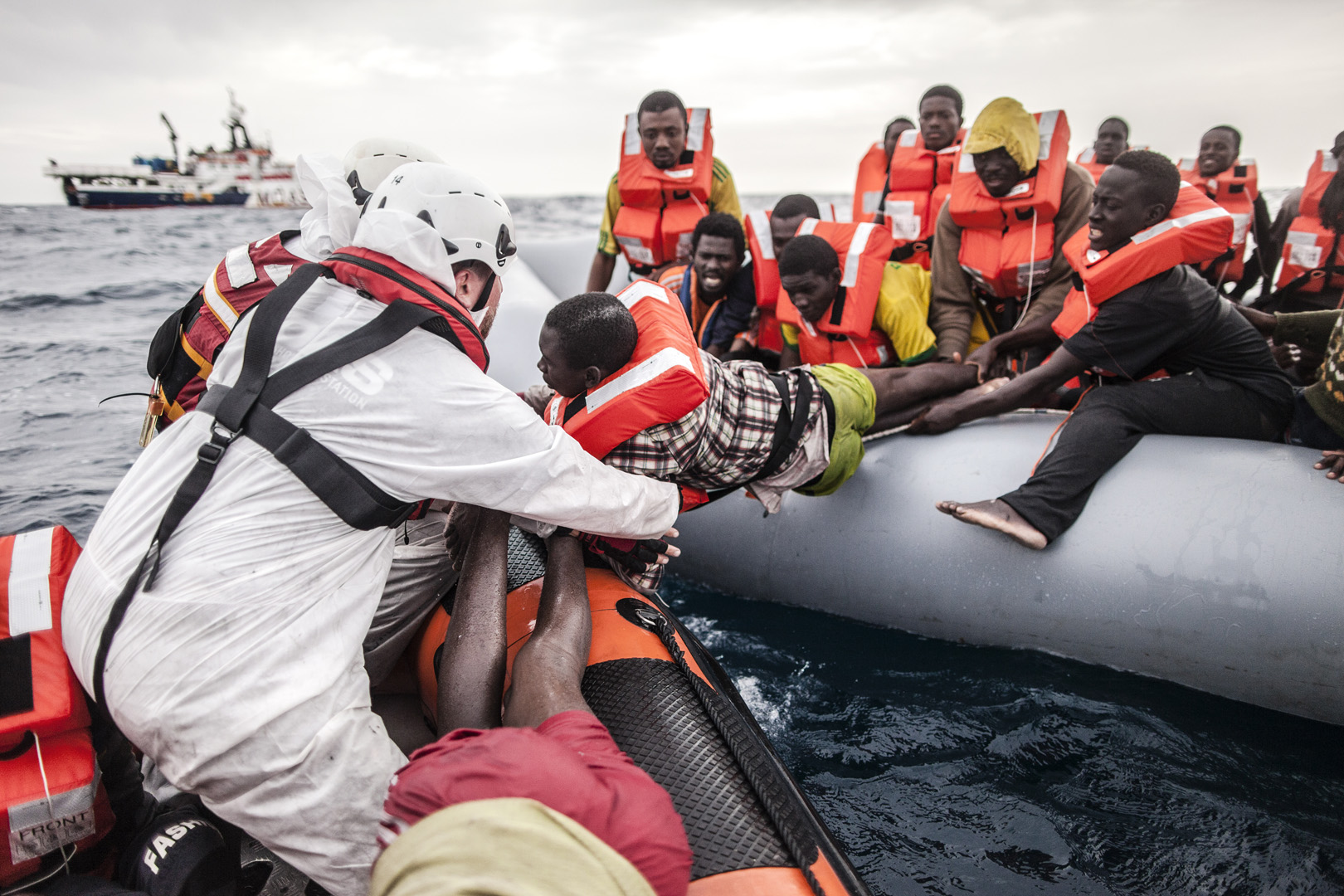
Rescue workers shuttle a group of tired, cold and hungry refugees to the Phoenix rescue boat (Photo: UNHCR)
In a world grappling with unprecedented levels of irregular migration, Rwanda has emerged as a pioneer in offering what its leaders describe as a humane and innovative solution: partnering with wealthier nations to process and resettle asylum seekers.
Drawing from its own tumultuous history of displacement and recovery, Rwanda’s involvement in such schemes—most notably the UK’s Migration and Economic Development Partnership (MEDP)—has not only provided a blueprint for managing global migration challenges but is now influencing policy across the European Union. The EU Parliament has now adopted it.
As EU member states face mounting pressure from rising arrivals, several are adopting or exploring the so called “Rwanda-style” deals, marking a shift toward externalized asylum processing despite ongoing debates over human rights and efficacy.
Rooted in Rwanda’s Post-Genocide Experience
Rwanda’s approach is deeply rooted in its post-genocide experience. In the aftermath of the 1994 genocide, which displaced millions and left the country in ruins, Rwanda transformed itself from a nation of needy refugees into a stable, rapidly developing economy.
Today, it hosts hundreds of thousands of mainly Congolese and Burundian refugees, and others from as far as Sudan, integrating them through access to education, healthcare, and employment opportunities.
President Paul Kagame and other officials have emphasized that this history fuels their commitment to ensuring no one lives in limbo.
“We know what it means to be displaced and vulnerable,” Kagame has stated in various international forums, underscoring a moral imperative to offer swift resolution and dignity to migrants rather than prolonged uncertainty in detention or unsafe journeys.
This philosophy aligns with Rwanda’s broader vision: bridging economic opportunity gaps that drive irregular migration, while providing safety and pathways to self-sufficiency.
The UK Partnership
Beyond this humanitarian ethos, Rwanda has advanced several practical arguments for its involvement in the UK plan, which was signed in 2022 but ultimately scrapped by the new UK government in 2024 after legal hurdles.
Economically, the partnership brought significant investments—over £240 million from the UK—to fund infrastructure, public services, job creation, training programs, education, and affordable housing.
These resources were seen as accelerating Rwanda’s ambition to become a high-income nation by 2050, while simultaneously expanding its capacity to support vulnerable populations.
On the international front, Rwandan officials highlighted the deal as a model of global “burden-sharing”, combating people smuggling by deterring dangerous crossings and promoting legal pathways.
Migrants relocated to Rwanda would have received comprehensive support, including health services, vocational training, and the option for permanent residency if their claims succeeded, positioning the country as a safe hub for rebuilding lives.
Additionally, the agreement bolstered Rwanda’s international image as a progressive partner in migration solutions, countering criticisms of its human rights record and fostering broader economic ties.
Europe Turns to the “Rwandan Model”
This “Rwandan model” is now gaining traction in the EU, where leaders are under pressure to curb irregular arrivals amid political shifts toward tougher policies.
The latest is new rules in favour of the above model adopted by the European Parliament.
On February 10, 2026, the European Parliament approved significant updates to the EU’s Asylum Procedures Regulation during a plenary session in Strasbourg, advancing the implementation of the 2024 Migration and Asylum Pact, effective June 2026.
The MEPs endorsed the first EU-wide list of “safe countries of origin”. It allows for accelerated processing and presumptive rejection of asylum claims from nationals of these countries, with some accelerated border procedures potentially applicable earlier.
In a separate vote, the Parliament approved revisions to the “safe third country” concept, eliminating the previous requirement for a genuine link or connection between the asylum seeker and the third country.
This enables EU member states to transfer applicants to non-EU countries deemed safe under international standards—even if the individuals have no prior ties or transit history there—provided a bilateral or EU-level agreement exists for claim processing or returns.
This new move has been described as enabling “Rwanda-style” or “offshore” arrangements, drawing direct parallels to the UK’s now-abandoned Rwanda partnership.
In December 2025, EU interior ministers endorsed the above framework, including “return hubs” in third countries like Serbia, Albania, and North Macedonia for processing claims.
Germany has explored using UK-funded facilities in Rwanda for its own asylum seekers, with migration commissioner Joachim Stamp suggesting it as a practical option.
Italy has implemented a similar arrangement with Albania, where migrants are processed in external centers under Italian oversight, a move praised by Prime Minister Giorgia Meloni as a “European spirit” solution that could extend to nations like Ghana and Tunisia.
Denmark, which initiated its own discussions with Rwanda, now advocates for EU-wide external processing.
Austria and the Netherlands have signed cooperation deals emphasizing deportations, while European Commission President Ursula von der Leyen has backed exploring “lessons” from such models, aligning with the European People’s Party’s push for “safe third country” reforms.
Critics, Supporters, and an Uncertain Future
Critics argue these schemes risk violating international obligations, such as non-refoulement, and may not deter migrations effectively.
Yet, proponents in Rwanda and Europe view them as pragmatic: combining deterrence with development aid and shared responsibility.
As migration pressures mount, Rwanda’s innovative framework—born from its own resilience—may redefine how the world addresses one of its most pressing humanitarian challenges.
