


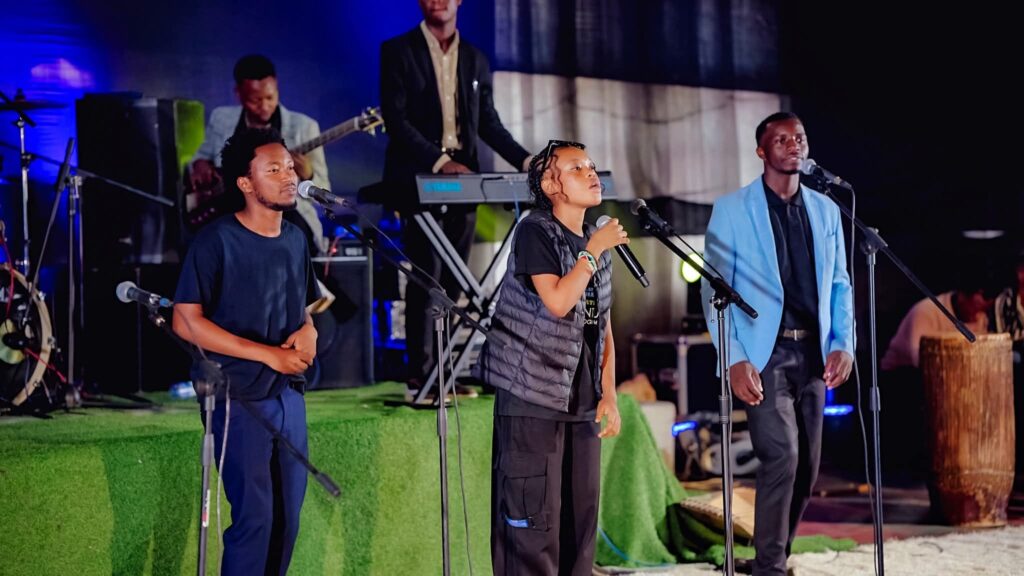
Ubuntu Music Program students perform during a community showcase, turning young talent into confidence and possibility for underprivileged children.
In 2003, Robert Niyikiza was 13 years old when his father got involved in a nasty road accident that left him bedridden for years. The rhythm of family life changed overnight and life quietly demanded maturity from him.
There was no official declaration of responsibility, but as the firstborn in a family of eleven children, Niyikiza understood what was required. School fees still had to be paid, meals still had to be found and his younger siblings still needed direction.
Born and raised in Kimisagara in a deeply Christian home, Niyikiza grew up surrounded by hymns and harmonies. His father sang in the ADEPR church choir, and young Robert followed the same path, lending his voice to church and school choirs.
What began as a childhood passion gradually became a practical skill; Through singing engagements and instrumental performances, he started earning small but meaningful income. It paid his secondary school fees and supported his siblings’ education.
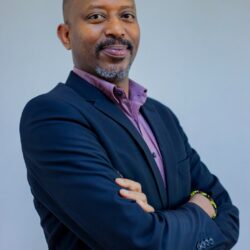
Robert Niyikiza, a Kigali-based music director and educator, and founder of the Ubuntu Music Program.
Today, some are in university, others are progressing through secondary school. Music, for him, was not a hobby. It was stability. When he remembers this journey, he reminisces with despair and hope in each measure.
“I did not see it as heroism I saw it as duty. I had something in my hands — music — and I knew I had to use it,” he says calmly.
As his talent sharpened, doors opened. He played instruments for respected Rwandan artists such as Mani Martin, Intore Masamba and others. The experience refined his professionalism and exposed him to mentorship that strengthened his craft.
Over time, he evolved into a music director and teacher — roles that provided both income and influence. Yet even as his career advanced, a question lingered: how many other young people had talent but no pathway?
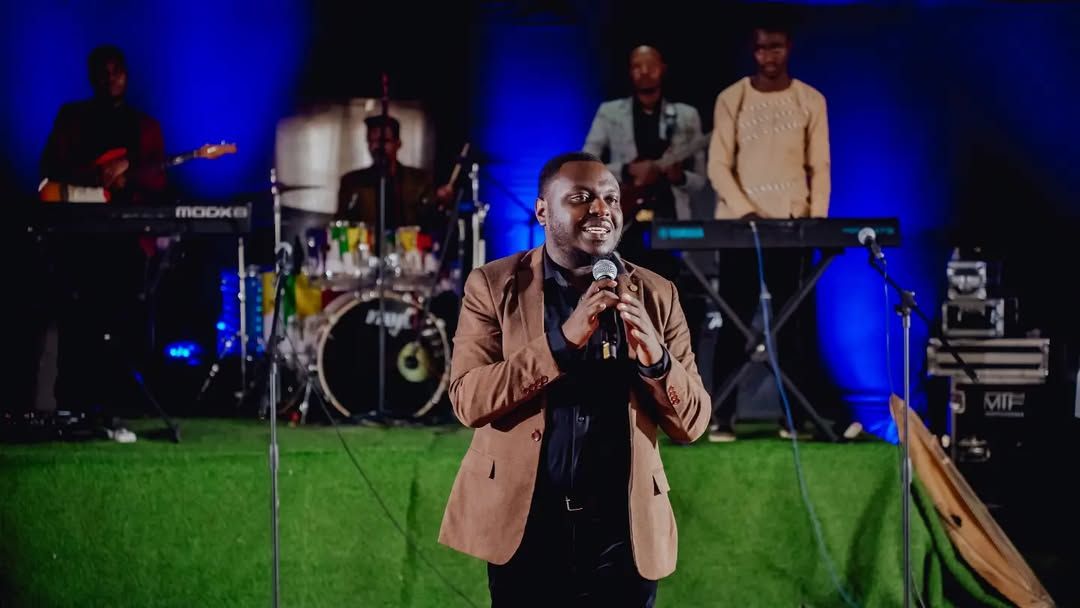
Ubuntu Music Program uses music to empower children and youth from underprivileged families, turning talent into opportunity and long-term life skills.
A Dream Takes Shape
In 2015, Niyikiza began acting on that question. With support from friends are well-wishers such as the Playing for Change Foundation, he launched an after-school music program in Kigali. The idea was use music as a tool to transform the lives of children and youth, particularly those from underprivileged families.
The early days were modest, with no state-of-the-art studios or even expansive premises. Just a few instruments and a determined teacher. “At the beginning, I would find students in their schools and teach them piano, guitar, drums and voice,” he recalls.
With a clear passion to become a hands-on instructor, the program initially operated within partner schools. But as it grew, another question of children who could not even afford to attend those schools emerged.
That reflection led to the birth of the Ubuntu music program in Nyakabanda. It started in a small rented space with limited equipment and many of the first students were vulnerable youth — some from unstable homes, others drawn to music as a way to process difficult experiences.
“They needed more than lessons. They needed someone to tell them their future is not defined by their background. Once the word spread, more children joined. The parents noticed change and confidence grew,” Niyikiza explains.
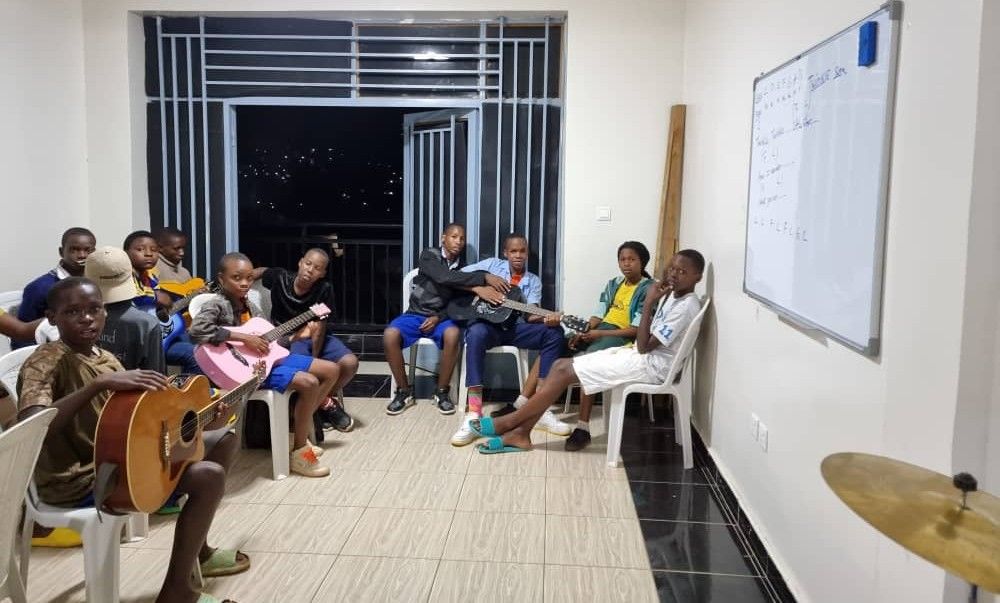
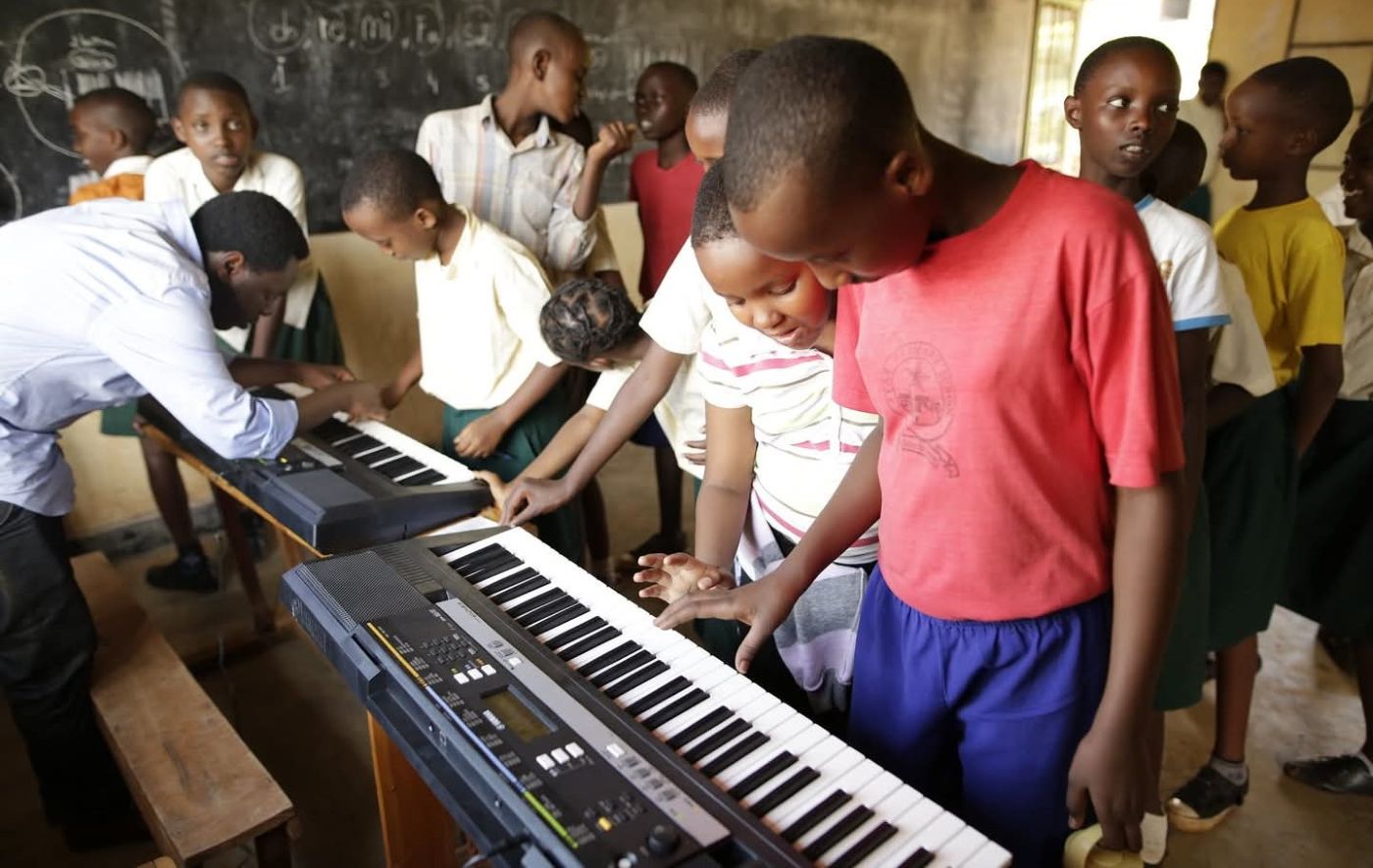
Ubuntu Music Program provides free music education to over 400 children, fostering creativity, confidence, and community.
Building a Community
Today, Ubuntu music program serves more than 400 children free of charge. Eighteen staff members support instruction in piano, guitar, bass, drums, vocal training, traditional dance and indigenous instruments such as inanga and djembe.
The curriculum has expanded to include English classes, fashion and modeling, and access to a recording studio where students produce their own songs. But the true measure of impact lies beyond the instruments.
Yabesi Osee joined the program as a shy boy with natural rhythm but little self-belief. He began with drum lessons. In 2020, he returned as a drum instructor. “Ubuntu Music Program did not only teach me to play. It taught me how to lead and how to see myself differently,” Yabesi says.
Parents describe similar transformations. Alphonsine Murekatete, a mother to one of the children enrolled at the recalls how her child once avoided speaking in public. “Now my daughter performs confidently Music changed her mindset,” she says.
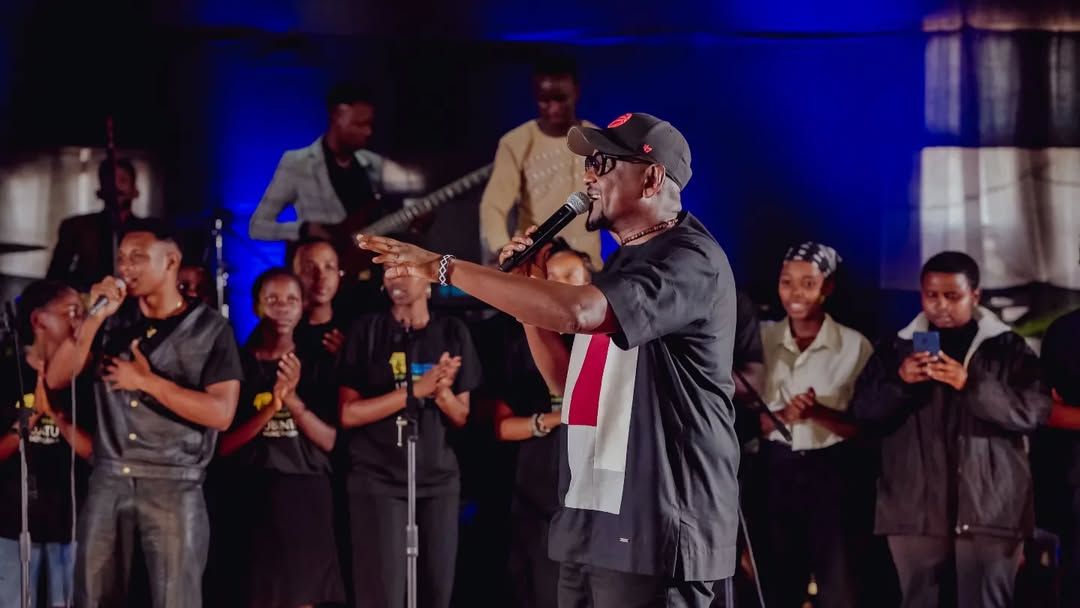
Rwandan music icon Intore Masamba guides young musicians during a training session at the Ubuntu Music Program.
The program also integrates health awareness, psycho-social support and community engagement activities. In 2025, health screenings were organized communal tests for both communicable and non-communicable diseases, with support from professional health workers.
From his home in Nyamirambo, just a short distance away from the rented school premises, Niyikiza continues to refine his mission. Plans are underway to expand branches beyond Kigali, introduce structured feeding initiatives and create vocational training pathways for youth who have left formal education.
He speaks about these ambitions not with spectacle, but with conviction. “I know what it feels like to search for an opportunity. If music opened a door for me, then it can open doors for others,” he proudly says.
Niyikiza’s journey is not simply a story of overcoming hardship. It is a story of converting experience into service. The choirboy from Kimisagara did not just survive responsibility at 13. He transformed it into a platform for hundreds.
And in doing so, he proved that sometimes the most powerful instrument is not the piano or the drum, it is the decision to use one’s gift for others.