



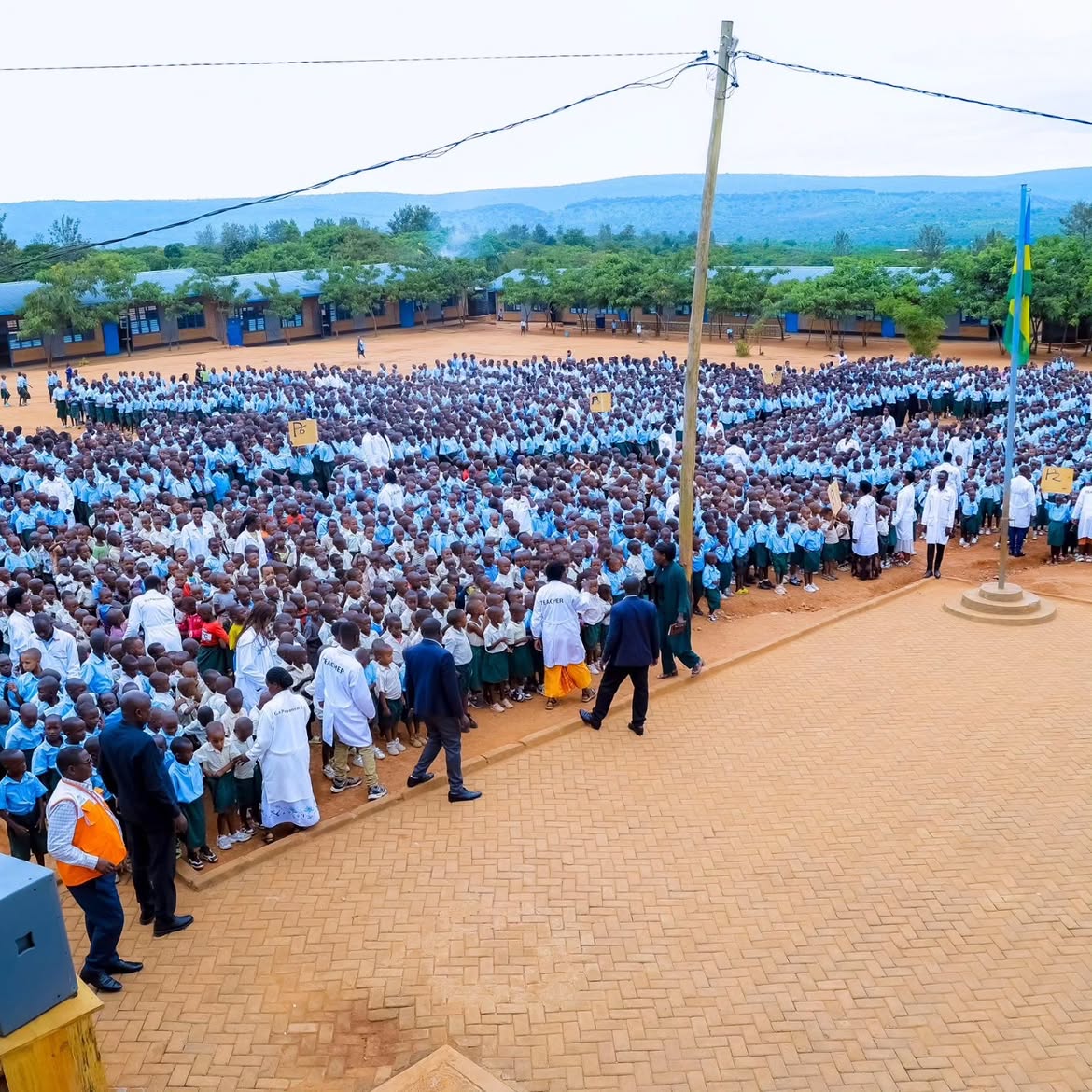
Paysannat LE School is one of those located near Mahama refugee camp. It is one of the largest schools in the country, with 10,204 learners—98% of whom are refugees from five different countries including Burundi and DR Congo.
KIGALI, Rwanda — When Rwanda released its 2026 national examination results on Thursday, one district once again stood apart.
Kirehe, in the Eastern Province, ranked first nationally in both the Primary Leaving Examination and Ordinary Level examination, recording 99.88 percent in PLE and 99.98 percent in O’Level.
But Kirehe, bordering Tanzania, is not an isolated success story in Eastern Rwanda.
Its neighbouring districts — Ngoma, Bugesera and Nyagatare — have also emerged as strong performers, suggesting that something broader may be happening across a province that has increasingly established itself as an education success story.
Ngoma ranked second in PLE this year with 95.27 percent, while Nyagatare was among the top five O’Level performers, recording 91.69 percent. Bugesera, meanwhile, produced the country’s highest-performing PLE student: Rwego Mutijima Bruno Ricky of Ecole Internationale La Racine, who scored 99.6 percent.
The pattern is striking.
Kirehe may be the most dramatic example, but Eastern Rwanda is producing strong results across several districts and schools.
The question, therefore, is no longer simply why Kirehe performs so well. It is whether the wider Eastern Province has developed conditions that are helping its children perform better.
A Success That Has Become a Pattern
Kirehe’s performance this year follows a similar result in 2025, when it also emerged as the country’s best-performing district in both PLE and O’Level.
That consistency prompted the Ministry of Education to show interest in studying the district’s practices and exploring teacher exchanges so educators elsewhere could learn from its experience.
The latest results strengthen the case for doing so.
But they also broaden the question.
If Kirehe were the only high performer in Eastern Province, its success could be treated as an exceptional district story. Yet Ngoma, Bugesera, Nyagatare and other districts in the province continue to feature prominently in national performance rankings.
That suggests that geography alone may not explain the results. Instead, a combination of education policies, infrastructure, attendance, community participation and investment may be creating favourable conditions across parts of the region.
Getting Children Into School Early
One of the clearest features of Kirehe’s education system is participation.
Previous education statistics cited in reporting on the district showed a 90 percent net primary attendance rate among children aged 6 to 11.
In Mahama Sector, where the large refugee settlement is located, attendance was even higher, at about 94.2 percent.
Early learning has also been relatively strong, with about 85.3 percent of children aged 3 to 5 reported to be attending nursery or kindergarten.
That matters because the foundations for literacy, numeracy and classroom learning are established long before national examinations.
A child who enters primary school with basic learning skills has a significant advantage over one encountering structured education for the first time.
Kirehe’s experience therefore suggests that examination success begins years before examination day.
Watching Students Before They Fall Behind
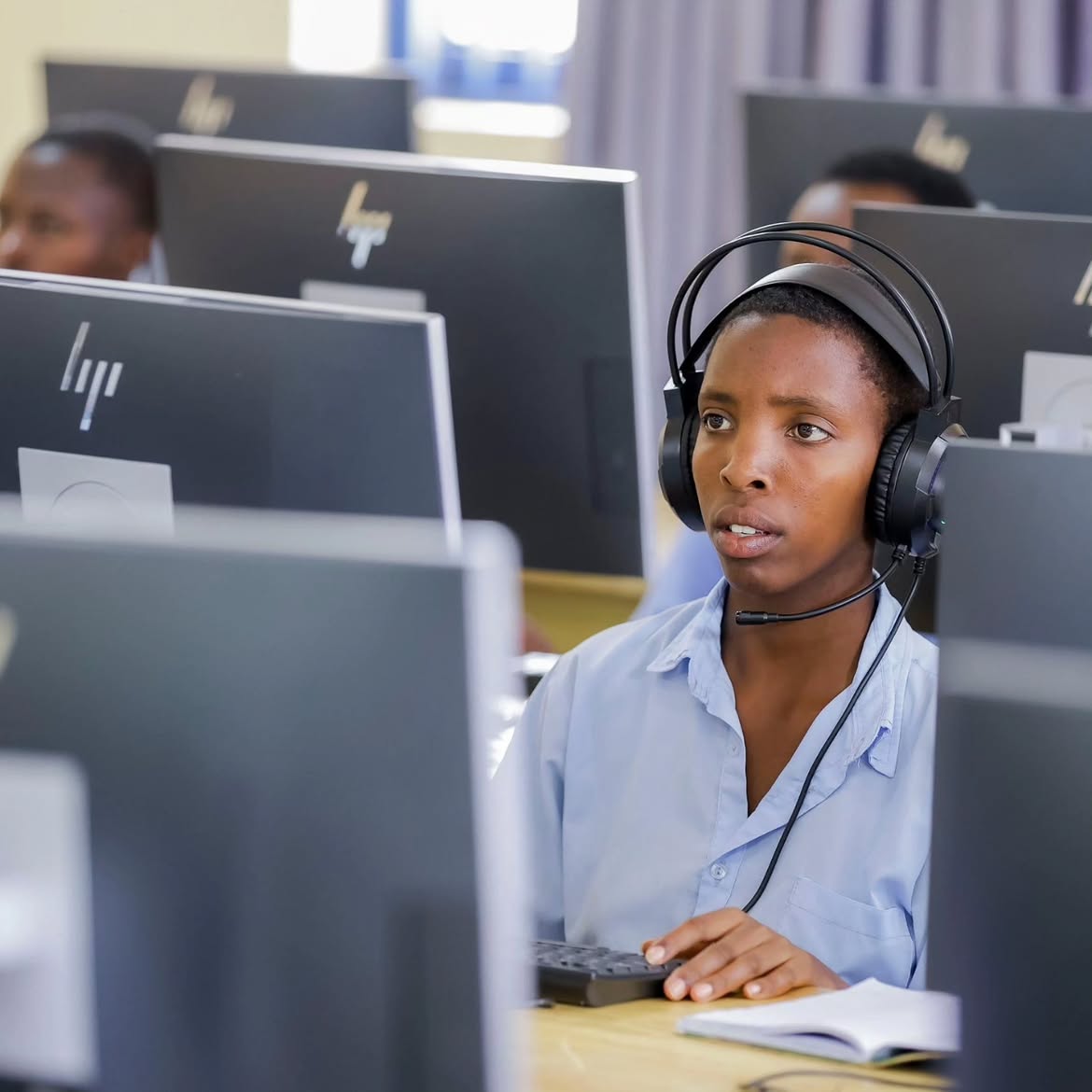
Another feature highlighted in earlier reporting is the close monitoring of pupils.
Teachers follow students’ progress and identify those who are struggling so they can receive support before weaknesses become permanent.
The approach is simple but important.
Waiting for national examinations to expose learning gaps leaves schools with little opportunity to respond. Identifying struggling pupils early gives teachers and parents time to intervene.
Kirehe still faces challenges, including relatively high pupil-teacher ratios.
Its performance therefore cannot simply be explained by unusually small classes or abundant resources. It also points to the importance of how existing resources are organised and used.
The Eastern Province Effect
Kirehe’s success becomes even more interesting when placed alongside its neighbours.
Ngoma, which borders Kirehe to the east and Bugesera to the west, ranked second nationally in PLE this year with a 95.27 percent pass rate.
Nyagatare, further north, ranked fifth in O’Level at 91.69 percent.
And in Bugesera, the strongest individual PLE performance came from Ecole Internationale La Racine, whose student scored 99.6 percent, the highest mark nationally.
The province’s strength is not limited to individual students.
Previous NESA data also showed schools from Bugesera, Ngoma, Kirehe and Nyagatare among institutions recording exceptionally high pass rates. In the 2024/25 results, for example, several schools in Bugesera and Ngoma recorded 100 percent O’Level pass rates.
This makes Eastern Rwanda worth examining as a regional education story rather than simply a collection of successful districts.
The Mahama Factor
Then there is Mahama.
The refugee settlement has a structured education system supported by international organisations and other partners. Its schools have benefited from programmes designed to maintain attendance and provide educational support.
Paysannat LE School is one of those located near Mahama refugee camp. It is one of the largest schools in the country, with 10,204 learners—98% of whom are refugees from five different countries including Burundi and DR Congo.
It would be too simple to attribute Kirehe’s success to Mahama. The district’s performance extends far beyond the settlement.
But the settlement raises an important question: Can concentrated investment in education, strong attendance and structured support influence the wider performance of a district?
Kirehe provides an opportunity to explore that question.
Infrastructure and Community
Kirehe has also expanded education infrastructure, including classrooms at primary and pre-primary levels. Technical and vocational education institutions have grown as well.
Community engagement and adult literacy programmes have added another layer.
The district has a relatively young population and strong participation among girls. Its secondary-school Gender Parity Index has previously been reported at 1.10, indicating substantial female participation.
These factors create an environment in which more children can enter school, remain there and progress.
And some of these characteristics are visible elsewhere in Eastern Province.
The region has benefited from continued investment in schools and classrooms, while districts have worked to improve attendance and community participation.
Can the Model Be Replicated?
Kirehe’s circumstances are distinctive. Its demographics, community structures and the presence of Mahama cannot simply be reproduced elsewhere.
But some lessons can.
Schools can strengthen early childhood education. Teachers can monitor individual pupils more closely. Struggling learners can be identified earlier. Parents can become more involved. Infrastructure can continue to expand.
Teacher exchanges could also allow educators from other districts to see how successful practices work in real classrooms.
The challenge is to determine which interventions matter most — and how they reinforce one another.
Beyond the Numbers
Rwanda’s overall PLE performance improved sharply this year. The national pass rate rose from about 75.6 percent in 2025 to 88.21 percent in 2026.
But the national figure hides important differences.
Kirehe is approaching universal success. Ngoma is close behind. Nyagatare remains among the strongest O’Level districts. Bugesera has produced the country’s top PLE student.
Together, they tell a more interesting story than a single district ranking.
Eastern Rwanda appears to be producing not just one exceptional education district, but a cluster of strong performers.
Kirehe’s near-perfect results therefore offer Rwanda something more valuable than a trophy.
They offer a question worth investigating:
What is happening in Eastern Rwanda’s schools that the rest of the country can learn from?
