




Formee catholic priest Fr. Thomas Nahimana
In the shadowy corners of Rwandan exile politics—where ambition often collides with spectacle—Fr. Thomas Nahimana has once again resurfaced.
The defrocked Catholic priest, long based in France, has unveiled yet another political vehicle: the Rwandan Opposition Coalition for Democratic Change (ROC).
Launched on January 16, 2026, ROC is presented as a broad-based alliance meant to unite up to 100 opposition figures from across Rwanda’s districts, with the stated goal of challenging the Rwanda Patriotic Front Inkotanyi (RPF Inkotanyi) in the 2029 elections. Nahimana was unanimously named the coalition’s presidential candidate.
The announcement was accompanied by familiar rhetoric: calls for international sanctions, arms embargoes, arrests of alleged war criminals, and appeals to divine justice.
To seasoned observers of Rwanda’s exile opposition, however, the moment felt less like a political breakthrough and more like the latest episode in a long-running and controversial saga.
Nahimana’s political odyssey began in the Cyangugu Diocese, where he was ordained in 1999 and served as a parish priest until 2005, when he went into exile following accusations of financial misconduct—allegations his supporters have consistently dismissed as politically motivated.
His relationship with the Catholic Church deteriorated as his political activism intensified, culminating in his defrocking.
In 2013, he founded the Ishema Party, which later morphed into the self-declared Rwandan Government in Exile (GREX) in 2017, with Nahimana appointing himself “President.”
ROC now represents his latest rebranding—marketed as a more inclusive, coalition-based platform. Critics, however, argue that the structure closely mirrors earlier initiatives, raising doubts about whether this is genuine coalition-building or simply another solo project under a new name.
Fundraising Campaigns
One of the most persistent criticisms surrounding Nahimana relates to fundraising among the Rwandan diaspora. Over the years, he has repeatedly appealed for financial support, portraying himself as a central figure capable of catalyzing political change in Rwanda.
In one widely circulated episode, Nahimana was reported to have solicited $1million from diaspora to fund his project for removal of Government of Rwanda—a sum mocked as implausibly small for the political objectives he claimed to pursue.
While precise details of this specific appeal remain difficult to independently verify, similar fundraising activities have been observed more recently.
In May 2024, for instance, Nahimana was spotted in Malawi, addressing a small gathering of supporters and appealing for campaign funds.
His detractors argue that such efforts often finance his international travel rather than producing tangible political impact, reinforcing perceptions of performative activism rather than organized resistance.
The ‘Government in Exile’

Thomas Nahimana met DR Congo President Félix Tshisekedi in Belgium, as the Congolese leader put together a project for apparent ‘regime change’ in Rwanda
Perhaps the most controversial aspect of Nahimana’s political enterprise is the internal structure of GREX, particularly its so-called leadership and military training programs. Through these initiatives held in live online sessions, Nahimana has issued certificates, academic titles, and military ranks to supporters—moves that critics describe as theatrical rather than substantive.
Among the most bizarre examples is the promotion of former military officers to senior ranks within GREX, including individuals with deeply contentious pasts. One such case involves Innocent Sagahutu, a former Captain convicted for his role in the 1994 genocide against the Tutsi, who was promoted to “General” in a YouTube announcement.
For many Rwandans, especially genocide survivors, such associations severely undermine Nahimana’s moral and political credibility.
Critics argue that these affiliations blur ethical lines and weaken his stated principles.
Passport Scheme
Another episode that continues to haunt Nahimana’s reputation involves allegations—largely anecdotal but persistent—regarding the issuance of GREX “passports.”
According to reports circulating within opposition circles, some diaspora supporters paid fees for documents presented as official identification for the so-called government in exile.
These documents reportedly held no legal value, rendering them symbolic at best. Nahimana himself travels on a European passport.
Whether isolated incidents or misunderstood symbolic gestures, the episode illustrates the fragile boundary between political symbolism and perceived exploitation within exile movements.
Global Conventions
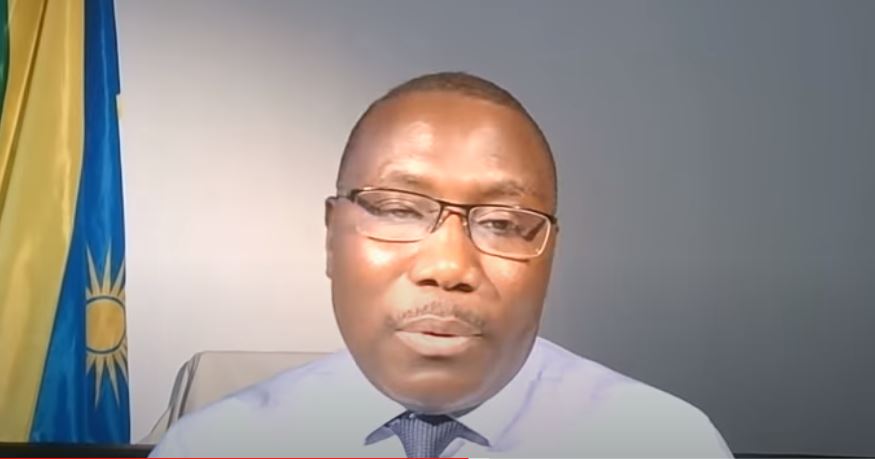
Thomas Nahimana’s politics is online
Nahimana’s international conventions form the most visible—and theatrical—dimension of his political strategy. Events have been held in Canada (Ottawa), South Africa (Cape Town), Australia, and other locations, often promoted as major mobilization moments for democratic change in Rwanda.
In February 2025, he addressed the Australian Institute of International Affairs, followed by a GREX International Convention later that year. Similar meetings elsewhere attracted small but loyal audiences.
Video footage and reports suggest intimate gatherings rather than the mass mobilization implied in official messaging.
Social media platforms, particularly X (formerly Twitter), amplify these events, but critics note a recurring pattern: expansive declarations paired with limited real-world engagement.
A Pattern of Spectacle Over Substance
Nahimana’s suffered a major blow in 2020, when he publicly claimed that President Kagame had died—a rumor swiftly disproven when Kagame later joked about his supposed demise. Despite such high-profile missteps, Nahimana has remained undeterred.
ROC’s launch echoes earlier declarations, blending political ambition with religious undertones and sweeping promises.
Nahimana maintains an active YouTube channel where a recurring theme is the portrayal of President Kagame’s government—and Rwandans who returned after 1994—as “Abavantara” (invaders). While framed as political critique, this label carries a deeper, coded message.
It advances the insinuation that these returnees have imposed themselves on the country, subtly reinforcing a narrative to his audience that “Tutsis” are dominating “Hutus,” without stating it explicitly.
To non-Rwandan audiences, particularly when his statements are translated into English or French, Nahimana’s rhetoric can appear to be routine political commentary.
For native Kinyarwanda speakers, however, the meaning is far more explicit and troubling. The language relies heavily on implied “us versus them” distinctions—terminology and framing that closely mirror the coded ethnic rhetoric prevalent in Rwanda prior to the 1994 genocide against the Tutsi.
As Rwanda looks toward 2029, Nahimana’s political show continues. Whether it evolves into a credible force—or remains an enduring farce—may ultimately be decided not by declarations abroad, but by realities on the ground.
