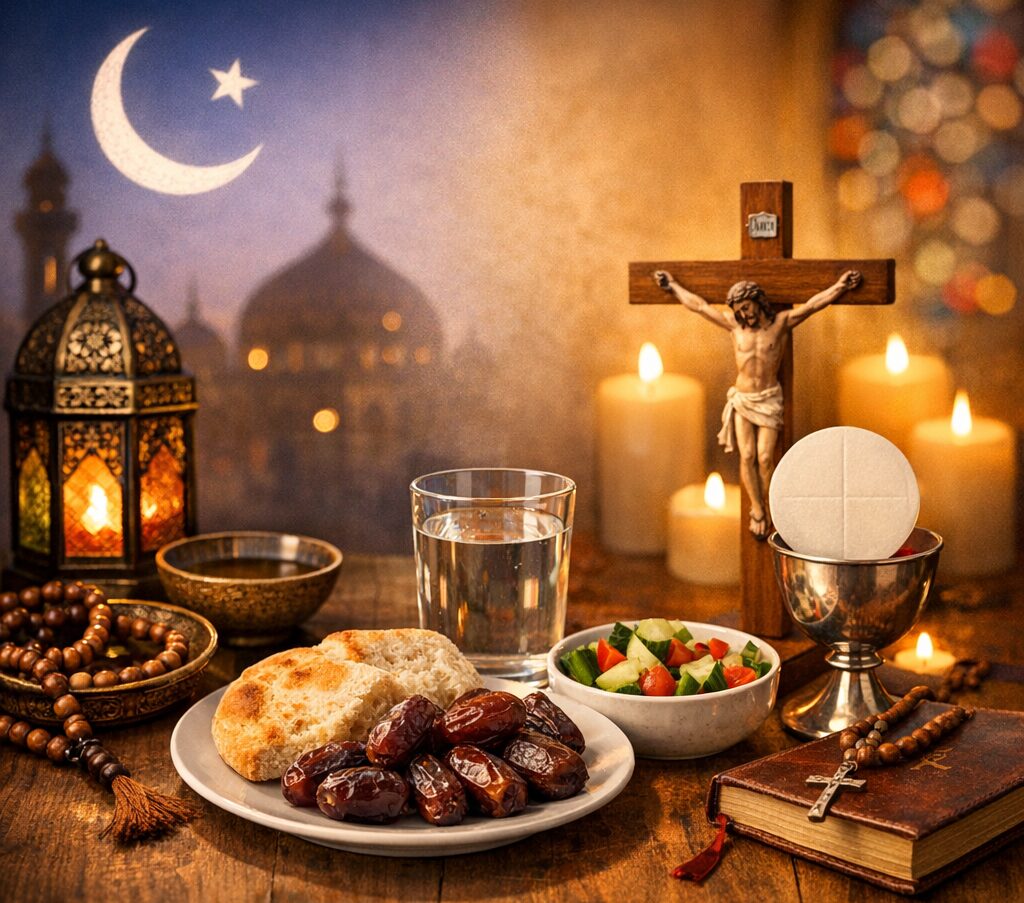
Muslims and Catholics observe fasting during the overlapping periods of Ramadan and Lent, a convergence that occurs because the Islamic lunar calendar shifts each year while the Christian calendar for Lent is linked to the timing of Easter.
When Muslims and Catholics fast at the same time—during Ramadan and Lent—it is more than a coincidence of religious calendars; it becomes a powerful moment of shared reflection, discipline, and spiritual renewal.
During Ramadan, Muslims fast from dawn to sunset, dedicating themselves to prayer, charity, and self-discipline. At the same time, Catholics observe Lent, a 40-day period of fasting, prayer, and repentance leading up to Easter.
When these sacred seasons overlap, several important lessons emerge:
- Despite theological differences, both traditions emphasize self-control, sacrifice, compassion for the poor, repentance, and spiritual growth. This reminds us that faith traditions often share similar moral foundations.
- In countries like Rwanda, where Christians and Muslims live side by side, simultaneous fasting highlights peaceful coexistence. It becomes a visible sign that different beliefs can flourish in mutual respect.
- Fasting cultivates empathy. Hunger softens the heart. When two major faith communities fast together, it deepens understanding of each other’s spiritual struggles and commitments.
- Both Ramadan and Lent call believers to reduce worldly distractions, reflect on personal behavior, and strengthen their relationship with God. This shared period can inspire broader society to embrace values such as integrity, forgiveness, and reconciliation.
- Such moments create opportunities for interfaith dialogue, shared meals at sunset (iftar invitations), joint charity work, and conversations about faith. These foster trust and break down stereotypes.
A Message for the World:
In a time when religion is sometimes portrayed as divisive, simultaneous fasting sends a different message: faith can be a force for humility, peace, and moral responsibility.
In essence, when Muslims and Catholics fast at the same time, the lesson is not about competition of beliefs. It is about shared humanity, discipline, and the pursuit of spiritual growth.
Here’s how it happens:
Muslim Fasting (Ramadan) – Ramadan is the ninth month of the Islamic lunar calendar. – The Islamic calendar follows the moon cycle, with about 354 days a year. – Because it is shorter than the solar year, Ramadan shifts approximately 10–11 days earlier each year. – During Ramadan, Muslims fast from dawn to sunset for 29–30 days.
Catholic Fasting (Lent) – Lent is a 40-day period of prayer and fasting before Easter. – It begins on Ash Wednesday and ends before Easter Sunday. – The Catholic calendar follows the solar year, but Easter’s date is determined by a combination of solar and lunar calculations—the first Sunday after the first full moon following the spring equinox.
Both traditions sometimes overlap because Ramadan moves earlier each year (lunar calendar), while Lent falls in March–April (linked to Easter calculations). Every few years, the two fasting periods coincide partially or almost completely. For example, in recent years, Ramadan has begun in March, overlapping significantly with Lent. This overlap is purely astronomical and calendar-based, not coordinated between the two religions.
Gasana Marcelin is a seasoned multimedia journalist and professional translator at Kigali Today, serving as a senior TV and radio reporter, producer and writer. Known for his clear storytelling and editorial versatility, he is also a passionate guitarist with a love for soft music and movies.