



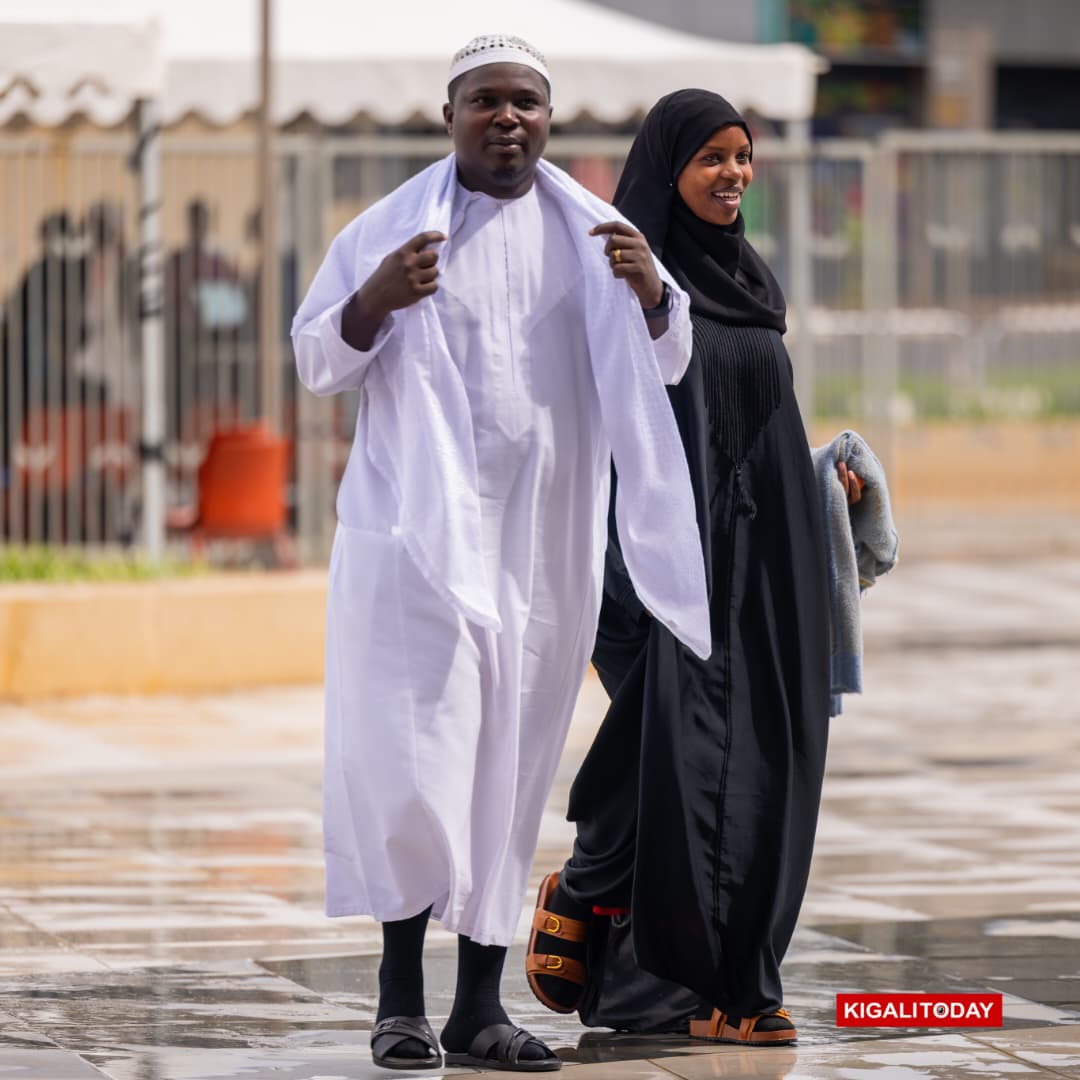
A Muslim arrives at BK Arena today. Once restricted to segregated enclaves like Biryogo, the community now occupies Rwanda’s most prominent national stage.
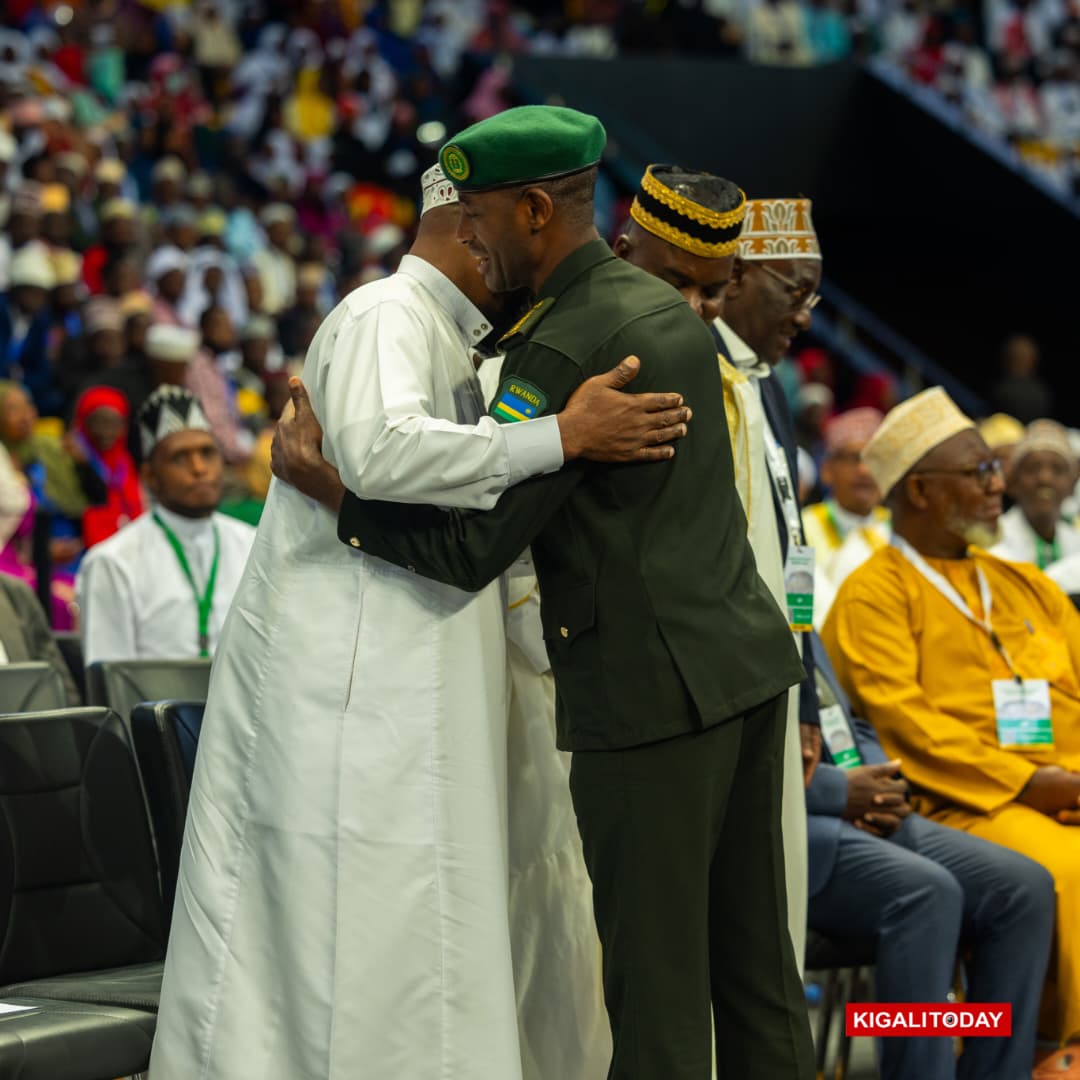
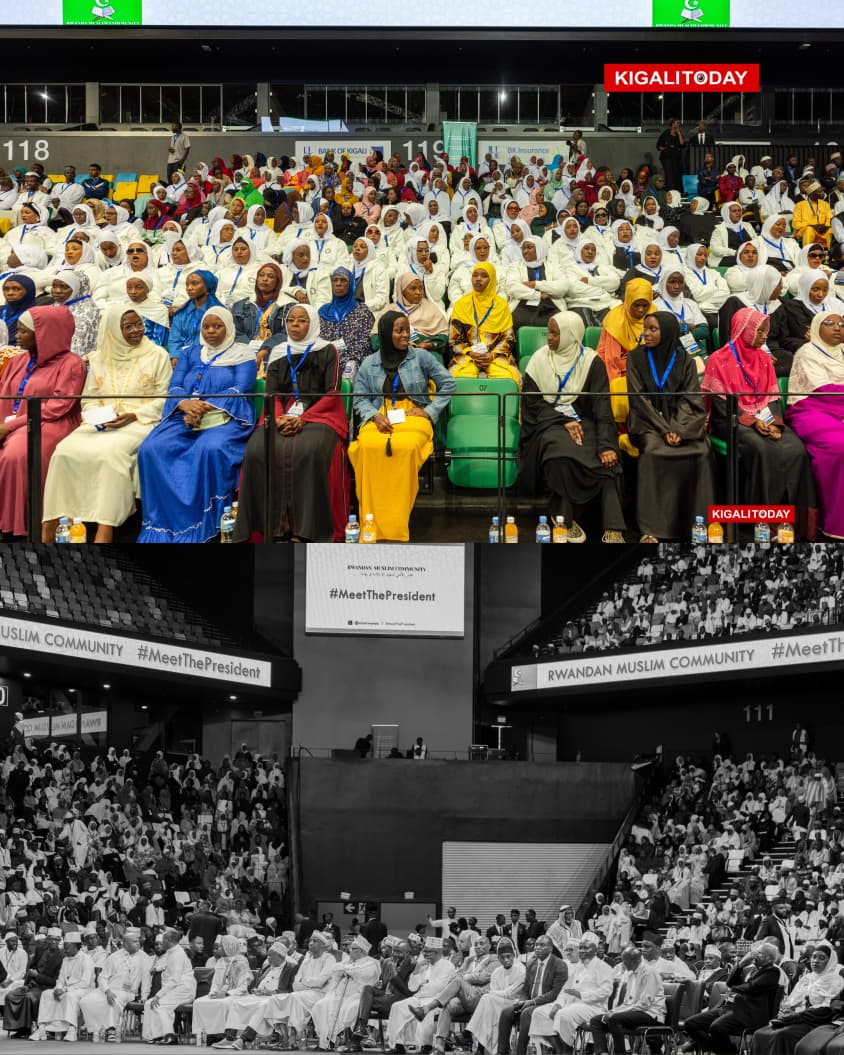
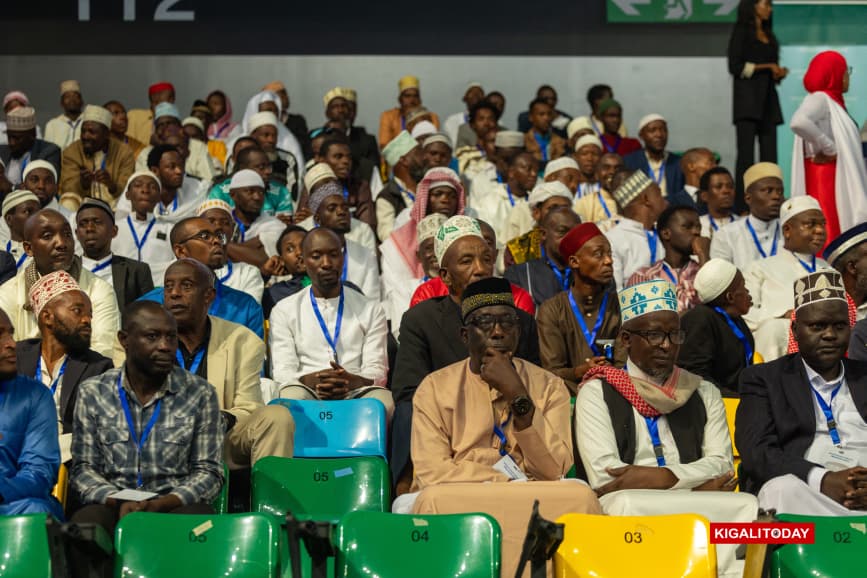
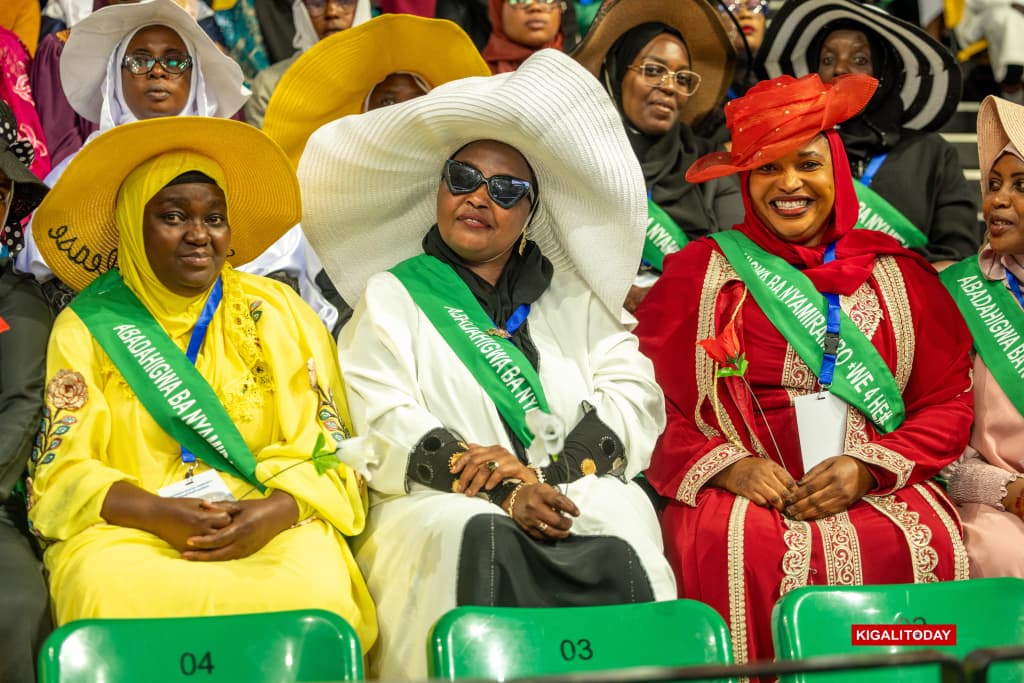
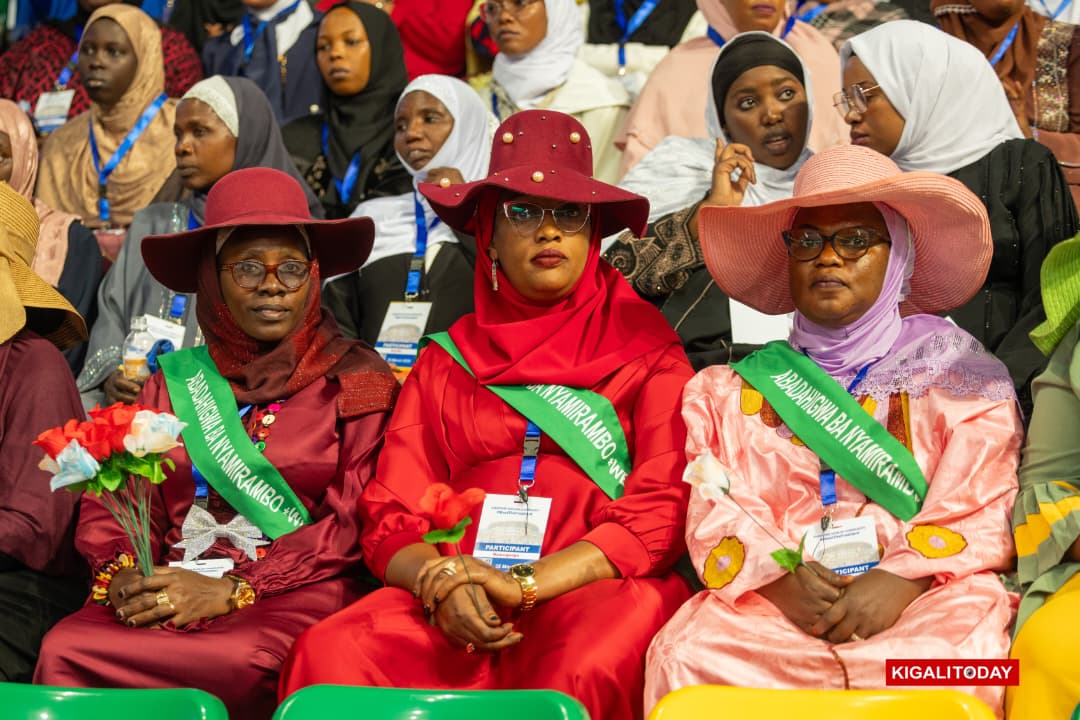
KIGALI, Rwanda — On this Wednesday, inside the cavernous BK Arena, thousands of Rwandan Muslims gathered in celebration just days after Eid al-Fitr, their presence filling the stands in a show of confidence and belonging that would have been almost unimaginable a generation ago.
Standing before them, President Paul Kagame delivered a message that was both congratulatory and cautionary: a community that has risen from the margins must now learn to manage its own internal differences.
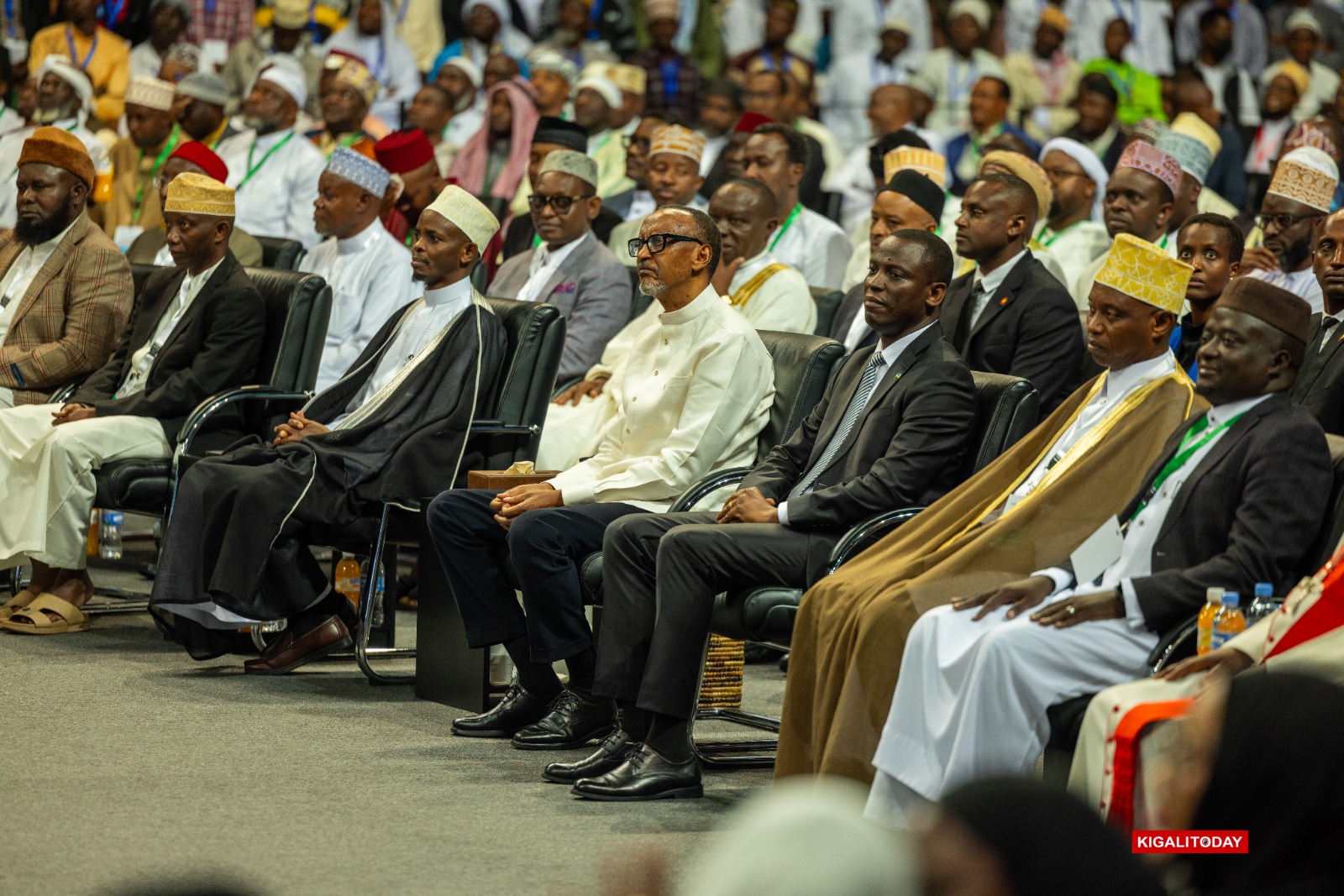
Once a marginalized minority, the community now engages directly with the presidency as a key stakeholder in Rwanda’s national governance.
It was, in many ways, the language reserved not for outsiders, but for stakeholders — a recognition of how far Rwanda’s Muslims have come.
Their story is one of the most striking social transformations in modern Rwanda: from a tightly controlled, segregated minority under colonial rule to a visible, increasingly influential force woven into the country’s political, economic and social fabric.
On the Margins
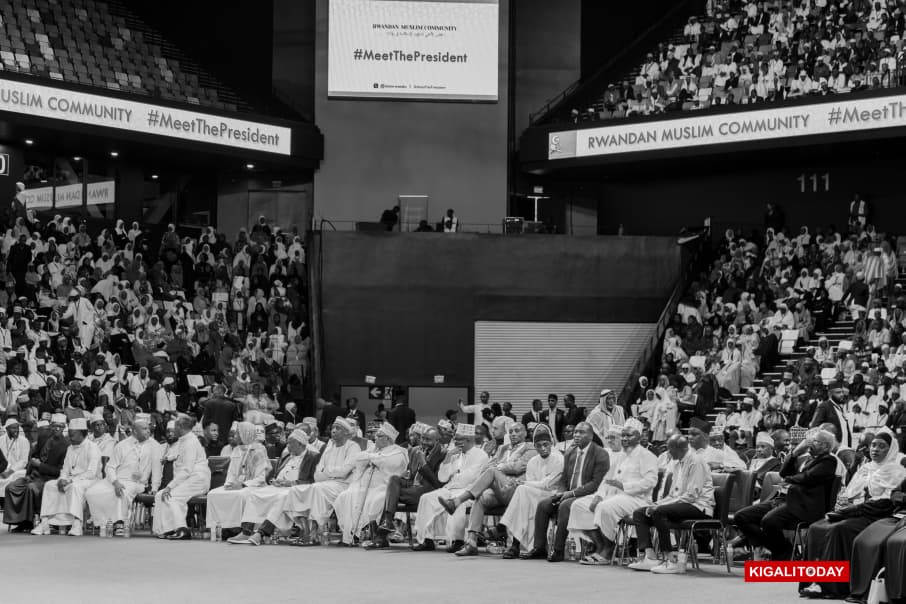
Muslims listen attentively to President Kagame. Once confined to the margins, the President’s presence marks their transition from a segregated minority to a central force in Rwanda’s national fabric.
Islam arrived in Rwanda not through missionary zeal but by accident — carried inland by traders and colonial soldiers at the turn of the 20th century.
By 1913, a small but cohesive Muslim community had built its first mosque in central Kigali, a modest structure that would later evolve into Masjid Madina, today the largest mosque in the country.
Early converts were drawn through trade networks, intermarriage and the economic opportunities that Muslim merchants offered.
But what began as quiet integration soon hardened into systemic exclusion.
Under Belgian rule, Islam was viewed as a rival to Catholic missionary expansion.
In 1925, colonial authorities ordered Muslims into segregated enclaves known as “Camp Swahili,” effectively recasting them as a separate and suspect population — neither fully indigenous nor fully accepted.
In Kigali, that policy took physical form in neighborhoods carved out and policed with bureaucratic precision. Movement required permits. Residency was restricted. Even social interaction was controlled.
The most enduring of these enclaves emerged in 1937: Biryogo.
Life Inside the Camp
Today, Biryogo is a bustling urban neighborhood. But for decades, it was something closer to a contained world.
Rows of tightly packed homes stretched along carefully demarcated roads. Muslims were forbidden from farming or raising livestock, limiting their economic life largely to trade.
Schools were scarce, and access to education often required conversion to Christianity — forcing the community to establish its own institutions with little external support.
The label “Umuswahili,” used at the time, carried a sting — implying foreignness, dishonesty, even inferiority.
Elsewhere across Rwanda, similar enclaves existed, reinforcing a national system that kept Muslims politically voiceless and socially peripheral.
Full citizenship rights would not come until 1964, years after independence.
And even then, the stigma lingered.
1994
The 1994 Genocide against the Tutsi would become an unexpected inflection point.
While Rwanda’s social fabric collapsed, many Muslim communities distinguished themselves in a different way. Mosques became places of refuge.
Clerics and ordinary believers alike sheltered those fleeing violence. Participation in the killings was notably limited compared to other segments of society.
In the aftermath, this moral stance reshaped perceptions.
For many Rwandans, Islam — once viewed through a colonial lens of suspicion — came to be associated with discipline, unity and resistance to division.
Conversions followed.
From Isolation to Integration
After 1994, the new government dismantled the legal and social architecture of exclusion. The camps were abolished.
Movement restrictions vanished. Muslims could live, work and own land anywhere in the country.
Biryogo itself transformed — no longer a closed enclave, but a vibrant, mixed neighborhood integrated into the wider city.
Across Rwanda, mosques multiplied. Muslim-run schools expanded. The community began to assert itself not as a separate entity, but as part of a broader national identity.
Officially, Muslims still make up a small share of the population — about 2 percent, according to the latest census.
But their influence far exceeds their numbers, visible in commerce, education and public life.
Leaders like Salim Hitimana often describe the journey in simple terms: from confinement to complete liberty.
New Challenges
With expansion has come complexity.
The umbrella body, the Rwanda Muslim Council, has faced periodic internal tensions — disputes over leadership, control of mosques and management of resources.
These divisions echo earlier rivalries, dating back to pre-1994 factions that competed for influence within a constrained community.
Now, with more assets, institutions and visibility at stake, those disagreements carry greater weight.
That is the backdrop to President Kagame’s remarks at BK Arena.
His message — that the community must resolve its disputes internally — reflects a broader expectation placed on institutions that have matured into national actors.
For older generations, the shift is almost difficult to articulate.
A community once confined to designated quarters, monitored by colonial administrators and excluded from mainstream life, now gathers openly in the country’s largest arena — addressed directly by the president.
The symbolism is unmistakable.
Rwanda’s Muslims are no longer defined by where they were allowed to live, but by how they participate in a country that has, over the past three decades, sought to redefine itself.
And in that transformation, their journey — from the narrow lanes of Biryogo’s Camp Swahili to the national stage — stands as one of the clearest examples of how deeply Rwanda has changed.
