



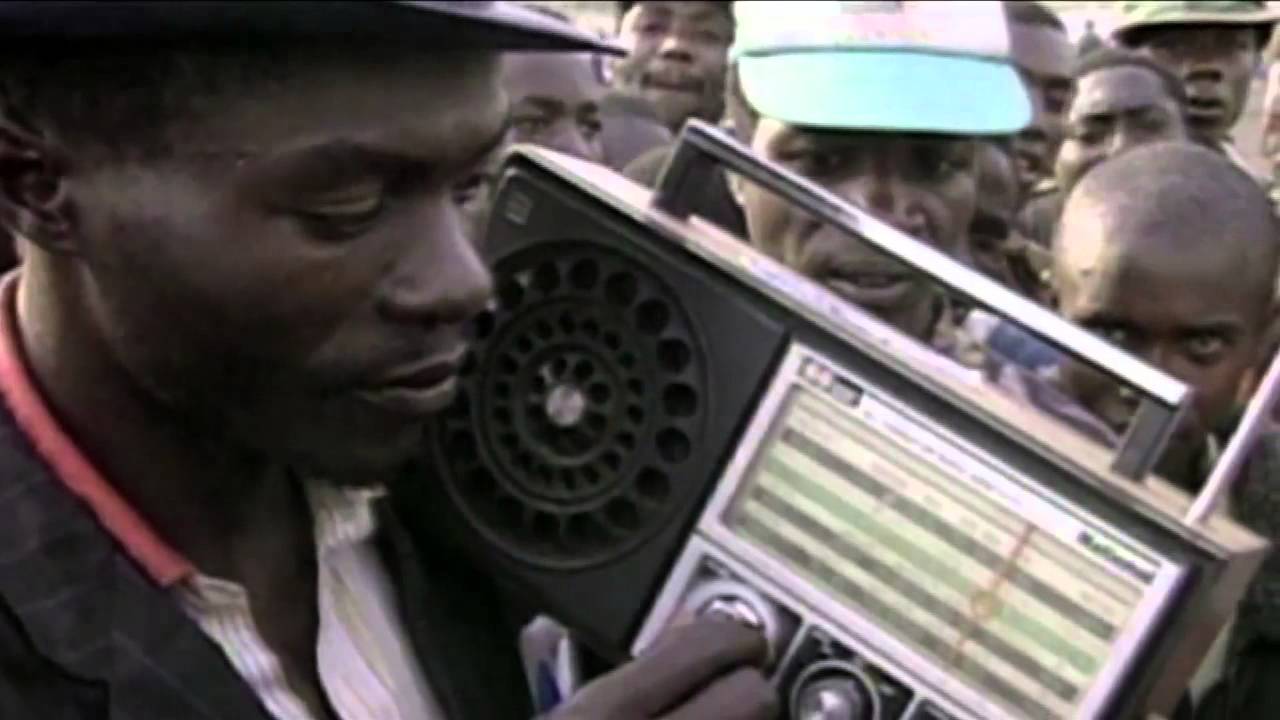
The film ‘Words that Kill’ was produced by Aegis Trust in partnership with the USC Shoah Foundation. It talks about the haunting similarities between the propaganda of the Nazi regime and Hutu Power extremists and how media, especially radio, was used to dehumanize Tutsi and call for people to kill their friends and neighbours.
KIGALI — In one of the most sobering and sharply critical parts of his Kwibuka32 address, President Paul Kagame revisited the international community’s response to the 1994 Genocide against the Tutsi, accusing global actors of indifference, hesitation, and moral failure at a time when decisive action could have saved countless lives.
Speaking at the Kigali Genocide Memorial, Kagame recounted how warnings were clear, evidence was available, and even practical interventions were within reach—yet little was done.
Among the most striking examples he cited was the failure to disrupt the broadcasts of hate radio, particularly RTLM, which played a central role in directing killings across the country.
Kagame said that the technology to jam RTLM’s signals existed at the time, and that aircraft capable of carrying out the operation were available.
“Officials even calculated the hourly cost of the mission,” he said.
But in the end, the plan was abandoned.
“The operation was deemed to be too expensive,” Kagame said, adding that it was also viewed as a potential violation of Rwanda’s sovereignty.
For Kagame, this decision symbolized a broader failure to value Rwandan lives.
“It became too expensive—especially when, in their minds, those lives are really worthless,” he said, speaking with visible gravity.
Warnings Ignored, Action Delayed
Kagame emphasized that the genocide did not occur without warning. Intelligence had been gathered and shared months in advance, including detailed reports of weapons stockpiling and lists of Tutsis targeted for killing.
In one instance, he noted, a senior United Nations commander in Rwanda sent a fax to headquarters in New York outlining these preparations.
Rather than acting on the intelligence, Kagame said, the commander was instructed to share the information with the very government accused of planning the genocide—and to take no further action.
This, Kagame suggested, reflected a deeper unwillingness to confront the reality unfolding in Rwanda.
“Genocide is defined in international law precisely to create an obligation to act,” he said, criticizing the reluctance to even use the term during the early days of the killings.
To avoid the label, he argued, was effectively to avoid responsibility.
Withdrawal and Abandonment
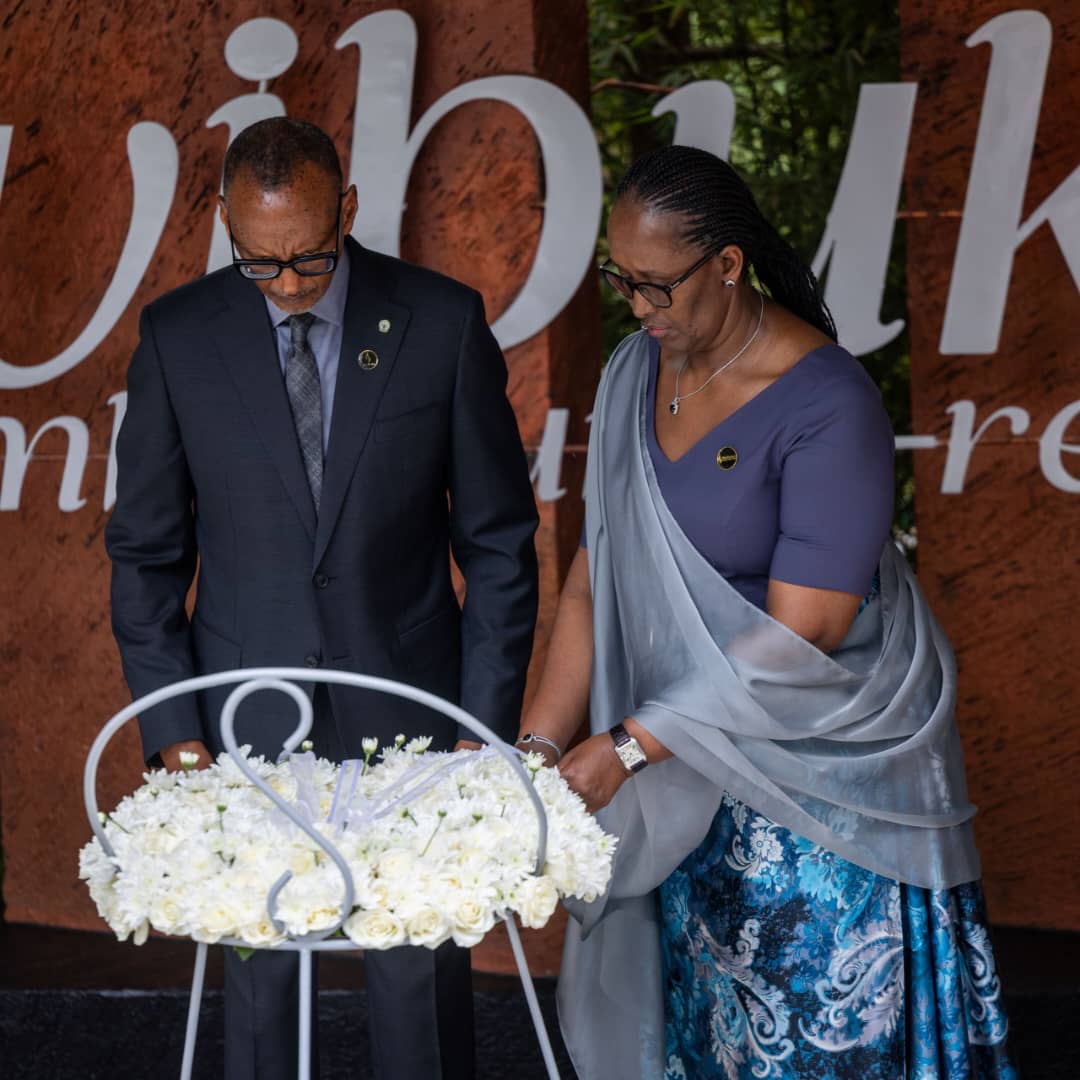
President Kagame and First Lady this Tuesday April 7, 2026, lay a Wreath at the Kigali Genocide Memorial Center in honour of the victims
Kagame also pointed to the withdrawal of peacekeepers at the onset of the genocide as another critical failure.
As violence escalated, foreign nationals were evacuated, while thousands of Tutsis were left behind without protection.
“When the peacekeepers withdrew, thousands of desperate Tutsi were left to die,” he said.
He acknowledged that some peacekeepers who remained were able to save lives, demonstrating what might have been possible with stronger political will.
“The lives saved by those who stayed make clear how much more could have been done,” Kagame added.
A Pattern of Global Indifference
Kagame framed these failures not as isolated mistakes, but as part of a broader pattern of international indifference to African crises.
“With only a few heroic exceptions, the world was unconcerned until it was too late,” he said.
He suggested that the decisions made in 1994—whether to withdraw troops, avoid the term genocide, or abandon intervention plans—were shaped by calculations that placed limited value on the lives at risk.
For Rwanda, he said, these choices left a lasting imprint.
“The lessons have been brutal,” Kagame noted, emphasizing that the country has drawn its own conclusions about security and self-reliance.
Shaping Rwanda’s Present
Kagame linked the failures of 1994 directly to Rwanda’s current approach to national security and international relations.
“If our lives do not happen to align with someone else’s interests, they are not worth saving,” he said, summarizing what he described as the harsh reality Rwanda faced during the genocide.
This, he explained, is why Rwanda prioritizes the protection of its citizens above all else—and why it is cautious about relying on external guarantees.
The message was clear: the memory of abandonment continues to shape Rwanda’s policies today.
Reflect—and Act
As Rwanda marks Kwibuka32, Kagame’s reflections on international failure serve as both a warning and a challenge.
The lessons of 1994, he suggested, are not only for Rwanda, but for the world.
Genocide, he reminded his audience, is not inevitable—it is enabled by inaction, denial, and delay.
And when the cost of intervention is weighed against the value of human life, the consequences can be irreversible.
In Kagame’s telling, the tragedy of 1994 was not only what was done—but what was not done.
And that, he implied, is a lesson the world cannot afford to ignore.
