



The death of Félicien Kabuga closes one of the longest and most painful chapters of the 1994 Genocide against the Tutsi in Rwanda — but not in the way the survivors had hoped.
On May 16, 2026, Kabuga died at 93 in detention in The Hague, under the custody of the International Residual Mechanism for Criminal Tribunals, the U.N. body handling the final unfinished business of the Rwanda tribunal.
He died without a verdict, without a final judgment, and without ever answering fully in court for accusations that made him one of the world’s most wanted fugitives.
For survivors, this is not closure. It is an unfinished sentence.
Kabuga was not merely another genocide suspect. He was widely regarded as the financier of the genocide — the wealthy businessman whose money, influence, and political alliances helped transform extremist ideology into organized extermination.
History may never receive a courtroom verdict, but in the eyes of Rwandans, judgment was rendered long ago.
He financed hate. He financed propaganda. He financed mass murder.
And for nearly three decades, he managed to outrun justice.
The Billionaire
Félicien Kabuga was once among Rwanda’s richest men, a businessman whose wealth stretched across tea estates, import-export companies, real estate holdings, and deep political connections within the ruling elite of President Juvénal Habyarimana’s inner circle — the notorious Akazu, the small but powerful network that helped design and sustain Hutu Power ideology.
His business empire, particularly through ETS Kabuga, gave him access not only to money but to the logistical channels that would later become crucial to the genocide.
Between January 1993 and March 1994, UN prosecutors and investigators said Kabuga played a key role in importing machetes, weapons, and ammunition, particularly into western Rwanda, including Gisenyi and Kibuye. These were not ordinary commercial imports. They became tools of extermination.
He was also accused of helping equip the Interahamwe militias, including providing the now infamous Kitenge uniforms associated with the militia groups that carried out mass killings.
But perhaps his most enduring role was not in steel, but in words.
Kabuga was among the principal financiers and leaders of Radio Télévision Libre des Mille Collines, better known as RTLM — the radio station that became one of the most effective propaganda weapons of the genocide.
As chairman and director-general, he helped shape its mission and funded its operations. At fundraising events, RTLM was openly described as serving “the defense of Hutu Power.”
Its broadcasts urged listeners to “cut down the tall trees” — a coded call for the murder of Tutsis. Presenters named targets, celebrated killings, directed roadblocks, and transformed mass murder into a national project.
The station became known simply as “Radio Machete.”
Kabuga also financed Kangura, the extremist publication run by Hassan Ngeze, later convicted by the ICTR. The magazine published the infamous “Hutu Ten Commandments,” anti-Tutsi propaganda, and openly dehumanizing content that normalized extermination.
One notorious 1991 cover asked: “Which weapons are we going to use to beat the cockroaches for good?” next to the image of a machete.
The genocide did not begin with bullets.
It began with preparation.
And Kabuga helped pay for all of it.
The Presidential Marriages
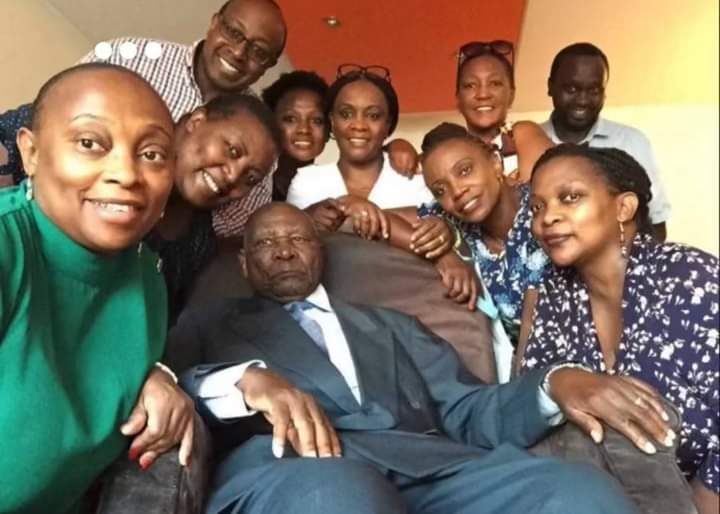
This is part of the extended family of Félicien Kabuga. Some are married into the Habyarimana family
Kabuga understood power not only through business, but through family.
He had 11 children, and strategically used marriage to deepen his position inside Rwanda’s genocidal establishment.
Two of his daughters married sons of President Habyarimana.
Françoise Mukanzi married Léon Habyarimana, while Bernadette Uwamariya married Jean-Pierre Habyarimana, the president’s eldest son.
Another daughter, Félicité Mukademali, married Augustin Ngirabatware, who served as Planning Minister in the 1994 interim government and was later convicted of genocide crimes by the ICTR.
These were not merely family unions. They were political architecture.
They placed Kabuga at the center of the state machinery that planned, financed, and executed genocide against the Tutsi.
His children would later play another crucial role: helping him disappear.
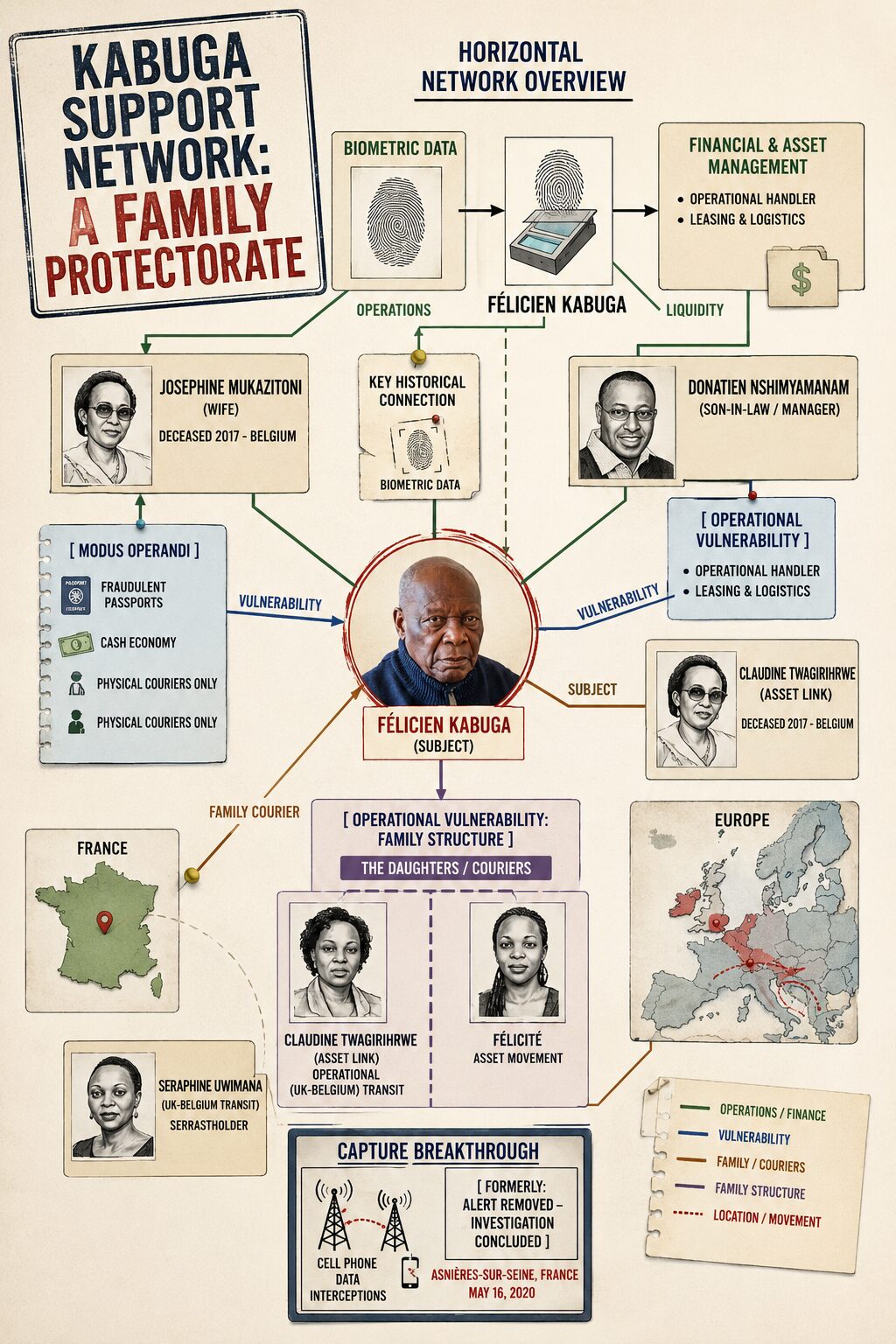
Investigators long argued that family networks were central to his decades-long evasion of justice.
The French Judicial Controversy
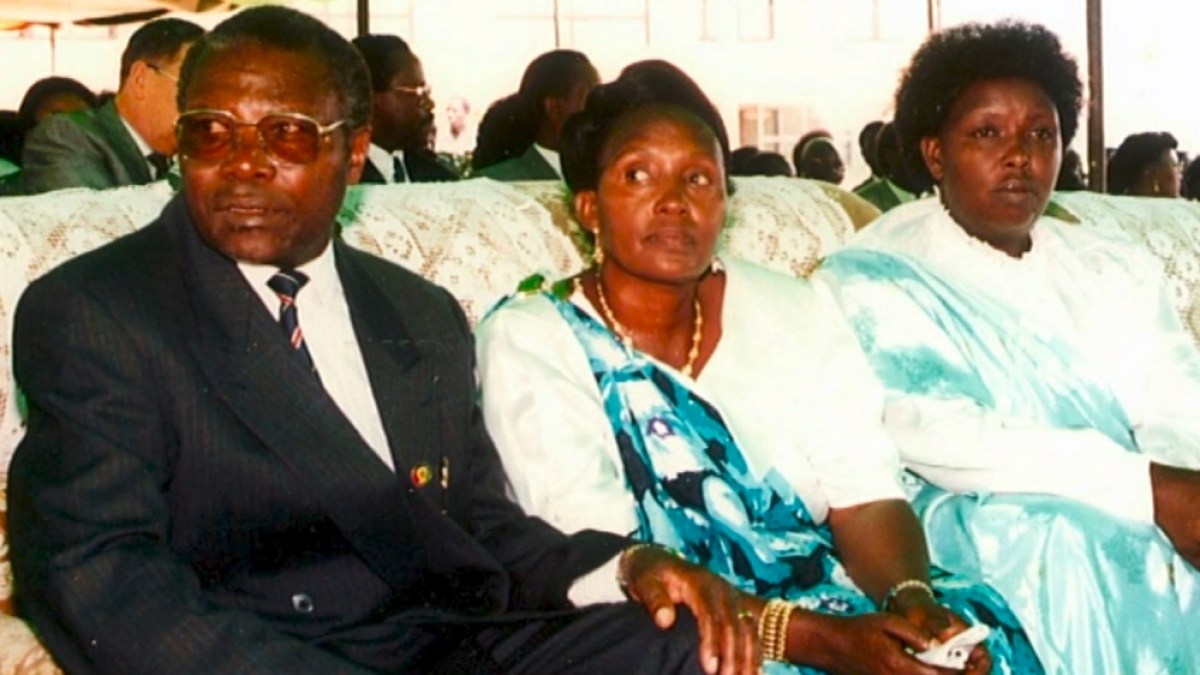
At the height of Kabuga Félicien’s power. His presence displayed unimaginable influence
Kabuga’s broader legacy of influence also intersected with one of the most controversial judicial episodes in post-genocide France.
Through family-linked networks, including his son-in-law Fabien Singaye — who served as translator — Kabuga’s orbit touched the work of French anti-terrorism judge Jean-Louis Bruguière.
In 2006, Bruguière issued explosive indictments accusing senior Rwandan military and political officials of orchestrating the 1994 assassination of President Juvénal Habyarimana, an allegation that implied the attack was the trigger for the genocide.
The move triggered a major diplomatic rupture between Kigali and Paris, with Rwanda denouncing the investigation as politically motivated and reliant on contested witness testimony while ignoring evidence pointing to genocidal planning already underway.
The inquiry was later weakened by subsequent judicial reviews in France under Judges Marc Trévidic and Nathalie Poux, and its central conclusions were effectively discredited in legal and political terms.
It left Bruguière’s case widely viewed as one of the most controversial and ultimately unsuccessful attempts to reframe responsibility for the genocide.
The International Protectorate of Silence
Kabuga’s escape was not simply the story of one man hiding.
It was the story of multiple countries that, at different moments, allowed him to remain hidden.
Before his arrest in France in 2020, Kabuga had spent years in Kinshasa in the Democratic Republic of the Congo, where he maintained business operations and benefited from regional instability.
He also found refuge in Kenya, where he became a major real estate investor and, according to investigators, built protection not only through property but through corruption — buying houses and buying silence.
Long before that, Switzerland had received him in 1995.
Swiss authorities later acknowledged that his role in financing the last genocide of the 20th century made his presence untenable. Yet instead of arresting him, they expelled him.
He also reportedly spent time in Germany and Oslo (Norway), often shielded by family and support networks that allowed one of the world’s most wanted men to move quietly across borders.
His evasion exposed an uncomfortable truth about international justice: money travels faster than accountability.
For nearly 30 years, Kabuga survived not because he was invisible, but because powerful systems repeatedly failed to make him visible.
Arrest, Delay
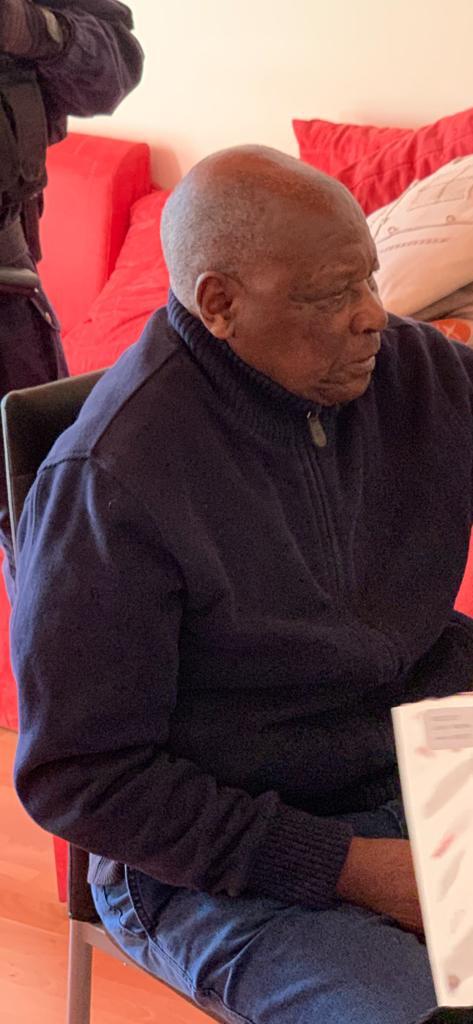
French agents took this photo of Kabuga at a secluded location immediately after his arrest
When French authorities finally arrested him in a Paris suburb in 2020, it was seen as one of the greatest breakthroughs in post-genocide justice.
After 26 years on the run, survivors believed the reckoning had finally arrived.
His trial began in 2022 in The Hague.
But by 2023, proceedings were suspended after judges ruled that Kabuga, suffering from severe dementia, was no longer fit to stand trial.
His senility became, in effect, a shield.
To legal institutions, it was a medical reality.
To many survivors, it felt like justice slipping away at the very moment it seemed within reach.
Justice delayed is justice denied.
In Kabuga’s case, justice was not merely delayed.
It vanished.
There would be no final testimony, no definitive verdict, no sentencing. One of the most consequential genocide trials of the modern era would end not with judgment, but with administrative closure.
At the time of his death, he was reportedly awaiting provisional release to a country willing to receive him.
None stepped forward.
No nation wanted him alive.
Now comes the darker question: who, if anyone, will accept him in death?
The refusal reflects more than diplomatic caution. It reflects the weight of his name.
A man once protected by wealth, networks, and influence ended alone — unwanted across borders.
Can Justice Recover?
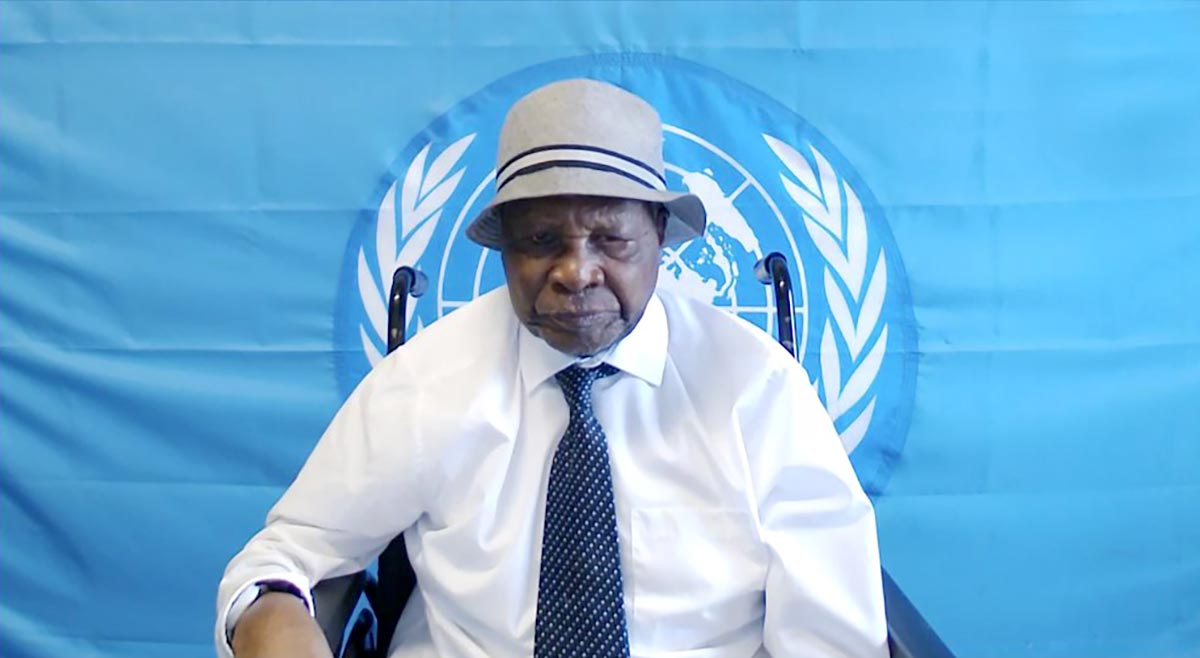
In both of these photos, Kabuga Felicien appeared in court, attentive but unbothered about the proceedings. The court later ruled he did have mental capacity to defend himself
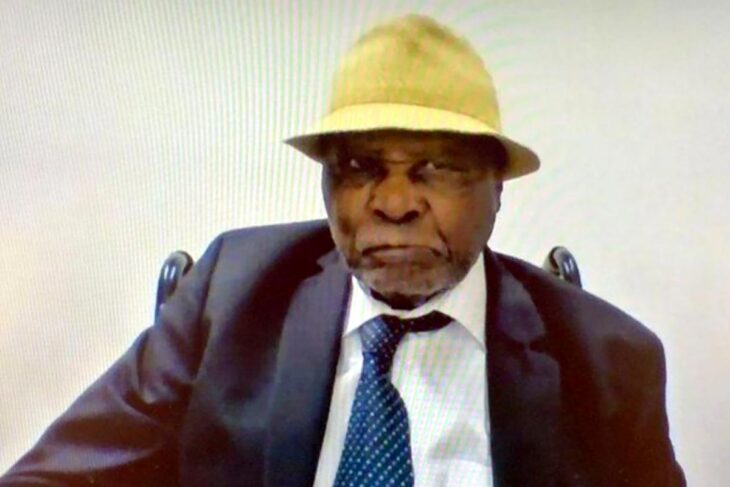
Kabuga’s death leaves behind one of the most significant unfinished trials linked to the 1994 genocide.
It also leaves a warning.
If time, delay, and international hesitation can outlast accountability, then justice itself becomes fragile.
There are still paths forward.
The prosecution of remaining accomplices and support networks must continue. Victims and survivors deserve recognition, truth, and meaningful reparative justice. International mechanisms must be strengthened so aging suspects cannot simply outlive accountability.
Otherwise, a dangerous lesson remains: that enough money, enough delay, and enough silence can defeat justice.
There is an old saying that there is no peace for a criminal.
Whether Kabuga escaped justice or merely postponed it is now beyond legal resolution.
But his story does not end in vindication.
It ends in controversy, absence, and unresolved pain.
For survivors, this is not closure.
It is a reminder that justice is not only about one man. It is about memory. It is about truth. It is about refusing to let history be rewritten by silence.
The verdict may never have been spoken in court.
But history has already written one.
