


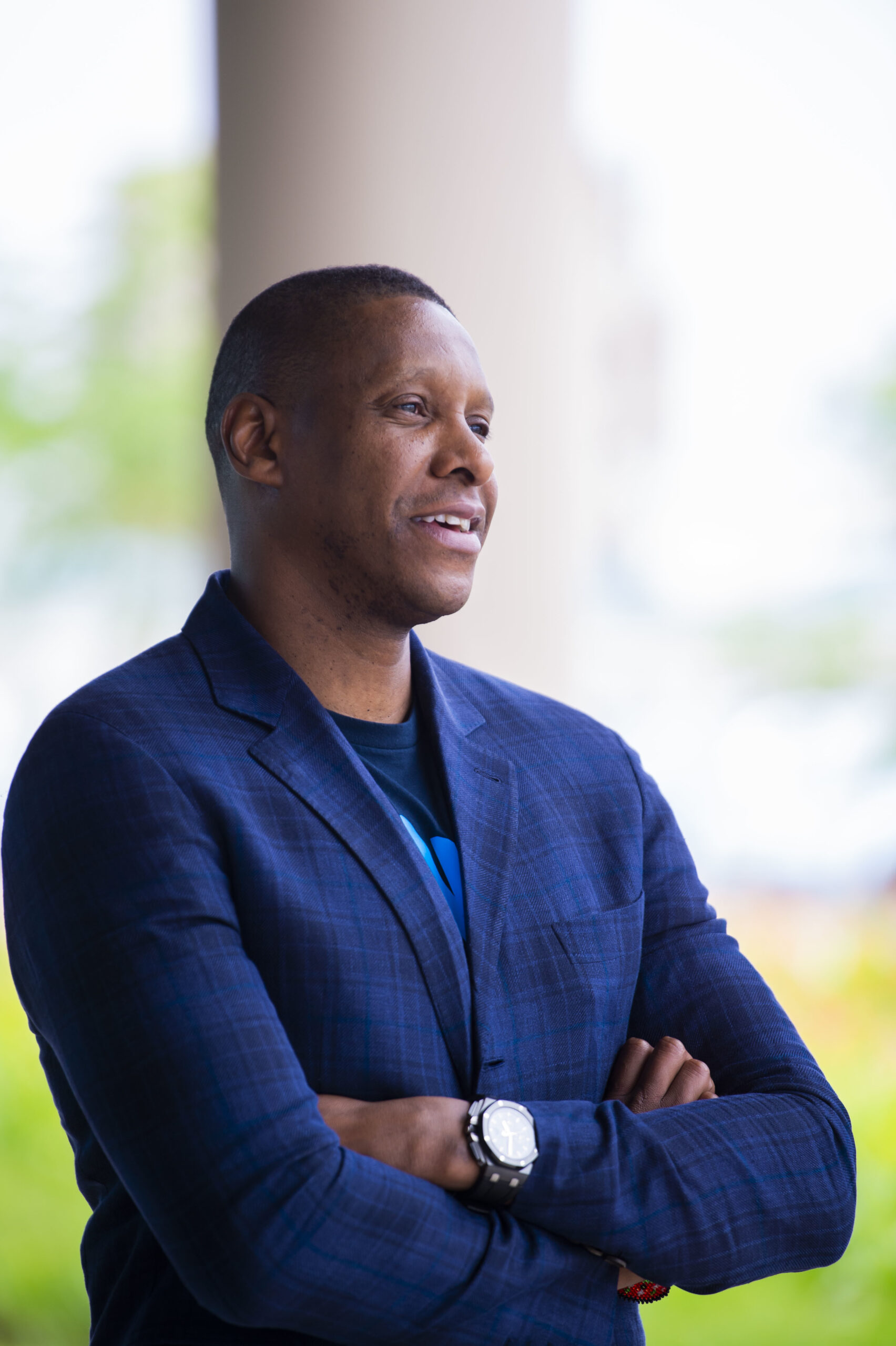
KIGALI — For decades, African sport has been treated largely as entertainment — a source of national pride, youth recreation and international spectacle, but rarely as a serious economic engine.
That, Masai Ujiri argues, must change.
Speaking Friday at one of the headline sessions of the Africa CEO Forum 2026 in Kigali, Ujiri — the newly appointed Team President of the Dallas Mavericks, former architect of the Toronto Raptors’ NBA championship run, and co-founder of Giants of Africa and Zaria Group — made a forceful case that Africa has spent too long seeing sport as “nice to have” rather than as an industry capable of generating billions.
He was speaking alongside Makhtar Diop, Managing Director of the International Finance Corporation (IFC), in a conversation moderated by CNN anchor and correspondent Eleni Giokos.
“We don’t see sports as a business,” Ujiri told the audience. “We see sports as nice to have. We see it as recreation, and we see it as competition.”
That mindset, he said, has left Africa rich in talent but poor in infrastructure, commercial returns and ownership of the value its athletes and entertainers create.
“When they say Africa, get ready for AFCON, get ready for the Olympics, get ready for the World Cup — we are number one there,” he said. “But to actually see what we should be doing for youth, for young women, for business on this continent, and providing the economic value that sports brings to us — we don’t actually see it.”
His argument found a powerful ally in Diop, whose institution has backed Ujiri’s vision through financing support for sports infrastructure and the broader Zaria Court concept.
Diop framed sport not merely as recreation, but as one of Africa’s most overlooked investment opportunities.
“African sport has never lacked talent, spectacle, or global reach,” Diop said. “What it has lacked is the architecture to capture the value it generates — in media rights, data, infrastructure, merchandising, and the brand equity athletes carry far beyond the pitch.”
For decades, he said, much of that commercial upside had flowed elsewhere because African governments and investors had failed to build systems that could retain and monetize it.
‘I Bought Into It’
Diop revealed that his support for Ujiri’s project began not with spreadsheets, but with a conversation and an iPad presentation.
“We met at a Toronto game,” Diop recalled. “He brought his iPad and said, ‘This is what I want to tell you. Don’t ask me about numbers. Let’s talk about vision.’”
Instead of leading with financial projections, Ujiri focused on the broader opportunity: sports cities, multi-use arenas, entertainment districts and a continental ecosystem where African talent could perform — and profit — at home.
“I just bought into it,” Diop said. “My immediate objective was to find a good vehicle to be able to support him.”
That support, however, required convincing IFC’s own investment teams, who were more accustomed to evaluating ports, roads and energy projects than sports arenas.
“They asked legitimate questions,” Diop said. “What is the rate of return? What is the cash flow?”
His answer was blunt.
“I said I will take more risk on this investment,” he said. “Even if the risk is higher than we would take in a normal infrastructure project, I am ready to take it.”
He said sports should be understood as infrastructure too — one capable of driving jobs, tourism, hospitality and urban development.
Arenas Are the Real Business
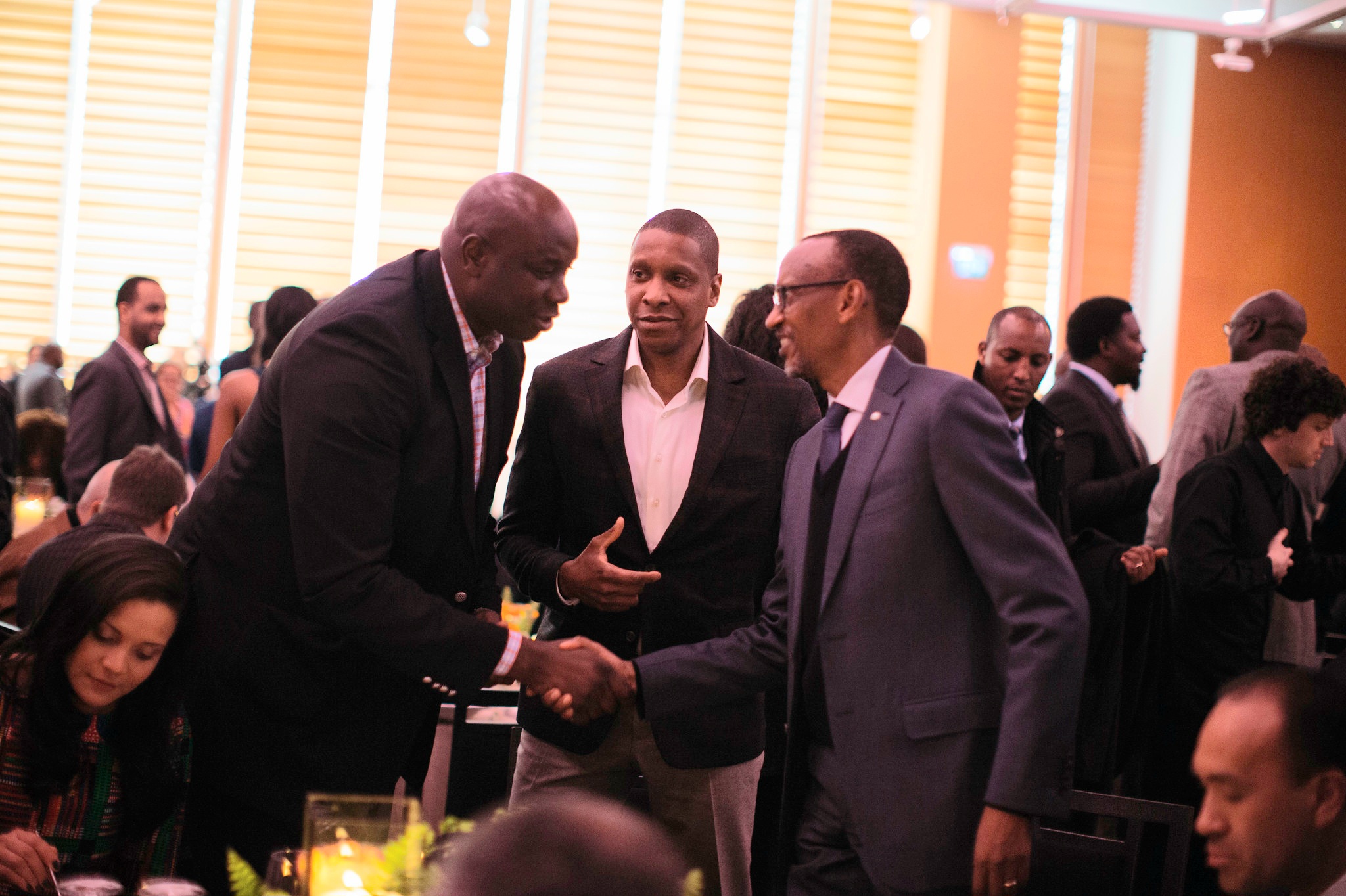
Masai Ujiri (center), General Manager of the Toronto Raptors at the time, introduces President Kagame to a participant at the NBA Africa Summit | Toronto, 13 February 2016
Ujiri drew a sharp distinction between iconic stadiums and revenue-generating arenas.
“The stadiums are iconic,” he said. “They’re big, a little bit more difficult to fill. The arenas are the money makers.”
He pointed to the growing model of entertainment districts built around multi-use arenas — spaces that host basketball games, concerts, conferences, restaurants, retail outlets and tourism activity.
“That is what provides what we are talking about,” he said. “The entertainment and sports districts you build around that is really huge.”
He cited Kigali’s BK Arena as proof that the model can work in Africa, praising President Paul Kagame for embracing sport as a development strategy and allowing the concept of a broader sports city to take shape.
“The real opportunity and the vision came from President Kagame,” Ujiri said. “For Rwanda to do what they’ve done here and set the tone — the template of what should be done on the continent — that belief in sports changed everything.”
BK Arena was, within just a year of construction, unveiled in 2019, barely a few years after Kagame picked up the idea.
He said international artists such as Kendrick Lamar, John Legend, Davido, Tiwa Savage and Diamond Platnumz have already performed in Kigali because of the infrastructure.
But the challenge, he said, is scale.
When he tried to bring global artists such as Drake for festivals, they wanted the ability to perform not just in Kigali, but also in Nairobi, Lagos, Dakar and Accra.
“They wanted a circle,” he said. “They wanted to come here and go to Kenya and go to Nigeria and go to Senegal. Along the way, some of these countries don’t have arenas.”
Without a connected continental ecosystem, Africa remains commercially fragmented.
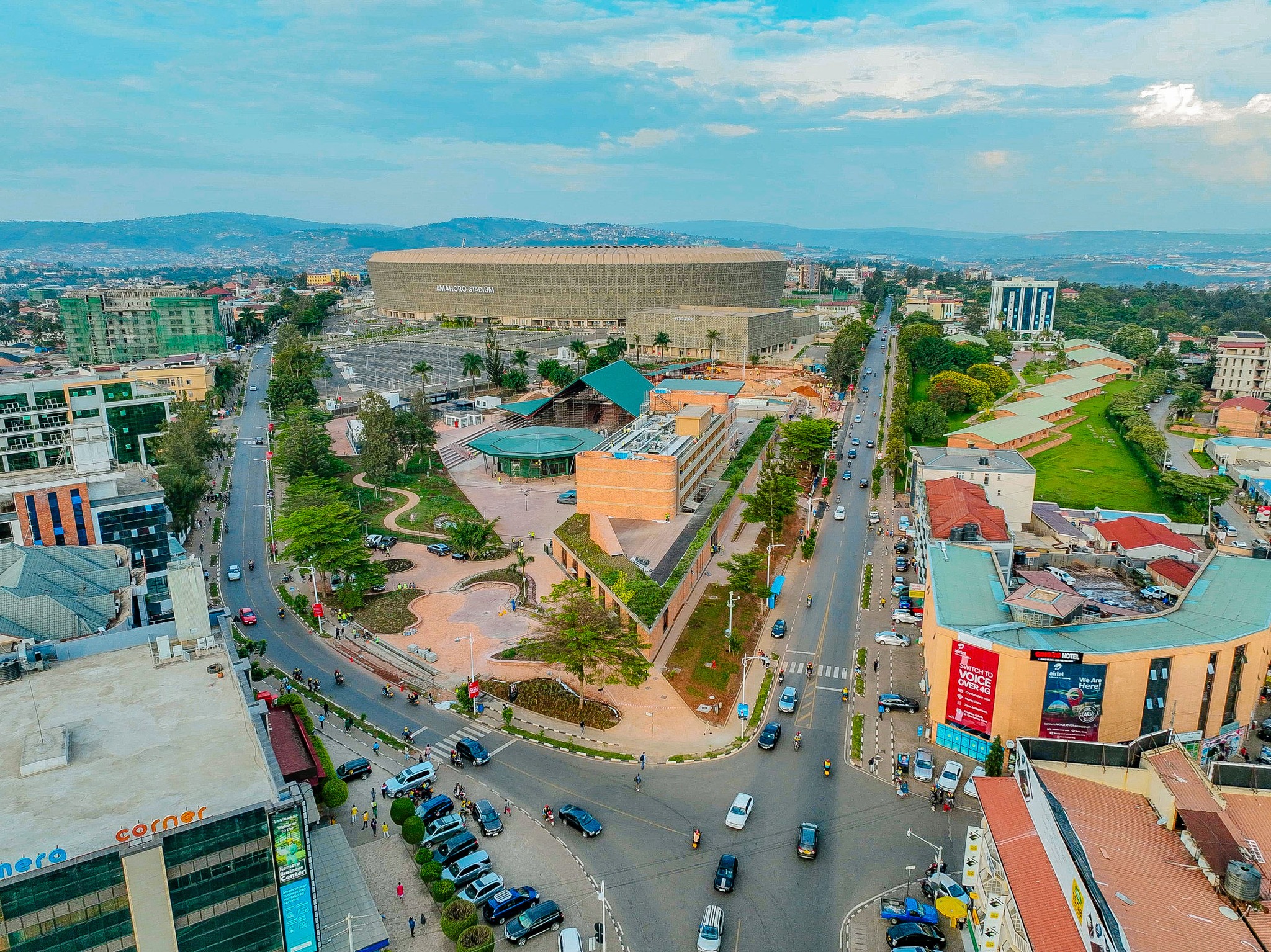
Zaria Court, part of the wider sports city in the Remera suburb of Kigali, as seen from above.
The $800 Million Lesson
One of the moments that convinced Diop most came during a visit to Toronto, when Ujiri pointed to the naming rights of the arena formerly known as the Air Canada Centre.
He explained how it became Scotiabank Arena under a sponsorship deal worth $800 million over 10 years.
“When he gave me that number, I said we are just scratching the surface,” Diop said.
“In Africa, people don’t monetize that.”
Even if African naming rights deals were far smaller — perhaps $200 million over a decade — Diop argued they would still dramatically improve the sustainability of sports infrastructure.
“If IFC is putting money in it,” he said, “believe me, it is safe to put money in that business.”
Government Should Build Less, Enable More
Both speakers were unusually direct in arguing that governments should stop managing sports facilities.
“Management of sports and sports facilities is not a job of government,” Diop said. “It is a job for the private sector.”
He argued that public facilities should be transferred to private operators who understand sponsorships, concerts, programming and profitability.
“Government doesn’t have the capacity of organizing a tour for Drake or Davido,” he said. “They don’t have the connections. It should not be their job.”
Instead, governments should unlock land, provide policy support and allow private investors to build and manage modern facilities.
Across Africa, Ujiri said, many cities are still sitting on old sports complexes built decades ago in prime urban locations, but political resistance has stalled redevelopment.
“Every country in Africa has it right in the middle of the city,” he said. “They are dejected, they are stressed, and people don’t want anybody to touch them. Why?”
He called for governments to stop protecting underused land and instead unlock it for economic transformation.
Beyond Sport: A Full Economic Ecosystem
For both men, the business of sport extends far beyond games.
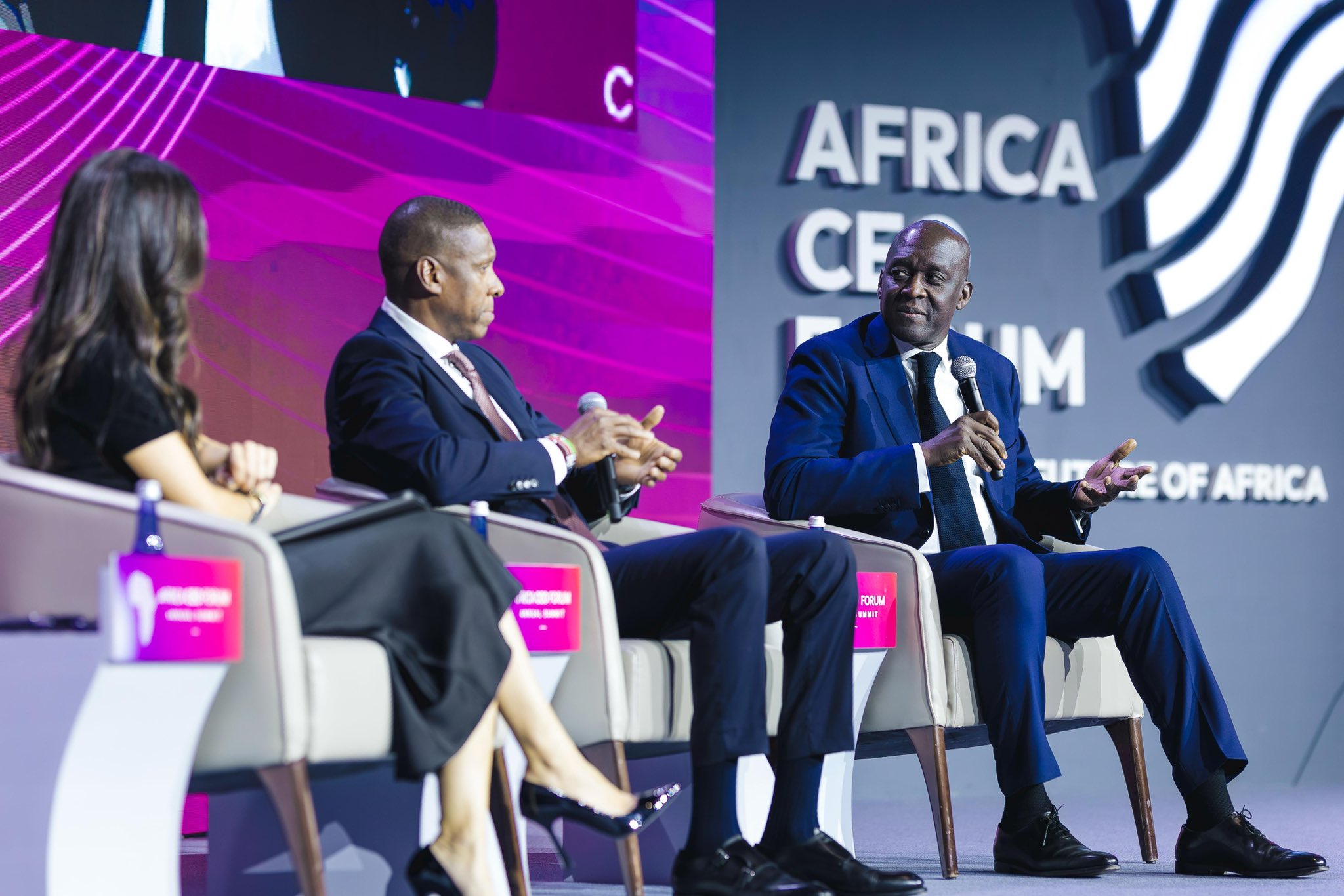
IFC Managing Director Makhtar Diop (R) speaking together with Masai Ujiri, and CNN anchor Eleni Giokos
Sports bars, hotels, transport, restaurants, conferences, retail and tourism all become part of the same revenue system.
“When people go to games or concerts, they spend money before and after,” Ujiri said. “You have to get that money spent in that ecosystem.”
Diop added that even churches and conferences can make arenas profitable.
“The preachers will be my customers every Sunday,” he joked, recalling a Senegalese investor’s business model.
Arenas, he said, must be viewed as multi-use commercial assets, not simply sports venues.
Education Is the Missing Link
Diop also warned that Africa risks producing talent while exporting its value because it lacks the institutions that support the business of sport.
The continent, he said, has too few elite music schools, sports medicine institutes and physical therapy centers.
“There is not a decent physical therapy institute in Africa at the level they have in Dallas,” he said.
He called for universities to create departments focused on sports business, sports medicine and economic analysis of the sports industry.
Without that ecosystem, Africa’s creativity and athletic excellence will continue to be monetized elsewhere.
Earlier on Friday, before taking the stage at the Africa CEO Forum, Ujiri signed a landmark partnership agreement with the International Finance Corporation (IFC) to accelerate the development of sports and entertainment arenas across Africa, formalizing the vision he later defended on stage.
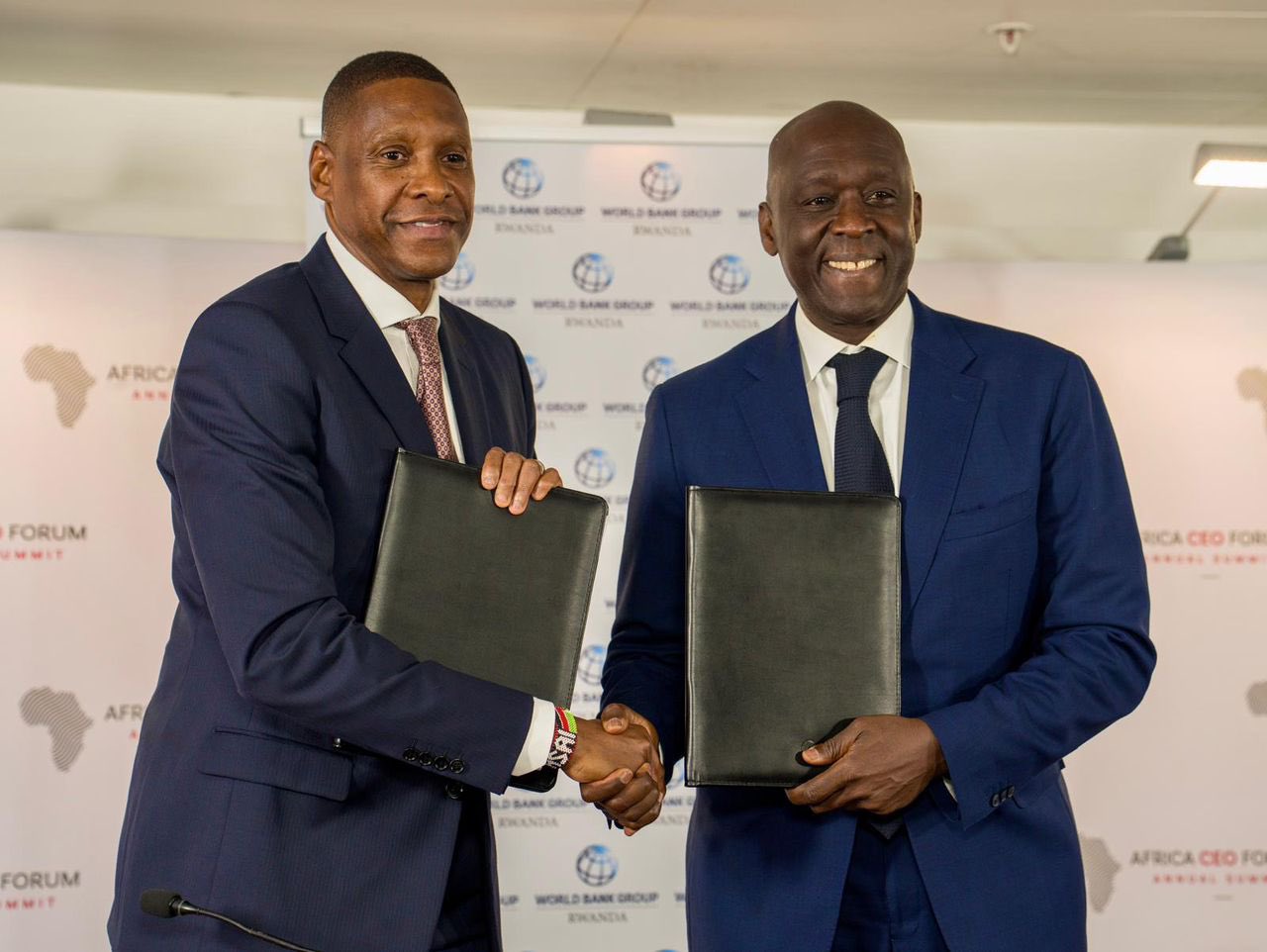
Sealing a long term vision. Before their appearance, they put pen to paper for future of sport and money
The deal, announced on the sidelines of the forum in Kigali, positions IFC as a key financial partner in expanding Zaria Court’s model of multi-use sports districts beyond Rwanda into other major African cities.
Within a space of five years, sports city in Remera suburb of Kigali was born, with Zaria Court laying the ground work at its opening in July last year.
For Ujiri, the agreement signed today was proof that global investors are beginning to recognize sport not simply as recreation, but as serious infrastructure with the power to drive tourism, jobs, hospitality and urban growth.
For Diop, whose institution backed the project, it was a clear signal that sports should be treated like any other strategic investment sector — one capable of delivering both strong returns and long-term economic transformation.
Winning Without Excuses
For Ujiri, the conversation ultimately came down to urgency.
“We have to win,” he said.
He spoke not only of championships, but of a broader African refusal to keep making excuses while exporting its best athletes, artists and professionals to richer markets.
“We are the best,” he said. “The best doctors, the best athletes, the best engineers, the best artists. Now we have to make Africa the best.”
He also pointed to women’s sport as a major growth frontier, citing his investment in a WNBA franchise in Toronto and urging equal opportunity across African sports systems.
“We know the women are smarter than us,” he said. “Let’s give them more opportunity.”
For him, the question is no longer whether sport can become serious business in Africa.
The question is whether Africa is ready to treat it that way.
“It is a business,” he said. “And it’s a business we have to grow.”
