



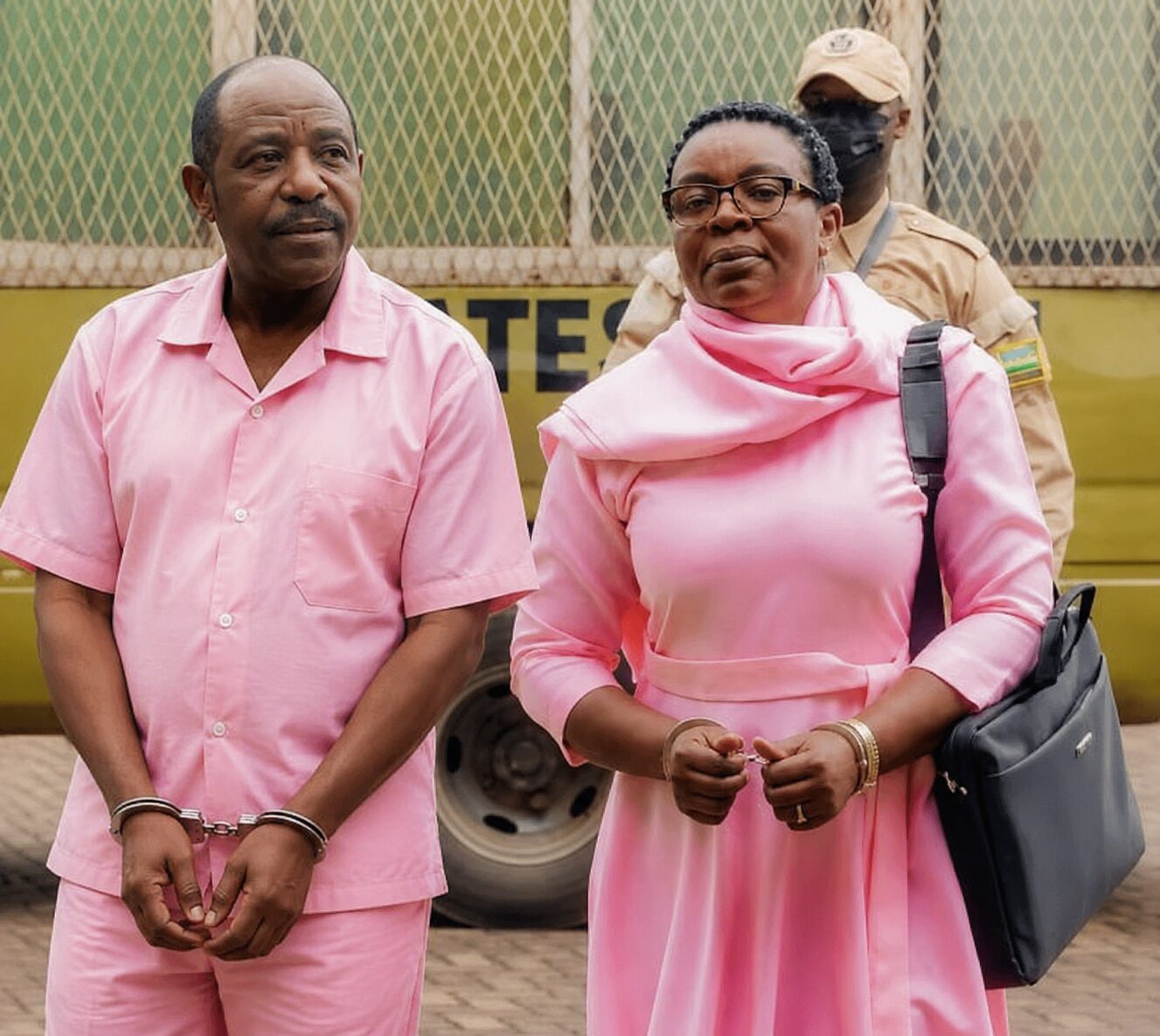
Paul Rusesabagina and Victoire Ingabire
Every year, the Oslo Freedom Forum presents itself as one of the world’s leading gatherings for self-styled defenders of “democracy, human rights, and freedom of expression.”
Politicians, activists, journalists, and campaigners converge in Norway to champion causes they believe deserve international attention. And every year, they are beside the point.
This year’s edition was no different. Once again, Rwanda was featured prominently through the promotion of individuals and narratives that have become familiar fixtures on the international advocacy circuit. Among them were the sons of unrepentant criminal Victoire Ingabire, and Carine Kanimba, the daughter of convicted terrorist Paul Rusesabagina.
Yet after the speeches ended, the cameras stopped rolling, and the attendees returned home, one unavoidable reality remained: Victoire Ingabire is still in prison, and Paul Rusesabagina remains a convicted terrorist.
The Oslo Freedom Forum may excel at generating headlines, but it cannot rewrite facts, overturn court decisions, or erase legal records. The issue is not that controversial figures are invited to speak or are discussed at international forums. The real concern arises when influential organizations present highly selective narratives that omit critical context.
Human rights advocacy loses credibility when it transforms complex legal and security issues into simplistic stories of heroes and villains. Audiences deserve more than carefully crafted public relations campaigns. They deserve the full picture. Unfortunately, the Oslo Freedom Forum offers none.
Instead, it presents infantilizing narratives and overlooks the allegations, evidence, convictions, and legal proceedings that would undermine its crusades.
Victoire Ingabire is introduced as an opposition politician and government critic. That description is not inaccurate, but it is incomplete. What is often omitted is the fact that Ingabire was convicted on evidence, some of which was provided by the Dutch police, which conducted a search at her home in the Netherlands, a country where she was domiciled before moving to Rwanda.
Today, she is facing prosecution over allegations that include forming a criminal group and plotting to commit crimes.
These allegations are not trivial. Prosecutors argue that they involve activities that extend beyond political opposition and enter the realm of criminal conduct.
Whether one agrees with the prosecution or not, fairness demands that these allegations be acknowledged whenever her case is discussed and that the trial be allowed to proceed to its conclusion.
Yet many international platforms choose to shove the legal dimensions of the case under the rug, hoping no one will notice.
By doing so, they deny audiences the opportunity to assess the case and form their own conclusions.
The same pattern is evident in discussions surrounding Paul Rusesabagina. For decades, his international reputation has been shaped by Hotel Rwanda, the Hollywood film that portrayed him as a “hero” during the 1994 Genocide against the Tutsi.
However, even this arguably controversial image cultivated through popular culture does not erase subsequent events. Rusesabagina was convicted by a Rwandan court on terrorism-related charges linked to the FLN armed group, which claimed responsibility for attacks that killed and injured civilians in Rwanda.
Evidence presented during his trial included his own public statements and witness testimonies, including that of U.S. citizen Professor Michelle Martin, as well as FBI-provided evidence linking him to financing through Western Union transfers to the genocidal FDLR. These activities, prosecutors argued, connected him to at least two terrorist armed groups.
His supporters continue to reject the verdict and portray him solely as a dissident. Yet even disagreement with the court’s decision does not eliminate the fact that the conviction exists.
A human rights forum committed to informing the public should present both sides of this reality rather than only the version that aligns with a particular narrative.
One of the most troubling trends in modern activism is the assumption that anyone who criticizes a government should automatically be immune from scrutiny. That is not how democracy works. Freedom of speech protects the right to express opinions. It does not exempt individuals from accountability for actions that may violate the law.
The principle should be simple: rights and responsibilities go hand in hand.
International advocacy organizations should be able to defend civil liberties while also acknowledging legitimate security concerns and judicial processes.
