



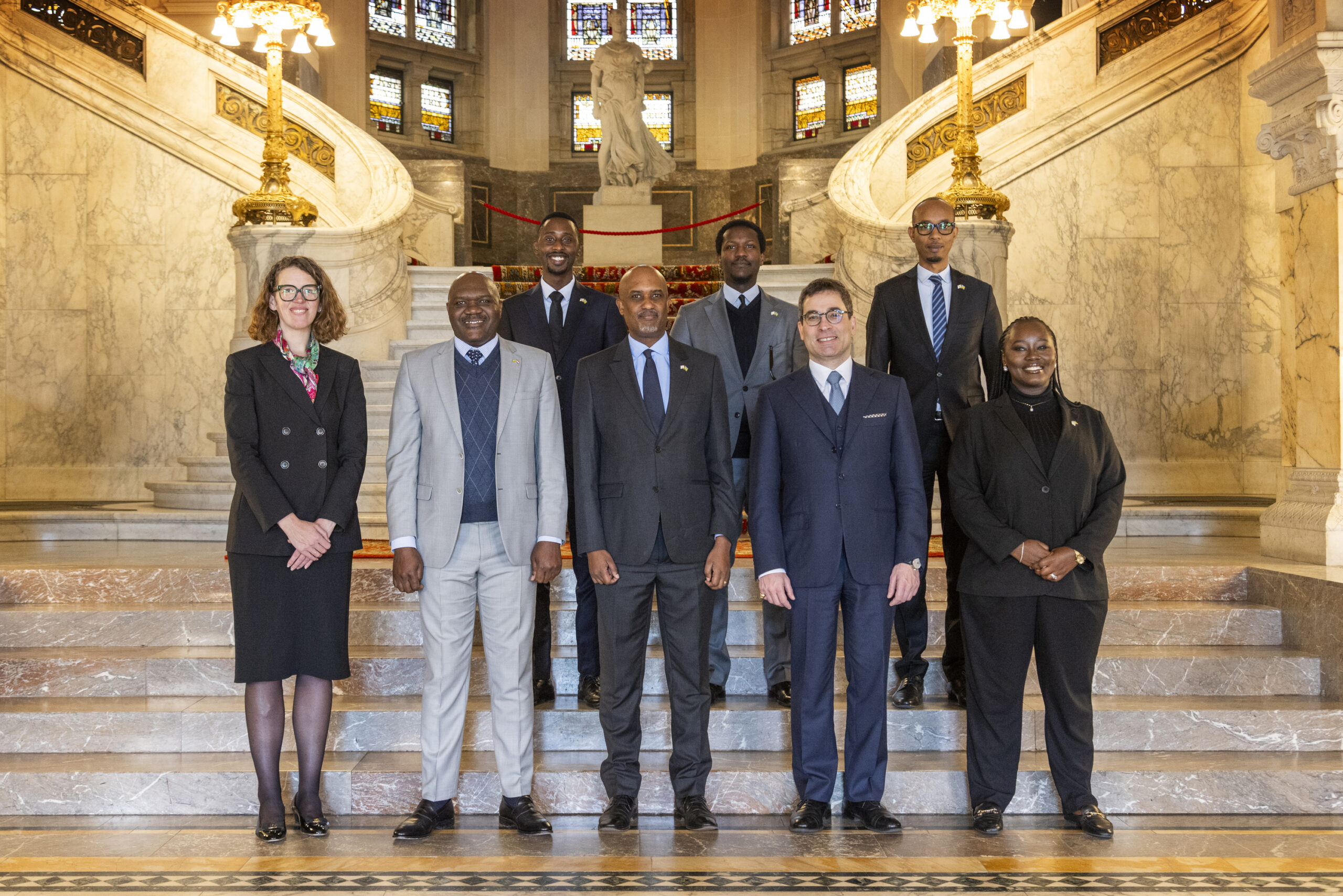
From R-L: Dr Doris Uwicyeza Picard – CEO Rwanda Governance Board (DGB), Lord Verdirame KC – Counsel, Dr Emmanuel Ugirashebuja – Minister of Justice and Attorney General, Ms Belinda McRae – Counsel (extreme left)
KIGALI — The arbitration ruling over the now-abandoned UK-Rwanda migration partnership may have denied Rwanda an additional £100 million in expected payments, but the case also revealed something less discussed: Rwanda’s growing willingness and ability to defend its interests through international legal mechanisms rather than political rhetoric.
For a country, like all other similar countries, often portrayed as the junior partner in dealings with larger Western powers, Rwanda’s decision to pursue arbitration against the United Kingdom demonstrated a level of legal confidence that many developing countries rarely exercise.
The dispute emerged after the new British government elected in 2024 scrapped the migration scheme, which had been negotiated under the previous Conservative administration.
While the political decision to abandon the policy was made in London, the legal and financial consequences were far more complex.
At stake was not simply migration policy but the interpretation of contractual commitments between two sovereign states.
Rather than accepting the UK’s position outright, Rwanda challenged aspects of the termination process and sought clarity over financial obligations contained in the agreement. The matter eventually proceeded to arbitration, where both sides presented detailed legal arguments over the status of future payments and the meaning of diplomatic exchanges between the two governments.
Although the tribunal has ultimately ruled against Rwanda’s claim for the final £100 million in payments, the proceedings themselves underscored a broader point: Rwanda insisted that international agreements should be governed by legal commitments rather than political changes.
For investors and international partners, that distinction matters.
One of the recurring concerns in international business is whether governments will honour agreements when political leadership changes. The UK-Rwanda dispute was unusual because it involved the UK seeking to exit a flagship policy after a change in government.
By taking the matter to arbitration, Rwanda effectively argued that contracts and treaties cannot simply disappear because political priorities have shifted.
The case also highlighted Rwanda’s increasingly sophisticated legal and diplomatic capacity.
Over the past two decades, Rwanda has invested heavily in strengthening state institutions, public administration and international engagement.
The arbitration proceedings required teams of lawyers, diplomats and policy experts capable of navigating complex questions of international law and treaty interpretation.
While the financial outcome was mixed, the process itself demonstrated that Rwanda is prepared to use formal legal channels available under international agreements rather than relying solely on diplomatic pressure.
The ruling also provided important clarity on the partnership.
The tribunal confirmed that Rwanda would retain the £270 million already received under the Economic Transformation and Integration Fund between 2022 and 2024. The dispute centred on two future payments worth £100 million that Rwanda argued remained due after the UK’s decision to terminate the arrangement.
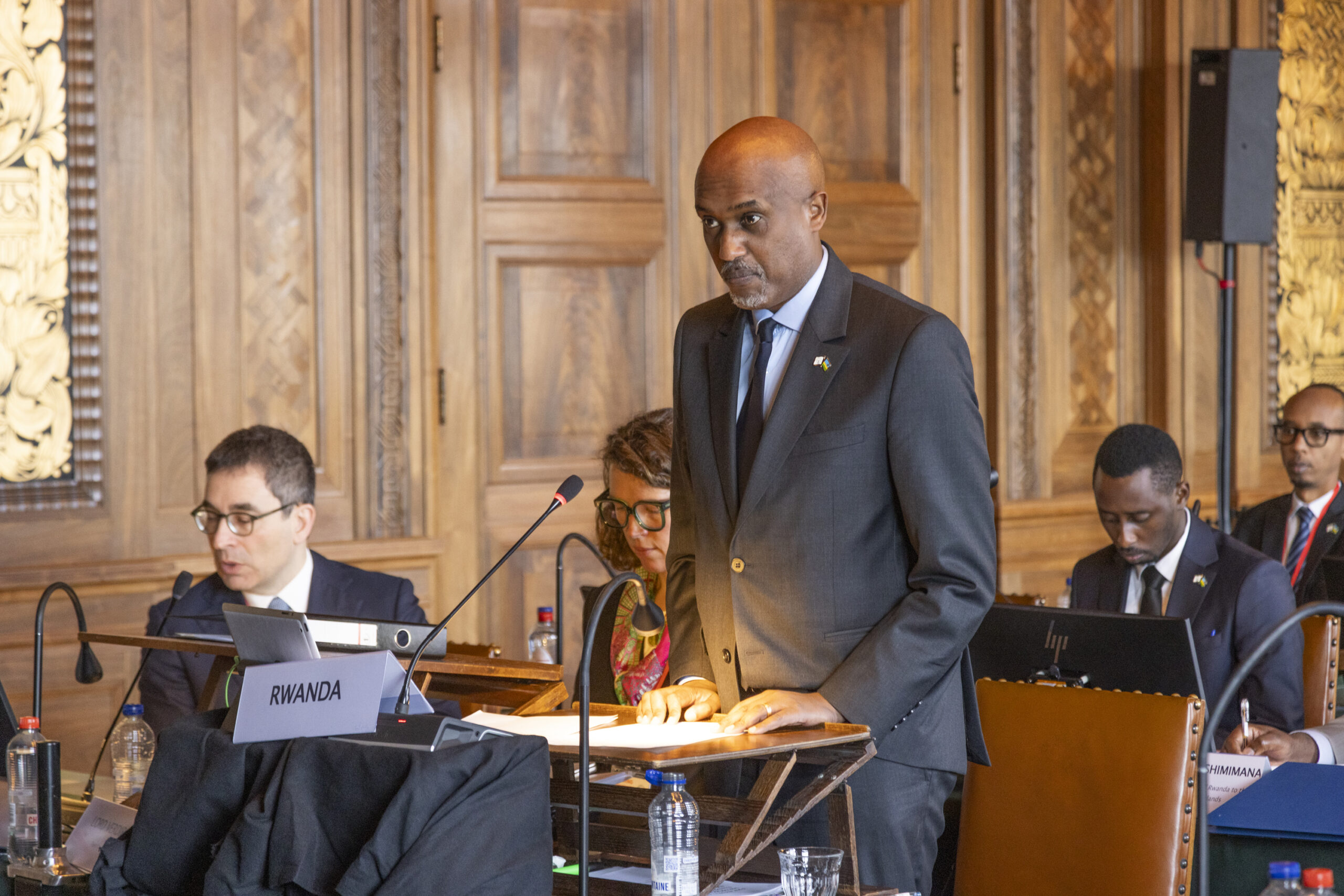
Dr Emmanuel Ugirashebuja, Minister of Justice and Attorney General, speaking before the court
From a financial perspective, Rwanda did not emerge empty-handed. The country retains the funding already transferred, while the arbitration established a definitive legal interpretation of the parties’ obligations.
Perhaps more importantly, the case sends a signal about Rwanda’s approach to international agreements.
Whether dealing with development partners, foreign investors or multinational institutions, Rwanda increasingly presents itself as a country that expects commitments to be respected and disputes to be resolved through established legal processes.
That reputation can be valuable in attracting investment, particularly at a time when many African countries are competing for international capital.
The UK migration partnership will likely remain politically controversial. But beyond the headlines about migrants and money, the arbitration revealed another story: a small African nation demonstrating that it is willing to test its rights before an international tribunal and insist that legal agreements be treated as more than political promises.
In that sense, the case may ultimately be remembered not only for the money Rwanda did not receive, but also for the message it sent about how the country intends to defend its interests on the international stage.
