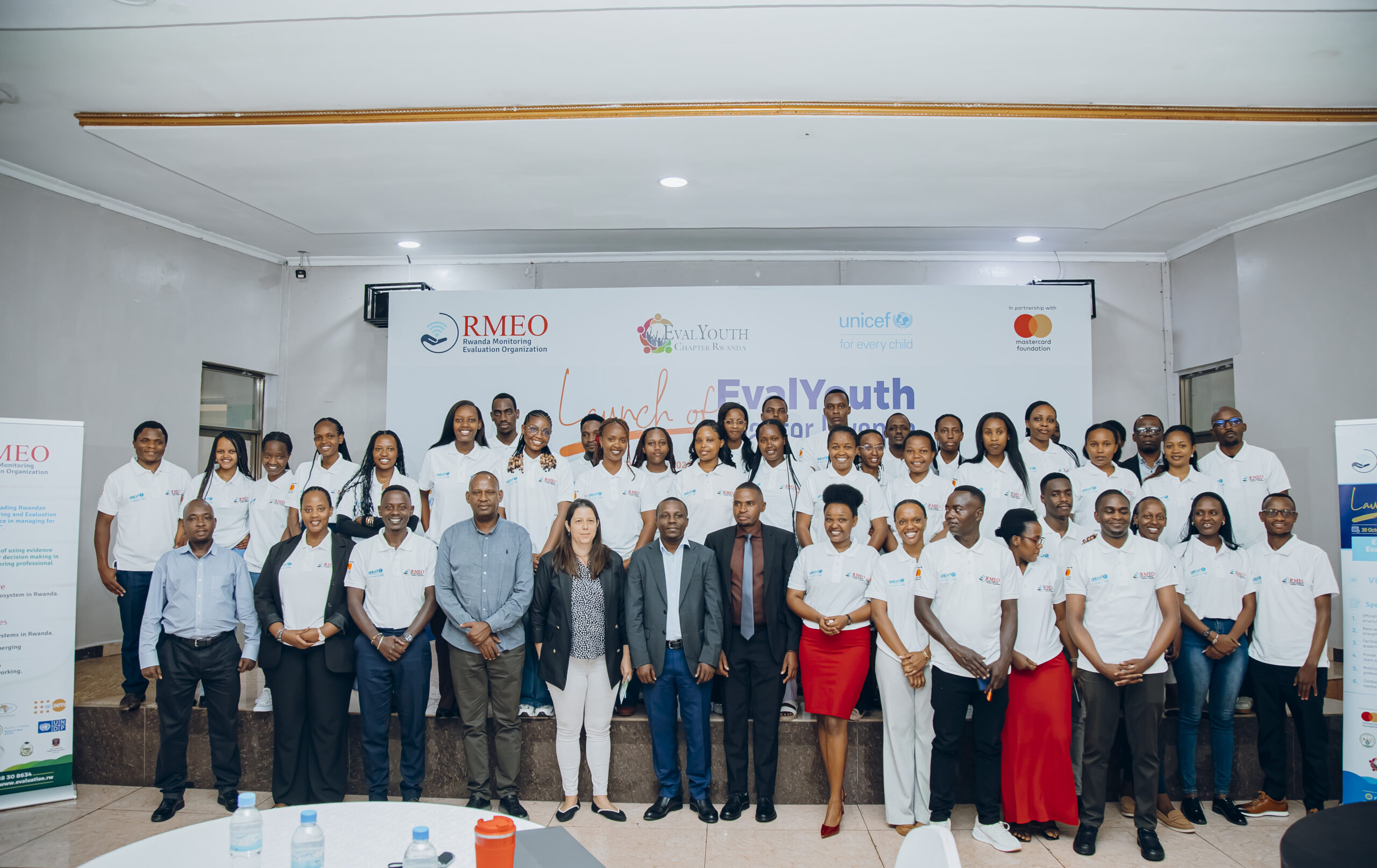
Rwanda has launched a chapter of young monitoring and evaluation (M&E) enthusiasts who will be dedicated to advancing youth-led evaluation practices and shaping the future of evidence-based decision-making in Rwanda.
The EvalYouth Chapter Rwanda is a national platform under the EvalYouth Global Network and EvalPartners, committed to empowering young and emerging evaluators through capacity building and mentorship in the evaluation profession.
The Chapter emerges from the existing professional M&E network – Rwanda Monitoring and Evaluation Organization (RMEO), which has been supported by UNICEF Rwanda since 2016 and more recently by the Mastercard Foundation.
Despite RMEO receiving support from partners to grow the M&E skills ecosystem in Rwanda, young and upcoming professionals who have joined the career and succeeded have highlighted the need for a youth platform to increase their voice and participation in boosting the culture and practice.
Jean Protogene Habakurama and Ernestine Uwimbabazi, who have transitioned from M&E enthusiasts to career evaluators, were respectively elected as Chairman and Vice Chairperson, with a committee that was sworn in on October 30 during the unveiling.
“The inspiration behind the establishment of EvalYouth Chapter Rwanda arose from the reality that many Young and Emerging Evaluators (YEEs) in Rwanda continue to face several challenges that limit our potential to fully contribute to the country’s development,” Uwimbabazi said.
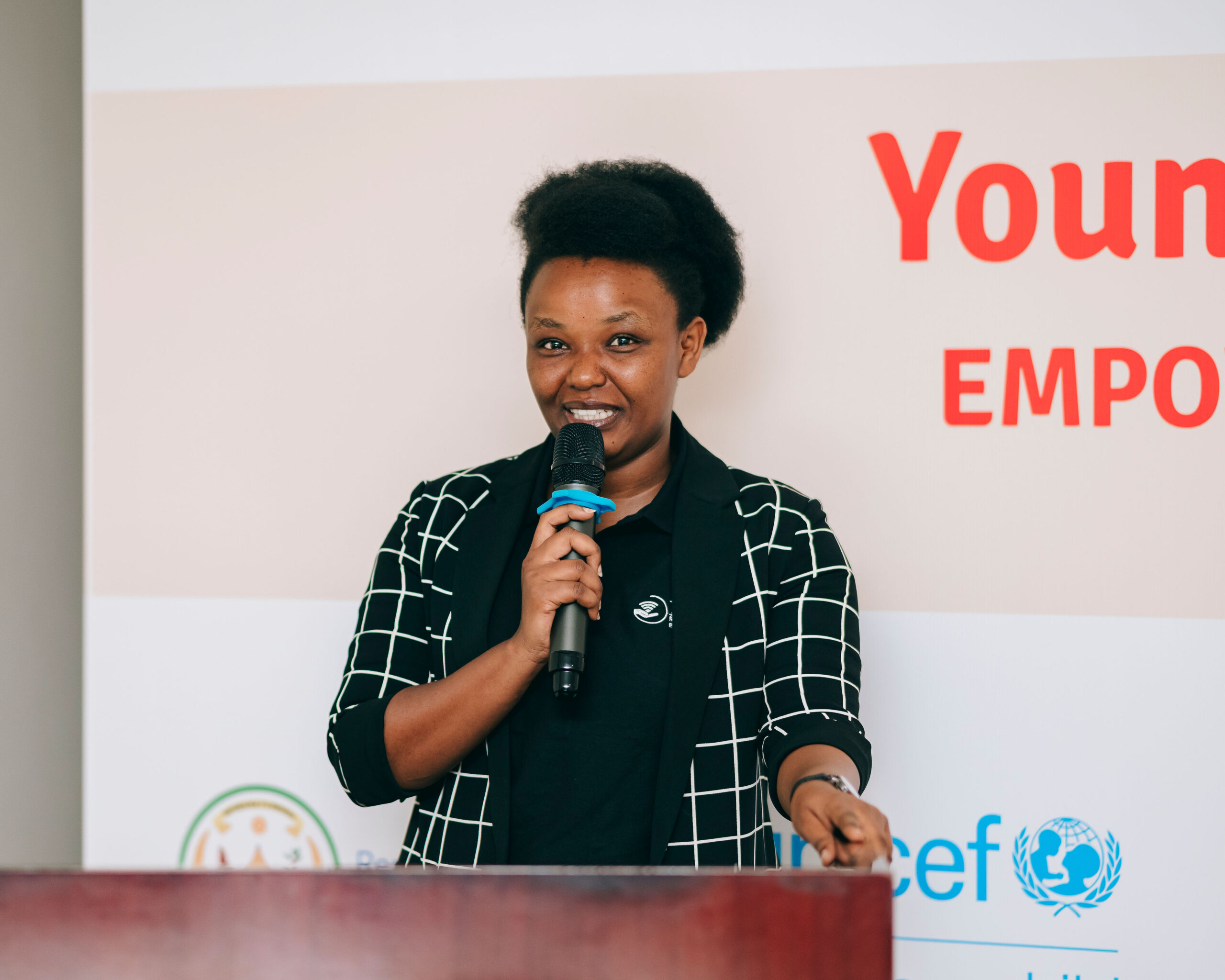
Ernestine Uwimbabazi
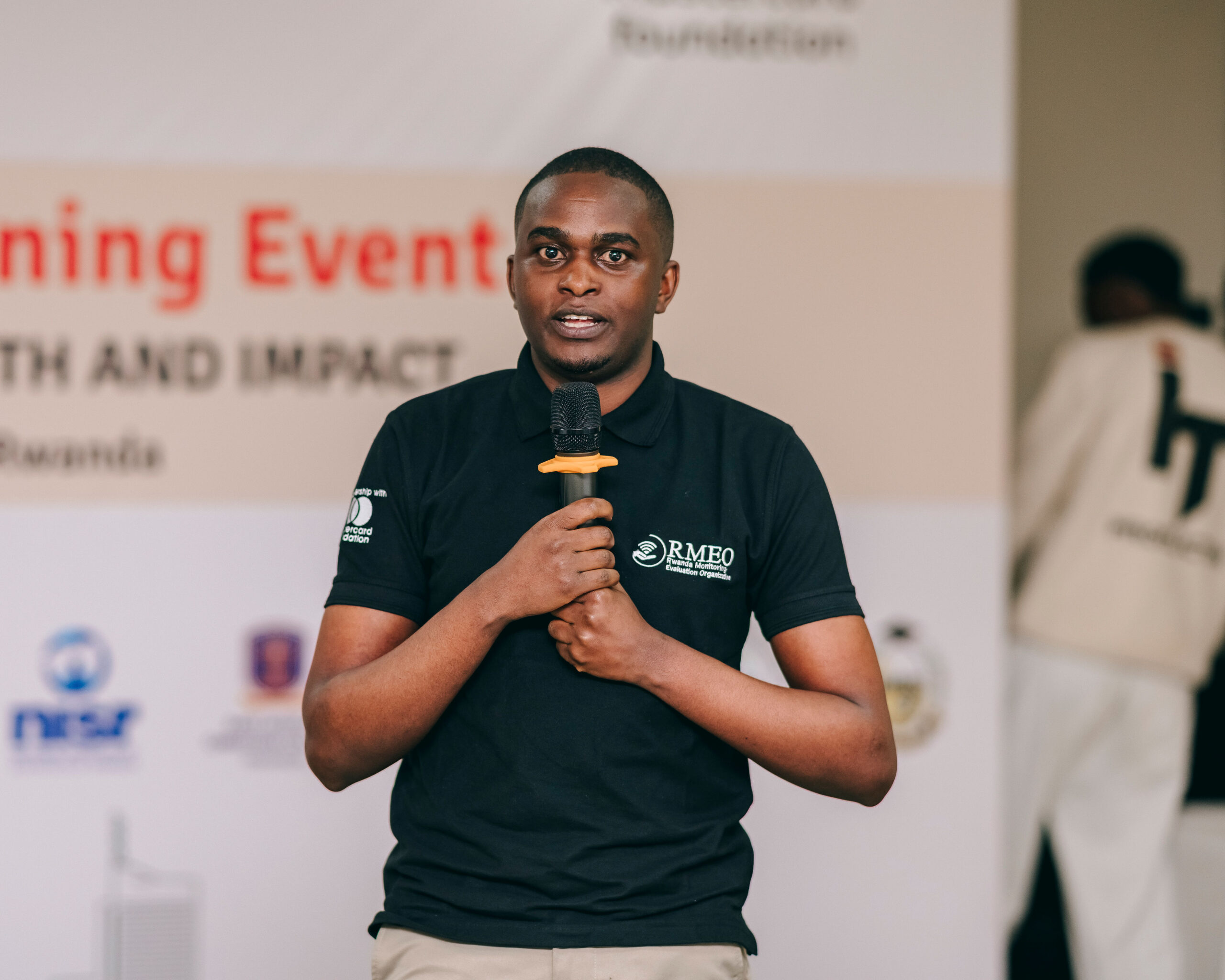
Uwimbabazi stated that they aim to promote evidence-based decision-making locally, especially engaging in Imihigo performance contracts evaluations, to meaningfully contribute to Rwanda’s National Strategy for Transformation
(NST2), Vision 2050, and the Sustainable Development Goals (SDGs).
Uwimbabazi said that this will be achieved through a Monitoring and Evaluation Framework (2025–2028) mandate that will guide the Chapter’s progress and measure its impact through key indicators:
These include training 500 young evaluators, establishing EvalYouth associations across public and private universities, and securing 15 formal partnerships.
Organizing three national evaluation dialogues with policymakers, ensuring 40 Young Emerging Evaluators secure evaluation-related jobs, and launching a digital platform with accessible evaluation resources.
To ensure this happens, Uwimbabazi said: “We need more partners to support us through training, sharing ideas, and giving us a platform to prove our worth.”
Through existing RMEO partners such as the Mastercard Foundation, United Nations Agencies (UNDP, UNICEF), National Institute of Statistics (NISR), Ministry of Youth, Rwanda Civil Society Platform, and African Evaluation Association (AfrEA) among others, Uwimbabazi said that they will use this existing network to connect more youth graduates to the M&E practice.
Enabling Rwanda’s Imihigo Evaluations:
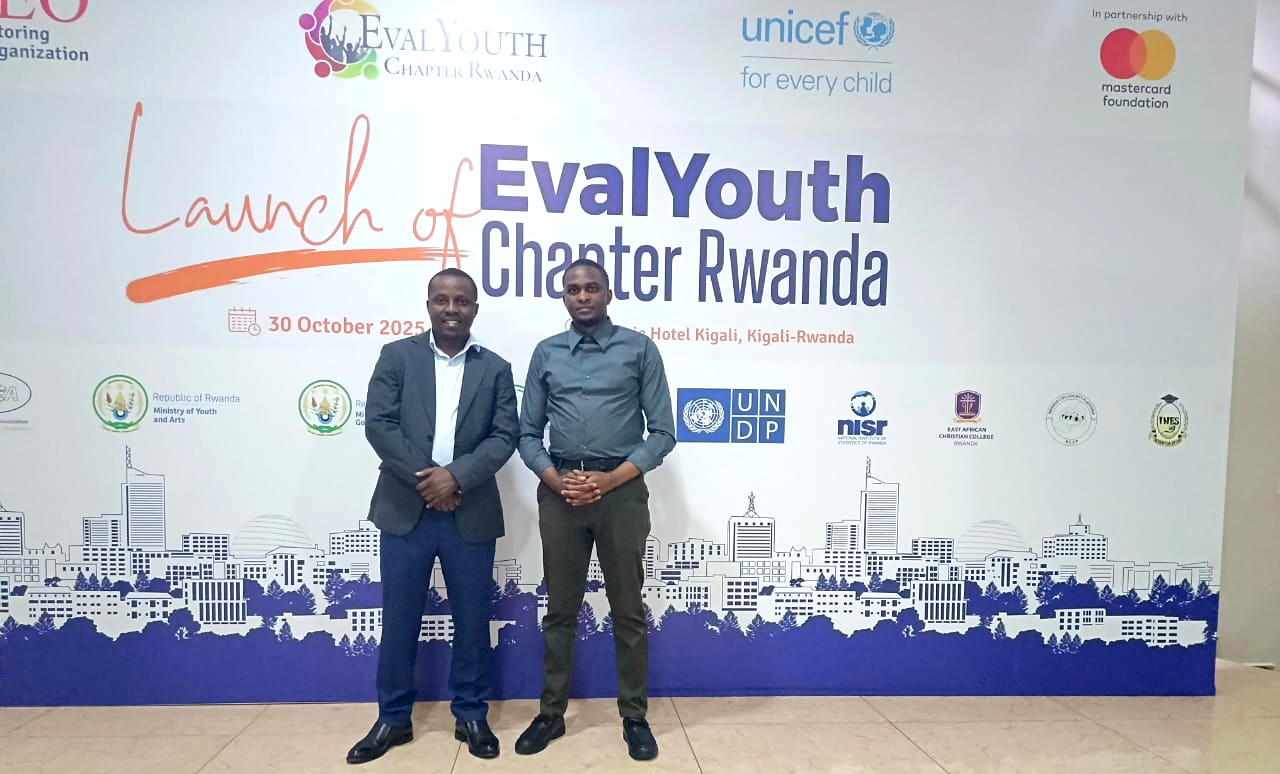
Baraka Mfilinge, left, Jean Protogene Habakurama, president of EvalYouth Chapter Rwanda
Imihigo (meaning “vow to deliver”) is a unique, home-grown, and citizen-based performance contract system that serves as a key tool for accelerating development, promoting accountability, and driving the implementation of national and local development agendas.
Baraka Mfilinge, Vice Chair, EvalYouth Global Network/AfrEA, Young & Emerging Evaluations (YEEs) Leader, said that the global network will support the Rwanda chapter to grow and ensure alignment with international evaluation standards, particularly the Made in Africa Evaluation approach.
Mfilinge noted that welcoming the Rwanda chapter into the global arena is a way of growing youth engagement in the evaluation profession as they bring in new perspectives and approaches.
“This will also provide a good opportunity for the government’s implementation plan of ambitious Vision 2050, which needs monitoring and evaluation to be embedded to measure the impact,” Mfilinge said.
Through training and networking support, Mfilinge revealed that some Rwandan evaluators have already been selected to participate in the upcoming AfrEA conference and skills training sessions in Accra, Ghana.
Mfilinge encouraged the Rwandan chapter to develop technical skill sets embedded in the existing Imihigo evaluation process.
“We encourage local knowledge in evaluation, which is why we want Rwandans to embed global knowledge into the Imihigo process so that citizens are the primary key in intervention,”
M&E requires a lot of data analytics, study, and assessment. The forum highlighted the high demand for M&E expertise in the market as it can be practiced and is needed in every sector to offer more trained youth employment opportunities in Rwanda and engage more youths in creating economic impact.
Challenges and Opportunities:
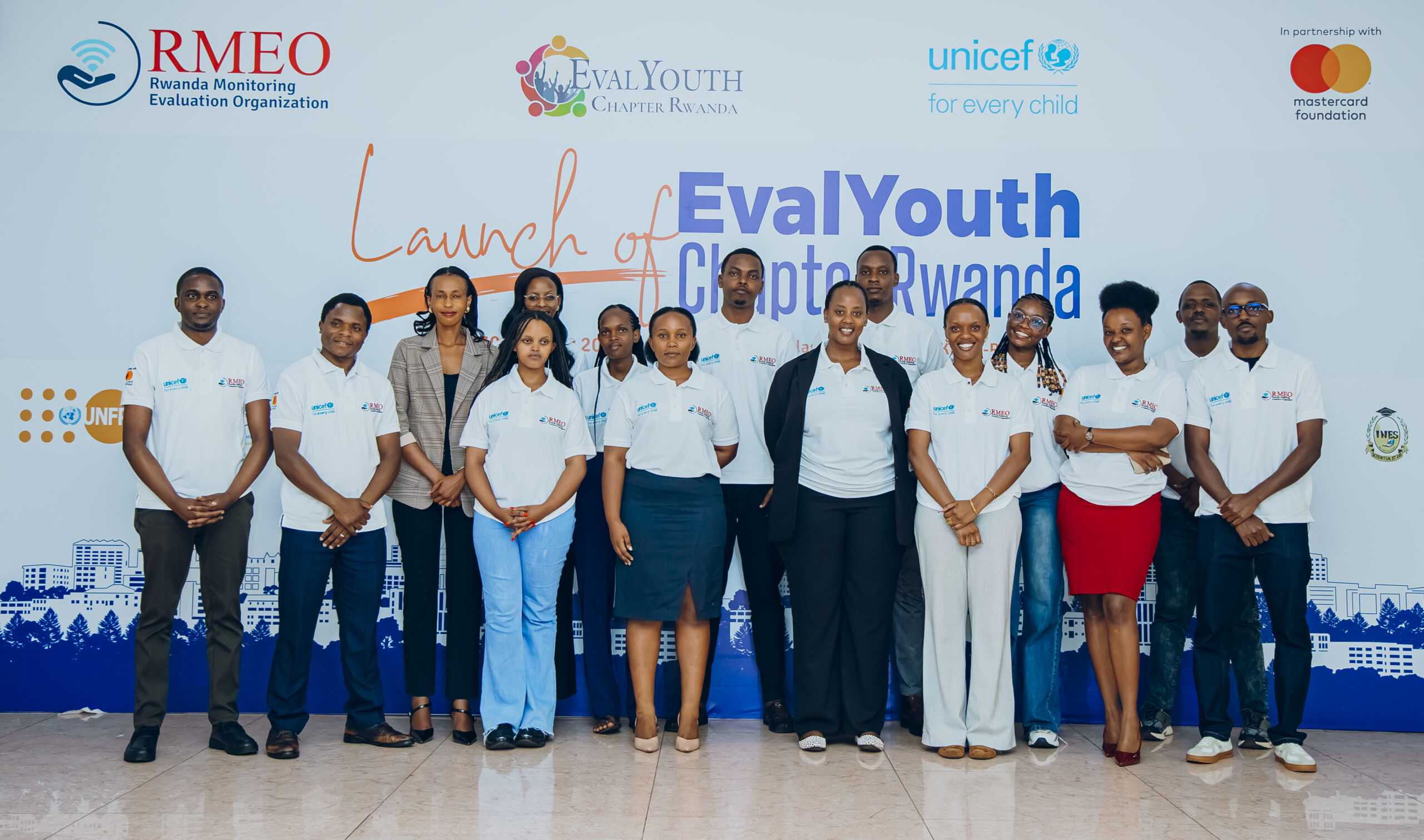
The Rwanda Chapter identified a set of challenges, including the closed M&E scope in employment – not many jobs for youth, a limited number of skilled labor in M&E depending on foreign manpower from Kenya, lack of youth consideration in M&E teams while South Africa uses 50% youth, which Rwanda needs to adapt to.
Language barriers, especially in the translation of questions and answers, were also mentioned.
They cited the lack of knowledge and culture of evaluation in institutional setups, no department on M&E due to lack of funding.
“The biggest challenge is the lack of skills among youth (required to have 10 years of experience to get an M&E job) yet they have skills and time, thus making the experienced ones have all the jobs,” said Remadjj Jennifer, one of the group representatives.
Alex Mugabo, president of RMEO, said that following the establishment of the youth chapter, they will be working towards achieving its goals and vision.
“This is the first step to many steps of the vision we have as RMEO for the young evaluators. Their acquired skills will be handy in developing their professional careers as evaluators,”
Mugabo revealed plans to develop a five-year development plan with its long-term and new partners, especially UNICEF and the Mastercard Foundation, but also encouraged more to join their cause.
“Besides the activities of the Public Accounts Committee (PAC), there is little done when it comes to the evaluation of government programs and policies, and we would like to engage both parliaments on this,” he said.
“We want you to be the change-makers in this ecosystem of evaluators. Even if we have one or three impact stories, we will have lived up to our expectations,” he added.