


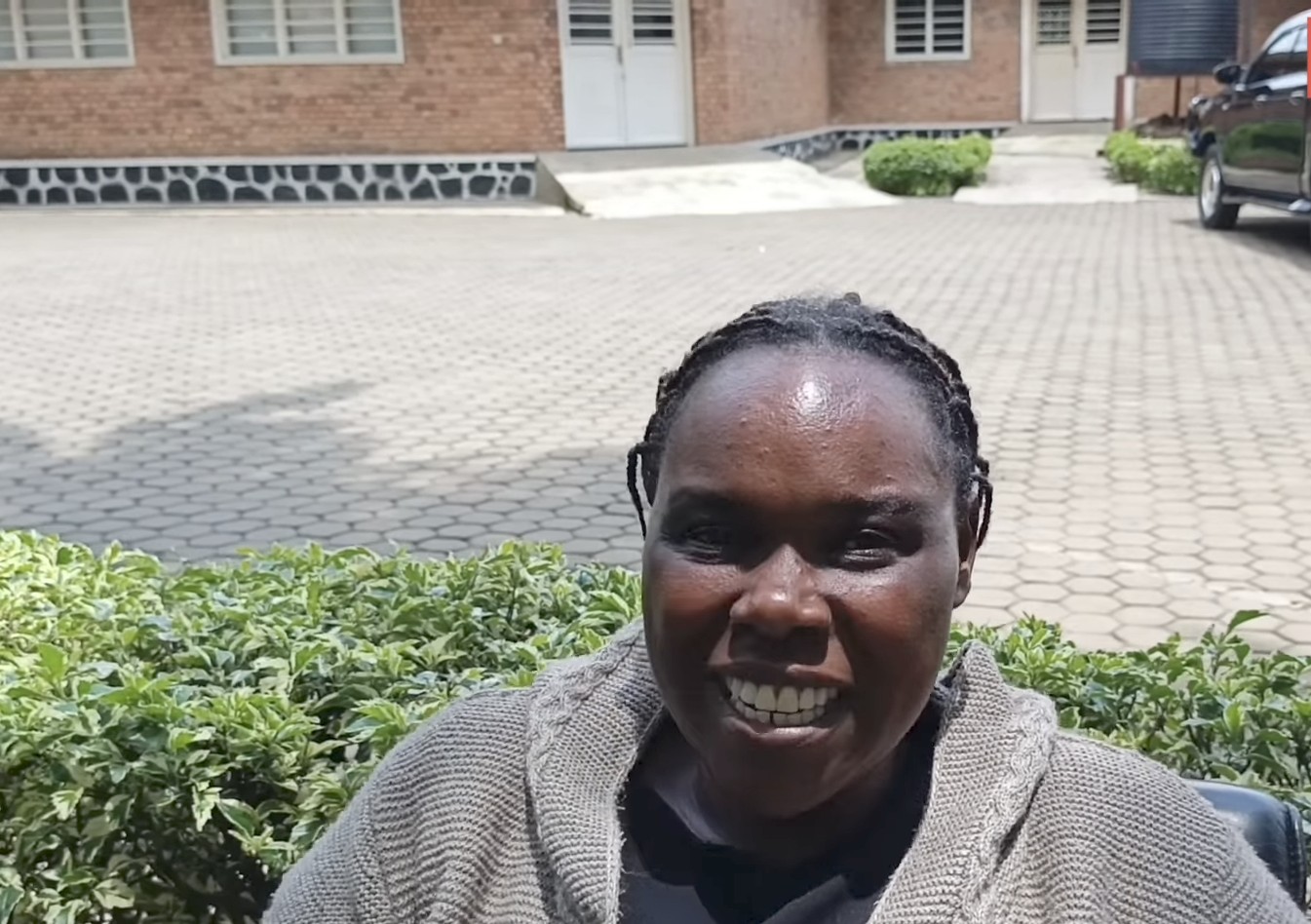
After nearly a year of speculation and social media uproar over her supposed abduction in eastern Democratic Republic of Congo, Claudine Mukamana, the widow of slain FDLR commander Colonel Protogène Ruvugayimikore, better known by his nom de guerre Ruhinda Gaby, has resurfaced — not in captivity or exile, but living quietly and safely in Rwanda, the very country her late husband spent decades fighting against.
Her reappearance has stunned those who had fueled online campaigns claiming she was kidnapped by Rwandan forces or their allies in eastern Congo.
In reality, Mukamana and her family voluntarily crossed into Rwanda months ago, and have been receiving assistance as they rebuild their lives in peace.
The appearance puts to rest months of misinformation that followed the violent death of her husband — one of the most notorious figures in the history of the Democratic Forces for the Liberation of Rwanda (FDLR), a group composed largely of elements responsible for the 1994 Genocide against the Tutsi and which has, for decades, terrorized civilians in eastern Congo.
The Spark: A Tweet That Went Viral
The controversy began in March 2025, when Nadine Kasinge, a Rwandan exile based in Canada, posted alarming messages on X (formerly Twitter) claiming that Mukamana and her family had been “abducted” by soldiers associated with the RDF or the M23 rebel group.
“On Sunday, March 9, a family of Rwandan refugees was abducted from their home in Goma by members of the #RDF / #M23. Witnesses reported that the soldiers searched their house, finding nothing other than their phones. After the operation, the armed men took the family to an unknown location, locking their home and threatening them never to return,” wrote Kasinge.
“Mrs. #Mukamana Claudine, her seven children, and her infant grandson were taken. They are connected to an FDLR military officer, a certain Col. #Ruhinda, who was recently killed during controversial military operations near #Goma in December 2023.” [actually 2024]
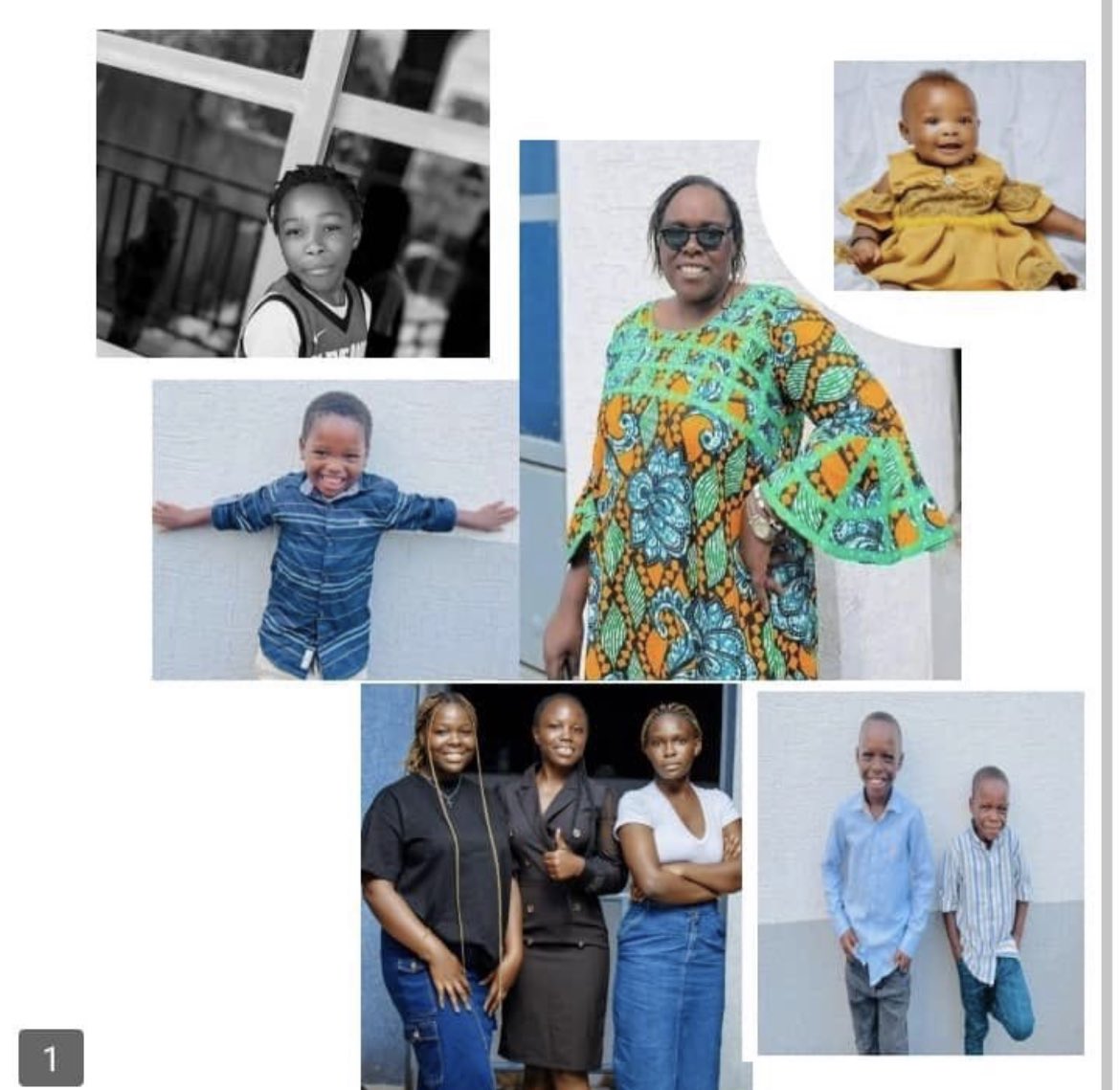
This is a photo collage posted by Nadine Kasinge on X
Within hours, the posts had spread widely across pro-FDLR and anti-Rwanda accounts, generating an outpouring of outrage and speculation. Some claimed Mukamana had been assassinated; others alleged she was being held in a secret facility in Rwanda.
None of these claims were ever verified. But in a region dominated by competing narratives — and where misinformation often replaces fact — the story fit a familiar pattern: portraying FDLR families as “victims” of Rwanda’s reach, even when evidence suggested otherwise.
Who Was Colonel Ruhinda?
To understand why the story of Mukamana’s disappearance gained such traction, one must understand who Col. Ruhinda Gaby was — and why his name still casts a long shadow.
According to detailed public records, Protogène Ruvugayimikore, alias Col. Ruhinda Gaby, was born in 1970 in what was then Karago Commune, now part of Nyabihu District in Rwanda’s Western Province.
He attended Gihira Primary School and later studied at Kibisabo Secondary School in Rubavu. Before taking up arms, he worked as a teacher at Kambi Primary School in Rambura Sector and as a veterinary technician in Kibisabo.
But his life took a darker turn in May 1994, during the Genocide against the Tutsi. As Rwanda descended into chaos, Ruhinda had joined the government army, then responsible for carrying out the killings.
He trained at the École Supérieure Militaire (ESM) Nyanza and later at Kigeme in Gikongoro, serving in the collapsing forces that fled the country as the Rwandan Patriotic Army (RPA) halted the genocide in July 1994.
When Rwanda was liberated, Ruhinda fled with remnants of the former army and militia into Zaire (now the DRC), joining hundreds of thousands who crossed into makeshift camps in Masisi and Walikale.
When those camps were dismantled in 1996–1997, millions returned home, but Ruhinda did not. He instead joined the rebel group ALIR (Armée de Libération du Rwanda), which later rebranded as the FDLR.
A Career in Rebellion
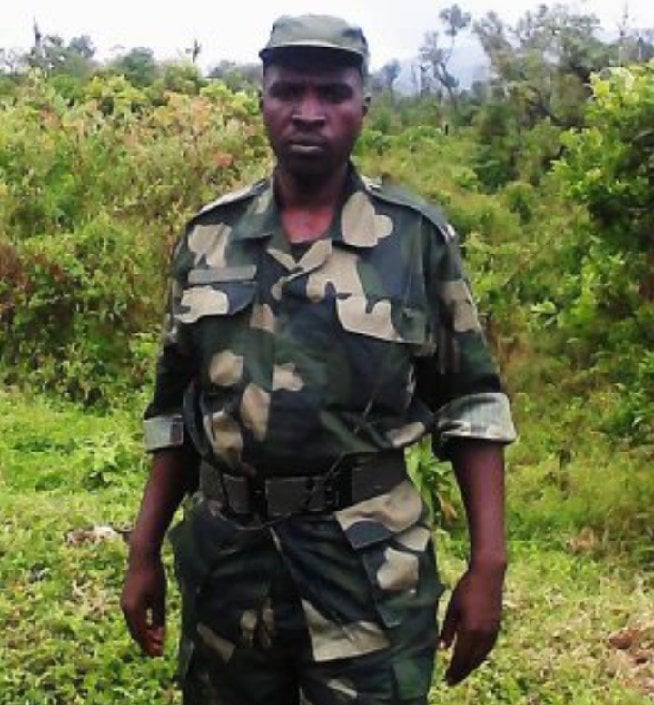 From 1997 onwards, Ruhinda emerged as one of the FDLR’s most active and militant commanders. He took part in the infiltration campaigns of 1997–1998, when FDLR (then ALIR) launched bloody incursions into northwestern Rwanda — including attacks in Rubavu, Rutsiro, and Gisenyi — that claimed hundreds of civilian lives.
He also played a key role in the “Oracle du Seigneur” operations of 2001, a campaign of guerrilla attacks on Rwanda’s northwestern districts. Over the following decade, Ruhinda rose through the ranks of the FDLR, commanding several battalions and later overseeing training operations for the group’s main military wing, FDLR-FOCA.
By the late 2010s, he had become head of one of the FDLR’s most feared units — the Commando de Recherche et d’Action en Profondeur (CRAP), or Special Research and Deep Action Commandos. This elite wing was responsible for reconnaissance, sabotage, and deep-penetration missions across eastern Congo and, at times, near the Rwandan border.
The UN Group of Experts repeatedly cited Ruhinda by name in its reports, noting that he attended several high-level meetings organized by Congolese officials to coordinate military actions between FARDC and FDLR units against the M23 rebellion.
He was also accused of ordering the cross-border shelling of Rwanda in June 2022, when multiple rockets landed on Rwandan territory as Kigali prepared to host the Commonwealth Heads of Government Meeting (CHOGM). The incident drew sharp condemnation from Rwanda and the international community.
In June 2023, the United Nations Security Council imposed sanctions on Ruhinda, citing his role in “training, leading, and organizing operations” that continued to destabilize eastern Congo.
The Death of a Commander
Col. Ruhinda’s death was confirmed on December 3, 2023, following intense clashes between M23 rebels and the Congolese army (FARDC) in Masisi Territory, North Kivu.
The fighting broke out just as the East African Community Regional Force (EACRF) was preparing to withdraw, after Kinshasa declined to renew its mandate.
As EAC troops packed up, FARDC and its allied militias — including the FDLR — rushed to fill the vacuum. M23, which had temporarily pulled back, swiftly reoccupied those areas, sparking renewed battles.
Ruhinda, leading his CRAP unit alongside FARDC positions, was killed during one of those engagements. His death marked the end of a 30-year career in rebellion and triggered shockwaves across FDLR networks.
For his followers, he was a fallen hero. For many Rwandans, his death closed a dark chapter of violence and hatred.
The Propaganda Machine Reacts
Almost immediately after his death, FDLR sympathizers and Congolese media accounts began circulating claims that his wife and children were “being hunted” by Rwanda. When Nadine Kasinge’s post surfaced three months later, alleging the abduction of the entire family in Goma, it seemed to confirm those fears.
The narrative fit perfectly into the ongoing propaganda war in eastern Congo, where Kigali is routinely accused of orchestrating events beyond its borders — often without credible evidence.
But behind the rumors, reality was different. Mukamana had indeed left Goma, but not as a captive. She sought to leave Congo voluntarily, disillusioned by years of life in exile and by her husband’s violent death.
Her family — including her seven children and infant grandchild — later crossed safely into Rwanda, where they were received by authorities and placed under protection.
Her return to Rwanda mirrors that of many other FDLR dependents who, disillusioned by decades of insecurity and displacement in Congo, have chosen to repatriate peacefully.
Life After the Rebellion
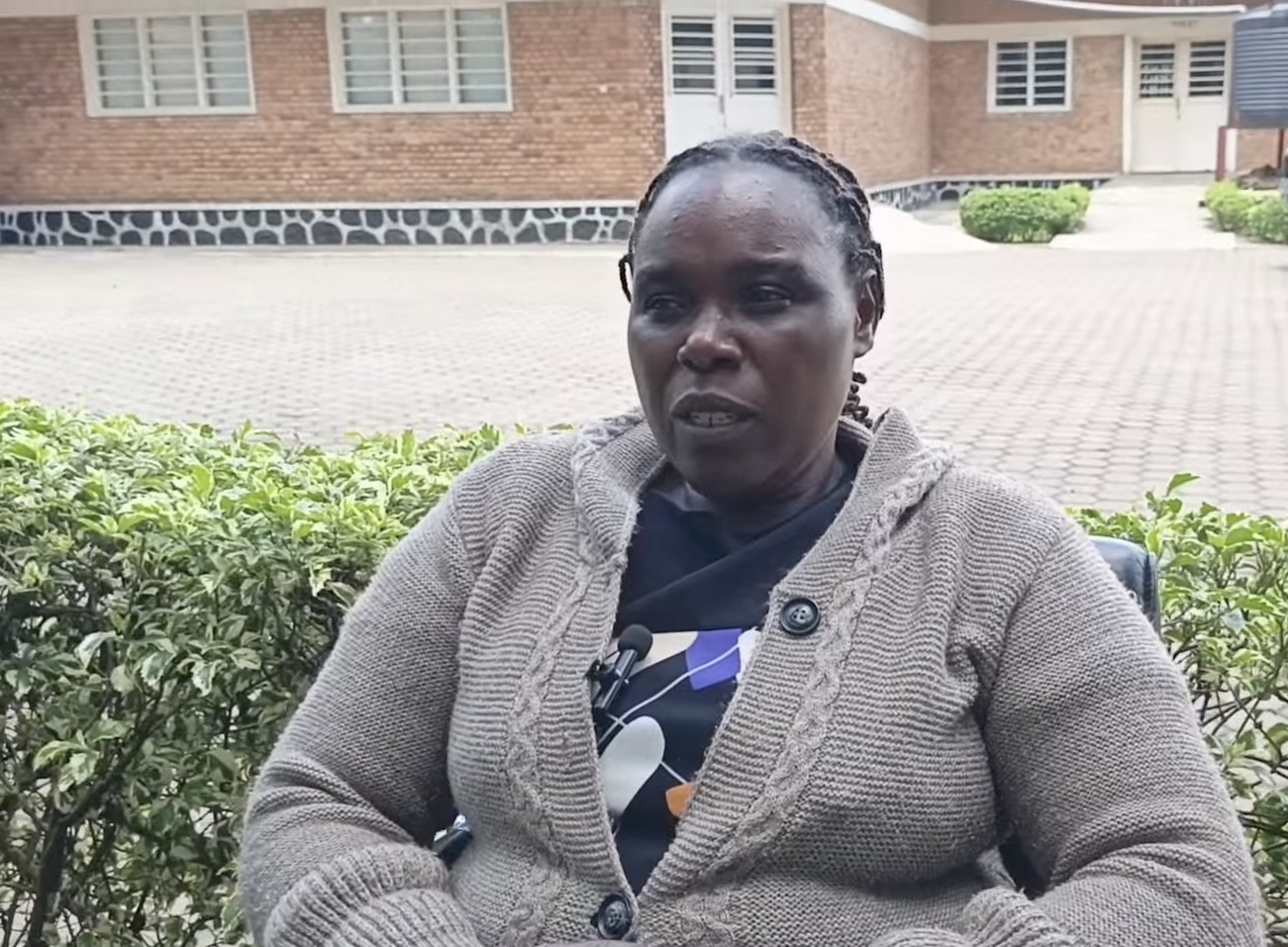
Today, Mukamana is said to be living a modest, calm life in Rwanda, reunited with relatives she had not seen in decades. Those who have met her describe her as “grateful to have a second chance.”
Her quiet existence sharply contrasts with the wild stories spread online months ago — stories that painted her as a ghost of Congo’s endless wars, a victim of shadowy forces.
Instead, she has joined the long list of Rwandan returnees who have decided to abandon the chaos of armed movements in Congo and rebuild their lives under peace and stability.
Meanwhile, the death of her husband has further weakened the FDLR’s command structure. Once seen as a formidable figure capable of mobilizing troops and coordinating attacks, Col. Ruhinda’s absence has reportedly fueled internal divisions within the rebel group, which continues to lose fighters to desertion and voluntary repatriation.
“I have spent many months without hearing the sounds of gunfire. It is the first time I have spend this long without hearing such sound in my life,” said Mukamana. “It so peaceful here. The children love it here because it is safe. They have friends and have gone back to school. I have peace of mind of I no longer have to hide.”
Mukamana left Rwanda in the mass of refugees that crossed into Zaire in late 1994. She would go on to be sent for training in the militia forces that were preparing to invade Rwanda to “take back our country”, according to her own account.
At 19 years in 2001, Mukamana got married to Ruhinda. Amid laughter, Mukamana reveals that her husband was canned 300 lashes, as part the brute normal with the FDLR; marriage is banned, and anyone who goes against it is given that number of lashes.
The follow up punishment is that the women are expelled from the FDLR camp. For Mukamana, her husband Ruhinda relocated the family to other regions of Rutshuru territory, later setting in Goma. Actually, she lives a relatively comfortable life, until M23 rebels took over the region.
Mukamana says even before the rebels came, she had been planning to relocate to Rwanda. But was afraid of being targeted by FDLR agents in Goma. She was not alone in Gona. Many senior commanders lived there and families.
So, when the M23 rebels approached Goma, all the FDLR cells disappeared. Mukamana refused to go with them. “Information was circulated that I had become an agent of the government of Rwanda,” she narrates.
“Actually, all the women with whom we shared much in common, as wives of FDLR commanders, changed their phones, so that I do not ever call them. To date, I don’t where they are. Even today, my daughter is married and still lives in Goma but I cannot reveal her names or location because she can be targeted by FDLR agents.”
A Closing Circle
Today, Mukamana doesn’t have specific details of how her husband was killed. But is very clear that he died from internal battles which had been ongoing for long.
Mukamana revealed that most top commanders are not married because, apparently, they want to marry when they “get back our country”.
Ironically, the same man who spent decades fighting Rwanda now has his family living safely within its borders — a reality that underscores how drastically the regional landscape has changed since the days of FDLR dominance.
For Claudine Mukamana, the journey from the hills of eastern Congo to safety in Rwanda is more than a homecoming. It is a quiet statement that the era of perpetual exile — built on myths of revenge and rebellion — is coming to an end.
