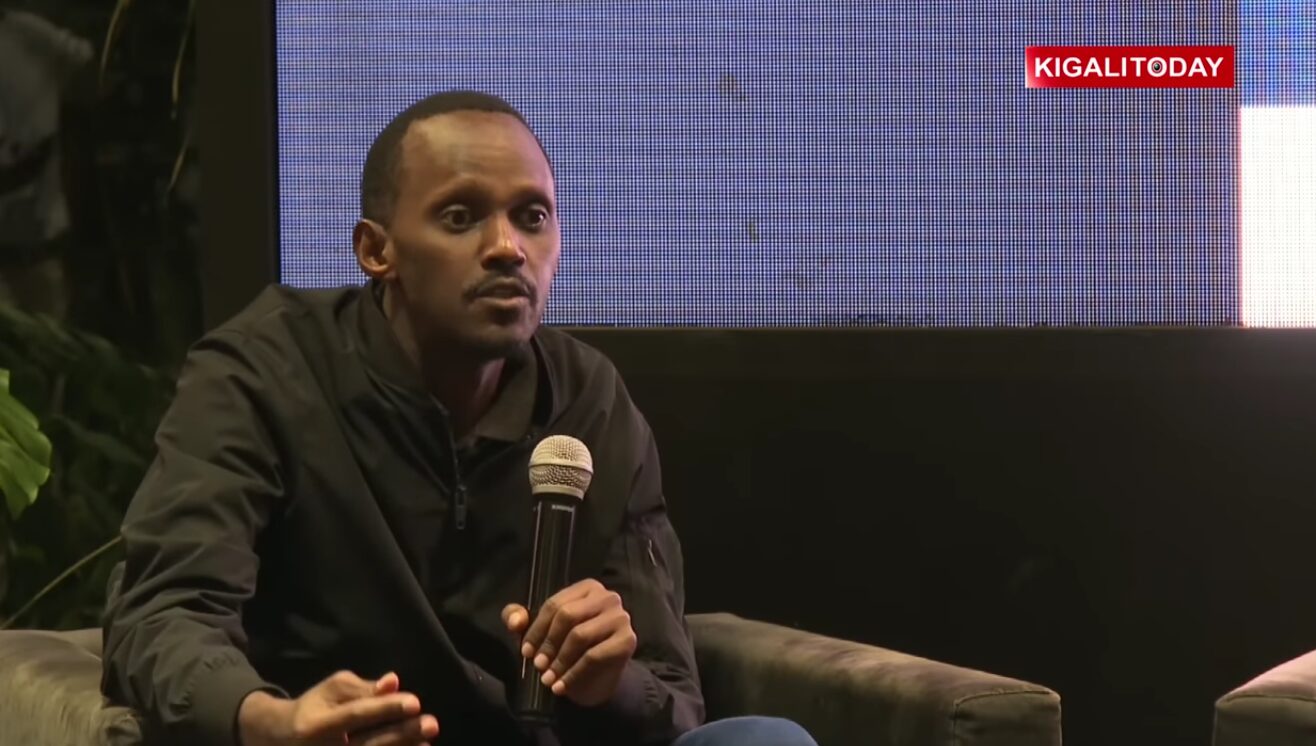
Alex Ntale
Alex Ntale, CEO of the Rwanda ICT Chamber, has revealed that there are many upcoming funding opportunities for the education technology (EdTech) ecosystem, but this will require maturity among local entrepreneurs to showcase their growth journey and socio-economic impact.
Ntale said that the upcoming funding opportunity (from partners) will come with strict measuring sticks that require one to meet certain requirements such as traction, evidence, and commitment to reach at least 5,000 learners over a set period of time.
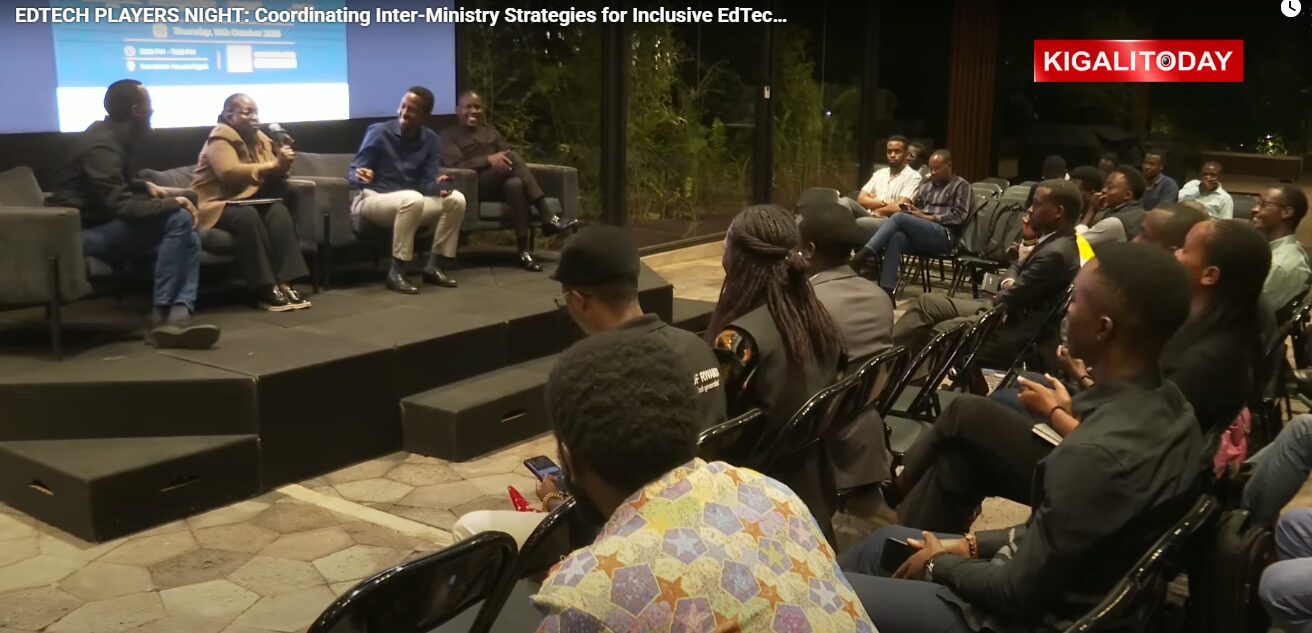
Ntale was speaking at the EDTECH PLAYERS NIGHT: Coordinating Inter-Ministry Strategies for Inclusive EdTech Growth, which brought together education technology experts and ambitious innovators in Rwanda.
“This will be close to 40 million per business (enterprise), non-refundable money, but we want to see serious operators who are not only coming in to take this money but are also doing the work,” Ntale said.
“Doing the work in terms of building systems that are being used and having a real impact on improving learning outcomes,” Ntale said, noting that as a Chamber, they tried to negotiate on lowering the criteria, but partners were insistent on engaging serious entrepreneurs who have achieved a degree of growth.
Experts also held discussions on how ecosystem players can partner with innovative entrepreneurs who have solutions that can benefit the education technology sector.

Geoffrey Karegeya
Geoffrey Karegeya, Business Development Manager at Rwanda Internet Community and Technology Alliance (RICTA), highlighted the progress made in connecting Rwandans, especially in the education technology ecosystem, and the need to have a protected brand.
He showed how the Rwanda dot.rw domain service has been fully owned by the Rwandan government as a way of protecting brands made in Rwanda and said that this comes with an opportunity for local entrepreneurs.
“If you have a solution, you have to start by protecting that brand because as you grow, the brand is exposed. That is why you need a dot rw domain to avoid someone stealing your brand,” Karegeya said, contrary to using a dot com domain which puts one at risk in terms of protection.
Karegeya revealed that RICTA is also offering a business opportunity for young innovators who can market and sell the domain locally.
“We are now moving into a reseller program for young smart Rwandans who know how to make money. Whoever has an innovative idea can venture into this and work with us,” he said.
Karegeya revealed that the Rwanda Internet Exchange Point (RINEX), which ensures local traffic remains locally managed, has seen growth in traffic.
RINEX ensures that whatever service Rwandans use, for example, an application in education that is accessed by students and lecturers, shouldn’t access that service on the general Internet.
It should be accessing that service locally. That traffic should be exchanged locally. It’s a switch. And the good news is that the Ministry of Education is already connected. And what we have observed is that the traffic from the ministry is growing.
That means it communicates that people behind education applications are using the infrastructure, Karegeya said.
On how young techpreneurs can navigate and use the existing opportunities in the edutech ecosystem (the Ministry of Education and its agencies).
Dr. Diane Sengati, Head of the Department of the Rwanda Basic Education Board (REB), said that through the studio office, there is collaboration between agencies and innovators to ensure their ideas are applicable solutions.
“We have to sit together actually. So we are into this together. It’s not like I have to come this. And then I will just do this. We have to be together. To make sure that this thing is working to make sure the solution is actually applicable,” she said.
On the role of the Rwanda Information Society Authority (RISA) in innovation and collaborating with ministries to ensure tangible innovation comes into play by developing software solutions to support the implementation of various e-government services and other ICT projects in Rwanda.
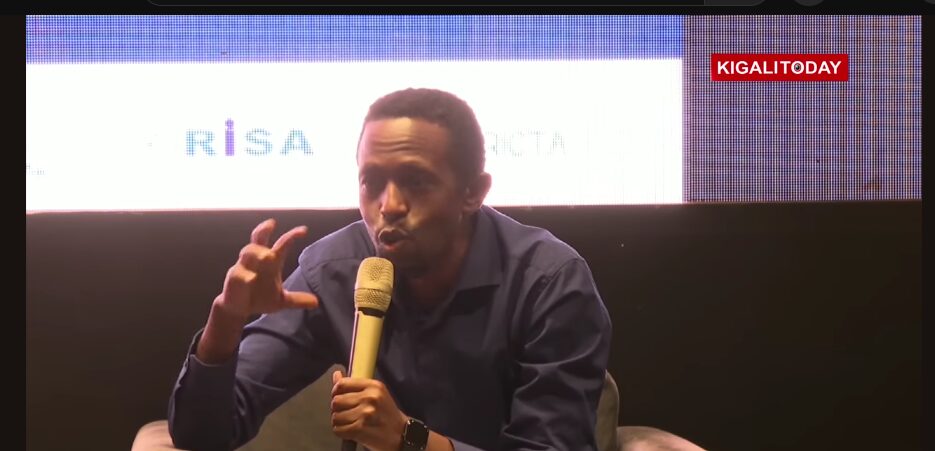
Dr. Said Rutabayiro Ngoga
Dr. Said Rutabayiro Ngoga, RISA Technology Innovation Division Manager, said that with existing infrastructure, core systems built, the next step remains in having innovators and entrepreneurs building services on top of that – the mainstream systems.
“That journey is not like a one-off because there are rules on how to connect, generate income, and how to build services. If you look at the digital journey, this cannot be done by a government agency (irembo) and the more people need services, the more we have to innovate, create ‘crazy things’,” he said.
He explained that with technology, miracles can be built, thus the need for crazy, out-of-the-box innovations on top of built systems.
Closing Innovation Funding Gaps:
Even with this open space for innovation, Ngoga said that ideas are accessed before being bought and consumed by the government.
“That means we are not there yet, but the plan is to ensure these gaps are closed. We are also thinking of funding sources for ideas to make sure funds are centralized to have a harmonized flow,” Ngoga said.
Funding streams and opportunities, Ngoga said that these exist through grant schemes (for organizations and startups), but there is a disconnection between meeting criteria and the innovations.
For example, Ngoga said that inter-ministerial collaboration and coordination are key to unlocking this challenge, which is mainly caused by gaps in lack of fund baskets, different funding conditions, and purposes.
Ngoga suggested that at the coordination level, the example of Hanga pitch events could be used to create collaboration in organizing, attracting fundable ideas, and soliciting fund pools which can create an impact in various sectors (health, agriculture…).
“The idea is how do we tap that and link it to the brand(s) so that we know that we already have a big network and community (of innovators). This is something we want to push so that one can see what we are looking for,”
Ngoga suggested that at the ecosystem level, there is a need to prepare entrepreneurs and scale up existing models such as the Hange Fest to have an aligned approach in channeling innovation funds into a single pool.
In order to sustain funding sources, especially when innovators have impactful ideas, Dr. Sengati stated that to ensure the sustainability of local solutions, they intend to work with innovators to find alternative sources by providing recommendations and presenting the proof of concept on behalf of the innovators.
Innovators’ concerns:
EDTECH PLAYERS NIGHT participants raised concerns over developing Artificial Intelligence-based applications that are hosted by other developed countries (Silicon Valley), developing competence-based curriculums that may contradict the existing edtech policies and targets in education.
Ntale encouraged the innovators to work within the government’s overall mission of improved education through competence-based learning. He encouraged innovators to explore new solutions to unexplored challenges in the field of applied mathematics, science, tourism, and financial solutions instead of focusing already existing solutions.