


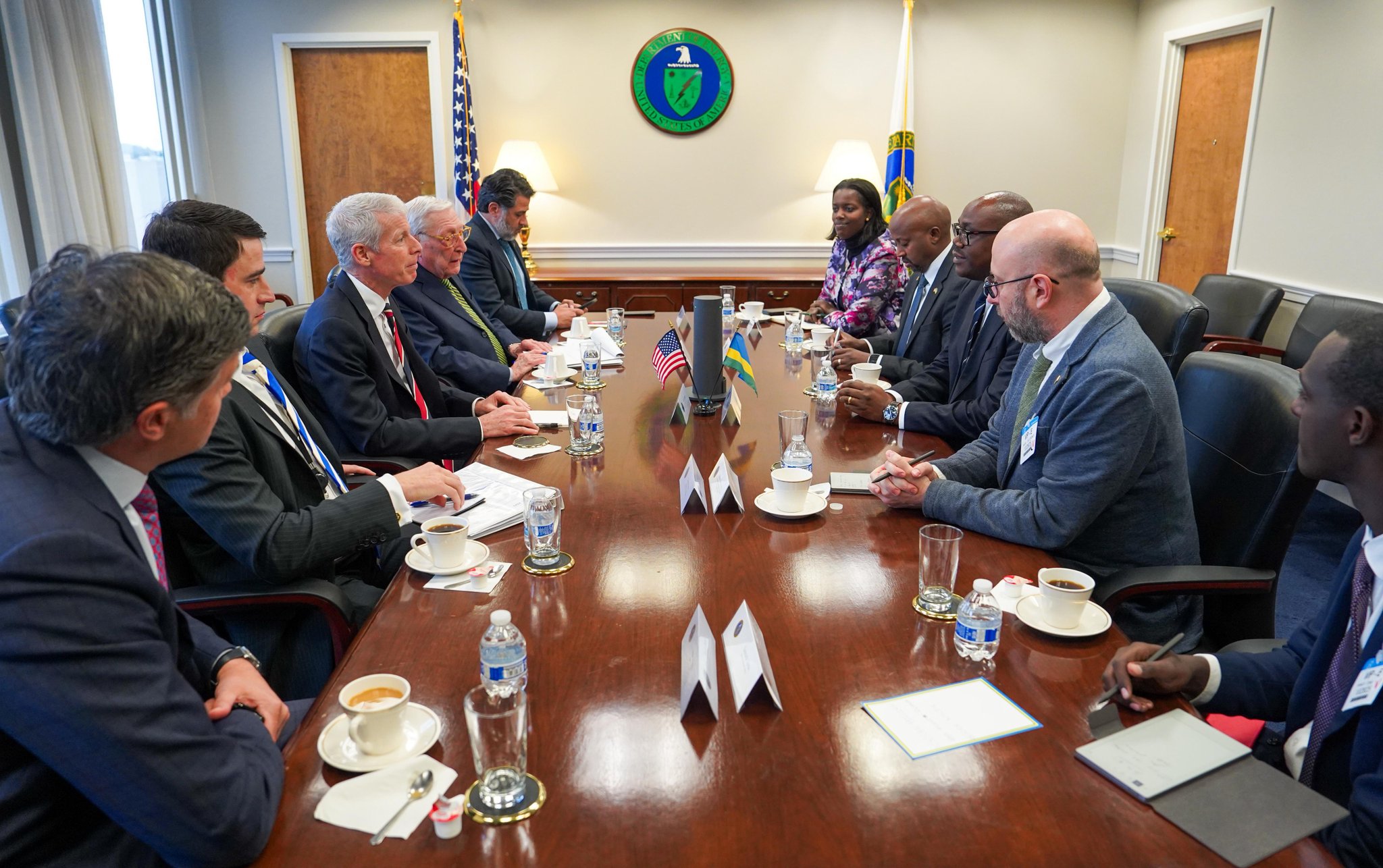
The Prime Minister Dr Justin Nsengiyumva and his delegation hold talks with U.S. Energy Secretary Chris Wright
Washington, D.C. — Rwanda’s Prime Minister, Dr. Nsengiyumva, has met with U.S. Secretary of Energy Chris Wright in Washington to strengthen cooperation in energy innovation, with a focus on Small Modular Reactor (SMR) nuclear power.
The meeting, held at the U.S. Department of Energy, underscored Rwanda’s determination to diversify its energy sources and advance sustainable industrialization through strategic partnerships in next-generation energy technologies.
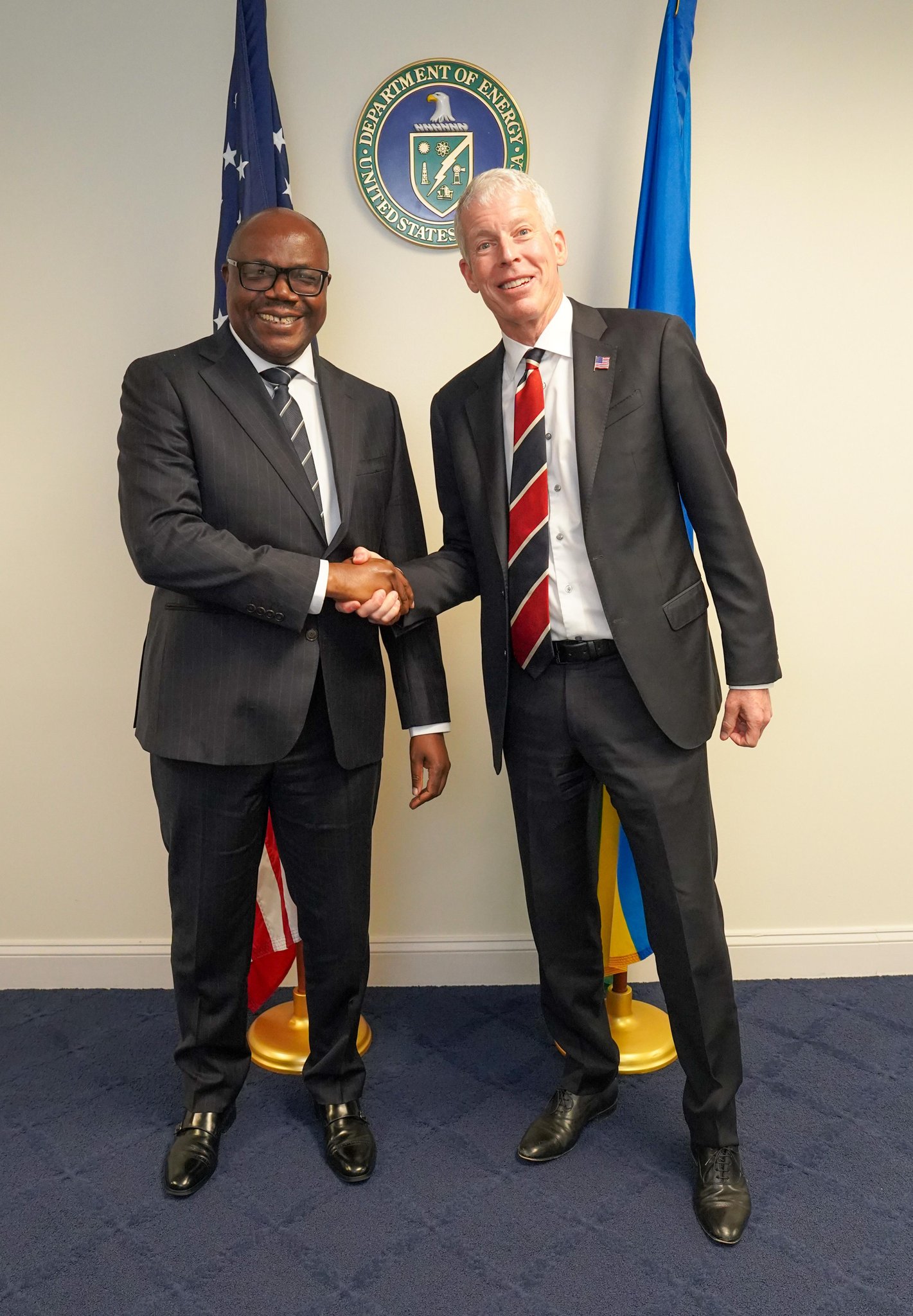
Both parties discussed investment opportunities in natural gas, and critical mineral processing.
According to the Rwanda Atomic Energy Board (RAEB), the country plans to build a nuclear power plant powered by SMR technology as part of a long-term plan to expand reliable and clean electricity generation.
The initiative is a cornerstone of Rwanda’s strategy to achieve energy independence and support industrial growth while contributing to global climate goals.
The first reactor is planned to be set up by end of next year, with several others by 2034. The government expects to invest over a trillion Francs (about $700m) to generate to have up to 5 Gigawatts.
All available internal energy sources including hydropower peat and solar, can only be able to provide up to 1 GW. Therefore, Rwanda has decided to use nuclear energy for power generation to avoid the imbalance in energy demand and supply.
RAEB Chief Executive Officer Dr. Fidèle Ndahayo has said previously that the first operational phase of the project aims to produce electricity by 2030 and will require about 234 trained staff.
Rwanda is investing heavily in human capital to support this vision, with over 200 students currently studying nuclear science in Russia, and additional training programs underway through bilateral partnerships with Hungary, China, and South Korea.
Dr. Ndahayo explained that the SMR reactors will use low-enriched uranium (below 20%), strictly for peaceful energy generation.
“The reactor will be built using state-of-the-art technology on a site covering between 15 and 50 hectares, and the goal is to have the plant operational by 2030,” he said.
Rwanda’s Minister of Infrastructure, Dr. Jimmy Gasore, reiterated that the country’s nuclear ambitions are entirely peaceful and development-oriented, emphasizing that Rwanda is not engaged in uranium enrichment for weapons use.
The Nuclear Energy Innovation Summit for Africa (NESIA 2025), held in Kigali from June 30 to July 1, brought together global experts and policymakers to explore the potential of Small Modular Reactors (SMRs) and Micro Modular Reactors (MMRs) in bridging Africa’s energy access gaps.
Currently, South Africa is the only African nation with an operational nuclear power plant, while Egypt and Rwanda are among those leading new nuclear energy initiatives.
Beyond nuclear cooperation, the Prime Minister’s discussions in Washington also covered natural gas development and critical mineral processing, areas crucial to Rwanda’s industrial and clean energy ambitions.
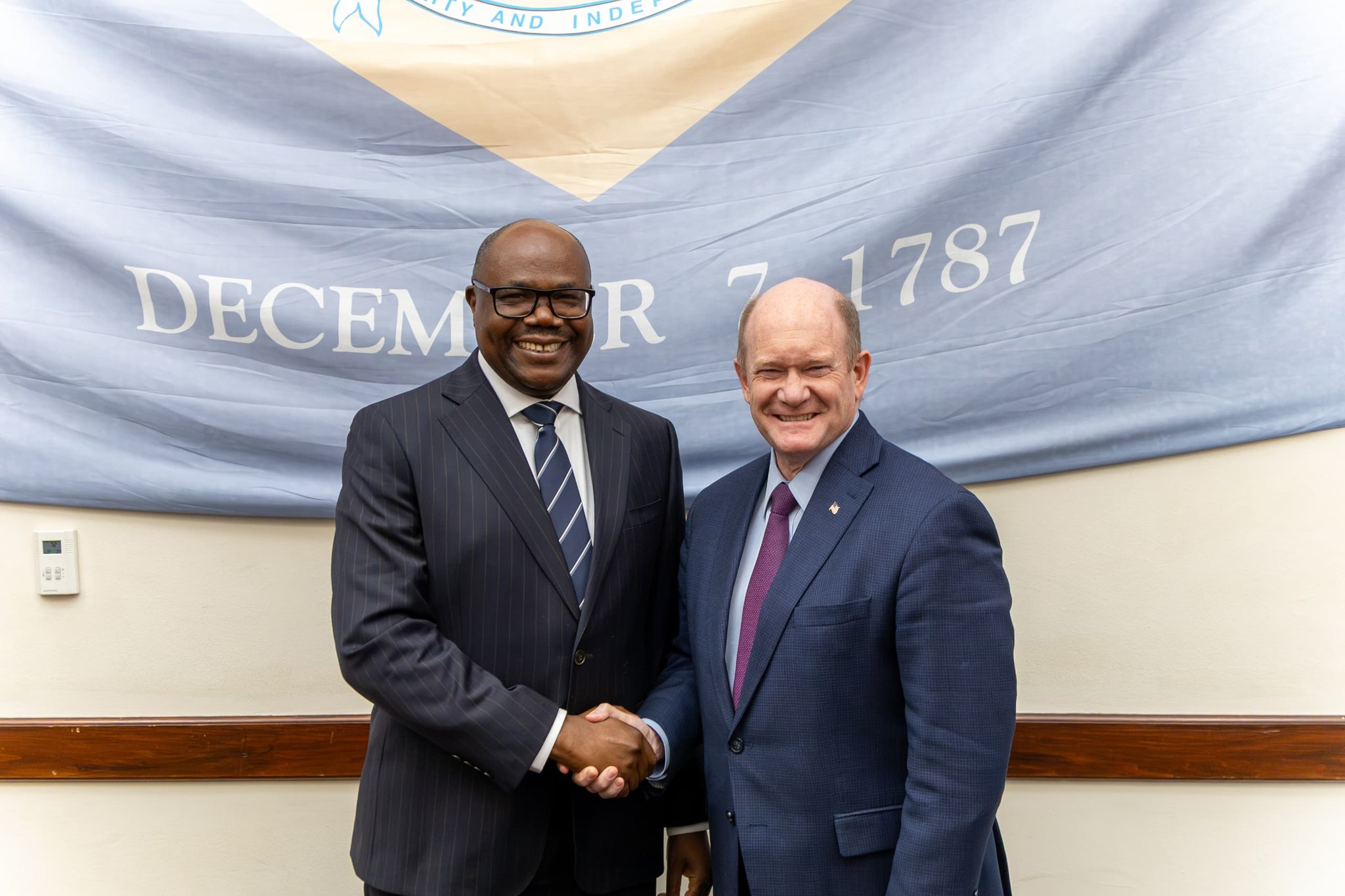
In other related meetings, Prime Minister Dr. Nsengiyumva also held talks with U.S. Senator Chris Coons, focusing on shared priorities in environmental conservation and reaffirming Rwanda’s commitment to strengthening U.S.–Rwanda collaboration in advancing sustainable conservation efforts.
Earlier, while in Washington, the Prime Minister joined world leaders — including President Daniel Chapo of Mozambique, Vice President Esperança da Costa of Angola, and members of the U.S. Congress — at the 2025 ICCF International Conservation Gala.
The event brought together high-level leaders to celebrate global efforts in conservation, climate resilience, and sustainable natural resource management.
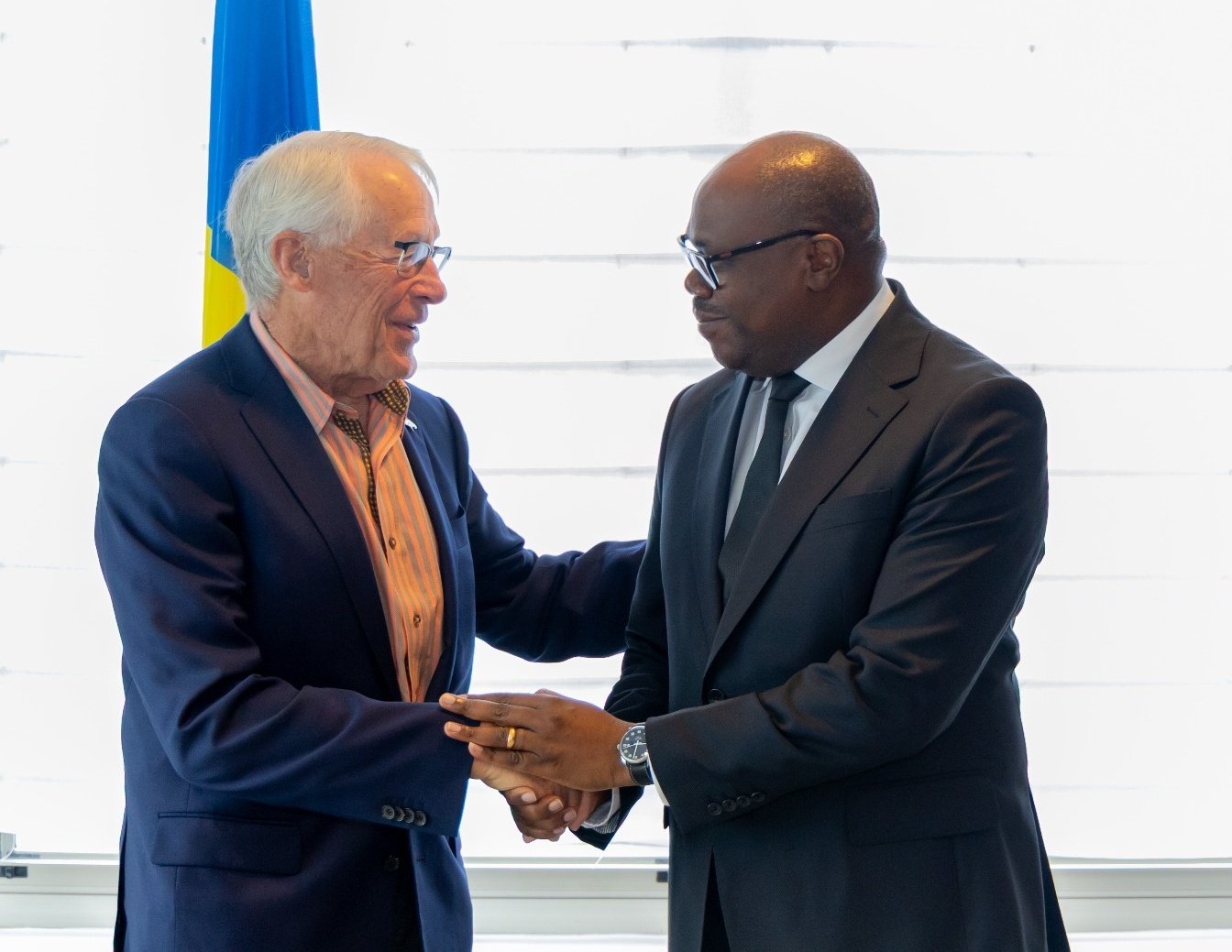
The Prime Minister Dr. Nsengiyumva also met with Mr. Rob Walton, founder of the Rob Walton Foundation, to strengthen collaboration on nature conservation in Rwanda and across Africa.
