



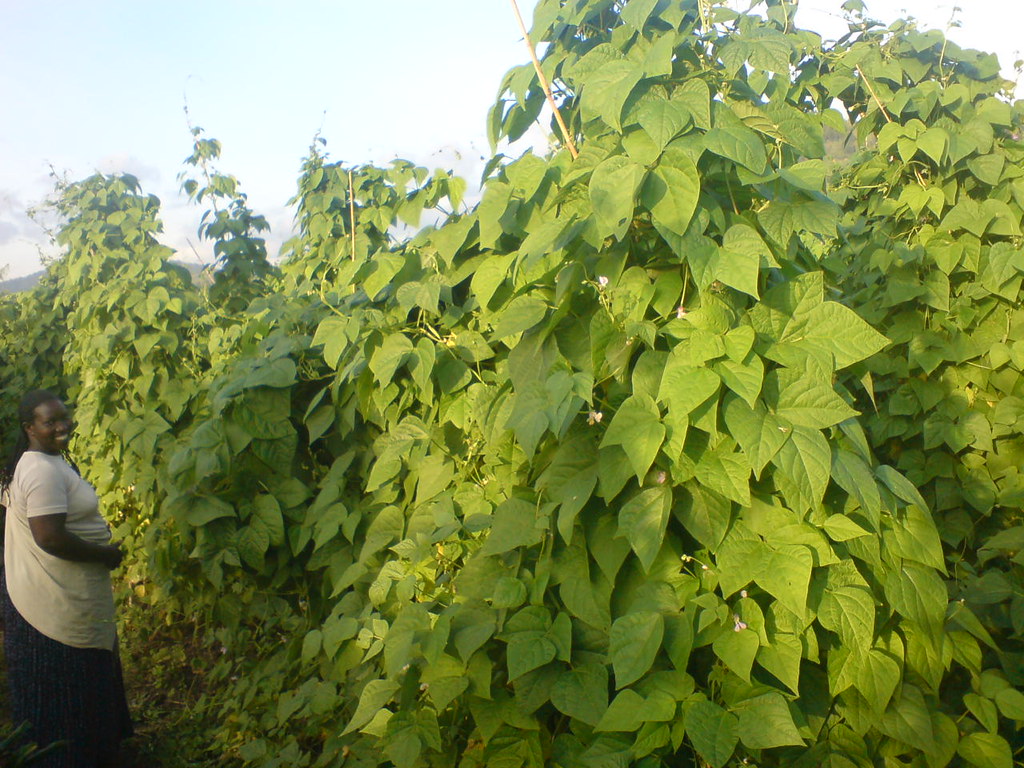
These are climbing beans, a species common developed for farmers in Rwanda
Kigali — The government has released an updated list of crop varieties that are officially approved for farming and commercial seed production in the country.
The list, known as the National Plant Variety List for 2025, was published by the Ministry of Agriculture and Animal Resources (MINAGRI) in a special issue of the Official Gazette on December 31, 2025.
The list includes 223 approved crop varieties covering 12 major crops: maize, soybeans, rice, beans, cassava, sweet potatoes, Irish potatoes, wheat, barley, sunflower, fodder crops, and sorghum.
These varieties are selected to suit Rwanda’s different farming zones, from lowland areas to high-altitude regions, and are meant to help farmers cope with climate change while improving food security.
Each approved variety is clearly described, including its name, country of origin—often neighboring countries such as Kenya, Zambia, and Zimbabwe—the year it was registered in Rwanda (mostly between 2022 and 2023), the company or institution maintaining it, how long it takes to mature, expected yields, and special qualities.
Some maize varieties, for example, can produce up to 7–8 tonnes per hectare, while others are resistant to diseases like maize leaf necrosis, tolerant to drought, or richer in protein.
The list is issued under existing agricultural laws and regulations.
Farmers are still allowed to grow traditional or unregistered seeds for personal use, but only varieties on this official list can be legally produced, certified, and sold as commercial seed.
This measure helps protect farmers from fake seeds and reduces the spread of crop diseases. It also supports Rwanda’s Strategic Plan for Agriculture Transformation (PSTA5), which promotes climate-smart farming to increase productivity and exports.
The release follows approvals made by technical committees in June and July 2025 and comes at a time of major progress in seed development.
Paragraph highlighting the table
The National Plant Variety List shows that maize dominates Rwanda’s approved crop varieties, reflecting its importance as a staple food and a priority for food security.
It is followed by sweet potatoes, rice, and beans, which also play a key role in household nutrition and income. Irish potatoes and wheat have a strong presence, while crops such as soybean and barley are steadily expanding.
Sunflower, sorghum, and fodder crops have fewer approved varieties, indicating more limited but strategic use, especially for animal feed and specialized production.
Overall, the distribution highlights Rwanda’s focus on staple and climate-resilient crops across different agro-ecological zones.
Table: Breakdown of Approved Crop Varieties
| Crop | Number of Approved Varieties |
|---|---|
| Maize | 81 |
| Soybean | 11 |
| Rice | 26 |
| Bean | 19 |
| Cassava | 8 |
| Sweet potato | 27 |
| Irish potato | 19 |
| Wheat | 16 |
| Barley | 11 |
| Sunflower | 2 |
| Fodder crops | 1 |
| Sorghum | 2 |
Recently, Rwanda approved 11 new Irish potato varieties, including Cyerecyezo, Gisubizo, Kazeneza, Nkunganire, and Ndamira. This marked the first major update of potato varieties in nearly 30 years.
Field trials show these varieties can increase yields by up to 40 percent, reaching 34–40 tonnes per hectare, and are highly resistant to late blight, a major disease in Rwanda’s wet highland areas.
Cyerecyezo, in particular, has shown strong resistance to pests and high productivity.
At the same time, Rwanda is testing bio-fortified potato varieties designed to improve nutrition and help reduce malnutrition and stunting, especially among children.
In addition, farmer-led trials conducted between 2021 and 2025 identified eight top-performing climate-smart varieties of maize, rice, potatoes, cassava, cabbage, and onions. These were tested directly on farmers’ fields and, in some cases, doubled yields while improving resistance to pests, drought, and unpredictable rainfall.
Rice varieties such as TETA 10-04 and cassava varieties like Nsizebashonje ranked highly for both resilience and productivity.
To further strengthen seed development, Rwanda launched the BioCap Project in December 2025. This five-year program aims to develop improved cassava, maize, and potato varieties using modern biotechnology.
Supported by a $14 million biotechnology center of excellence, the project targets resistance to major crop diseases and is expected to benefit more than 500,000 farming households by reducing losses and dependence on imported food. Pilot releases of genetically improved varieties are expected by late 2025 or early 2026.
Agricultural experts say this combined approach—approved seed varieties, farmer testing, and biotechnology—could significantly boost Rwanda’s agricultural output, farmer incomes, food security, and exports, while strengthening regional trade under COMESA standards.
As climate challenges increase, these government-approved crop varieties are seen as a key support for sustainable farming in Rwanda.
