




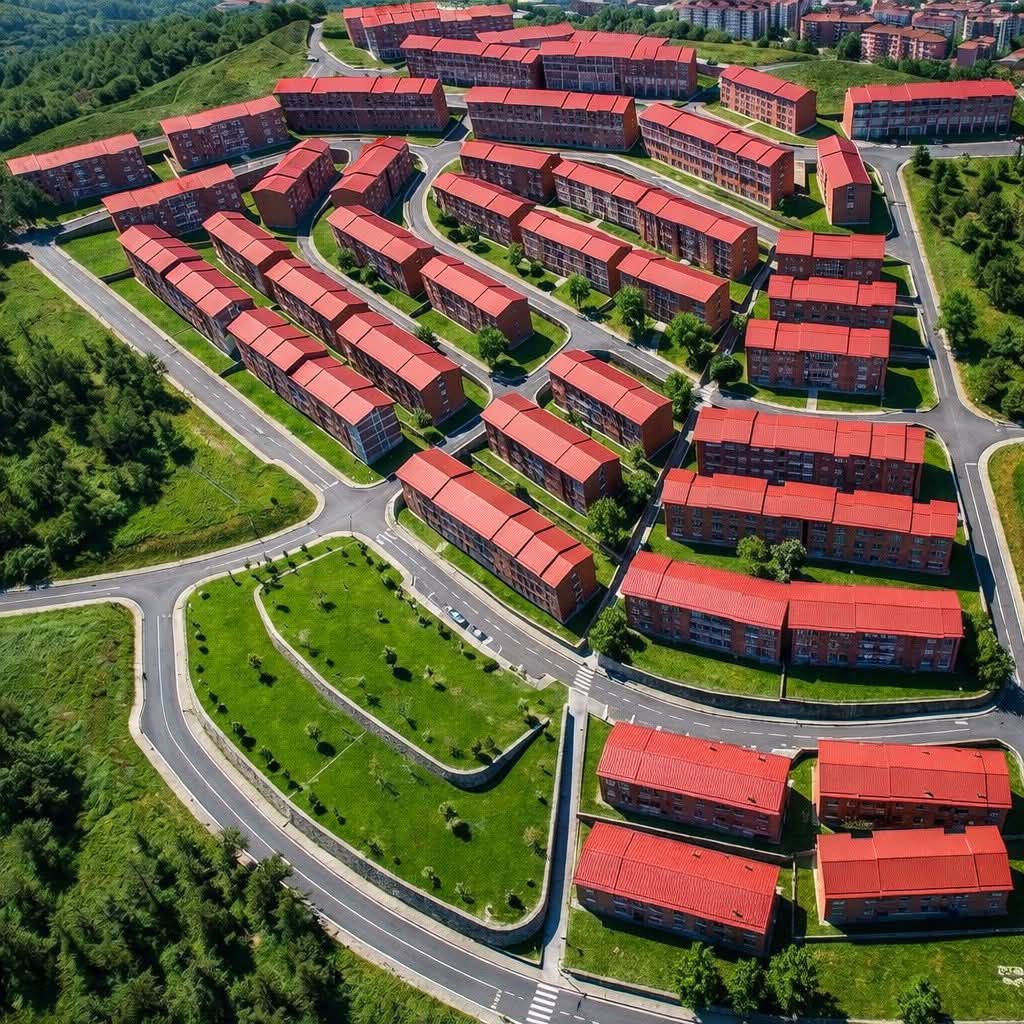
Nyabisindu redevelopment planned to house thousands of families
Home ownership in Rwanda is declining, and at first glance this trend can appear alarming. For decades, owning a home has been one of the clearest signs of security and long-term stability for households.
Latest official statistics, however, show that fewer households now own the homes they live in compared to ten years ago.
This change deserves careful explanation, because it is driven less by worsening living conditions and more by deep demographic and economic shifts taking place across the country.
The numbers
National statistics reflected in the Rwanda Statistical Yearbook 2025 show that about 72 percent of households owned their dwelling, as par latest figures from the statistics yearbook released December 31, 2025.
This represents a noticeable decline from around 80 percent recorded in the 2012 Population and Housing Census.
Over roughly a decade, home ownership has therefore fallen by about eight percentage points.
During the same period, the share of households living in rented housing increased from roughly 15 percent to about 22 percent nationally. The pattern is much stronger in urban areas.
In Kigali City, only around 34 percent of households own the homes they live in, while the majority are tenants. These figures point to a clear shift in how Rwandans are housed, especially in towns and cities.
Population growth
One of the strongest forces behind this trend is rapid population growth.
Rwanda’s population grew from about 10.5 million people in 2012 to approximately 13.2 million in 2022, an increase of nearly 2.7 million people in just ten years.
This is a growth rate of about 26 percent in a decade. Population growth leads directly to the formation of new households, and the number of households has been rising quickly.
Even when housing construction expands, ownership rates can still decline if new households are formed faster than people are able to buy or build homes.
In practical terms, more people are competing for housing, and many of them cannot immediately afford ownership.
A country dominated by young people
Rwanda’s age structure plays a critical role in explaining falling ownership.
More than 70 percent of the population is under the age of 30, and the median age is around 20 years. This makes Rwanda one of the youngest countries in the world.
Home ownership typically comes later in life, after individuals have secured stable jobs, accumulated savings, or gained access to credit.
A population dominated by students, first-time job seekers, and young families will naturally have lower ownership rates.
As large numbers of young people leave their parents’ homes, they often rent while they establish themselves economically.
This alone is enough to push national ownership rates downward, even if long-term prospects remain positive.
Urbanisation
Urbanisation is another major driver. Young people are moving to cities, particularly Kigali, in search of education, employment, and better opportunities.
Urban housing markets function differently from rural ones. In rural areas, many households build on family land using locally available materials, which keeps ownership levels high, often above 80 percent.
In cities, land is scarce and expensive, construction costs are higher, and most housing is developed for the rental market.
Buying a home in an urban area usually requires large amounts of capital or access to mortgage finance, which remains limited for many households.
As urban populations grow faster than rural ones, the national ownership rate naturally declines.
Ownership does not always mean quality
It is also important to distinguish between owning a house and the quality of that housing.
While around 72 percent of households own their homes, many of these homes remain basic.
Census data show that about 60 percent of houses still have earth floors, and roughly 68 percent are built with sun-dried bricks.
Only around 31 percent of homes have cement floors. These figures suggest that many households possess housing assets but lack the cash income needed to improve or upgrade them.
This reinforces the idea of “wealth without money,” where physical assets exist but liquidity is limited.
Smaller households, higher demand
Household size is also changing. Families are gradually becoming smaller, which means more households are being formed from the same population.
Two smaller households require two homes instead of one. This increases demand for housing units and places additional pressure on the market, especially in urban areas.
As a result, more people rent for longer periods before transitioning into ownership.
The Nyabisindu redevelopment (as seen in photo) fits within Rwanda’s broader effort to transform the housing sector nationwide.
Through the Rwanda Housing Authority, the government is rolling out large-scale urban renewal projects that replace informal settlements with planned, modern, and climate-resilient housing.
This approach is not only intended to improve living conditions, but also to expand access to home ownership by increasing housing supply and offering better-quality units.
Crucially, the programme is supported by extensive housing finance initiatives, designed to help households move from informal or rented housing into owned homes, aligning urban development with the country’s long-term social and economic goals.
What the decline really means
The decline in home ownership should not be read as a sign that Rwanda is moving backwards.
Rather, it reflects a society undergoing rapid demographic transition.
A fast-growing population, a large youth majority, and accelerating urbanisation are reshaping how people live and access housing.
In many countries, similar phases have been accompanied by rising rental markets before ownership levels stabilise or rise again as incomes grow and financial systems mature.
The real challenge ahead
The key policy challenge is not simply to raise ownership rates, but to ensure access to affordable, decent housing and effective housing finance, especially for young people.
As today’s young population ages and gains economic stability, demand for ownership will increase.
Whether the housing sector can respond with affordable supply, accessible mortgages, and well-managed urban development will determine how quickly ownership levels recover.
For now, the fall in home ownership is best understood as the outcome of a young, growing, and urbanising nation adapting to new realities rather than a collapse in household wealth.
