




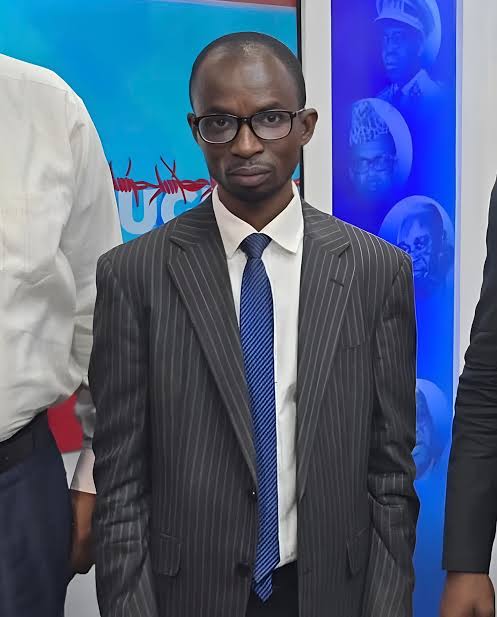
A Congolese opposition activist and online political commentator has alleged that he was starved, threatened, and psychologically pressured in detention in an attempt to force him to plead guilty to charges linked to his criticism of the government.
Parole Kamizelo Sukadi, widely known by his online aliases “Maîtrisable” or “Mr. le Maîtrisable,” is a communicator and opposition figure associated with the Parti du Peuple pour la Reconstruction et la Démocratie (PPRD), the party of former president Joseph Kabila.
He is known for his outspoken social media commentary on PresidentFélixTshisekedi, national sovereignty, and security issues, particularly the conflict in eastern Democratic Republic of Congo (DRC).
In one ot the videos, he sharply criticized the Washington Accords, arguing they were backed by Tshisekedi so that the balkanisation (break up) of Congo could be implemented. He accuses Tshisekedi of being an agent of the same forces that want to destroy Congo.
Sukadi was arrested on December 7, 2025, days after appearing in a televised political debate on December 4. Following his arrest, he was reportedly held in undisclosed locations by security services before being transferred on December 26 to the Parquet de grande instance de Kinshasa/Gombe, where formal judicial proceedings began.
He now faces charges of cybercrime—specifically the dissemination of false information through social networks under Article 360 of the Code du numérique—as well as offense against the head of state under a 1963 ordinance-law.
Prosecutors say the charges stem from videos and online posts in which Sukadi made allegations about state governance, national security, and the conduct of senior authorities.
During court proceedings that are ongoing as even this weekend, Sukadi partially acknowledged making some of the statements attributed to him but argued they were political metaphors intended to critique government policies rather than personal attacks.
He has also claimed that some of the social media accounts used as evidence were unsecured or accessed without his authorization.
More controversially, Sukadi told the court that his admissions were made under duress. He alleged that during detention he was deprived of food for three consecutive days, threatened with weapons, and pressured to confess in order to “preserve his health.”
According to his account, the conditions were deliberately designed to weaken him physically and psychologically.
He has since publicly asked for pardon, a move his supporters say was motivated by fear and exhaustion rather than genuine admission of guilt.
They argue the case reflects a broader pattern in which laws on cybercrime and offenses against state institutions are used to silence dissenting voices.
The prosecution, however, maintains that the statements were intentionally published, widely disseminated, and constituted clear legal offenses.
Prosecutors argue that such cases do not require a formal complaint from the head of state to proceed.
Sukadi’s arrest and trial have triggered intense public debate in the DRC and online, including false reports of his death while in detention and calls for the full broadcast footage of the December debate to be reviewed for context.
Human rights activists say the case raises serious questions about freedom of expression, due process, and the treatment of detainees in politically sensitive cases.
Supporters view Sukadi as a symbol of resistance against what they describe as growing authoritarianism, while critics accuse him of spreading unverified and inflammatory claims.
As the trial continues, his case has become a flashpoint in the wider national conversation about whether harsh criticism of political leadership constitutes a crime or remains protected political expression under Congolese law.
