




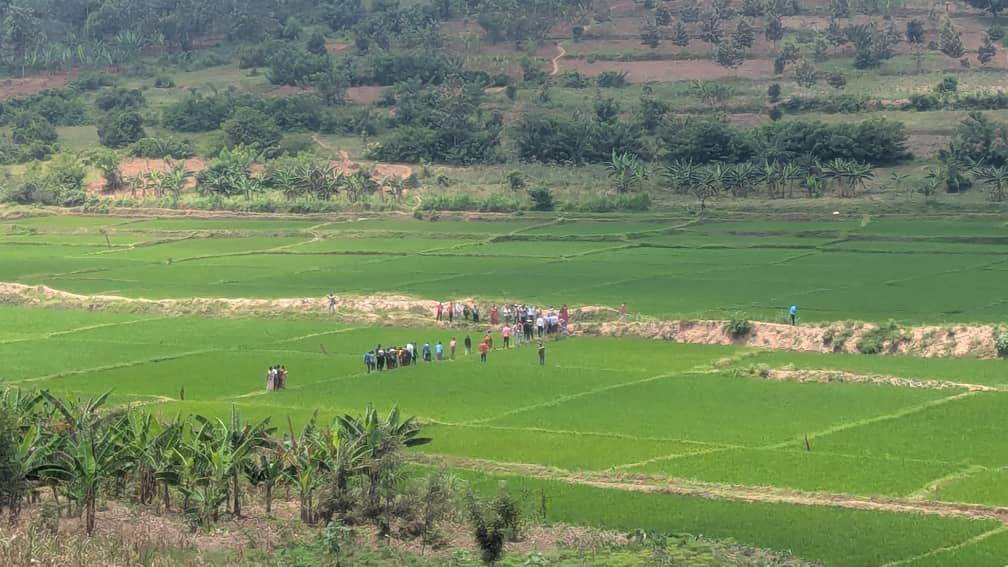
Farmers tour the Gatare marshlands, where combined use of compost and industrial fertilizers has boosted rice yields to 7.6 tonnes per hectare.
In the marshlands of Gatare, Gisagara District, rice paddies once left to the mercy of seasonal rains now flourish with astonishing harvests. The secret behind this transformation? A new generation of Rwandan farmers trained under the Rwanda–Israel agriculture programme.
These graduates return from Israel armed not just with knowledge, but with hands-on expertise in modern farming techniques—drip irrigation, water management, and compost production—that are reshaping agriculture across the country.
Since 2012, at least 200 Rwandan university graduates each year have spent 11 months in Israel, learning cutting-edge, science-based agricultural practices. What began as an exchange programme has grown into a structured pipeline, equipping thousands of young professionals to lead Rwanda’s agricultural modernization.
By early 2026, over 1,600 alumni had returned home, bringing with them a wealth of skills—from vegetable and fruit production, plant protection, soil conservation, and irrigation, to dairy and poultry farming, aquaculture, farm economics, project planning, and post-harvest management. Across Rwanda, their work is helping farmers increase yields, embrace climate-smart practices, and cultivate a more resilient, modern agriculture sector that promises a brighter future for the country’s food systems.
Turning Skills into Results: Cooperatives, Compost, and Better Yields
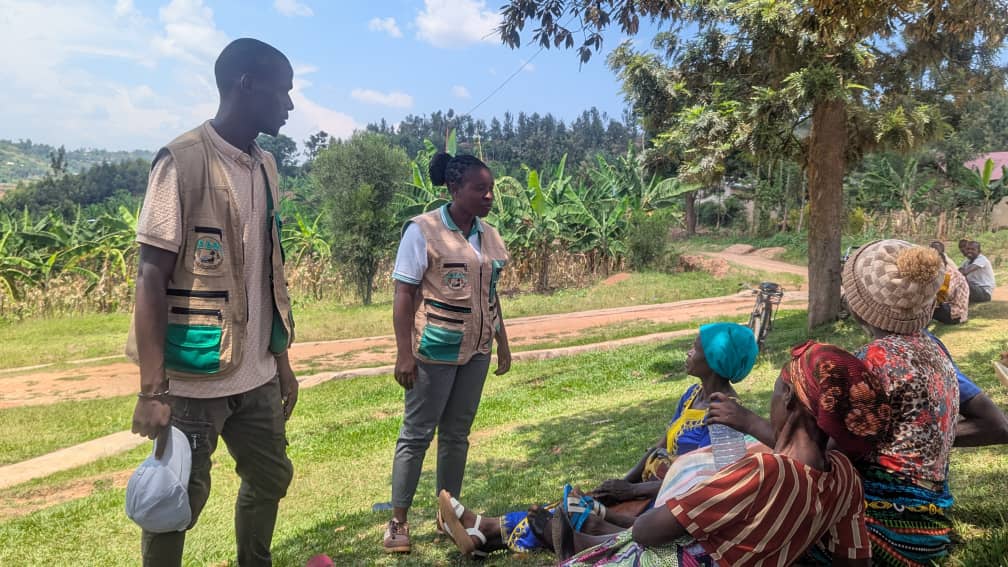
Israel-trained alumni, now experts, are sharing their knowledge and skills with local farming communities.
Building on the knowledge acquired abroad, many alumni have joined forces to form the Horticulture in Reality Cooperative (HoReCo), transforming how farming is done. The cooperative now manages large-scale irrigation and greenhouse projects, guiding farmers to adopt modern techniques such as drip irrigation, soilless farming, and climate-smart cultivation.
Not long ago, the same 130-plus hectares were farmed in isolation, with each farmer relying heavily on seasonal rains. “We used to harvest about 500 kilograms per hectare, and everyone planted whatever they wanted. After forming the cooperative, consolidating our land, and applying proper planting techniques, our production has steadily grown,” said Alphonse Mazimpaka, HoReCo president.
Today, HoReCo agronomists help farmers plan structured cropping calendars, calculate optimal seed spacing, fine-tune irrigation, and enrich soils with compost made from rice waste. The transformation has been dramatic: yields that once averaged 1.6 tonnes per hectare with industrial fertilisers alone now soar to 7.6 tonnes per hectare when combined with compost.
Compost manure is more than fertilizer—it improves soil fertility, reduces erosion, lowers production costs, and turns agricultural waste into a valuable resource. “We want to expand its use because it can significantly boost productivity, especially on sandy soils,” said Antoine Mbyukansenga, HoReCo agronomist. The Rwanda Agriculture Board (RAB) is scaling up compost production and distributing it nationwide, ensuring this sustainable, high-impact approach reaches even more farmers.
From scattered fields struggling under erratic rains to a cooperative driving modern, climate-smart agriculture, HoReCo illustrates how knowledge, collaboration, and innovation can reshape farming—and lives—across Rwanda.
Scaling Knowledge and Driving Economic Impact
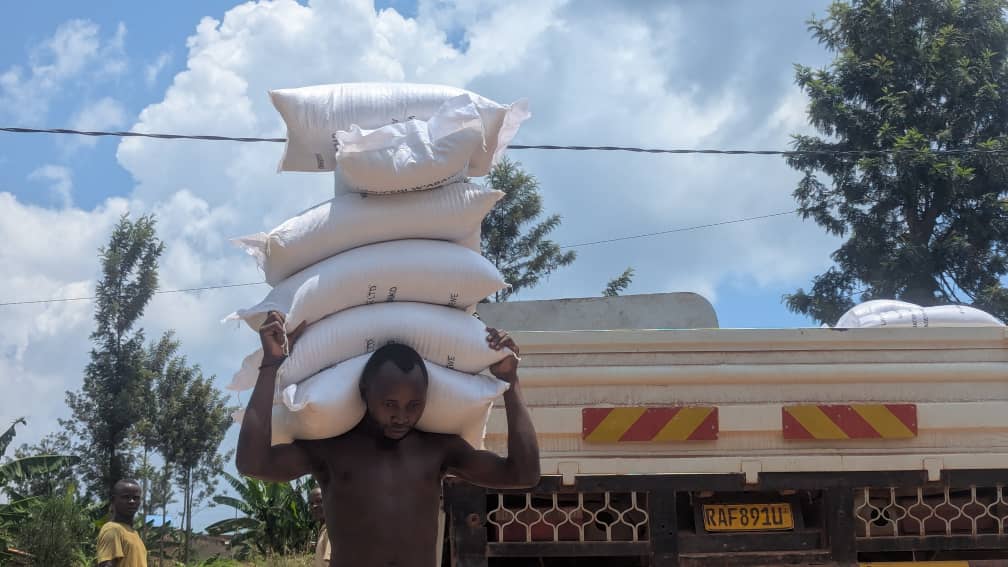
Armed with new knowledge, farmers are now achieving higher yields across the country.
The success of the Gatare model is now inspiring farmers across Rwanda. Through the World Bank-funded Sustainable Agricultural Intensification and Food Security Project (SAIP), farmers from drought-prone districts such as Ruhango and Huye have visited Gatare to see firsthand how improved irrigation scheduling, compost use, and other climate-smart techniques can transform yields.
With reliable, all-season harvests, the cooperative now supplies rice to the Gikongo Rice Factory while returning a portion to members for household consumption. Savings from reduced dependence on costly industrial fertilisers have enabled HoReCo to purchase cows for its 650 members and establish a microcredit scheme offering interest-free loans—creating both economic and social benefits for the community.
For farmers in Gatare, the transformation is about more than higher yields. It demonstrates how skills acquired abroad can be adapted to local realities, and how careful water management and sustainable soil practices empower smallholder farmers to drive Rwanda’s agricultural growth from the ground up.