


Members of Parliament have raised concerns over a shortage of mental health specialists in rehabilitation and correctional facilities, as the number of people admitted to these institutions has increased by 92 percent in recent years.
The concerns were raised on Tuesday during Parliament’s review of the Auditor General’s report, which highlights challenges facing correctional facilities across the country, including overcrowding and an insufficient number of mental health professionals. Lawmakers warned that the shortage undermines rehabilitation efforts, as mental health care is a critical component of successful reintegration.
According to the report, in 2024 one mental health specialist was responsible for about 150 people in correctional facilities, nearly double the ratio projected by the National Rehabilitation Service (NRS), which had anticipated one specialist for every 78 people.
MP Germaine Mukabalisa questioned how the government plans to address the staffing gap, noting that the number of specialists has not kept pace with the growing population in correctional facilities and that budget allocations remain inadequate.
“It has been shown that the number of specialists is small compared to the increase in the number of people being sent to correctional facilities, and the budget is insufficient,” she said. “What will be done to ensure that the required budget is made available so that the number of specialists can be increased?”
Responding to the concerns, the Chairperson of the Parliamentary Committee on Social Affairs, MP Veneranda Uwamariya said budget requests to address the issue are submitted through established government procedures.
“We are the body that determines the budget when it is requested or advocates for it to be made available,” he said. “The process is known and followed. The funds may be allocated now or in the future, depending on how the available budget is distributed.”
She added that complementary interventions are being implemented through the Ministry of Health to address mental health challenges more broadly. These include public awareness campaigns aimed at preventing harmful alcohol consumption, such as ‘Tunyweless’ (Drink Less), Alcohol Is Not for Minors, Alcohol Does Not Grow Up, and messages encouraging parents to protect children from alcohol abuse.
In addition, mental health services are available from health centers to referral hospitals, alongside strategies focused on prevention, early detection, and intervention, as well as strengthening mental health services in schools.
The Auditor General’s report shows that admissions to correctional facilities rose from 3,886 people in the 2020/2021 financial year to 7,461 in 2023/2024, representing a 92 percent increase. MPs warned that this sharp rise has intensified pressure on already limited mental health services.
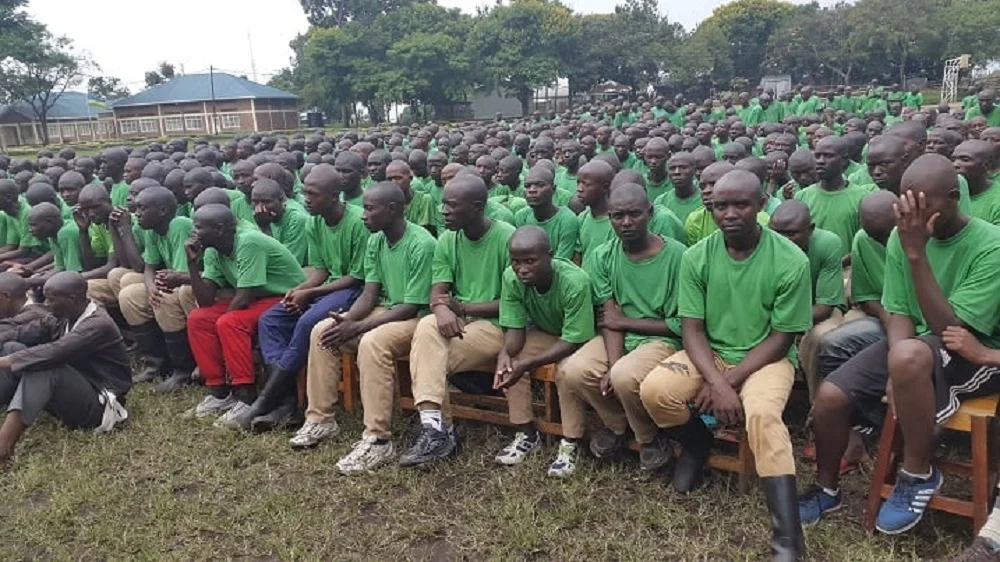
Concerns were also raised about overcrowding in correctional facilities. MP Mukabalisa questioned the reasons behind the increasing admissions and asked what measures the Ministry of Gender and Family Development is taking to prevent vulnerable individuals, particularly children, from ending up in such institutions.
Chairperson of the Parliamentary Committee said the report attributes the rise in admissions partly to the absence of a strong system to prevent behaviors that harm the population.
Mukabalisa further asked for concrete decisions to be submitted to the Ministry of Gender and Family Development to address the root causes of the problem, saying: “What has happened to the behavior of those being taken to these centers that the numbers have increased to such a high level?”
Uwamariya explained that the increase is linked to multiple factors, including antisocial behavior, family problems, poverty, peer pressure, school absenteeism and dropout, unemployment—especially among youth—alcoholism, and drug abuse.
She added that government officials, including the Minister of Local Government, the Director General of NRS, the Minister of Internal Security, and the Minister of Gender and Family Development, informed Parliament that a multi-institutional steering committee has been established.
The committee is tasked with developing strategies to prevent harmful behavior, improve the management of correctional and temporary detention centers, and strengthen reintegration mechanisms for graduates.
The Auditor General’s report further shows that 19,700 people exhibiting disruptive behavior were admitted to correctional facilities, of whom 11,200 completed rehabilitation programs. These included 924 women and 1,135 children who were later reunited with their families.
A total of 11,478 beneficiaries received vocational training in areas such as construction, carpentry, tailoring, agriculture, hairdressing, cooking, and electrical engineering, while 251 children accessed primary education. Some graduates were also linked to employment opportunities.
Correctional facilities play a key role in rehabilitating individuals whose behavior disrupts society by providing psychosocial support, medical care, general education, and technical and vocational training. These services aim to help beneficiaries reform their behavior, acquire practical skills, and contribute positively to national development.