




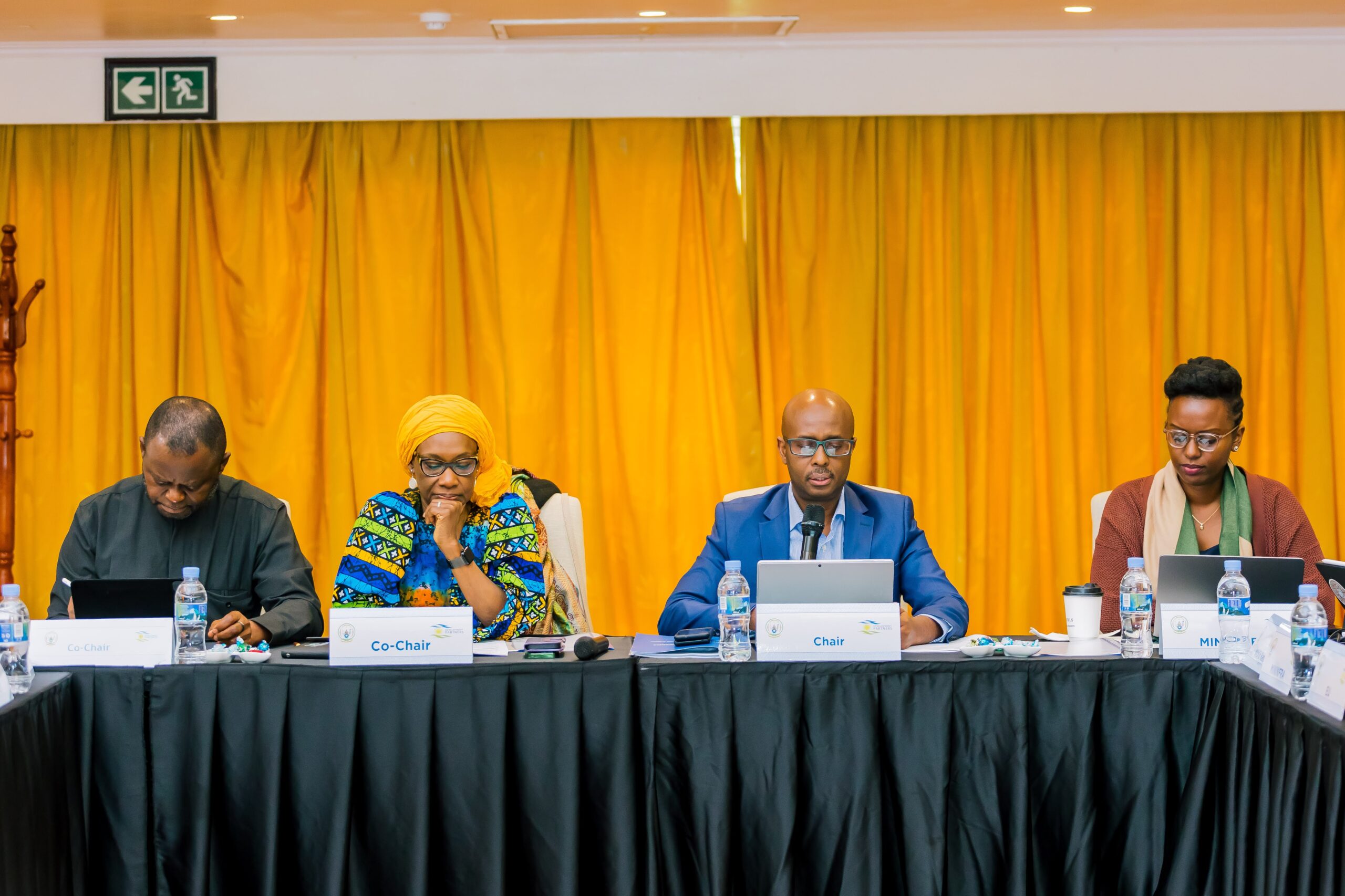
Minister of Finance and Economic Planning, Hon. Yusuf Murangwa (second right), with senior officials and development partners.
Rubavu — Government leaders and development partners meeting in Rubavu District have agreed to reposition Rwanda’s development cooperation into a more strategic and results-driven phase, aligning external support more closely with the country’s long-term priorities.
The discussions, held under the theme “Strengthening Partnerships through Implementation of the New Development Cooperation Policy,” focused on how Rwanda and its partners can work together to deliver stronger, more sustainable development outcomes.
At the centre of the meeting was the draft Rwanda Development Cooperation Policy (RDCP), which will replace the 2006 Aid Policy. While the earlier framework helped mobilise resources during Rwanda’s post-genocide recovery, the new policy reflects the country’s evolving development context. It seeks to move beyond traditional aid models toward deeper, more strategic, and mutually accountable partnerships.
“We are entering a new phase in our development journey,” said the Minister of Finance and Economic Planning, Hon. Yusuf Murangwa. “This policy is about working differently—moving from scattered projects to joint efforts that are designed here in Rwanda and driven by our long-term national vision.”
The draft policy sets a forward-looking roadmap to 2050 and is designed to remain adaptable to global shifts, including climate finance, emerging sources of investment, and rapid digital transformation. It aims to strengthen the implementation of the National Strategy for Transformation (NST2) and future national development plans, while ensuring that development cooperation delivers clear, measurable, and lasting impact.
Building Trust Through Accountability and Partnership
Ozonnia Ojielo, the United Nations Resident Coordinator, said the policy signals a shift toward partnerships that prioritise impact, scale, and long-term sustainability.
“This is about ambition grounded in reality,” he said, noting that achieving lasting change requires stronger coordination and joint action among all partners. “The United Nations stands ready to work with the Government to advance this policy and ensure its effective implementation.”
Under the new framework, the Government of Rwanda and its development partners will roll out the revised approach over the next two years. Multisectoral teams will develop concrete programmes and flagship initiatives aligned with national priorities, focusing on improved coordination, strengthened delivery systems, and faster results across key sectors.
Officials added that the rollout will introduce clearer accountability mechanisms and monitoring tools, ensuring that external support directly contributes to the implementation of NST2 and future national development plans.
The meeting brought together bilateral and multilateral donors, development finance institutions, private sector actors, and civil society organisations to review progress and align cooperation with Rwanda’s long-term development agenda.
Aid partners’ confidence in the Rwandan government is rooted in its consistent record of good governance, transparency, and results-driven development. Over the past decades, Rwanda has demonstrated its ability to effectively manage resources, implement national strategies, and deliver measurable outcomes that improve citizens’ lives. This credibility, combined with a clear vision for long-term development and a willingness to engage partners in strategic, accountable ways, has made Rwanda a trusted and reliable partner for development cooperation.
