



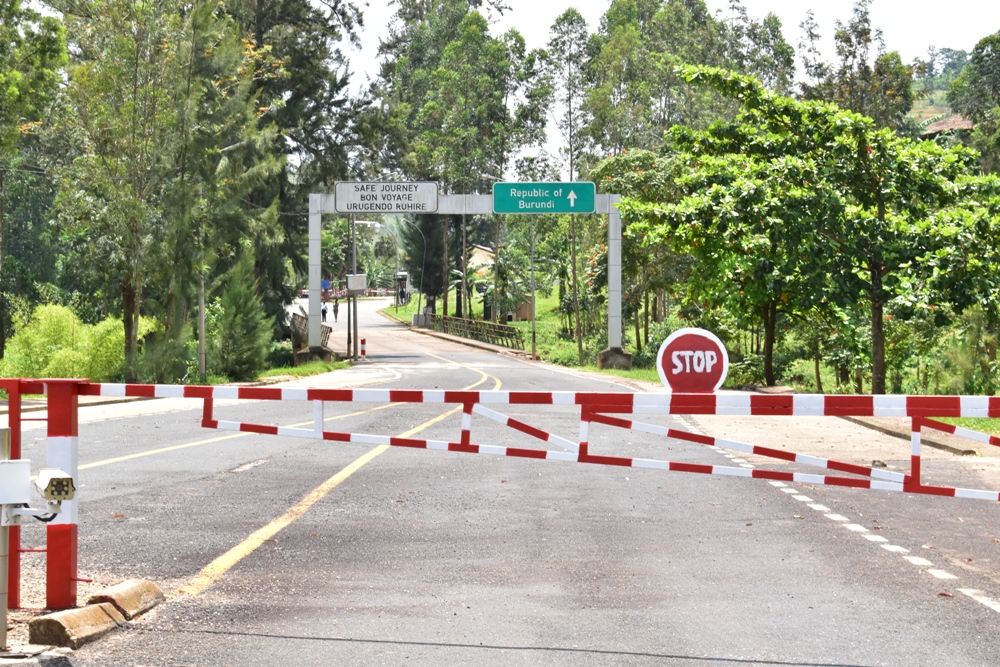
This is the Akanyaru border post between Rwanda and Burundi. Burundi closed its land border in early 2024, essentually stopping any trading between the two peoples
Kigali, Rwanda — Despite decades of efforts to integrate East Africa’s economies, trade among East African Community (EAC) members remains surprisingly limited, prompting renewed concern from policymakers and business leaders.
Recently, the EAC convened a two-day High-Level Multisectoral Dialogue in Kigali to tackle persistent barriers and chart a path toward deeper regional economic integration.
The meeting brought together officials from all eight Partner States to examine why intra-EAC trade has stagnated at roughly 15 percent of total trade — far below the region’s potential, estimated at 30 to 50 percent.
While the EAC has made progress in establishing legal frameworks, institutions, and policies to support integration, officials agreed that operational and procedural challenges remain the principal obstacles.
“Even with the right policies, practical challenges continue to slow trade within the Community,” said Rwanda’s Minister of Trade and Industry, Prudence Sebahizi, during the opening ceremony. “We must move from policy formulation to enforcement and coordination so that businesses can trade seamlessly across borders.”
A key focus of the discussions was non-tariff barriers (NTBs) — including duplicative inspections, discriminatory domestic taxes, inconsistent rules of origin, and burdensome sanitary regulations.
These hurdles, officials noted, raise transaction costs, disrupt supply chains, and undermine confidence in the EAC as a rules-based market.
“The cost of trading within the Community is often higher than trading with external partners,” said Yusta Kayitesi, Rwanda’s Minister of State in charge of EAC Affairs. “Addressing these barriers is essential to unlock the region’s trade potential.”
Transport and logistics challenges were also highlighted. Officials cited uneven implementation of One-Stop Border Posts (OSBPs), incomplete operationalization of the Single Customs Territory, high transport costs, and weak digital integration, including limited real-time data sharing, as key factors delaying the movement of goods.
Kenya’s Cabinet Secretary for the Ministry of East African Community, ASALs and Regional Development, Beatrice Askul Moe, called for simpler, faster, and more competitive trade processes.
“We need clear, actionable plans to reduce clearance times, ease movement of goods, and ensure predictable regulations,” she said, emphasizing shared responsibility among governments, regulators, and the private sector.
The EAC Secretary General, Veronica Nduva, noted that while regional trade has grown from US$6.42 billion in 2016 to US$15.25 billion in 2024, intra-EAC trade still accounts for only about 12 percent of total exports, showing that EAC economies continue to rely heavily on external markets.
Private sector leaders echoed the urgency for practical measures. Denis Karera, Vice Chairperson of the East African Business Council, emphasized that “we need a scorecard to track progress and ensure time-bound solutions that translate policy into real trade gains.”
The dialogue is expected to produce a coherent set of recommendations for the EAC Council and Summit, aiming to create a seamless, competitive, and inclusive regional single market.
As officials and businesses push for implementation, the message is clear: East African countries currently find it easier to trade outside the region than with their neighbors, and unlocking intra-regional trade is now a question of action, not policy.
