



On the drive through Kigali — from Kimihurura to Remera, from busy roundabouts to the entrances of shopping centers — it is becoming harder to miss them.
Sleek electric cars sit in glass-fronted showrooms, their images stretched across towering billboards, promising a quieter, cleaner future.
But what stands out is not just their growing presence; it is their unfamiliar names. These are not the traditional global brands that once defined aspiration on Rwanda’s roads, but a wave of mostly Chinese models now filling the city’s most visible spaces.
And as these vehicles become part of the daily commute — seen, desired, but still out of reach — banks are beginning to respond.
Increasingly, they are stepping in with financing designed to turn that daily glimpse into ownership, betting that the car you pass every morning on your way to work is the one you will soon want to drive home.
Rwanda’s electric vehicle push is starting to look less like a government experiment — and more like a banking race.
In recent months, lenders have quietly moved in, not with loud announcements but with carefully structured deals — loans, partnerships and financing schemes designed to make electric cars and motorbikes affordable in a market where upfront cost has long kept buyers on the sidelines.
What was once a niche conversation about green transport is quickly becoming a contest over who will finance — and ultimately shape — the country’s shift away from fuel.
The shift is happening against a backdrop of rising adoption, with Kigali alone now hosting more than 200 charging stations, a sharp increase from just a handful only a few years ago.
At the center of it all is a simple constraint: people are interested in electric vehicles, but most cannot afford to buy them outright.
Even after tax exemptions, entry-level electric cars in Rwanda still range between Rwf 30m and Rwf 60m ($20,000 and $40,000), putting them out of reach for most households without financing.
Now, Rwanda’s banks are trying to solve that — each in a different way.
A Market Taking Shape
The latest signal came Tuesday this week, when Kenyan lender Equity Bank Rwanda announced a partnership with China Electric Vehicle Rwanda Ltd (CEVR) to expand access to electric cars through what it described as “flexible financing.”
The details remain thin — but the intention is unmistakable. The bank’s commercial director, Eric Rutabana, pointed to cost as the main barrier, not demand.
The new financing is expected to reach beyond corporate clients to individuals, small businesses and transport operators — a segment that makes up a large share of Rwanda’s economy, where over 90 percent of businesses are SMEs.
For Glory Lu, the company’s chief executive, the partnership is a sign that Rwanda is ready to move from early pilots into broader adoption.
But if Equity’s move signals momentum, it also reveals something else: the space is already crowded.
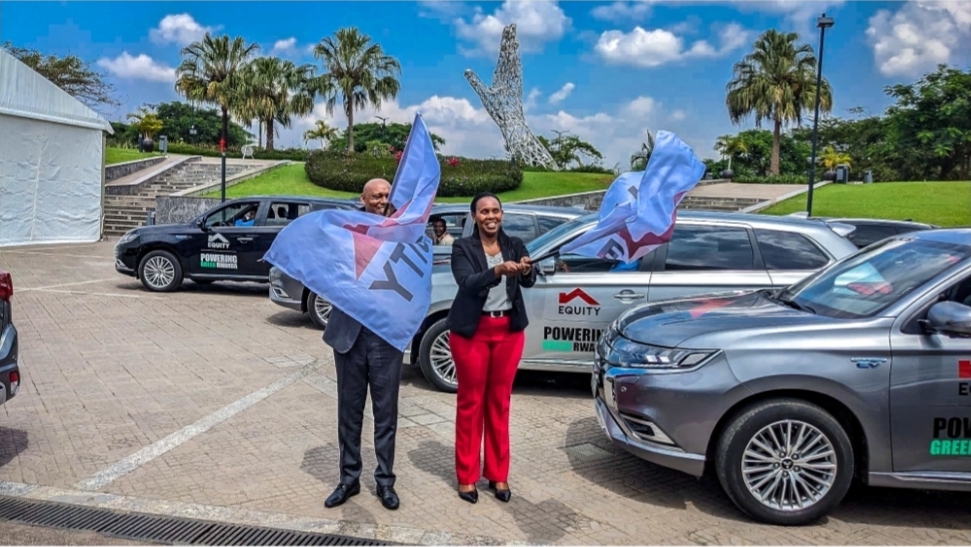
Equity Bank Rwanda is taking its chances
Different Banks, Different Bets
Across Rwanda’s financial sector, there is no single approach to electric vehicles. Instead, banks are testing different models, each reflecting a distinct view of how the market will grow.
At one end is the Pan African lender Ecobank Rwanda, which has taken perhaps the most aggressive stance. Its approach is simple: remove the cost barrier as much as possible.
Through partnerships with vehicle dealers, the bank is offering financing that can cover up to 100 percent of the vehicle price, sometimes requiring no upfront payment at all.
Customers can repay over up to five years, and in some cases pay zero interest if the loan is cleared within about two years.
It is a model designed to answer a direct question: if electric cars become financially accessible, will demand follow?
But it comes with limits. Buyers are typically tied to approved dealers, and the range of vehicles available is shaped by those partnerships.
In practice, that means most customers are choosing from Chinese brands — particularly BYD and Geely — which dominate Rwanda’s EV supply due to lower prices and ready availability.
A different approach is emerging at Kenyan NCBA Bank Rwanda, where the focus is less on loans and more on access.
Through its partnership with Kabisa, the bank is financing electric taxis in a way that feels closer to a business package than a traditional loan.
Drivers can acquire vehicles with no upfront payment, while the car itself serves as collateral.
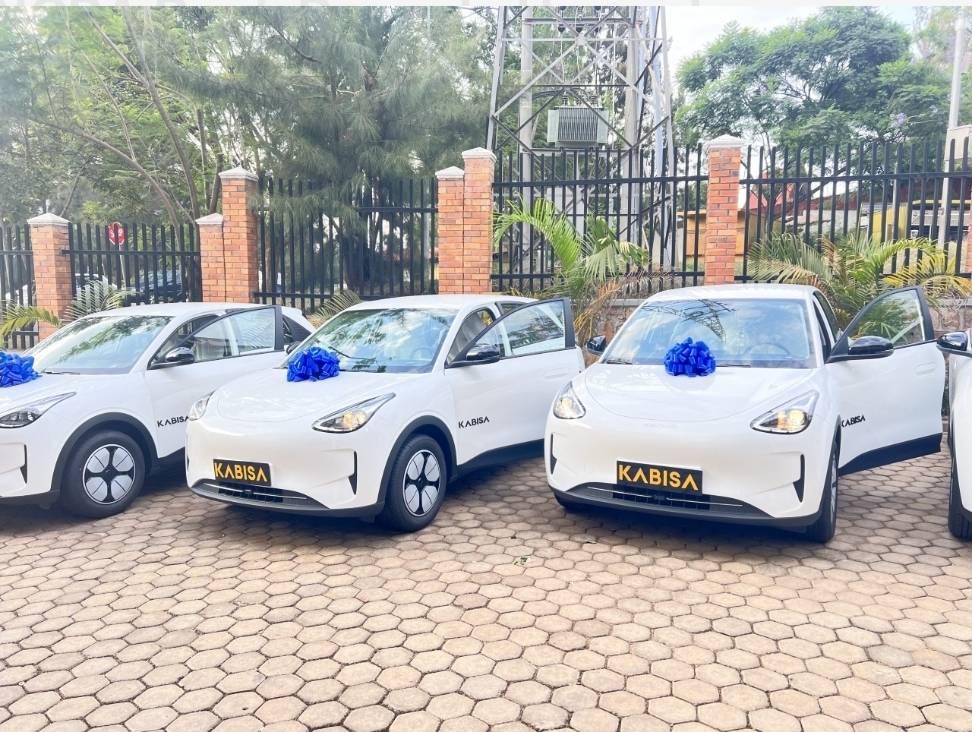
NCBA Bank Rwanda and its involvement with ‘Kabisa’ has brought a noticeable impact
Insurance, maintenance and access to charging infrastructure are bundled into the arrangement, and repayments are structured around the income the vehicle generates — often on a monthly payment cycle aligned to earnings.
In parallel, the bank has explored lease-style models with manufacturers like Volkswagen, allowing customers to pay monthly for access to a vehicle rather than owning it immediately.
The idea subtly shifts the question from ownership to usage — from buying a car to simply being able to use one.
Elsewhere, the purely local Rwandan lender Bank of Kigali is taking a more measured route, focusing on businesses and fleet operators.
Its bet is that electric mobility will scale through companies first — transport operators, logistics firms and small enterprises — where savings on fuel can quickly offset the cost of financing.
Industry estimates suggest that electric vehicles can cut operating costs by 30 to 50 percent compared to fuel-powered alternatives, strengthening the case for fleet adoption.
At a different level altogether, the Development Bank of Rwanda (BRD) is providing the kind of long-term capital that underpins the entire system.
Through its green financing facilities, it offers loans that can stretch up to 12 years, with interest rates around 12 percent and grace periods of up to two years, aimed at companies investing in electric fleets or infrastructure. It is less visible to consumers, but essential to the market’s foundation.
Other lenders, including I&M Bank Rwanda, Access Bank Rwanda and GTBank Rwanda, are positioning themselves somewhere in between — offering more conventional vehicle loans that can be adapted to electric cars.
At I&M, for example, customers can access loans of up to Rwf 50 million with repayment periods of up to four years, often processed within a matter of days.
One Supplier
Despite the variety in financing models, the vehicles themselves tell a simpler story.
Across nearly all these programs, the cars being financed are overwhelmingly Chinese. Brands like BYD and Geely appear repeatedly, supplied through local distributors such as CEVR and other partners.
Industry players estimate that Chinese brands account for well over 70 percent of EVs entering Rwanda’s market, largely due to pricing advantages.
The dominance is not accidental. Chinese manufacturers offer vehicles that are said to be cheaper, more available and better suited to a market where affordability is everything.
Western brands, by contrast, have struggled to move beyond small pilot projects into large-scale, bank-supported programs.
Because financing is often tied to specific dealers, banks are not just enabling purchases — they are quietly shaping the supply chain itself.
Another shift is happening just as quietly: the profile of the EV buyer is changing.
Early adoption tended to favor salaried individuals and corporate buyers — people with stable income and access to credit. But the newer models are expanding that base.
Taxi drivers, small business owners and transport operators are now central to the market, particularly under models like those offered by NCBA, where the vehicle is expected to generate income.
This matters because it changes the role of the car. It is no longer just a personal asset, but a working tool — something that earns as it is paid off.
In Rwanda’s transport sector alone, thousands of operators — from taxi drivers to motorcycle riders — stand to benefit from lower running costs if financing becomes accessible.
Banks, in turn, are adjusting their requirements. Proof of income still matters, but it no longer has to come from a formal salary. Cash flow, business activity and earning potential are becoming just as important.
Policy Sets the Direction
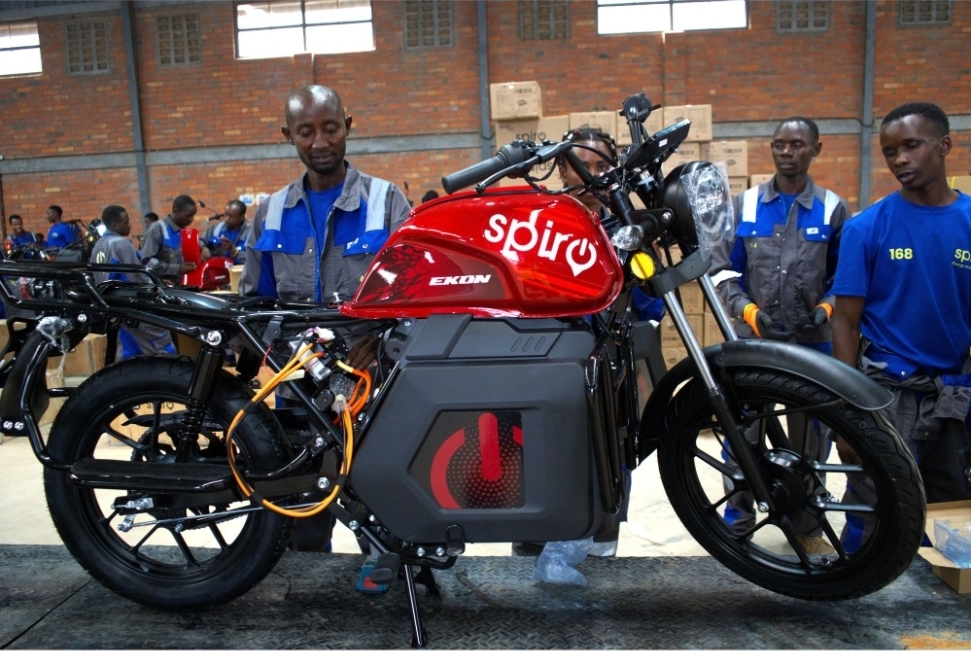
Electric motorcycle taxi financing is a major aspect of the EV boom in Rwanda
Behind the financial activity is a strong push from the government.
Rwanda has introduced wide-ranging incentives to encourage electric mobility, including zero import duty, VAT and excise taxes on electric vehicles, batteries and charging equipment.
It has also set targets for electrifying public transport, including ambitions such as having 20 percent of buses electric by 2030, while continuing to expand charging infrastructure nationwide.
These policies do not directly finance vehicles — but they make it easier for banks to do so. By lowering costs and reducing risk, they create the conditions for lenders to step in.
The result is a system where policy, finance and supply are increasingly aligned.
While the overall vehicle parc stands at over 394,000 registered private vehicles as of fiscal year 2024/25—with motorcycles forming the vast majority—the green segment remains small but is expanding rapidly, especially in two-wheelers and commercial fleets.
Pure battery electric vehicles (BEVs) still represent a modest share of the transition. Some figures put them at less than 1,000. Hybrids, particularly popular Toyota and KIA models, dominate the greener segment with up to 8,000 units on the road, accounting for the bulk of the combined electric-hybrid total.
Together, these vehicles made up less than 2 percent of total vehicle sales in 2024, yet their numbers have multiplied dramatically—hybrid imports alone surged by over 237 percent between 2021 and 2024.
What is emerging is more than a new product line for banks. It is a competition over how electric mobility will take shape in Rwanda.
Some lenders are trying to remove cost barriers entirely. Others are redefining ownership, turning cars into monthly services. Still others are betting on businesses and long-term investments to drive adoption.
Each approach carries its own assumptions about who the customer is — and how they will pay.
And in that competition, the stakes extend beyond market share.
The institutions that succeed in financing electric vehicles will not only capture customers. They will help determine which vehicles dominate Rwanda’s roads, who gets access to them, and how quickly the country can move away from fuel.
For now, the direction is clear.
Rwanda’s electric future is not just being built in showrooms or charging stations.
It is being negotiated in banks.
