



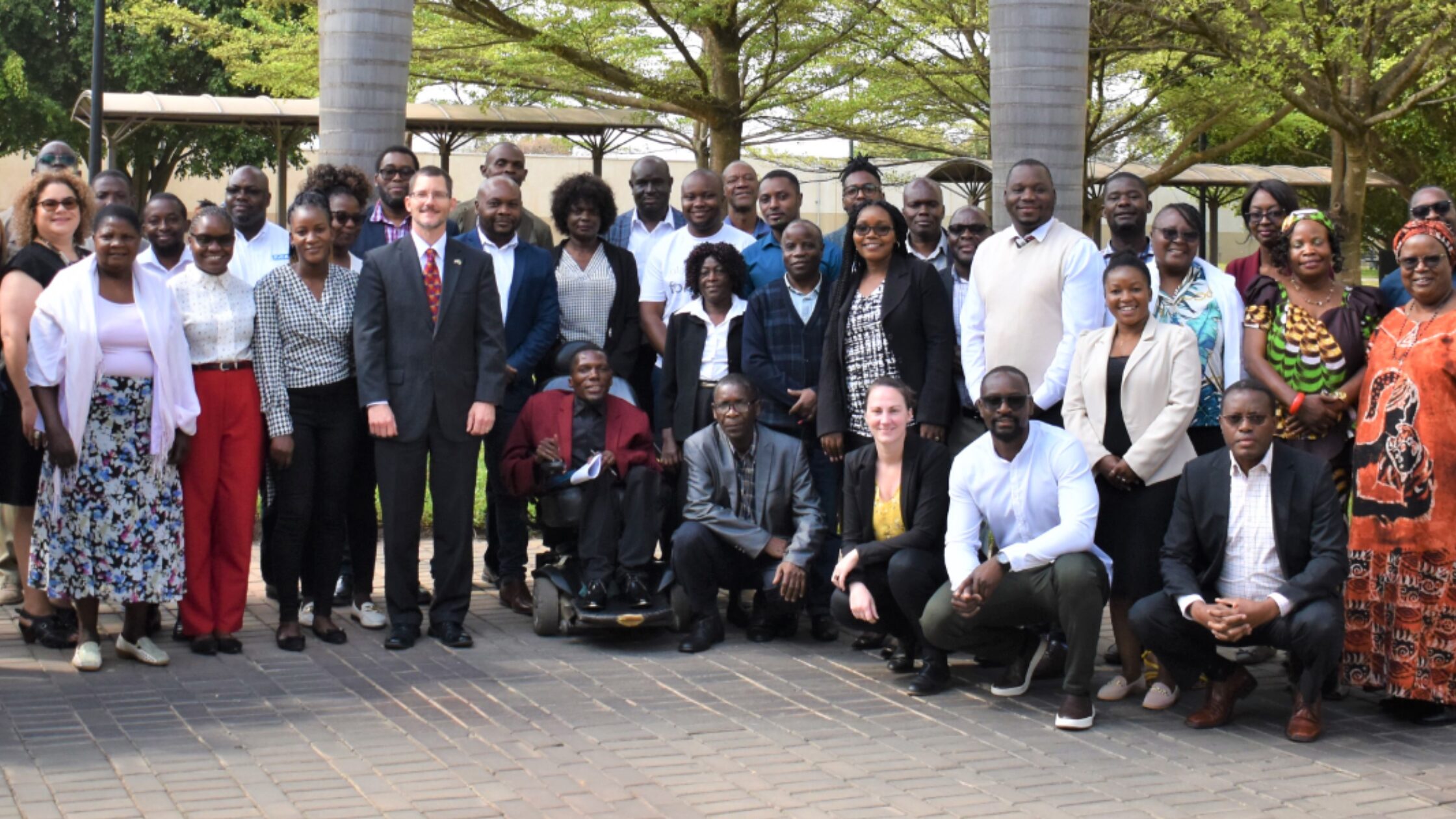
Officials from the U.S. Embassy in Zambia engage with local HIV health personnel
Rwanda’s Cabinet is set to consider resolutions from consultations on the new Rwanda Development Cooperation Policy (RDCP). The policy is the first of its kind on the African continent—and, as Zambia is now finding out, one that other African nations may soon need to adopt.
The United States is reportedly considering withholding support for HIV prevention in Zambia unless the country increases access to its mineral resources for American interests.
According to a draft memo prepared for Secretary of State Marco Rubio and shared with The New York Times, the US plans to withhold funding for HIV programmes to demonstrate its determination to advance its own priorities.
“We will only secure our priorities by demonstrating willingness to publicly take support away from Zambia on a massive scale,” the memo states.
Neither the US State Department nor the Zambian government commented when approached by The New York Times. In a written response, the State Department said it does not comment on “purportedly leaked documents or on deliberative diplomatic discussions.”
The draft memo was reportedly prepared by the US Africa Bureau and approved by American negotiators.
Dependence on PEPFAR
More than one million Zambians living with HIV depend on treatment funded through a decades-old programme established under President George W. Bush in 2003 and maintained by subsequent administrations.
The President’s Emergency Plan for AIDS Relief (PEPFAR) was passed with bipartisan support and hailed as the largest commitment by any country to combat a single disease.
Zambia is among its biggest beneficiaries, receiving over $6 billion in the past two decades. The programme also targets other diseases, including tuberculosis (TB) and malaria.
America First
African commentators have long argued—often with justification—that aid can serve as a tool of influence or control. Research by Oxfam and others suggests that financial outflows from poorer countries may exceed inflows from wealthy Western nations.
The Trump administration has shown little interest in such nuances.
Last year, the US cut aid to many developing countries and pushed for agreements that prioritise American interests in exchange for continued support.
While these arrangements are often framed around governance standards or strategic cooperation, they make clear that continued funding must deliver tangible benefits to the United States.
One of the most controversial examples is the requirement for countries to share population-level medical data, including disease testing. There are no guarantees that benefits from resulting research—such as vaccines—will return to the populations from which the data is drawn.
Zimbabwe walked away from such negotiations, citing concerns over sovereignty. In Kenya, activists have gone to court to block a similar data-sharing agreement already signed by the government.
Caught Between Two Elephants
“When elephants fight, it is the grass that suffers,” goes a well-known African proverb. Zambia increasingly appears to be in that position.
The US is not only seeking easier access to Zambia’s mineral wealth but also preferential treatment over China.
Zambia is a major global producer of copper, yet this has not translated into significant poverty reduction. The country also holds large reserves of cobalt and lithium—minerals critical for green energy technologies.
Washington is pushing Lusaka to open its mining sector to American investors, arguing that Chinese firms currently enjoy greater access.
Zambia reportedly has until May to sign an agreement that would require aligning its mining regulations with US expectations—or risk losing hundreds of millions of dollars in aid.
The draft memo emphasises the effectiveness of such pressure tactics: “Sharp public cuts to American foreign assistance would significantly demonstrate… our insistence on tangible benefits under our America First foreign policy.”
It adds that during negotiations, US officials repeatedly highlighted what Zambia stood to lose. In one instance, the State Department threatened to cancel debt relief worth hundreds of millions of dollars.
“Within days,” the memo notes, “the Zambian Mines Minister explicitly reversed course… and gave US technical experts unprecedented access to their mining database.”
Few Easy Choices
Zambia faces a difficult dilemma. A sudden withdrawal of aid would have severe consequences, particularly for people living with HIV who rely on sustained treatment.
Gradual reductions might be manageable, but abrupt cuts could be devastating. Faced with this reality, Zambia may have little choice but to comply with US demands.
Digging the Well Early: Rwanda’s Strategy for Uncertain Times
Each year, Rwanda’s Ministry of Finance convenes the Development Partners Retreat (DPR), bringing together bilateral and multilateral partners, the private sector, and other stakeholders.
The government presents its priorities, outlines implementation strategies, and gathers input from development partners. The retreat’s resolutions are then submitted to Cabinet for consideration and possible adoption into policy.
This year’s retreat, held in Rubavu, acknowledged shifting global dynamics and proposed an approach that, while not new to Rwanda, may soon become essential for other African nations.
Under the theme “Strengthening Partnerships through Implementation of the New Development Cooperation Policy,” discussions focused on aligning partners’ interests with national development goals under the National Strategy for Transformation (NST2).
In other words, as global power dynamics grow more assertive, countries may need to find ways to avoid being the grass.
