



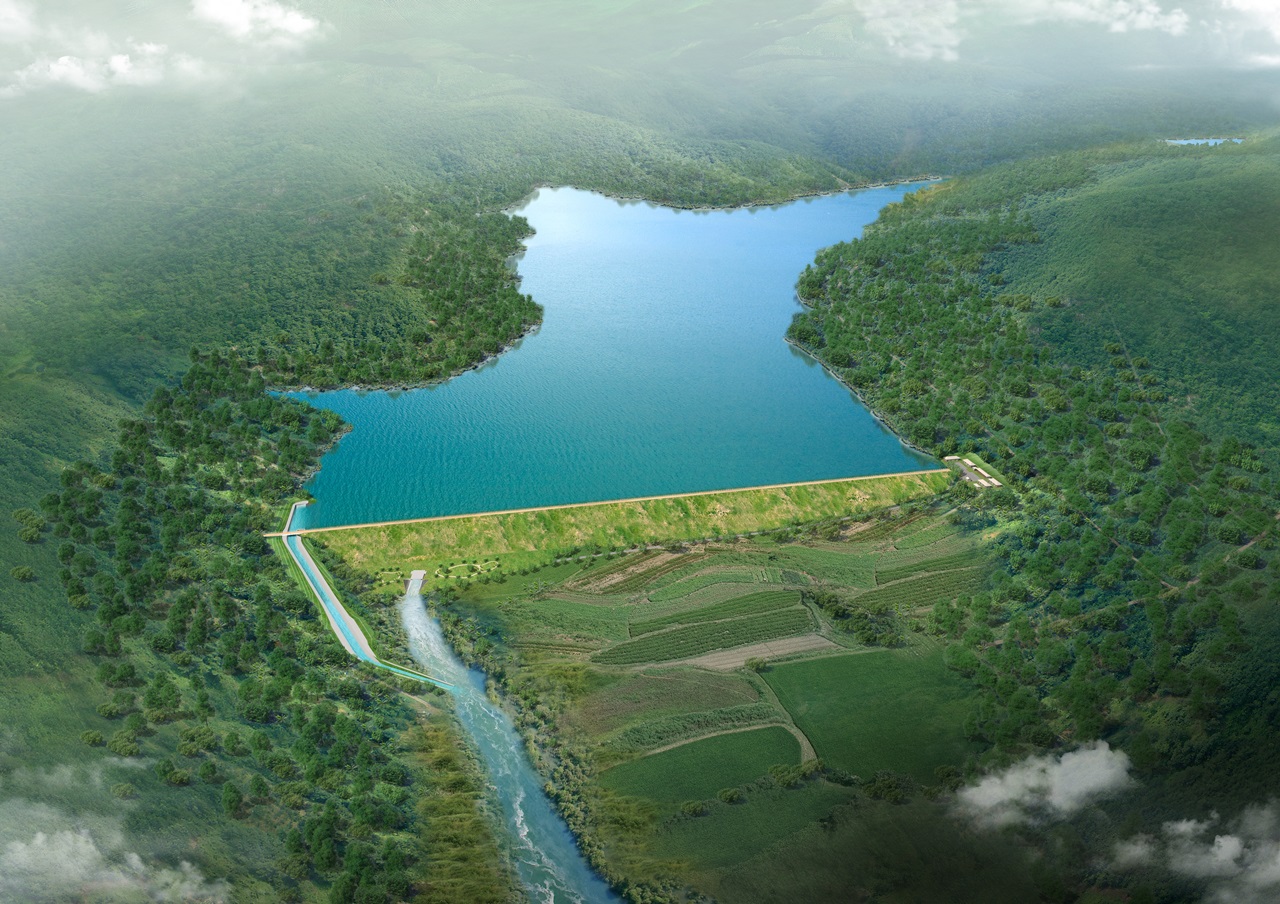
The original architectural design of the Muvumba project
KIGALI, Rwanda — In a blistering rebuke before Ministers and local government officials, President Paul Kagame put on the spot those overseeing a major water infrastructure project in Rwanda’s Eastern Province, describing it as criminal negligence, highlighting a gap between the country’s ambitious development plans and their uneven execution.
The project at the center of the criticism is, in the original planning documents, called the Muvumba Multipurpose Water Resources Development Program in Nyagatare District, a drought-prone area long seen as a test case for climate resilience.
Conceived several years back, as an integrated development effort, it was designed to capture water from the Muvumba River, irrigate thousands of hectares of farmland and supply clean water to tens of thousands of households and their livestock.
For years, it has been presented as a flagship initiative to transform one of Rwanda’s most vulnerable regions.
But at a meeting yesterday where central and local officials met to review annual district performance contracts, or Imihigo held in Bugesera District, the governor of Eastern Province, Pudence Rubingisa, acknowledged a critical lapse.
The session was yesterday in 2nd day, and had been presided over the Prime Minister Dr Justin Nsengiyumva. President Kagame had come in for closing remarks. Within a few minutes of beginning his address, President Kagame expressed outright disatisfction over poor and delayed implementation of key government project.
Kagame singled out the Muvumba project, asking the Governor and Mayor of Nyagatare district to give geniune details of what is really going on, and whether the project, being implemented today, is the actual one.
“It is true, Your Excellency,” said Governor Rubingisa. “We implemented the irrigation project, but we forgot that there was also a component to provide water to other sectors.”
President Kagame responded sharply.
“You forgot?” he said. “Forgetting should surely be a crime. It is literally criminal. How can you forget to give water to the people?”
The moment drew attention to what appears to be a breakdown in the implementation of one of the government’s most ambitious infrastructure programs, raising broader questions about accountability in a system known for strict performance standards.
A Plan Built on Integration
The Muvumba project was never intended to be just a dam. Approved in 2020 by the African Development Bank with a loan of more than €121 million (about Rwf 205 billion), it was designed as a multi-purpose system combining irrigation, hydropower and domestic water supply.
According to project documents, the completed dam is expected to:
- Store 55 million cubic meters of water
- Supply 50,000 cubic meters of domestic water per day, enough for about 500,000 people
- Irrigate 11,000 hectares of farmland
- Generate one megawatt of electricity
- Benefit nearly 800,000 people in Nyagatare District
In its first phase, the project was to support 3,073 hectares of irrigated land, with infrastructure including gravity-fed and pressurized irrigation systems, 69.7 kilometers of canals and 75 livestock watering troughs.
The African Development Bank described it as a driver of “sustainable and inclusive growth,” with a target to secure financing for irrigation and water distribution systems by 2023.
That target has not been met.
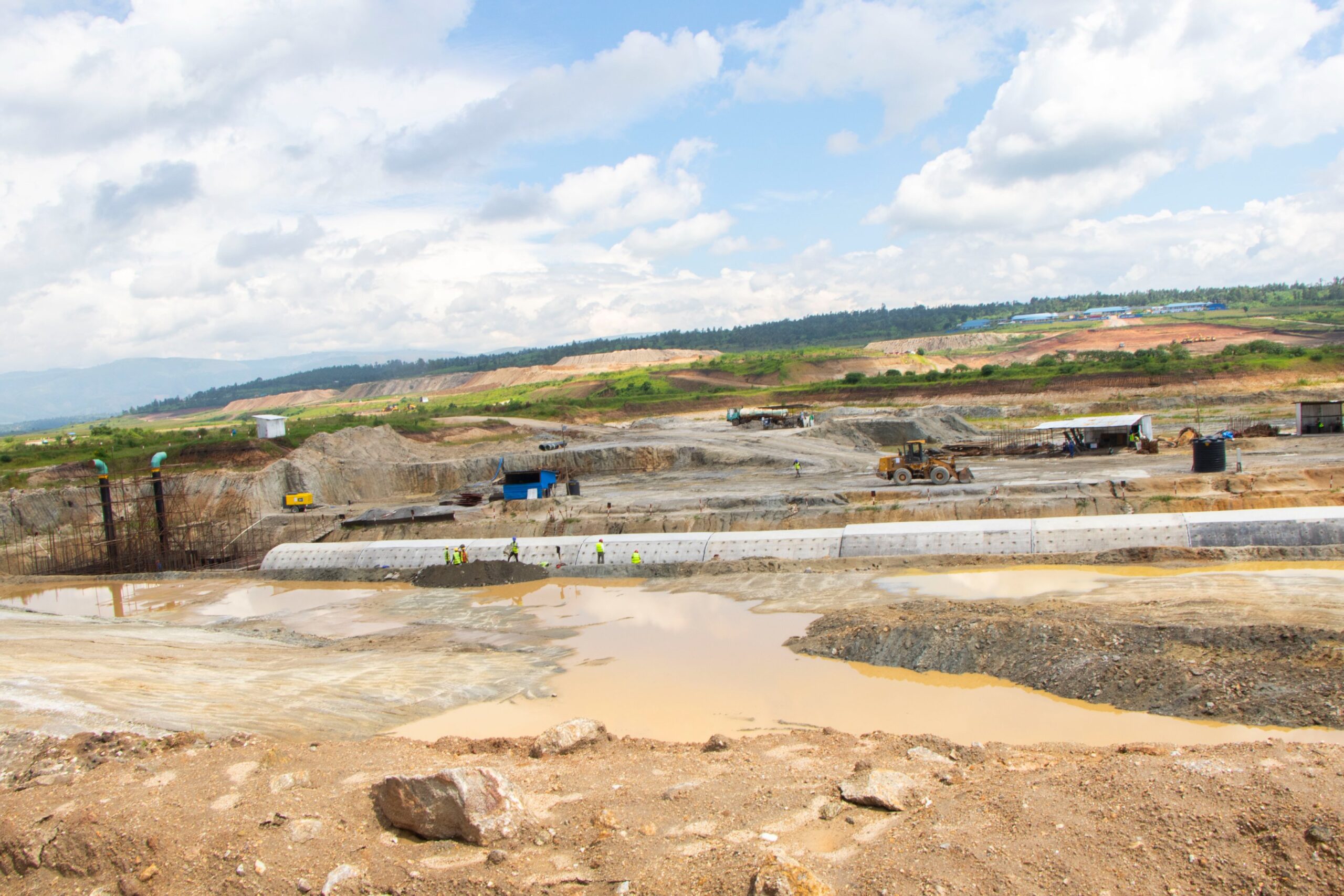
While the dam itself is under construction — about 44.1 percent complete, with completion expected in 2027 — the irrigation networks and water supply systems that would make it functional have not been built. The government has said it is still mobilizing resources for those components.
What was planned as a single, integrated project has instead become fragmented, requiring additional financing and renewed political effort to complete.
Life Without Water
President Kagame dismissed explanations for the delay, attributing the failure to what he described as deeper behavioral problems within the system.
“The leaders are arrogant, and that arrogance is futile,” he said.
He also criticized what he called a culture of “kwireba,” a Kinyarwanda term suggesting neglect of responsibility or disregard for those meant to benefit from public programs.
“That is a bad culture,” he said. “Things do not reach the people they are intended for.”
He likened officials’ assurances to a “song” he had heard before — familiar promises without a clear mechanism for follow-through.
For residents of Nyagatare, the consequences are immediate. Livestock farmers will continue to walk for hours during dry seasons to find water for their animals. Some people used bicycles, others walked on foot to fetch water for livestock. Some cows have died because there simply wasn’t enough water.
A smaller project, the Musenyi Dam, provided some relief but proved insufficient.
Some farmers have received rainwater-harvesting tanks and sheets, and a decentralized system known as INUMA has introduced treated water through kiosks and household connections. But residents say it falls short of demand.
The Cost of Delay
The consequences of the project’s partial implementation are far-reaching.
In one of Rwanda’s driest districts, water scarcity persists. The promised transformation — year-round farming across 11,000 hectares and improved livelihoods for hundreds of thousands — has yet to materialize.
The planned daily supply of 50,000 cubic meters of water, enough to serve nearly 800,000 people, remains unrealized.
The delay also raises concerns for the government and its development partners. The African Development Bank, a key financier, is left with a project that is not being implemented as originally designed, affecting both outcomes and credibility.
President Kagame’s public criticism signaled that he sees the issue not as a technical delay but as a governance failure.
“You are not doing the things you committed to do in previous such gathering, how sure can I be that you will indeed implement the commitments you make today,” said Kagame. “I have heard this song countless times in the past 30 years,”
Kagame asked the Prime Minister and all relevant institutions to work out a monitoring mechanism for constant review of all programs, this time with a component that includes criminal liability.
“There must be a way you will assess the implementation of all of these ideas you are saying today,” he said.
In a system that prizes execution, the admission that a core component of a flagship project was effectively “forgotten” has become more than a moment of embarrassment.
It has underscored the risks of fragmentation in development planning — and the consequences for the hundreds of thousands of people the project was meant to serve.
