



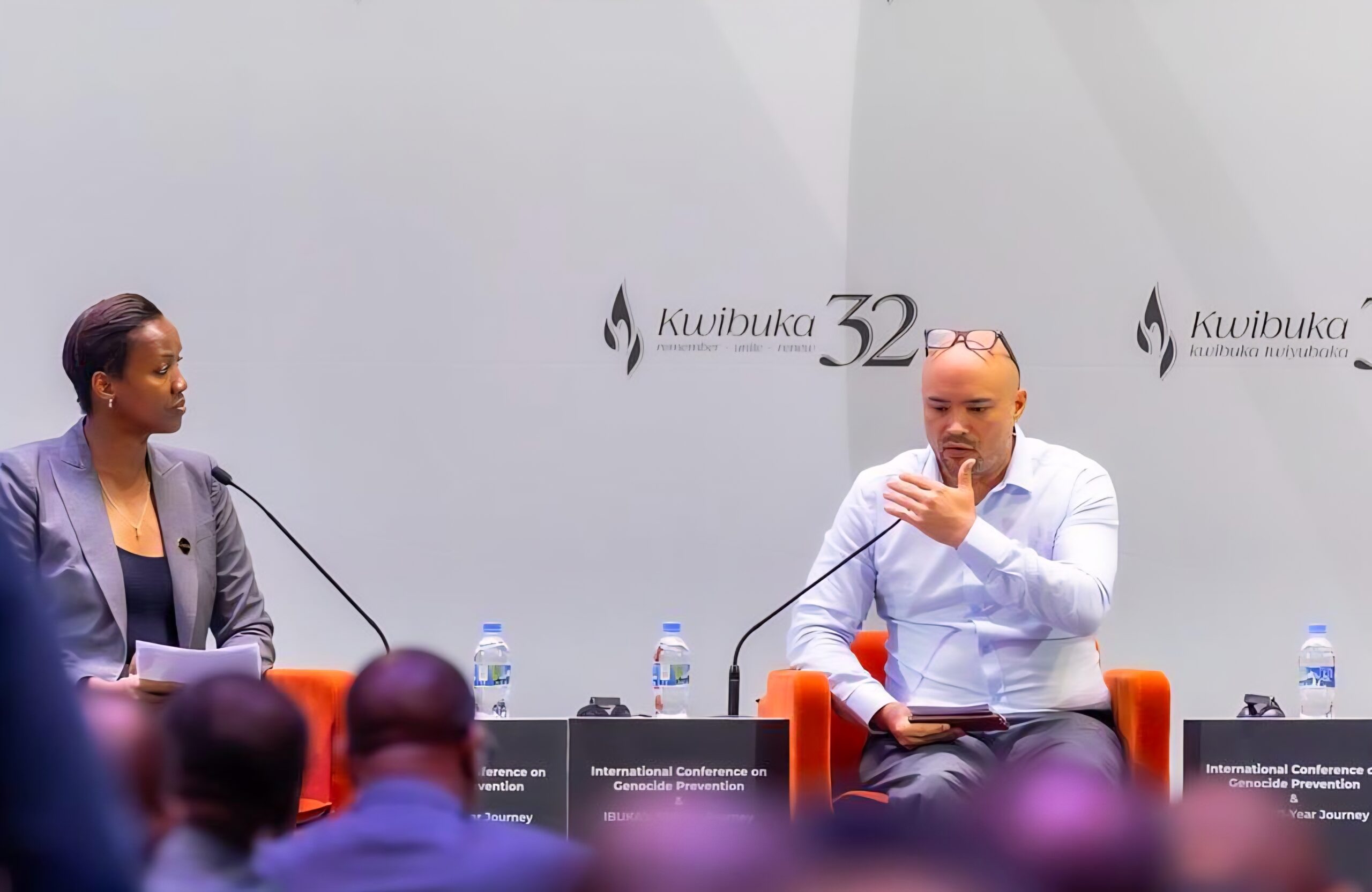
Bruno Boudiguet, a French researcher, speaks on one of the panels at the conference
At the International Conference on Genocide Prevention held on April 8 at Intare Arena, Bruno Boudiguet delivered a forceful intervention challenging the dominant narrative surrounding the conflict in Eastern DR Congo one that consistently portrays Rwanda as the primary culprit.
Boudiguet, who has spent years studying information warfare in the region pushed holes in Tshisekedi regime’s narratives intended to externalize the intra-Congolese. “Today, we are facing a narrative that is completely disconnected from reality, one that attributes to present-day Rwanda the worst accusations in Congo genocide, resource exploitation, and systematic destabilization without reflecting the true complexity on the ground.”
According to the seasoned researcher Boudiguet, this narrative is not accidental. “It does not come out of nowhere. It is not new, nor spontaneous. It is part of a historical and ideological continuity that has been constructed and maintained over time,” he explained.
Drawing from his research, he traced its origins to “Françafrique” networks and figures such as Paul Barril. Barril was a central figure in spreading these narratives was Paul Barril, both a military actor and a propagandist, who operated during critical periods, including the genocide, while shaping and promoting specific interpretations. These ideas, he added, were later amplified by authors like Charles Onana.
Boudiguet also highlighted how this information war has evolved over time. “This narrative did not stop there it continued from the Mobutu era, was carried by figures like Lambert Mende, and is still present today through actors such as Patrick Muyaya.” In his view, this continuity shows a deliberate effort to maintain a single, directed storyline.
The French writer articulated the issue which has remains contentious both across the region and abroad. “What we are witnessing is not just a conflict of facts, but a real war of information, where complex realities are simplified and responsibility is systematically oriented in one direction.” Boudiguet remarked.
He also addressed sensitive and controversial aspects of the conflict. Notably, he stated that “children born of rape have been referred to as ‘Interahamwe,’ and that this phenomenon or culture appeared in the Congolese context after 1994, with the arrival of Rwandan Hutu Interahamwe militias.”
This, he suggested, reflects how the legacy of the genocide has evolved within Congo in ways often ignored in mainstream narratives. Boudiguet’s revelations challenge current accusations against the Congolese movement- M23-AFC which the Kinshasa regime and funded rights watchdogs have been accusing of sexual violence.
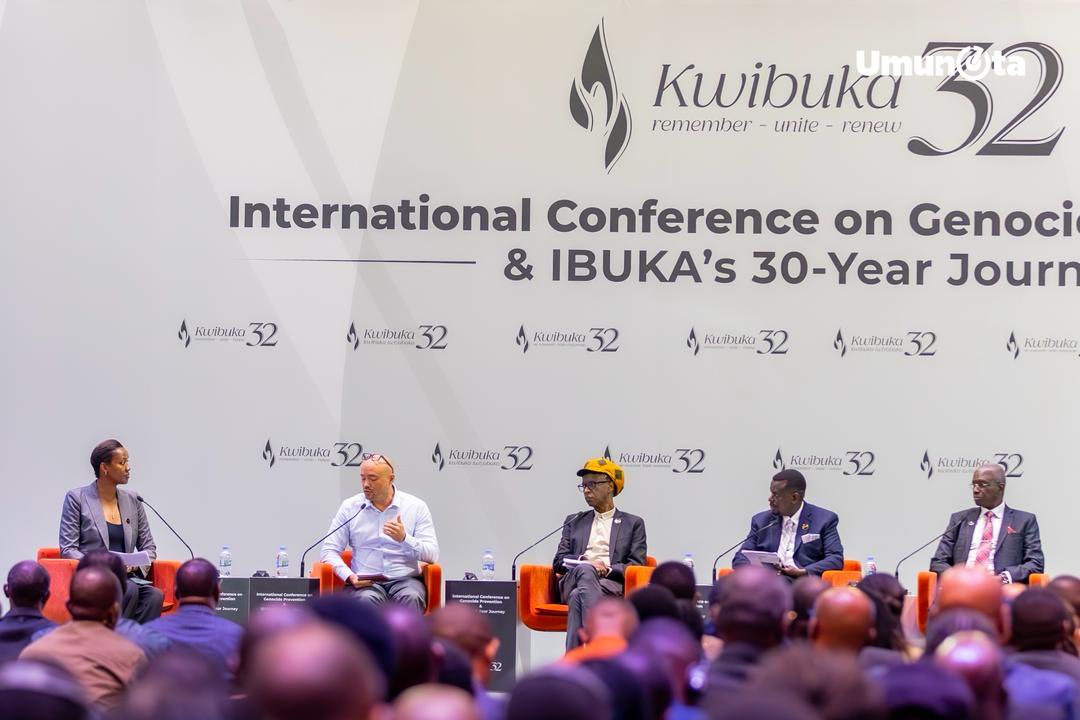
Beyond this, Boudiguet questioned widely cited reports and figures, particularly regarding the number of deaths and the role of armed groups, arguing that these are often presented without sufficient context, reinforcing a simplified version of the conflict.
Ultimately, Boudiguet’s message was clear; the crisis in Eastern Congo is not just a war on the ground but also a battle over truth itself. This war of narratives, what people believe is often shaped less by facts than by those who control the story.
