



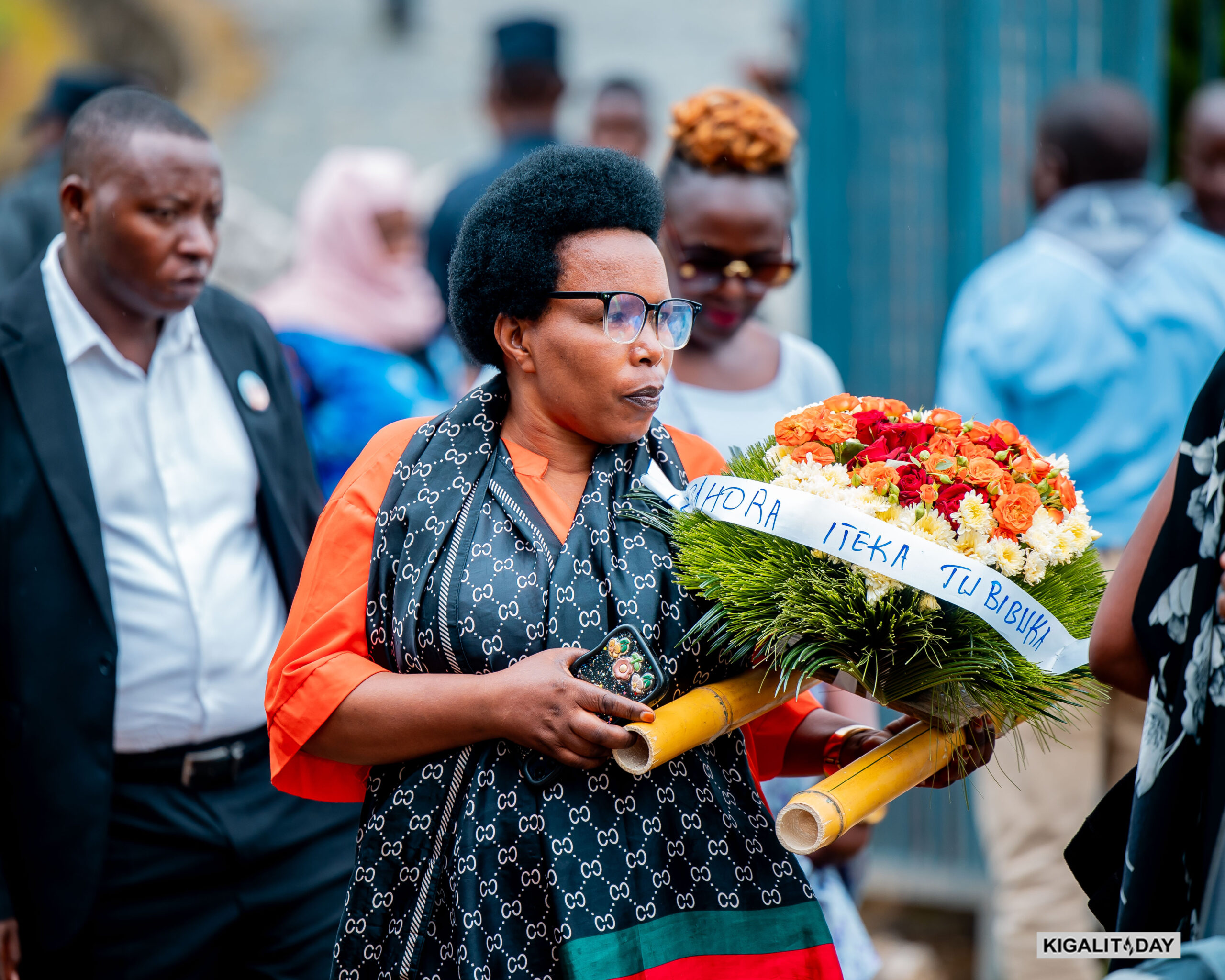
A mourner carries a wreath to lay on graves with remains of victims of the 1994 Genocide against the Tutsi in Ngororero district.
NGORORERO -Apollinaire Rurangwa’s survival of the Genocide against the Tutsi is marked by a harrowing path of repeated attacks, narrow escapes, and years of uncertainty that began long before 1994.
Speaking during the commemoration in Ngororero District, Rurangwa described how the violence that eventually engulfed the country took root during his childhood. He was only 11 years old when his family’s life was first upended on October 1, 1990. Returning from school that day, he found his village in turmoil and his mother unable to articulate the unfolding tragedy.
“She just sat there in shock. I kept asking questions, but she told me to stay quiet and watch,” he recalled.
Within days, their home was demolished and neighbors were killed or displaced. Alongside his aunt and two younger siblings, Rurangwa fled, beginning a long period of displacement and separation across the country.
Surviving repeated attacks
After years on the run, Rurangwa experienced a brief sense of stability following the Arusha Accords, which prompted many families—including his own—to return home. However, the situation deteriorated rapidly after April 1994.
Like many others, he sought refuge in churches, schools, and administrative offices, believing they offered protection. Instead, these sanctuaries became sites of mass killings. At one such office, Interahamwe militias locked people inside and opened fire through the windows and doors; when their ammunition ran low, they set the building ablaze.
“I thought I was going to burn inside. I managed to escape through thick smoke and hid in a nearby kitchen with two other children. One of them had been shot and was in severe pain. Our attempts to help him drew attention, forcing us to flee again,” he said.
Now a father of three, Rurangwa survived by constantly moving and hiding, at one point lying among the dead to avoid detection. The injured boy he had tried to help was later discovered and killed. Rurangwa recounted a similar escape at a church, where he hid in an abandoned vehicle as killers searched the grounds. He eventually reached Goma in the DRC, traveling mostly under the cover of night and aided by individuals who sheltered him during the day.
His testimony reflects the cycles of displacement, fear, and profound loss that defined survival for so many during the Genocide against the Tutsi.
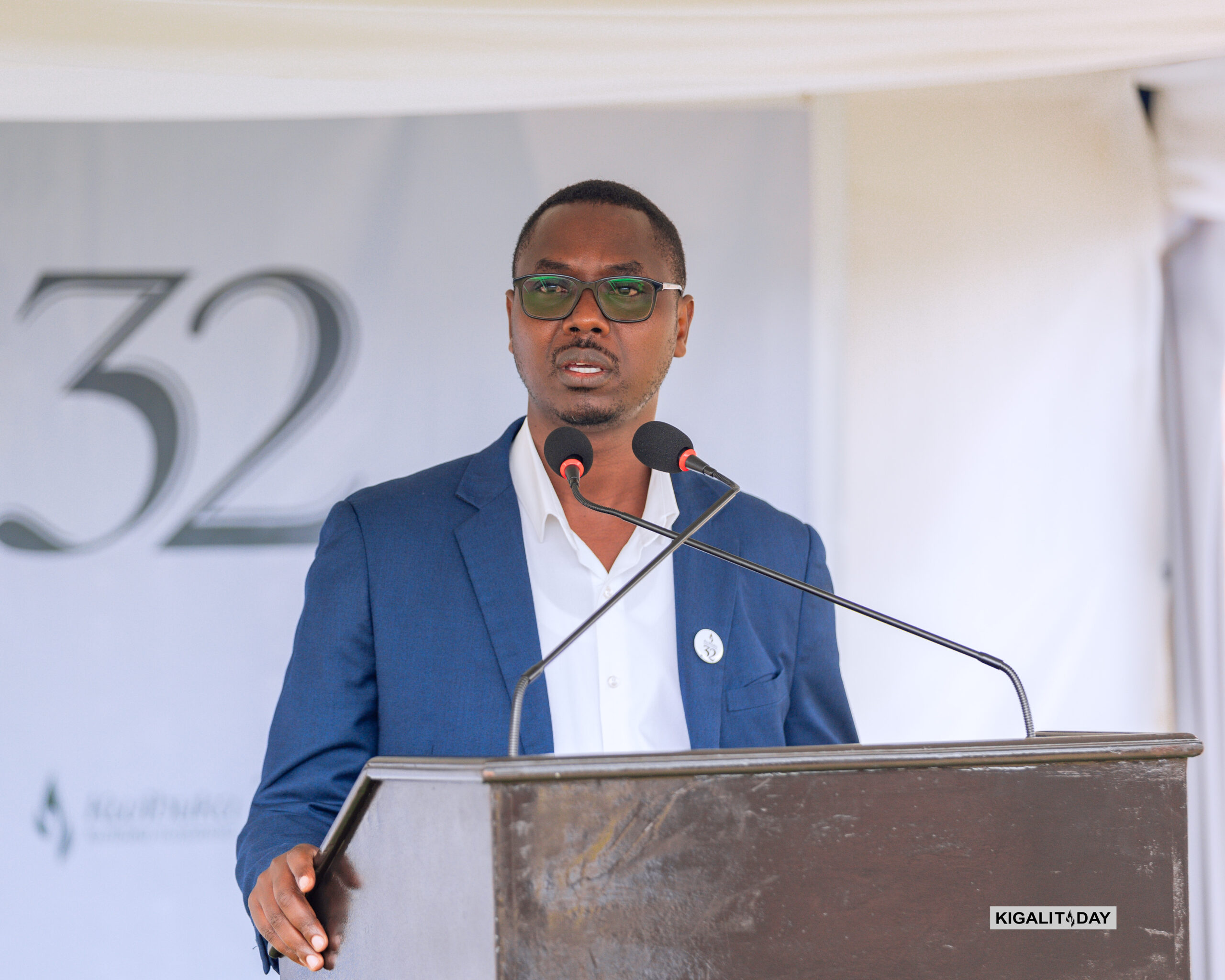
Apolinaire Rurangwa survived repeated attacks, had narrow escapes and endured years of uncertainty long before 1994.
History, responsibility and vigilance
Tragically, Ngororero remains a place where instances of genocide ideology persist. Annonce Manirarora, a commissioner at Ibuka, explained that survivors in the district have continued to face hostility even after the genocide, a reality she said should further steel the community’s resilience and unity. She cited a recent incident on April 7, where an individual publicly questioned the relevance of the commemoration, and another where a survivor’s cattle were stolen the same day. She also noted the painful reality that some victims’ remains have yet to be recovered for a decent burial.
“The law obliges everyone to fight genocide and its ideology,” she said, urging continued vigilance.
Ironically it’s the same place where cases of genocide ideology still persist. Manirarora explained that survivors in the district continued to face attacks even after the genocide, which she said should strengthen everyone’s resilience and unity.
She cited a recent incident on April 7 where an individual publicly questioned the relevance of commemoration, as well as an attack on a survivor whose cows were stolen the same day. She also noted that some victims’ remains have never been recovered for proper burial.
“The law obliges everyone to fight genocide and its ideology,” she said, urging continued vigilance.
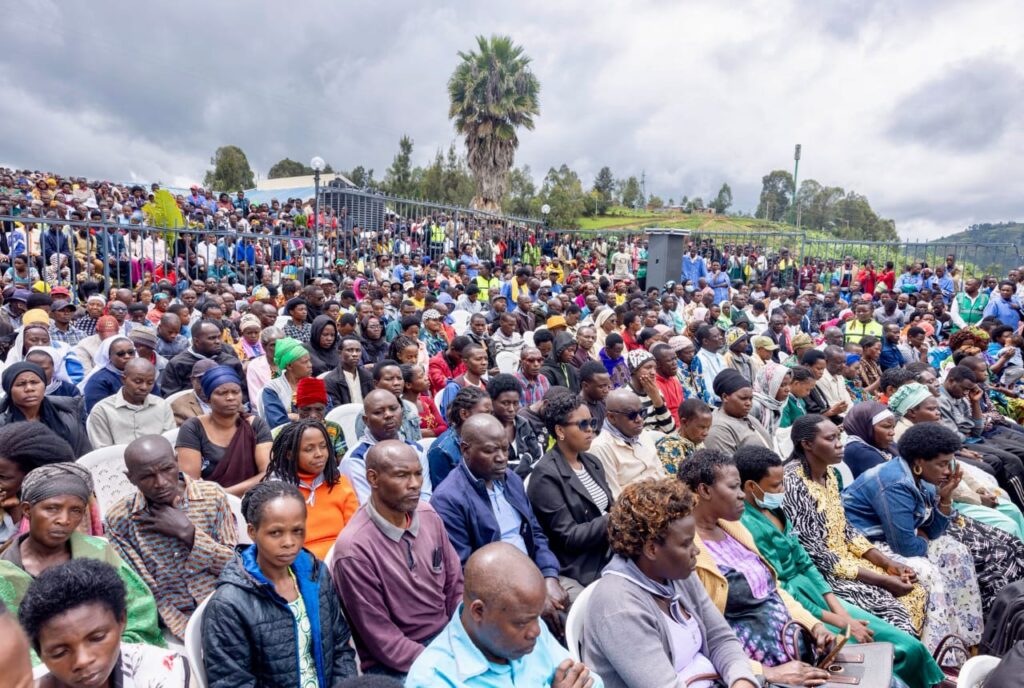
Thousands of residents gathered for the commemoration of the Genocide against the Tutsi in Ngororero district.
Learning From the Brave
Prime Minister Dr. Justin Nsengiyumva, who attended the commemoration, remarked that testimonies like Rurangwa’s must strengthen national resolve and reinforce the collective responsibility of remembrance. He urged Rwandans to draw lessons from historic acts of courage, such as the resistance shown by students during the 1997 Inyange School attack, while condemning the leaders who planned and executed the genocide, including figures such as Athanase Seromba.
“You, the young people, should take a leading role in confronting divisionism, particularly online. The older generations must continue educating others about the causes and consequences of the genocide,” he noted.
The Prime Minister further observed that Ngororero still faces visible gaps in unity and reconciliation. He urged local leaders to take deliberate, sustained action to rebuild trust, strengthen social cohesion, and address the lingering effects of division that continue to manifest within sections of the community.
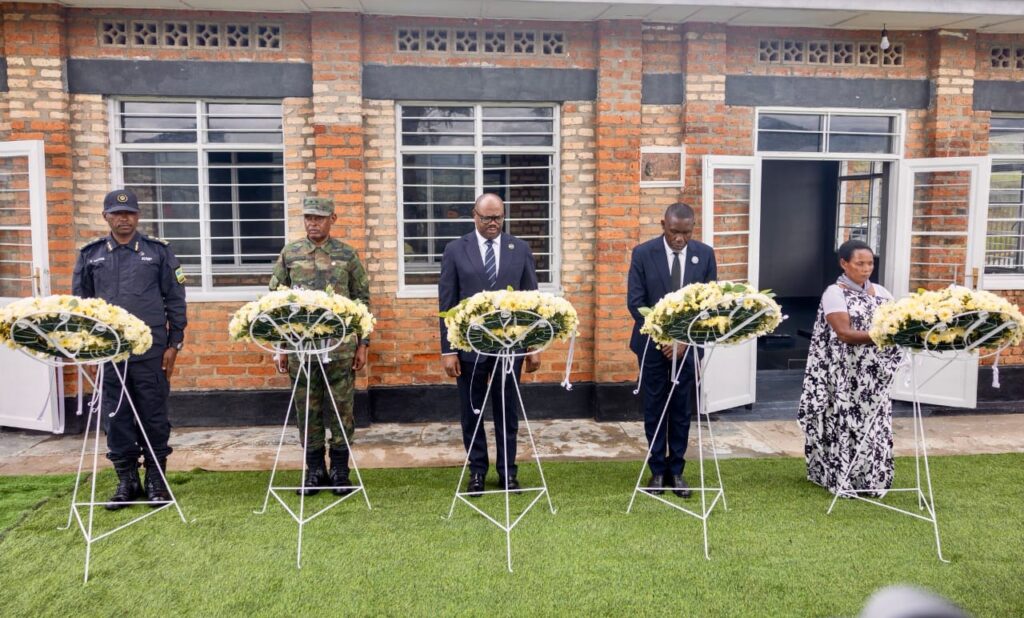
Prime Minister Dr Justin Nsengiyumva attended the commemoration alongside other leaders.