


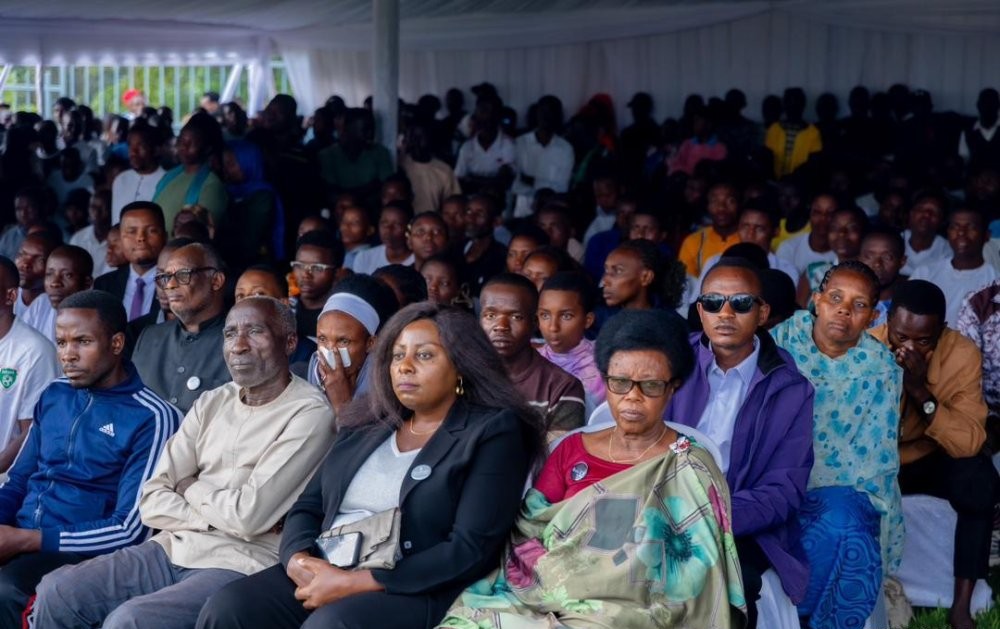
Thousands of mourners turned up at Rebero Genocide Memorial to end the commemoration week of the 1994 Genocide against the Tutsi.
KIGALI – At the Rebero Genocide Memorial, where Rwanda honors politicians who chose courage over complicity, Dr. Jean-Damascène Bizimana, the Minister of National Unity and Civic Engagement, traced a chilling history of how politics became a weapon of division.
Delivering a chronology of how the Genocide against the Tutsi did not erupt suddenly, he explained that it was not just an act of violence, but the outcome of a long political project. “It was built, step by step, through decades of calculated political decisions,” he said.
Politics of Exclusion in the 1960s
The foundation of that process, Bizimana explained, was laid in the early years following independence, when political power became explicitly tied to ethnic identity.
Under Grégoire Kayibanda and his party PARMEHUTU, governance was framed as a project of ethnic dominance. On October 2, 1961, Kayibanda told lawmakers that political power belonged to Hutus, an assertion that effectively excluded Tutsis from national leadership.
This ideology was not confined to speeches. It was codified through policy and reinforced across institutions. A manifesto released on June 7, 1969 emphasized “liberating” Hutus from Tutsi influence, language that deepened divisions and legitimized discrimination.
Bizimana cited a report from Butare Prefecture dated January 26, 1963 warning against Tutsi participation in governance, portraying them as unfit for leadership. Days later, on January 28, 1964, Kayibanda publicly praised his government for “liberating” Hutusfurther entrenching a narrative of exclusion.
As early as 1962, policies ensured preferential treatment for Hutu students while systematically sidelining Tutsis. Over time, such practices normalized division, embedding it not only in governance but in the social fabric of the country.
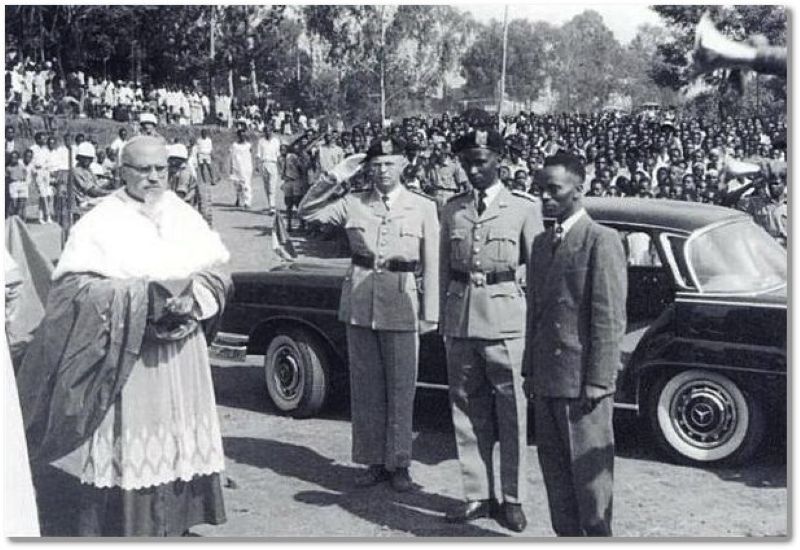
Under Grégoire Kayibanda and his party PARMEHUTU, governance was framed as a project of ethnic dominance.
The Habyarimana era
The July 1, 1973 coup d’état that brought Juvénal Habyarimana to power initially presented as a corrective moment. A month later, Habyarimana justified the coup as a move to restore unity and end divisionism, a position he later reiterated in an interview published on February 15, 1975.
However, as Bizimana noted, this narrative stood in contrast to the reality on the ground, where patterns of exclusion continued largely unchanged.
With the establishment of the MRND in July 1975, Rwanda became a one-party state. While the party’s official agenda emphasized unity, peace, and development, its policies maintained systemic discrimination.
Access to education, employment, and public office remained restricted for Tutsis, while power became increasingly concentrated within a narrow regional elite. The political system, rather than dismantling division, institutionalized it further.
By the early 1990s, signs of internal strain began to emerge. The resignations of Christopher Mfizi on August 15, 1992 and Jean Gualbert Rumiya on November 14, 1992 reflected growing unease within political circles, even as extremist rhetoric intensified.
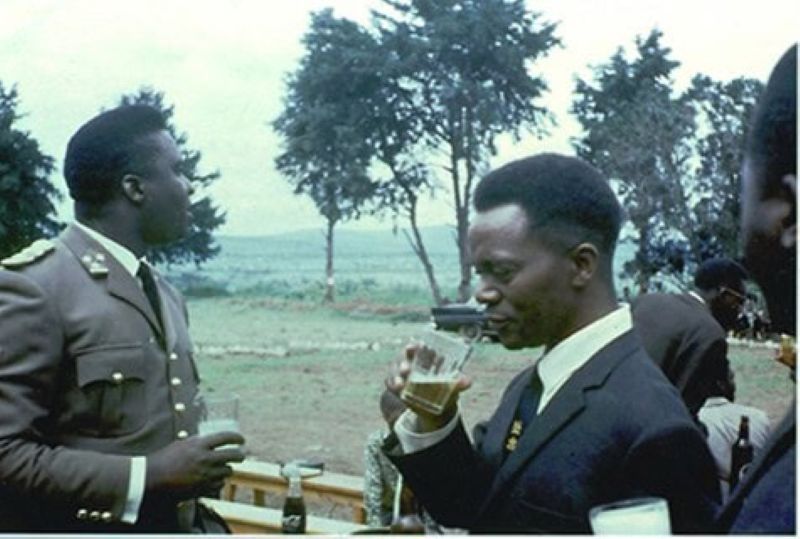
Juvénal Habyarimana (L) came to power through a coup d’état on July 1, 1973 against Grégoire Kayibanda (R).
The Final Descent
The early 1990s marked a decisive shift from entrenched discrimination to active mobilization.
On March 8, 1992, Members of Parliament including Bernadette Mukarurangwa and Laurent Baravuga, led campaigns in Butare encouraging civilians to arm themselves and target those identified as enemies.
Figures such as Léon Mugesera became prominent for their inflammatory rhetoric, but they operated within a wider network of political actors and institutions promoting division. Such actions reflected a broader strategy to prepare the population for violence.
Media outlets played a central role in amplifying these messages. Platforms like Radio Rwanda reinforced official narratives, while extremist broadcasts encouraged unity among Hutus in opposition to a constructed enemy.
By 1994, this machinery had fully matured. On April 23, 1994, even as the Genocide was underway, national radio broadcasts praised the Interahamwe militia and called on civilians to pursue those in hiding.
Earlier, political figures such as Froduald Karamira had urged the population to work alongside the army to “finish the job.” What followed was not spontaneous violence, but the execution of a system that had been built over decades.
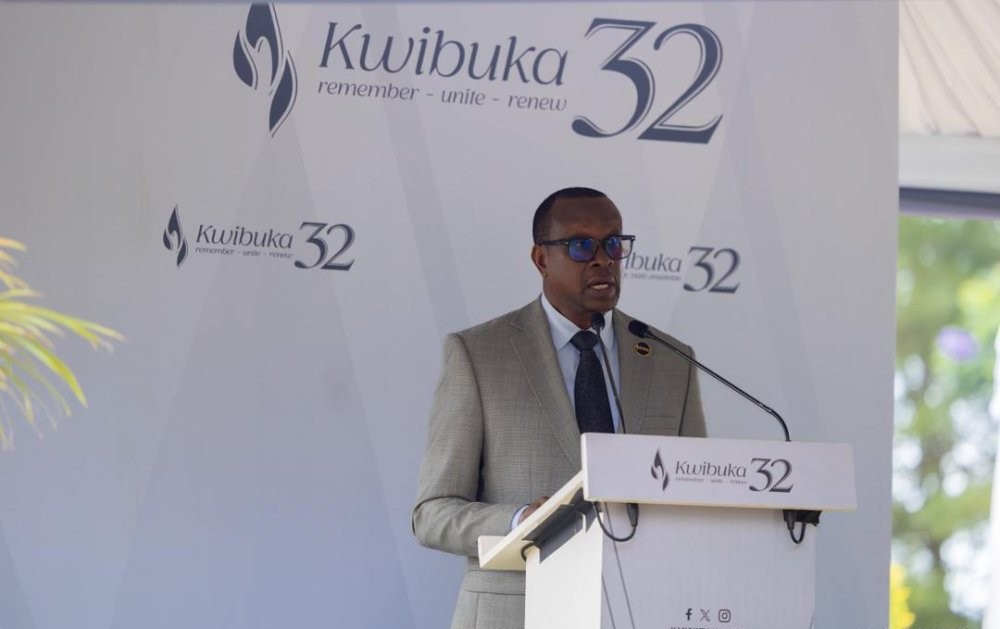
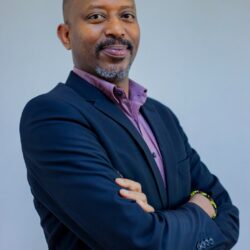
Dr. Jean-Damascène Bizimana, the Minister of National Unity and Civic Engagement while tracing a chilling history of how politics became a weapon of division at the Rebero Genocide Memorial on April 13, 2026.
Remembering Those Who Chose Courage
Against this backdrop, the commemoration at Rebero serves not only as a reflection on failure, but as a tribute to those who resisted. Leaders such as Agathe Uwilingiyimana rejected the politics of division, even at the cost of their lives.
Others, including Félicité Niyitegeka and Michel Rwagasana, chose principle over survival. The legacy extends to the Nyange students, who refused to be divided along ethnic lines. Their actions stand in stark contrast to the political choices that led to genocide.
Today, Rwanda continues to reflect on these lessons. A 2025 study found that 93% of Rwandans believe political parties played a major role in fostering division, an acknowledgment of the central role politics played in the tragedy.
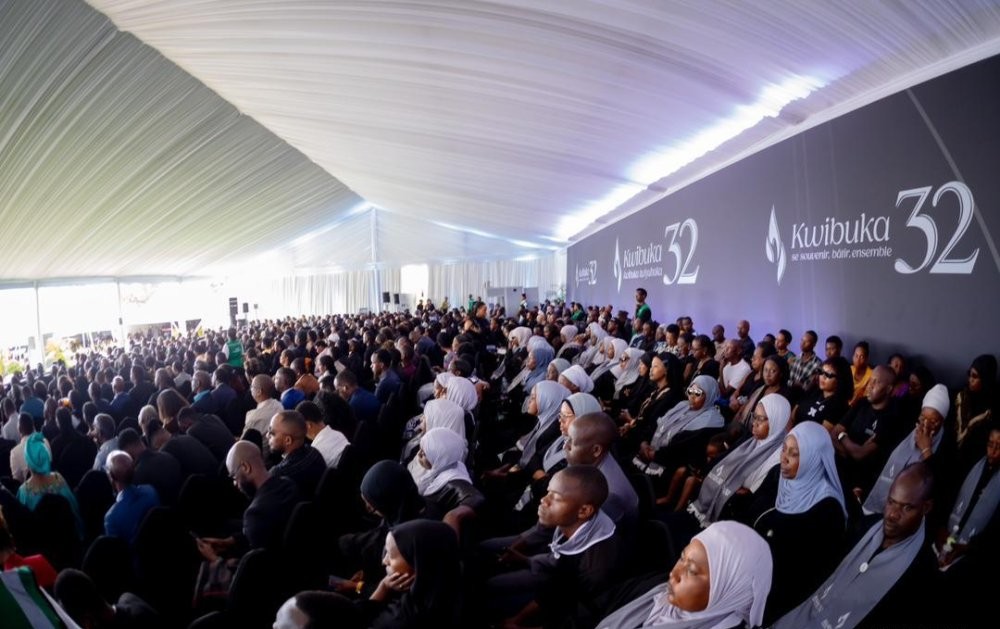
Mourners at Rebero Genocide Memorial, where remains of politicians who were killed for opposing the 1994 Genocide against the Tutsi are laid to rest.