


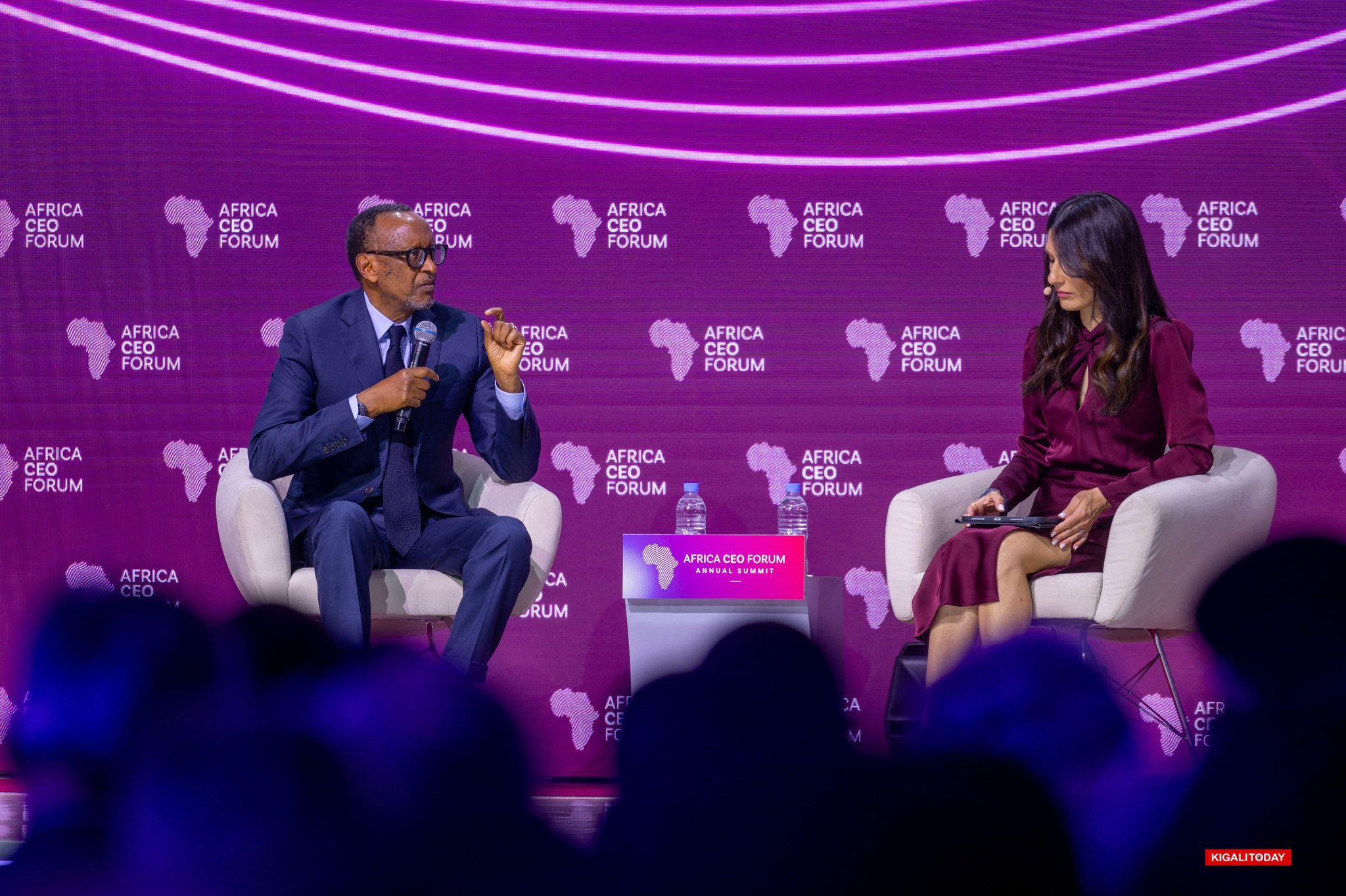
The question at the Africa CEO Forum 2026 was light at first, almost playful.
Did Paul Kagame ever wake up, scroll through social media, and feel shocked by what some world leaders were saying online?
The audience inside Kigali’s convention hall laughed knowingly. By then, the fireside conversation had already moved through geopolitics, sanctions, mineral extraction and global hypocrisy.
But now the discussion turned to something more personal: the modern information age and the increasingly chaotic public square shaped by social media.
Kagame paused.
“There’s a lot,” he said.
Then came the line that drew another ripple of laughter through the room. “I have become immunized to shocks,” Kagame said.
The moment revealed something larger than humor.
Across much of the world, political leaders have struggled to adapt to an era in which diplomacy unfolds publicly, misinformation spreads instantly, and presidents, billionaires, activists and anonymous users compete on the same digital platforms for influence and attention.
At this year’s Africa CEO Forum 2026 — a summit dominated by discussions about global instability, fractured alliances and economic transformation — the subject of social media surfaced as another sign of how dramatically power itself has changed.
The forum gathered more than 2,000 business leaders, investors and policymakers from across Africa and beyond, many of them navigating economies and political systems increasingly shaped by digital technology, online narratives and information warfare.
Kagame, who has governed Rwanda since 2000 and witnessed the rise of the internet age alongside Africa’s economic transformation, spoke about social media less as a threat than as a force that has fundamentally redistributed the power to speak.
“Social media is very interesting,” he said. “It brings equality in some sense of presentation of ideas and feelings.”
Unlike many world leaders who often frame social media primarily as a source of instability, Kagame described it as a democratizing force that has weakened the monopoly traditional media once held over public discourse.
“It has really changed — media has been democratized,” he said. “I think it is important.”
In Kagame’s view, the most significant shift is that everyone now has the ability to participate publicly in debates that were once filtered almost entirely through governments, broadcasters or major newspapers.
“Everyone can express themselves and they will be heard,” he said.
That openness, he argued, creates a self-correcting dynamic.
“If you are wrong,” Kagame said, “there will be somebody to tell you, say, no, no, no, that’s not right.”
“And when it is right,” he continued, “then people will say, wait a minute, I think there is a point here that we should be thinking about.”
For Kagame, the internet age has disrupted old systems of authority and weakened the ability of powerful institutions to shape narratives uncontested.
“We have gone beyond having this narrow sense of being guided into things without sometimes thinking,” he said.
He argued that people are no longer forced to simply accept information because it appears in established media outlets.
“We are conditioned to believing even what is not right,” Kagame said, “just because it has been said by somebody in the media.”
Social media, he suggested, has broken that monopoly.
The exchange came during a forum heavily centered on the future of African economies in a rapidly changing world.
Throughout the summit, executives and political leaders will discuss artificial intelligence, digital finance, online entrepreneurship and the growing role of technology in reshaping African business and governance.
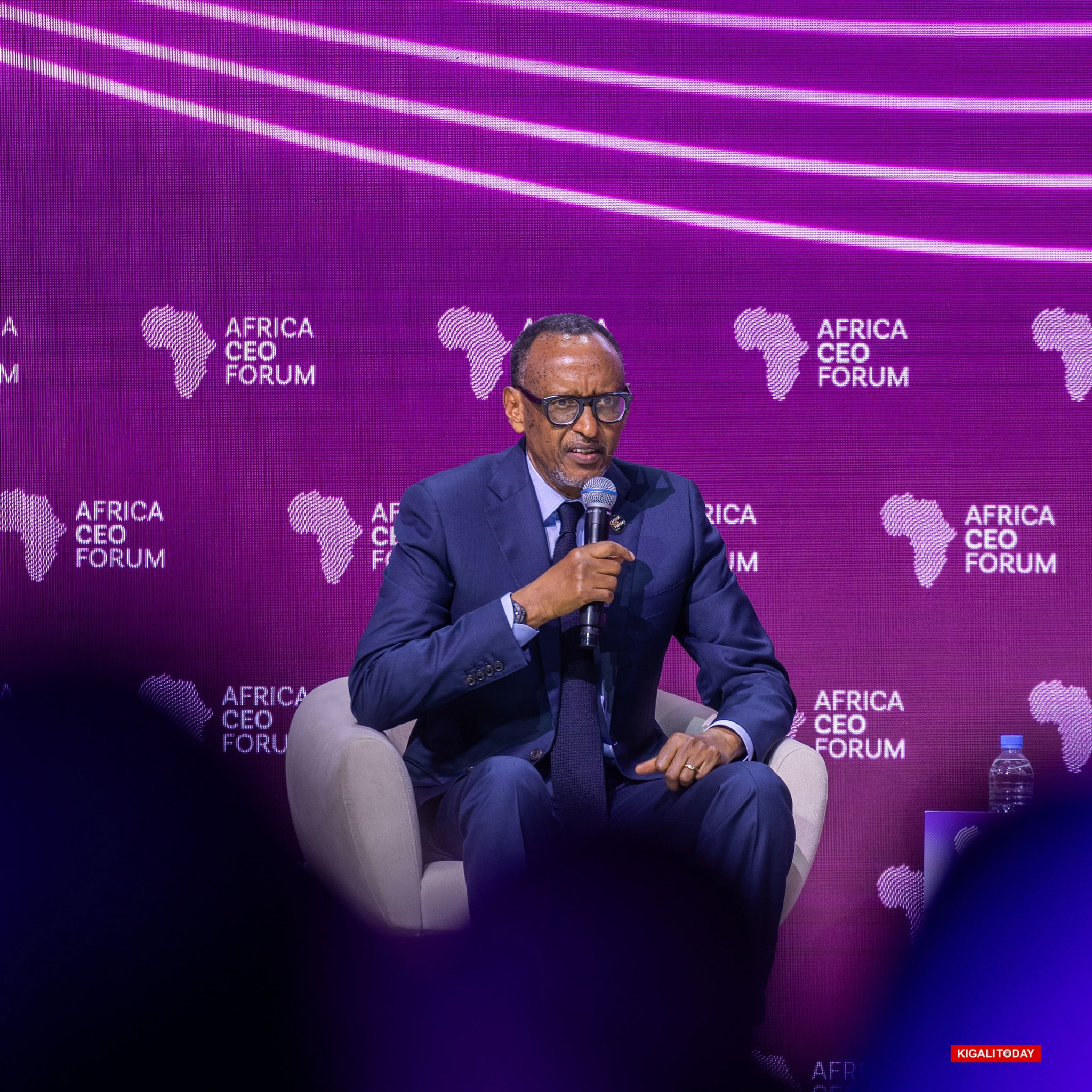
Kagame’s comments reflected another dimension of that transformation: information itself is now decentralized.
He acknowledged, however, that the openness of social media comes with confusion, contradiction and constant criticism.
“Some of us also follow,” he said. “And it’s up to any individual to scan and try and make sense of what you’ve heard, what you are seeing.”
Rather than calling for tighter control, Kagame framed the challenge as one of personal responsibility.
“You receive criticism. You receive advice,” he said.
“And so it remains the responsibility of any individual to decide how they build on that and benefit.”
The moderator pressed him again, returning to the original question: was he truly no longer shocked by what he sees online from global leaders?
Kagame smiled slightly.
“As I had said, I have been immunized,” he replied.
Then he reflected on how decades in politics had shaped that perspective.
“For the 30-something years of my life,” he said, “we come to understand there will be things that would otherwise be shocking, but they don’t shock because we have been there.”
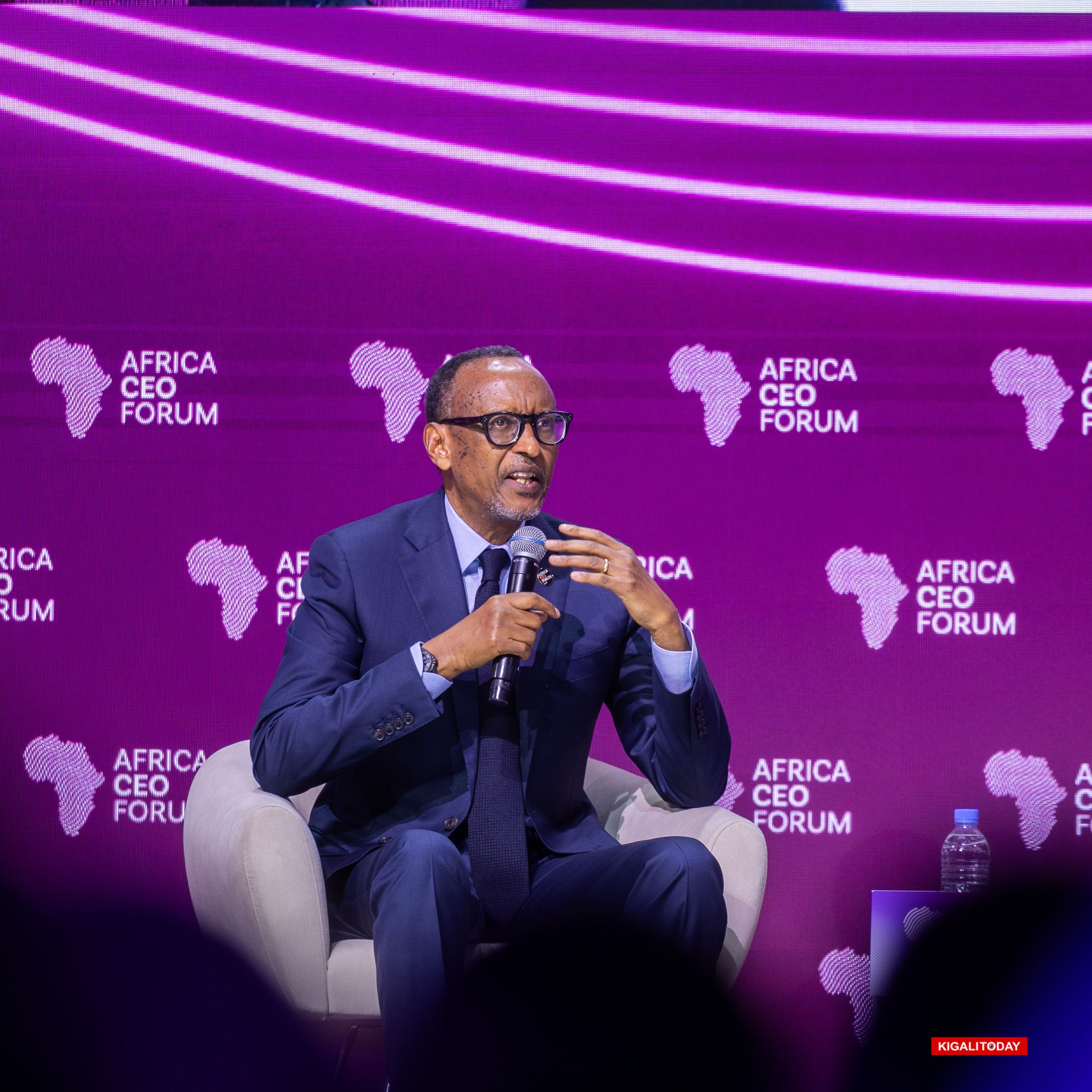
What President Kagame didn’t tell the CEO Forum is that in Rwanda, social media has become so much of a force in public discourse that when ordinary people want something done, or a road built, all they do is post on social media.
When an ordinary person feels they have been wronged by any institution or powerful individual, the first thought is social media, particularly X (Twitter). They obviously know they will emerge victorious.
It was a striking answer at a moment when politics increasingly unfolds through viral posts, online outrage and algorithm-driven confrontation.
But Kagame’s deeper point appeared to be this: the world has changed irreversibly, and leaders must now operate in an environment where authority is constantly challenged, information is constantly contested, and public judgment arrives instantly.
In that world, shock itself becomes harder to sustain.
