


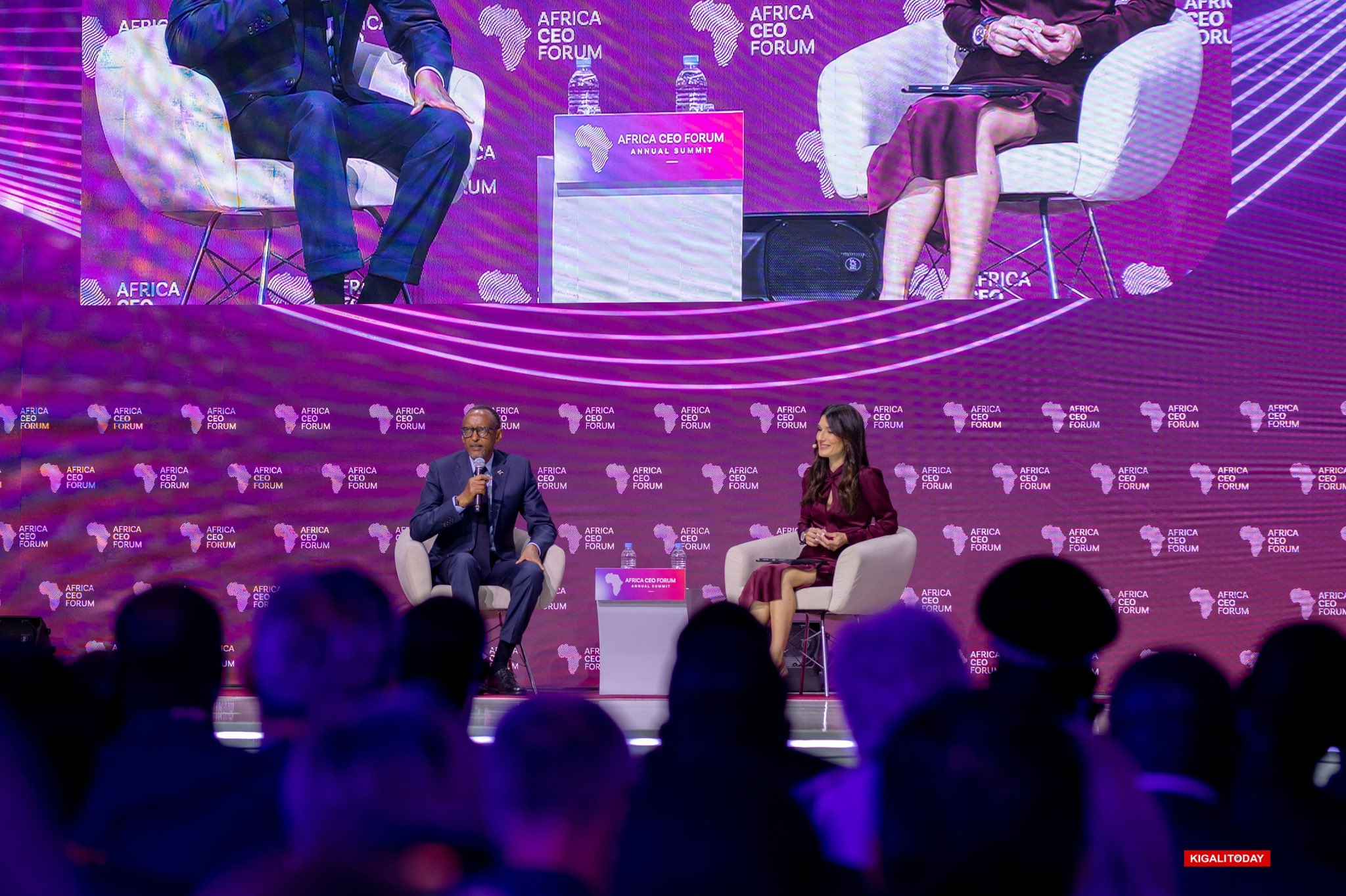
At the Africa CEO Forum 2026 in Kigali, the conversation turned sharply from economics to power politics when the moderator asked President Paul Kagame about sanctions imposed on Rwanda over the conflict in eastern Democratic Republic of the Congo.
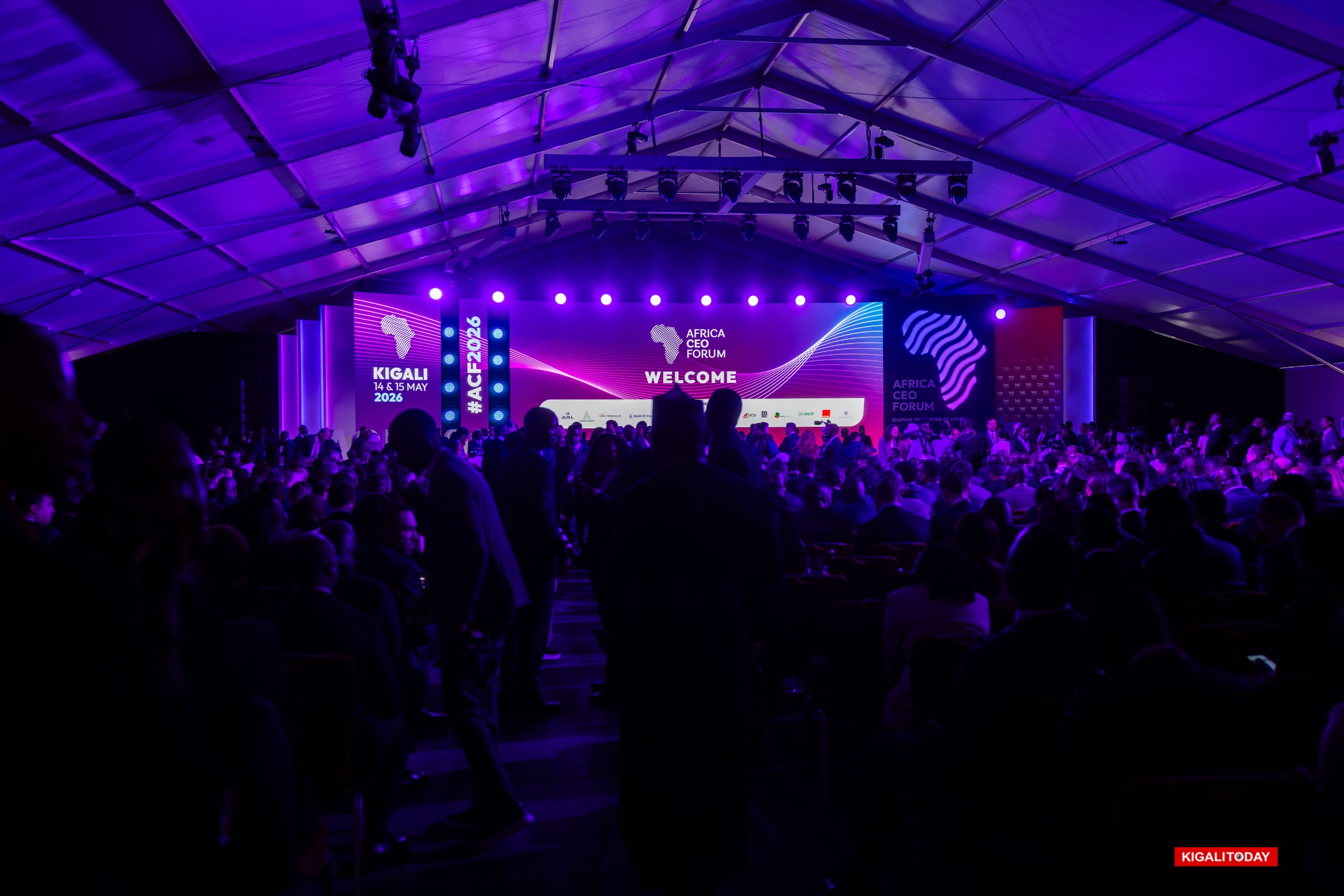
The room — filled with investors, executives, policymakers and African heads of state attending the continent’s premier private-sector summit — had spent much of the morning listening about industrialization, scale and African ownership of resources.
But the question reflected a broader anxiety hovering over the forum itself: in a world increasingly shaped by geopolitical rivalry, how much room do African states actually have to act independently?
Kagame’s answer was unsparing.
“Well, it’s a crisis, in a sense,” he said.
Then he widened the issue beyond Rwanda.
For Kagame, sanctions were not merely diplomatic tools. They were part of a much older global system in which powerful countries continue to use pressure, punishment and economic leverage to shape outcomes across Africa.
“Africa,” he said, “not leveraging our capacity, our potential, our energy of the people of our continent — is just locked out there.”
He described a world order in which stronger powers still operate with what he called “a whip in their hands,” deciding who gets rewarded and who gets punished.
“They are no longer even hiding it,” Kagame said. “It’s just in the open.”
The remarks came at a particularly significant moment for Rwanda. Relations between Kigali and several Western governments have become increasingly strained over accusations surrounding the conflict in eastern Congo.
The United States has imposed sanctions on several military officers as well as the Rwanda Defence Force (RDF), accusing Kigali of supporting the M23 rebellion — allegations Rwanda has consistently denied while insisting its primary security concern is the continued presence of the FDLR, a militia founded by perpetrators of the 1994 Genocide against the Tutsi.
At the CEO Forum, Kagame suggested such measures are often less about justice than strategic interests.
“Sanctions are just applied,” he said, arguing that global powers tend to favor whichever side offers greater geopolitical or economic advantage.
“In a case of the one who provides less than the other,” Kagame said, “it goes in favor of the highest bidder.”
The moderator pressed him directly, asking whether “all roads lead to mineral deals.”
Kagame barely hesitated.
“It is in the open,” he replied, amid loud applause from the high profile audience.
Throughout the discussion, Kagame painted a picture of Africa still trapped in relationships of extraction, where major powers preach democracy and human rights while simultaneously competing for control of strategic resources.
“These powers you see that come here lecturing people democracy, human rights,” he said, “and they are doing it in one arm and the other, they are just taking away everything that people own.”
Then came one of the most striking passages of the conversation.
“In the old days,” Kagame said, “the kings and so on and so forth used to give their in-laws, their children, powers — say, go and control something somewhere.”
“And this is happening today.”
He never explicitly named any country. He did not need to.
The audience understood the reference immediately, as the Forum venue responded with unison applause.
The Africa CEO Forum itself provided an important backdrop to Kagame’s argument.
The 2026 edition was organized around the theme “Can a New Deal Between State and Private Sector Deliver the Continent a Winning Hand?” — a reflection of growing concern among African leaders that the continent remains economically vulnerable despite possessing many of the resources driving the global economy.
Kagame framed sanctions as part of that larger imbalance.
Still, he acknowledged their impact.
“It hurts absolutely,” he said. “That’s what it is meant to do.”
But Kagame insisted Rwanda would not surrender under pressure.
“We never capitulated in worse situations,” he said.
In one of the defining lines of the session, he argued that accepting external pressure can carry a greater cost than resisting it.
“It is not so difficult to say no,” Kagame said. “In fact, it costs more to say yes to the wrong thing.”
This statement also drew applause precisely because it reflected a broader shift increasingly visible among some African governments: a willingness to publicly resist Western diplomatic pressure in ways that would have been far less common a decade ago.
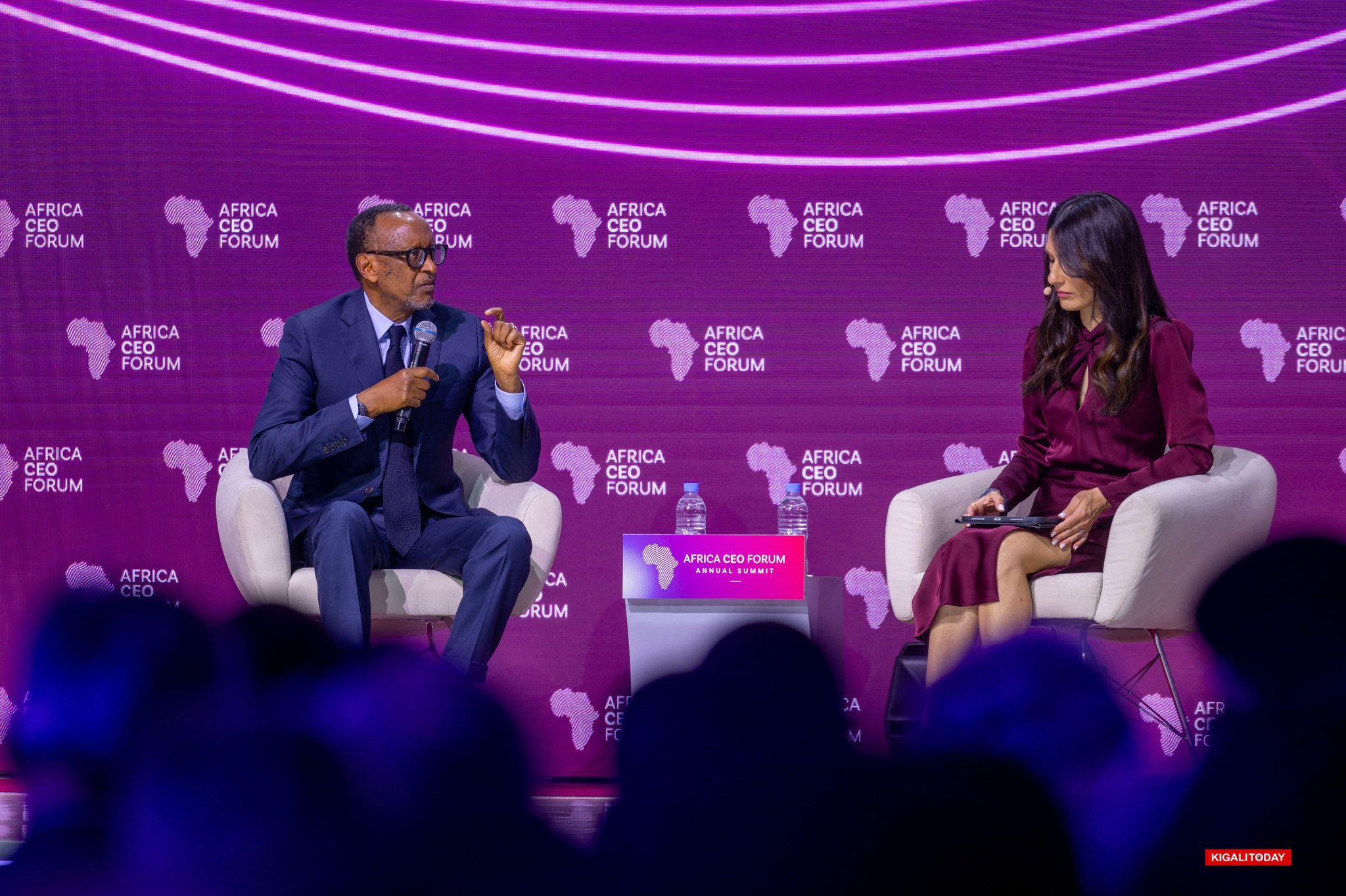
The moderator pointed to recent examples of African countries reconsidering or rejecting foreign-backed mineral agreements viewed as overly extractive.
Kagame seized on that point to argue that Africa’s central challenge is no longer simply exploitation by outsiders, but whether African leaders themselves are prepared to defend their own interests.
“We can’t just be people who are waiting to be ripped off,” he said. “We must be able to say no.”
Yet Kagame’s remarks also carried an undercurrent of realism.
He did not pretend sanctions were harmless, nor did he claim Rwanda was immune from external pressure. Instead, he portrayed resistance as a calculation — painful, but necessary.
“So in a way, we are hurt,” he admitted. “But I think we would be hurt more by not doing what we are doing.”
For Kagame, the larger issue was historical as much as political.
By the end of the discussion, he returned repeatedly to the idea that Africa’s vulnerability persists because the continent still lacks sufficient collective leverage in global affairs.
But he also argued that the emerging geopolitical turbulence — sanctions, trade wars, strategic competition — may ultimately force Africa into greater self-reliance.
“One day,” Kagame said of the powers exploiting weaker nations, “they may not live long enough to see the gains from exploiting people.”
Then he turned back toward the audience of executives, investors and African leaders gathered in Kigali.
“There is a lot we can do,” he said, “to raise Africa.”
