



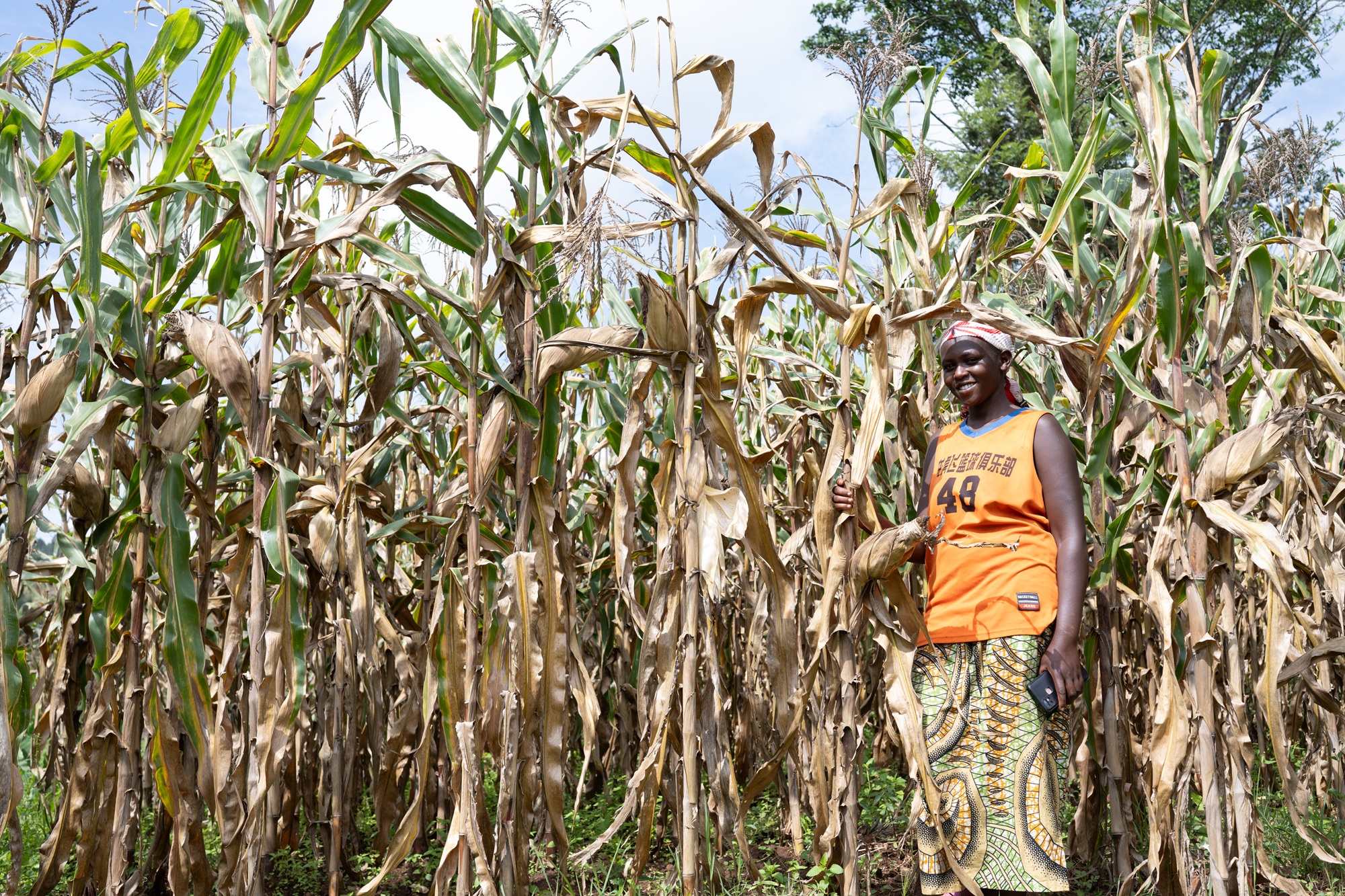
Adeline Gwizimpundu is a 28-year-old young farmer from Rukara cell, Kayonza district, in the Eastern part of Rwanda. She grows beans, maize, cassava, and Irish potatoes on one hectare of land.
“Renting the land was not enough to start farming. I needed seed and fertilizer. That’s when One Acre Fund came to my rescue,” Adeline says.
After One Acre Fund
How she joined
As mentioned earlier, when Adeline first rented land, she didn’t have the
Recently, I have been reflecting on the young people I have met through my work and what their experiences tell us about the future of agriculture. One is 28-year-old Adeline Gwizimpundu from Rwanda’s Kayonza District. Today, she owns land through income earned from farming and wants her three children to see agriculture as a profession worthy of the same respect as becoming a doctor or engineer.
Adeline’s journey challenges a familiar narrative about youth and agriculture. Too often, we portray young people as being disinterested in farming. In my experience, the reality is very different. They do value farming; as a way of life, a family legacy, and often, an important safety net. What might be changing is how they want to engage with it. Beyond feeding themselves, they are looking to create wealth and opportunity for their families and communities. The question then becomes: are the systems around them designed to help fulfill this ambition?
Adeline was a teacher when she started farming, and initially she rented farmland. After joining One Acre Fund/ Tubura, where I work, she accessed quality farm inputs on credit, progressively increased her harvests, gradually built a more sustainable livelihood and transitioned to being a full time farmer.
In Rwanda, over 70% of the population is under the age of 35, which provides an opportunity to harness a dynamic, ambitious, and capable generation. At a time when many young people are seeking meaningful and dignified work, agriculture can provide a pathway to income and entrepreneurship.
As we marked International Youth Day earlier this month, I found myself asking: What if we listened closely enough to understand what is holding young people back? What if we designed agricultural systems around their lived realities rather than expecting them to fit into systems that already exist?
Listening is where better solutions begin
Young people are not an identical group, and there is no single solution that will make agriculture work for all. Their needs vary depending on where they are in their farming journey and the barriers they face. For some, the biggest challenge is access to land. This is why we are championing Kwiharika with households we already work with, an existing cultural tradition in which parents share a portion of their land with their children for farming, and pairing this with access to Tubura’s training and farm inputs.
For others, the challenge may be access to affordable inputs, finance, or markets. A young farmer just starting out may need very different support from someone like Adeline, who, after achieving successful harvests, needed better access to markets.
“I loved selling my harvest through One Acre Fund because the price was better, and I received the money all at once,” Adeline says.
But listening is not only about understanding the support young people need. It is also about understanding how they want to receive it. Agricultural information is more likely to influence decisions when it reaches farmers through channels and formats they prefer. That is why we are exploring digital approaches, including WhatsApp, YouTube, and prompted AI-voice notes, to make such information more accessible and relevant. Additionally, using persona-driven social and behavior change approaches, including radio and theatre, allows us to engage different groups of young people in ways that reflect their experiences and help raise awareness of available support and pathways within agriculture.
Ultimately, the goal is not to find one solution for all young farmers. It is to build a habit of listening, testing, adapting, then scaling, so that agricultural programs respond to the realities of the people they are designed to serve.
Listening is only the beginning. Allies must act on what they hear
With Africa’s agriculture sector expected to grow into a $1 trillion industry, now is the time to position young farmers at the forefront of this growth.
Young people cannot overcome structural barriers alone. Governments, development partners, the private sector, and agricultural organizations all have a role to play, from improving access to land, finance, skills, and markets, to designing programs with young people, not for them. Families and communities also matter, particularly where decisions around shared resources such as land are concerned.
It’s all hands on deck: we need to listen to young people, act on what they tell us, and create the conditions for them to lead.
Adeline shows what is possible when a young person has the opportunity to start, grow, and reinvest in agriculture. Our responsibility is to make that pathway possible for many more young people.
Ms Nandi Bwanali is the Global Youth Lead at One Acre Fund
