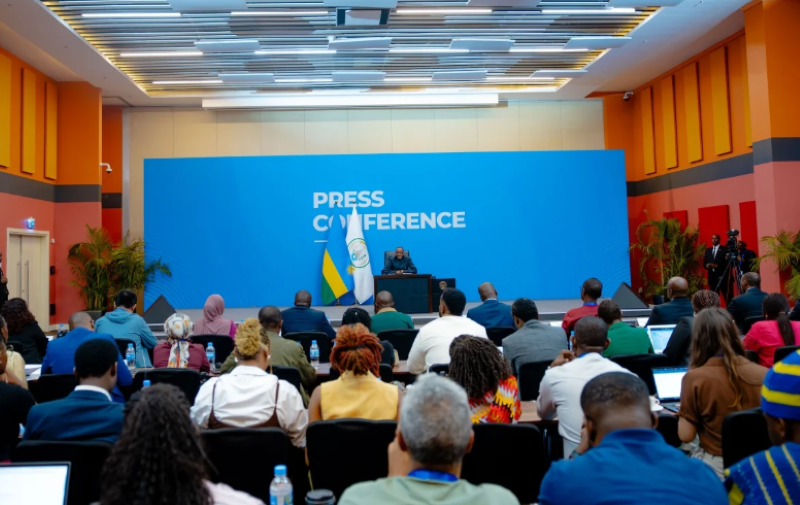
 KIGALI – President Paul Kagame has defended Rwanda’s crackdown on illicit and substandard alcoholic drinks, saying the government cannot justify allowing businesses to operate when the products they produce or distribute are killing consumers.
Kagame said the debate over the crackdown should begin with the human cost of unsafe drinks rather than the commercial interests of manufacturers, distributors and sellers.
Recently, authorities intensified a nationwide campaign against alcoholic beverages that have been linked to deaths and injuries, with more than 140 breweries and distilleries closed and hundreds of brands recalled.
The president said the scale of the reported deaths makes the government’s intervention a question of public responsibility rather than a dispute over business regulation.
“If you follow the news, it’s not only two people today or another one the next day. They are many. sometime close to 100 died in a single day. Before we go to the business aspect, let’s first answer the bigger question. Do we want factories that produce things that kill people?” he questioned.
Under his watch, Kagame said Rwanda should not be expected to tolerate factories whose products repeatedly cause harm simply because those businesses provide employment or generate economic activity.
The President also dismissed the idea that the problem can be addressed only by focusing on locally manufactured drinks. Some of the products under scrutiny, he said, enter Rwanda from outside the country.
He emphasized that the danger should be assessed by its effect on consumers rather than by where the product was manufactured. Once a product is known to be dangerous, the responsibility of the state is straightforward: stop it from reaching consumers.
This puts the current crackdown in a broader context.
The issue is not simply whether a particular drink complies with a technical standard, but whether the state should permit the continued production and sale of products that it knows can seriously harm the public.
Regulators Must Answer
That responsibility, Kagame said, extends to the institutions whose job is to prevent dangerous products from reaching the market.
Rwanda National Police and the Rwanda Investigation Bureau recently presented public officials suspected of involvement in the production and distribution of substandard alcoholic beverages, including employees of the Rwanda Food and Drugs Authority and the Rwanda Standards Board.
Kagame said such institutions exist precisely because consumers cannot be expected to determine for themselves whether every product on the market is safe.
The president raised the possibility that some officials may have had improper relationships with businesses under their supervision. “I believe some of the people have a stake in this, maybe they have stakes in the factories or are bribed to allow them by pass regulations,” he noted.
Kagame said the crackdown would not be treated as a temporary enforcement campaign.
He broadened the issue to include other harmful substances, particularly drugs and alcohol consumed by young people, saying the government has a responsibility to intervene before the consequences become even more difficult to contain.
“That’s a war that we shall not stop until everything is done in the right way. Our authorities should move against people suspected of wrongdoing before problems become even more widespread,” he said.
The crackdown therefore is testing whether Rwanda’s regulatory institutions can prevent dangerous products from entering the market, whether businesses will comply with safety requirements and whether officials responsible for enforcement will be held accountable when they fail.