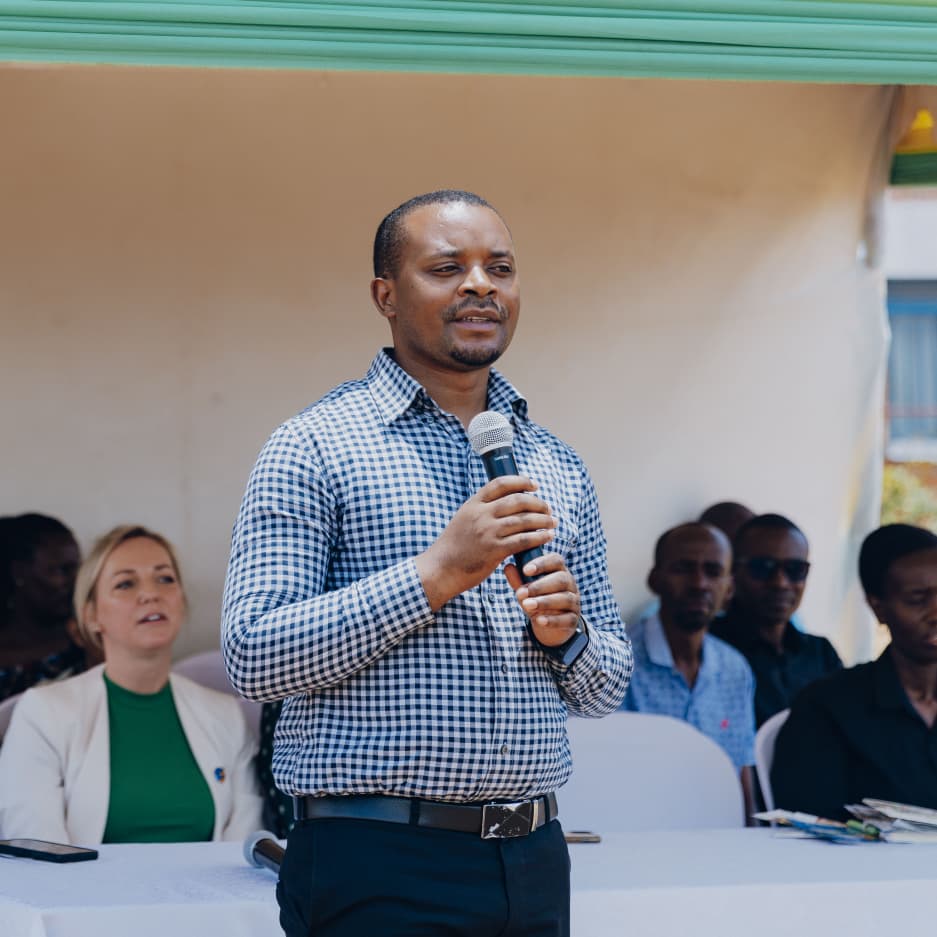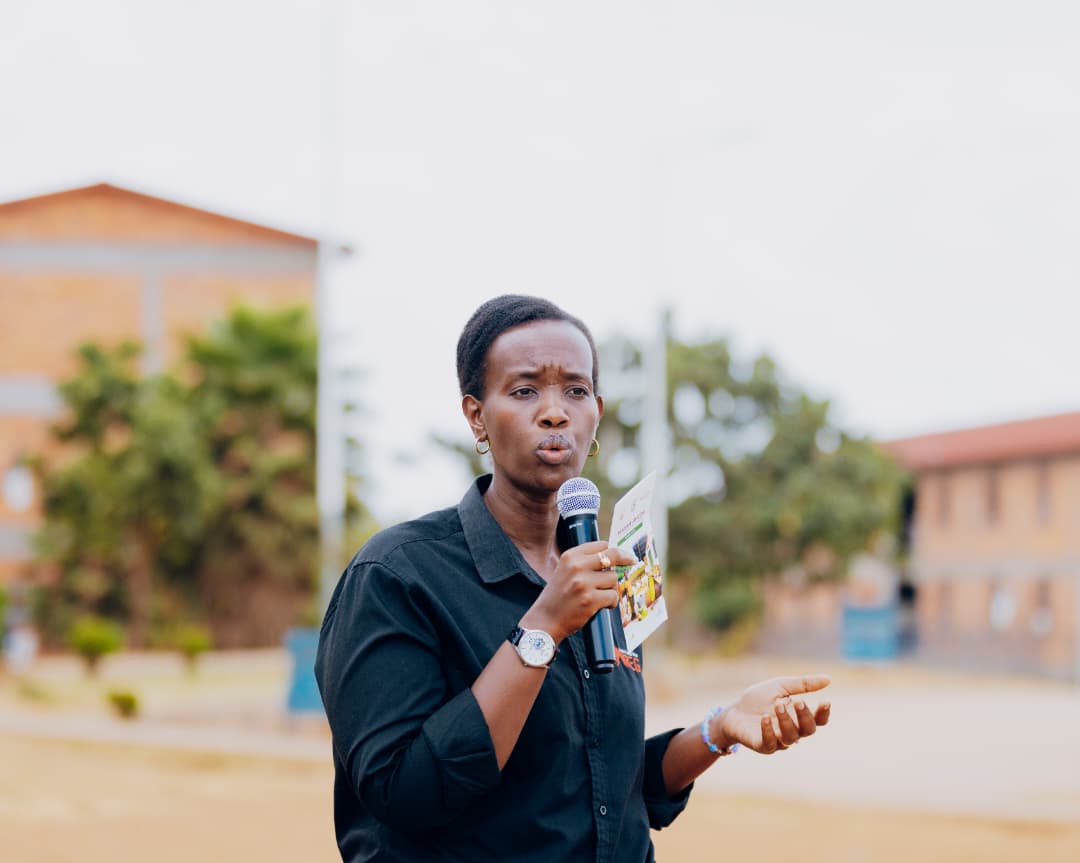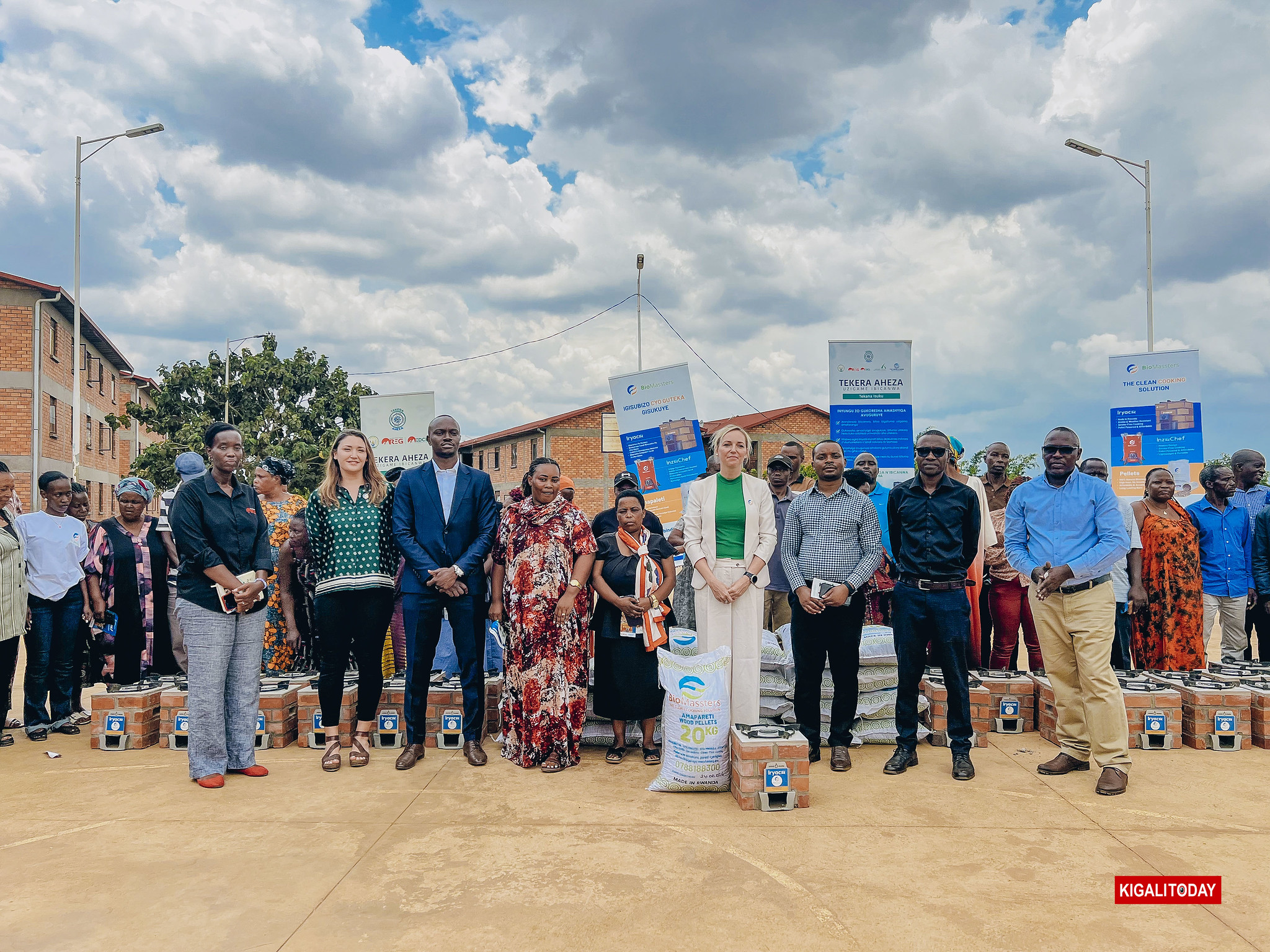
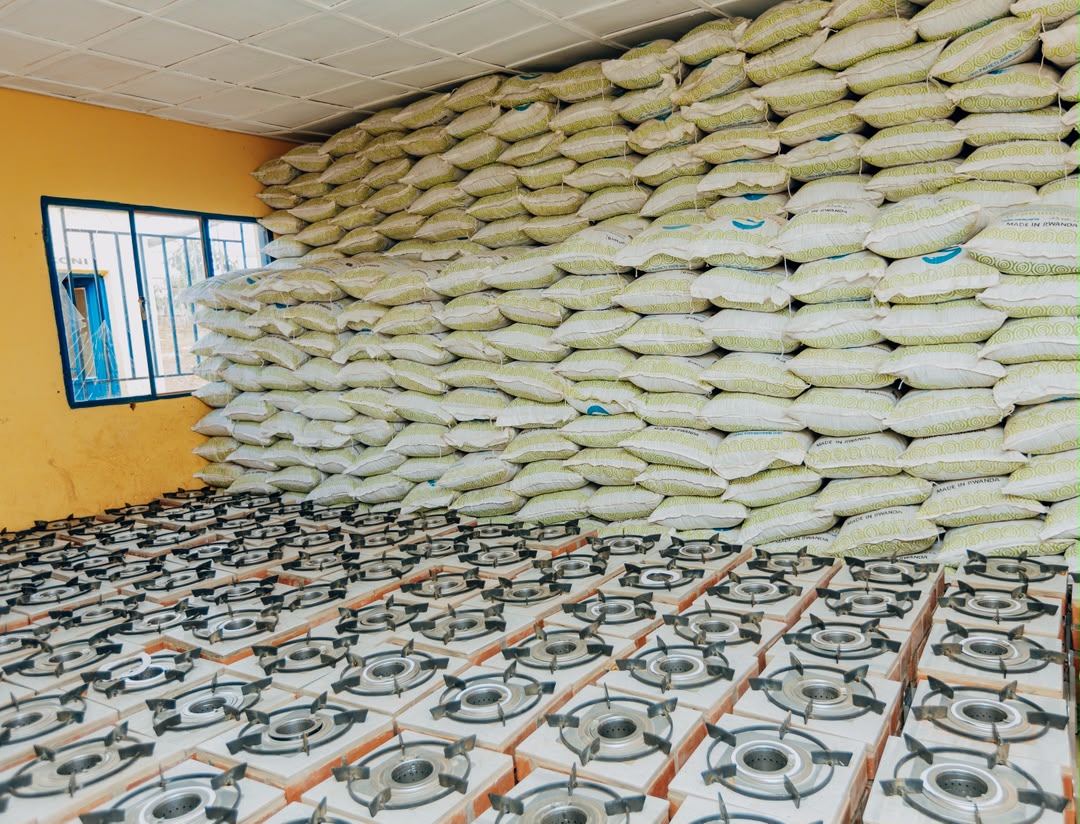
BioMassters Ltd has started distributing 1,280 locally manufactured clean cooking stoves and 25,600 kilograms of pellet fuel worth approximately Rwf94.208 million to households in five Kigali IDP settlements, giving families access to cleaner and lower-cost cooking.
The distribution began on September 23 at the Busanza IDP settlement in Kicukiro District and is being implemented in partnership with the Government of Rwanda, Rwanda Housing Authority (RHA), the City of Kigali, the Energy Development Corporation Limited (EDCL), and Innovate UK.
Each beneficiary household is receiving a Tier-4 gasifier stove and 20kg of pellet fuel free of charge, together with training, access to a local pellet supply point and after-sales support.
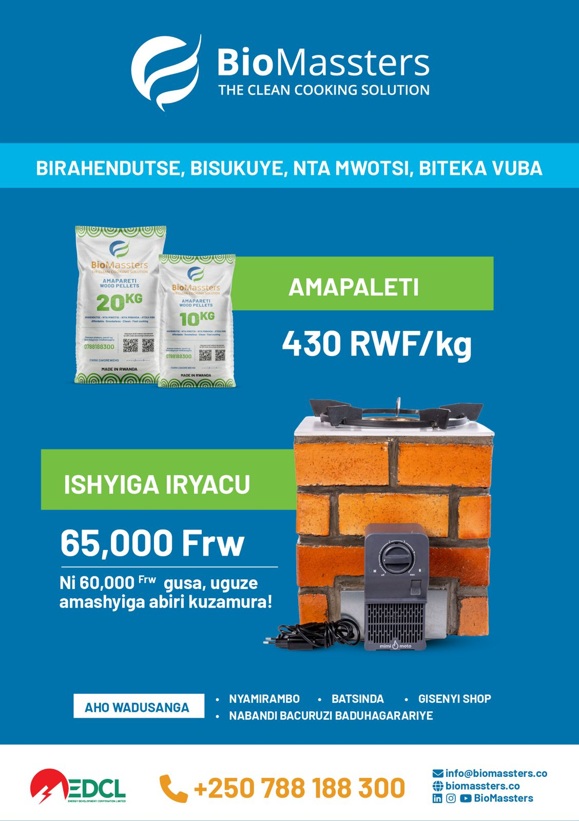
At current market prices, a stove costs Rwf65,000 and a kilogram of pellets Rwf430, putting the combined value of the package at Rwf94.208 million.
The five settlements were selected after BioMassters assessed all 18 IDP settlements in Kigali, interviewing households about their cooking fuels, expenditure, and access to potential pellet supply points and after-sales services.
The assessment is intended to ensure households can continue using the stoves after receiving them.
Lower Costs, NO Smoke
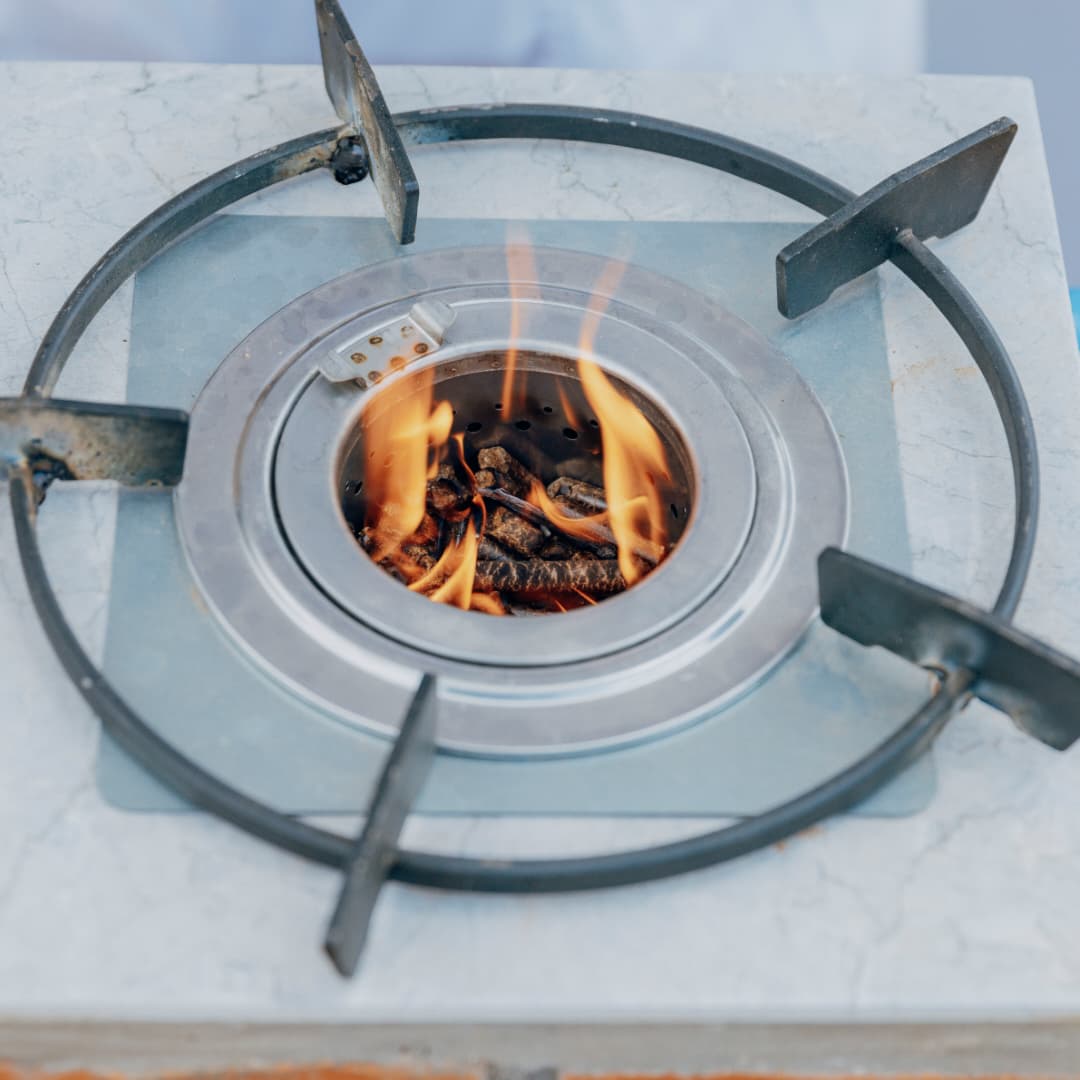
The initiative comes as Rwanda seeks to expand access to cleaner cooking technologies while reducing household air pollution and pressure on biomass resources.
The World Health Organization estimates that 98.5 percent of Rwanda’s population relied on polluting cooking fuels in 2023, while household air pollution from solid fuels was estimated to have contributed to 6,932 deaths in 2019.
BioMassters says its Tier-4 gasifier stoves – described so because of their high cleanliness and efficiency level – can reduce biomass consumption by up to 90 percent and cooking costs by up to 50 percent compared with charcoal. The company produces its pellets in Rwanda from biomass waste.
Its Iryacu stove has been tested and certified by the Rwanda Standards Board, with the company reporting a safety score of 97 and thermal efficiency of over 40 percent.
For beneficiaries, lower cooking costs are a key attraction.
Beatha Mukarutesi, one of the first recipients, said her household spends about Rwf16,000 on each of two sacks of charcoal per month.
“These stoves are timely and cost effective compared to charcoal we have been using,” she affirmed.
She said using pellets would help reduce household cooking expenses while avoiding the smoke and soot associated with charcoal.
Jean Pierre Iyakaremye, president of the hygiene committee in Rwanga Cell, said charcoal has also affected the condition of homes and surrounding infrastructure.
“Everyone is happy with it. It will save lots of money for families,” he said of BioMassters’ cooking solution.
Fuel supply key to adoption
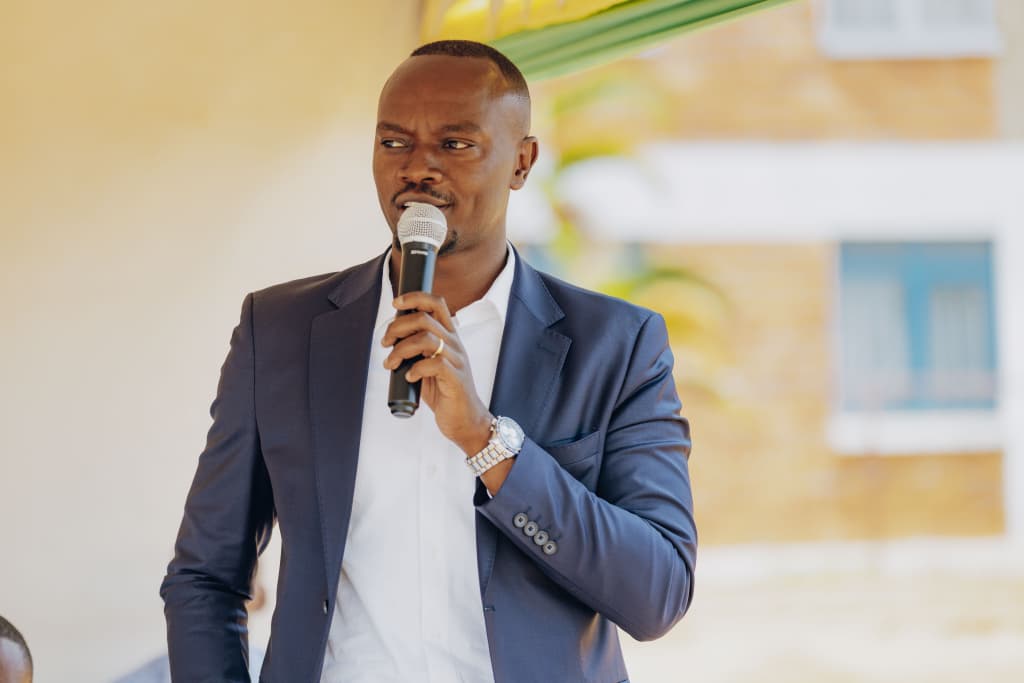
Sylvain Rucyaha, Director of Business Development and Sales at BioMassters, said the company is investing in a fuel supply network to ensure households can continue using the stoves.
A stove, he said, is only useful if households can easily access its fuel.
BioMassters currently has more than 40 pellet supply points and is expanding through company shops and a franchise network in Kigali and beyond. The five settlements covered by the program will also have local pellet supply points.
“We are not just selling stoves. We are building the fuel network behind them,” he said.
Rucyaha said pellets currently cost Rwf430 per kilogram, compared with between Rwf700 and Rwf1,000 for charcoal in Kigali.
After-sales support
Claudia Muench, CEO of BioMassters, said the company wants beneficiaries to use the stoves as long-term household appliances rather than treating them as one-off donations.
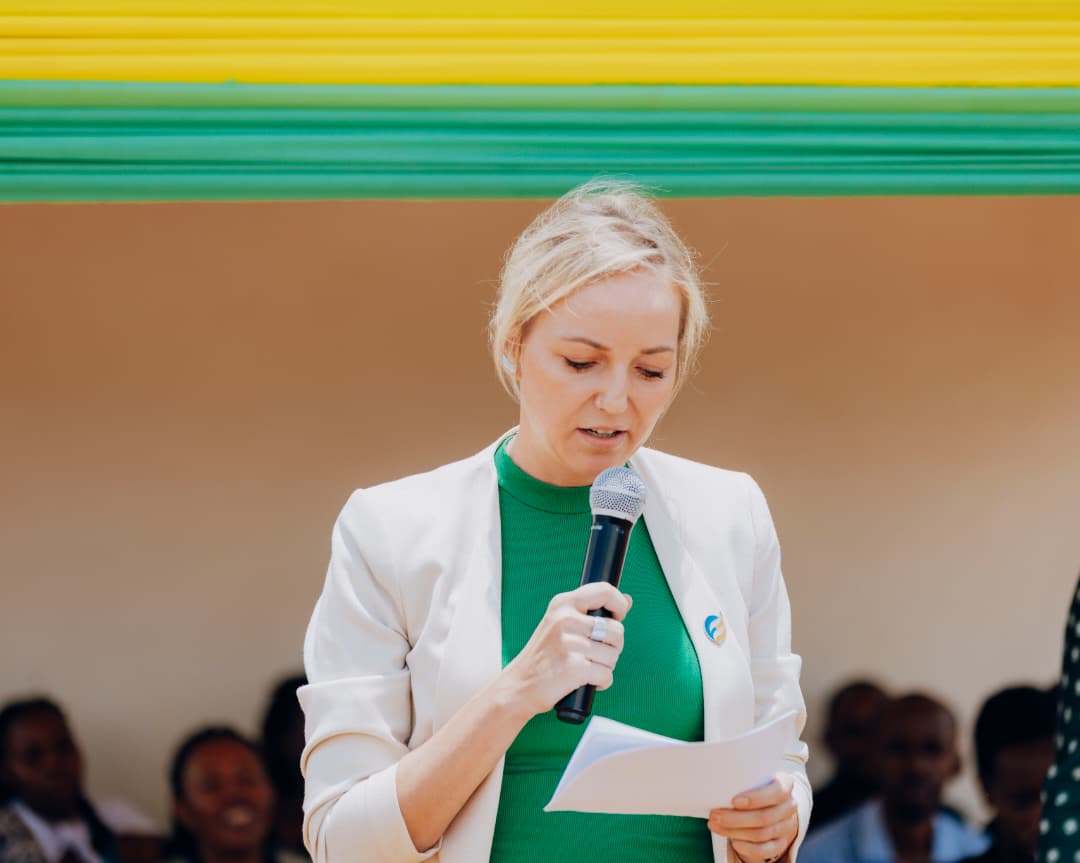
About 8,500 families across Rwanda are already cooking with BioMassters products every day, according to Muench.
“Today is an important day, not just because you’re receiving a new stove, but because you’re joining a growing movement of families across Kigali and Rwanda who are choosing a cleaner, safer and more affordable way to cook,” she said.
Customers can obtain additional pellets from local outlets, while those needing help operating their stoves can receive further training free of charge, Muench said.
“If something goes wrong with the stove, call us and we will repair it,” she said.
Each stove comes with a three-year warranty, according to the company.
Beyond households, aligning with Rwanda’s emission reduction goal
BioMassters is also targeting institutional kitchens, particularly schools that rely heavily on firewood.
Rucyaha said the company is working with the Ministry of Education and has already retrofitted 10 schools. An MoU targets the retrofitting of 250 schools over the coming years.
Rwanda’s climate action plan targets a 38 percent reduction in greenhouse gas emissions by 2030 compared with business as usual, while the country aims to become a carbon-neutral and climate-resilient economy by 2050.
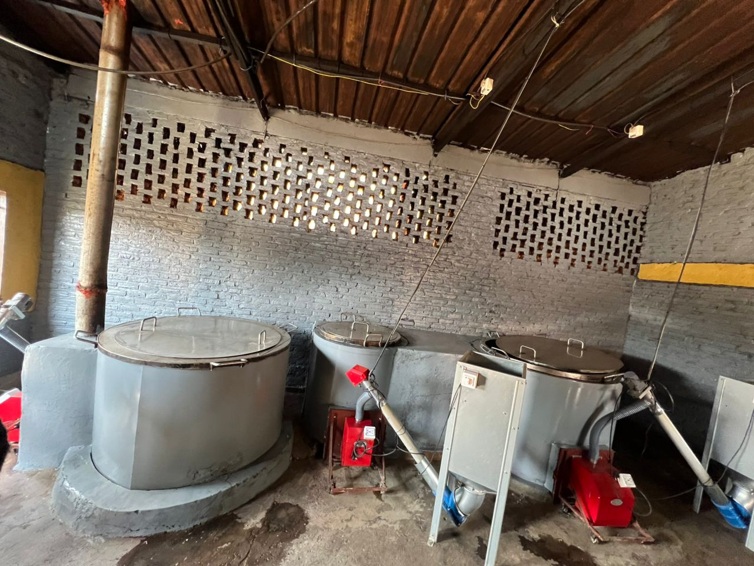
BioMassters says replacing charcoal with pellets made from biomass waste can help reduce pressure on forests and make use of materials that would otherwise be discarded.
“Every family that stops buying charcoal eases pressure on Rwanda’s forests. Our goal is to make charcoal unnecessary in this country,” Rucyaha said.
Over 1,500 stoves distributed since December

BioMassters has been distributing 1,555 stoves and 31,100 kilograms of pellet fuel, valued at about Rwf114.4 million, free of charge to families in Nyagatare, Rubavu and Kigali since December 2025.
The company estimates that these distributions have enabled nearly 9,800 Rwandans to cook without smoke.
“Rwf114 million given back, 1,555 families (supported), and we’re not finished,” Muench said.
Jean Pierre Hitimana, Senior Research and Development Engineer at RHA, said the technology is particularly relevant in densely populated settlements such as Busanza.
“We are increasingly adapting to model villages and hence congestion. Therefore, using such stoves is better and commendable. We recommend everyone to use them. It has significant benefits,” Hitimana said.
This work was carried out with support from the Government of Rwanda through the Energy Development Corporation Limited (EDCL), under the Rwanda Energy Access and Quality Improvement Project (EAQIP), financed by the World Bank and Innovate UK.